






At the end of March, CMA-CGM followed in the footsteps of the two other P3 members by confirming the long-expected upgrade of six new buildings to 18,000 teu. Maersk had previously ordered 20 Triple-E class vessels with a similar capacity, of which seven have already been delivered.
Array
(
[ID] => 97114
[~ID] => 97114
[IBLOCK_ID] => 25
[~IBLOCK_ID] => 25
[IBLOCK_SECTION_ID] => 1364
[~IBLOCK_SECTION_ID] => 1364
[NAME] => Silent Revolution Out at Sea
[~NAME] => Silent Revolution Out at Sea
[ACTIVE_FROM_X] =>
[~ACTIVE_FROM_X] =>
[ACTIVE_FROM] =>
[~ACTIVE_FROM] =>
[TIMESTAMP_X] => 01.09.2016 18:07:25
[~TIMESTAMP_X] => 01.09.2016 18:07:25
[DETAIL_PAGE_URL] => /publications/rzd-partner-int/38-2014/silent-revolution-out-at-sea/
[~DETAIL_PAGE_URL] => /publications/rzd-partner-int/38-2014/silent-revolution-out-at-sea/
[LIST_PAGE_URL] => /info/index.php?ID=25
[~LIST_PAGE_URL] => /info/index.php?ID=25
[DETAIL_TEXT] => The eighth vessel, Marstal Maersk will undergo sea trials this month and will be followed by a further five sister ships in the current calendar year. Next year, Maersk will complete the order, when they receive the final batch of seven of these queens of the sea. By 2016 the P3 group, consisting of Maersk, MSC and CMA-CGM, will be operating a fleet of 29 vessels each with a capacity of between 18,000 and 19,000 teu.
The G6 Alliance, which includes MOL, is evaluating whether to purchase container vessels of 18,000 or more teu, which would enter service by 2020 or slightly later. In the shorter term, the G6 Alliance will operate a fleet of 48 vessels, each with a capacity of 13 to 14,000 teu. Interestingly, MOL think that a Suezmax vessel could theoretically carry up to 20,000 teu. Not to be outdone by the other major lines, China Cosco Holdings, the main listed unit of the China Ocean Shipping Group, is planning to order five 14,000 teu ships and to develop its ties with China Shipping Group in the container sector. At the same time, China Shipping Container Lines received the CSCL Summer, the second of eight 10,036 TEU ships ordered from Chinese shipyards in October 2011 at a price of USD 94.3 million each.
However, Hapag Lloyd and CSAV are bucking the trend towards alliances by negotiating a merger, which would form the world’s fourth-largest container box fleet. This year, Hapag is due to take delivery of the last three 13,169 teu units of the 10-strong Hamburg Express class. The other Hamburg-based container line, Hamburg-Sud has been busily adding new tonnage with additional reefer plugs. It has long been speculated that the two residents of the Hanseatic city could eventually join forces to form a major player in the container shipping industry but so far no white smoke has been spotted above Ballindamm or Willy-Brandt Strasse.
Seaspan has just taken delivery of the 10,000 teu Hanjin Buddha, the first of seven container ships ordered from Jiangsu Yangzijiang by Seaspan and Greater China Intermodal Investments, which are co-operating closely with their client, Hanjin. The Hanjin Buddha is expected to operate on the transpacific route, where it will eventually be joined in May by other similarly-sized vessels. The 8,452 teu Ever Loyal was delivered to Evergreen and is the 18th ship in a series of 30 ships built by Samsung. These ships are part of a 55-ship new building programme, to which the line will add seven new 14,000 teu vessels to be taken on charter. Evergreen is projecting to add just under 600,000 teu capacity to its fleet by 2017. Nevertheless, Evergreen has been criticised for not ordering more of the larger vessels. It could equally be argued that the 8,000 teu capacity allows Evergreen to operate their vessels either on the West Coast or on the East Coast trades by simply passing through the upgraded Panama Canal – once it is completed, of course. Indeed, it is anticipated that most ships with a capacity of 8 - 9,000 teu will eventually be redeployed from the Asia-Europe trade to the routes from Asia to the East Coast of America.
Why, you may ask, is there is mad rush to upgrade to 18,000-teu vessels? The answer is quite simple: these giant vessels should offer cost savings of up to 30% per teu, and at a time when freight rate increases fail to gain traction, the lines have wholeheartedly embraced the mantra of “big is beautiful”. Equally important, prospective clients could be willing converts to container transport: Severstal just announced that they will use containers to transport steel coils. The Russian steel producer quotes more reliable delivery times plus projected cost savings of between 20 and 30 percent. When lines and major clients start “singing from the same hymn sheet”, we might have to view this more as a crusade rather than a revolution.
Another Russian producer that may join in the crusade is Uralkali, which has just signed a deal to supply India with 800,000 tons of fertiliser per year. The contract started in April and the terms agreed are USD 322 per ton CFR (Cost and Freight). Divide that figure by, say, ten metric tons per teu and you quickly realise how important the projected slot savings will be in persuading key shippers like Uralkali to switch part of their shipments to containers, much as Fosagro is doing via the port of Ust-Luga. In December, Uralkali opened a brand new fertiliser terminal in the Port of Riga. Belkaliy has a similar-sized fertiliser terminal just to the south of Riga in the Lithuanian port of Klaipeda. The Belarussian potash producer enthusiastically embraced intermodal transport early on and has been co-operating with major lines on trial shipments of fertilisers in refrigerated containers on the return leg to banana plantations in Colombia. Belkaliy will benefit from the larger MSC vessels that will start to call at the ice-free port of Klaipeda, when the latest upgrades to the local terminals are completed this autumn. In addition to fertilisers and steel coils, the container lines will be targeting Russian producers of non-ferrous metals, pulp, paper and sawn timber to provide export cargos to fill up eastbound vessels to India and the Far East. In the cut-throat world of commodity trading, improved transit times on modern vessels combined with a hefty reduction in per-teu transport costs should ensure the eager shipping line representative a seat at the negotiating table.
John Keir, Ross Learmont Ltd
[~DETAIL_TEXT] => The eighth vessel, Marstal Maersk will undergo sea trials this month and will be followed by a further five sister ships in the current calendar year. Next year, Maersk will complete the order, when they receive the final batch of seven of these queens of the sea. By 2016 the P3 group, consisting of Maersk, MSC and CMA-CGM, will be operating a fleet of 29 vessels each with a capacity of between 18,000 and 19,000 teu.
The G6 Alliance, which includes MOL, is evaluating whether to purchase container vessels of 18,000 or more teu, which would enter service by 2020 or slightly later. In the shorter term, the G6 Alliance will operate a fleet of 48 vessels, each with a capacity of 13 to 14,000 teu. Interestingly, MOL think that a Suezmax vessel could theoretically carry up to 20,000 teu. Not to be outdone by the other major lines, China Cosco Holdings, the main listed unit of the China Ocean Shipping Group, is planning to order five 14,000 teu ships and to develop its ties with China Shipping Group in the container sector. At the same time, China Shipping Container Lines received the CSCL Summer, the second of eight 10,036 TEU ships ordered from Chinese shipyards in October 2011 at a price of USD 94.3 million each.
However, Hapag Lloyd and CSAV are bucking the trend towards alliances by negotiating a merger, which would form the world’s fourth-largest container box fleet. This year, Hapag is due to take delivery of the last three 13,169 teu units of the 10-strong Hamburg Express class. The other Hamburg-based container line, Hamburg-Sud has been busily adding new tonnage with additional reefer plugs. It has long been speculated that the two residents of the Hanseatic city could eventually join forces to form a major player in the container shipping industry but so far no white smoke has been spotted above Ballindamm or Willy-Brandt Strasse.
Seaspan has just taken delivery of the 10,000 teu Hanjin Buddha, the first of seven container ships ordered from Jiangsu Yangzijiang by Seaspan and Greater China Intermodal Investments, which are co-operating closely with their client, Hanjin. The Hanjin Buddha is expected to operate on the transpacific route, where it will eventually be joined in May by other similarly-sized vessels. The 8,452 teu Ever Loyal was delivered to Evergreen and is the 18th ship in a series of 30 ships built by Samsung. These ships are part of a 55-ship new building programme, to which the line will add seven new 14,000 teu vessels to be taken on charter. Evergreen is projecting to add just under 600,000 teu capacity to its fleet by 2017. Nevertheless, Evergreen has been criticised for not ordering more of the larger vessels. It could equally be argued that the 8,000 teu capacity allows Evergreen to operate their vessels either on the West Coast or on the East Coast trades by simply passing through the upgraded Panama Canal – once it is completed, of course. Indeed, it is anticipated that most ships with a capacity of 8 - 9,000 teu will eventually be redeployed from the Asia-Europe trade to the routes from Asia to the East Coast of America.
Why, you may ask, is there is mad rush to upgrade to 18,000-teu vessels? The answer is quite simple: these giant vessels should offer cost savings of up to 30% per teu, and at a time when freight rate increases fail to gain traction, the lines have wholeheartedly embraced the mantra of “big is beautiful”. Equally important, prospective clients could be willing converts to container transport: Severstal just announced that they will use containers to transport steel coils. The Russian steel producer quotes more reliable delivery times plus projected cost savings of between 20 and 30 percent. When lines and major clients start “singing from the same hymn sheet”, we might have to view this more as a crusade rather than a revolution.
Another Russian producer that may join in the crusade is Uralkali, which has just signed a deal to supply India with 800,000 tons of fertiliser per year. The contract started in April and the terms agreed are USD 322 per ton CFR (Cost and Freight). Divide that figure by, say, ten metric tons per teu and you quickly realise how important the projected slot savings will be in persuading key shippers like Uralkali to switch part of their shipments to containers, much as Fosagro is doing via the port of Ust-Luga. In December, Uralkali opened a brand new fertiliser terminal in the Port of Riga. Belkaliy has a similar-sized fertiliser terminal just to the south of Riga in the Lithuanian port of Klaipeda. The Belarussian potash producer enthusiastically embraced intermodal transport early on and has been co-operating with major lines on trial shipments of fertilisers in refrigerated containers on the return leg to banana plantations in Colombia. Belkaliy will benefit from the larger MSC vessels that will start to call at the ice-free port of Klaipeda, when the latest upgrades to the local terminals are completed this autumn. In addition to fertilisers and steel coils, the container lines will be targeting Russian producers of non-ferrous metals, pulp, paper and sawn timber to provide export cargos to fill up eastbound vessels to India and the Far East. In the cut-throat world of commodity trading, improved transit times on modern vessels combined with a hefty reduction in per-teu transport costs should ensure the eager shipping line representative a seat at the negotiating table.
John Keir, Ross Learmont Ltd
[DETAIL_TEXT_TYPE] => html
[~DETAIL_TEXT_TYPE] => html
[PREVIEW_TEXT] => At the end of March, CMA-CGM followed in the footsteps of the two other P3 members by confirming the long-expected upgrade of six new buildings to 18,000 teu. Maersk had previously ordered 20 Triple-E class vessels with a similar capacity, of which seven have already been delivered.
[~PREVIEW_TEXT] => At the end of March, CMA-CGM followed in the footsteps of the two other P3 members by confirming the long-expected upgrade of six new buildings to 18,000 teu. Maersk had previously ordered 20 Triple-E class vessels with a similar capacity, of which seven have already been delivered.
[PREVIEW_TEXT_TYPE] => html
[~PREVIEW_TEXT_TYPE] => html
[PREVIEW_PICTURE] =>
[~PREVIEW_PICTURE] =>
[LANG_DIR] => /
[~LANG_DIR] => /
[CODE] => silent-revolution-out-at-sea
[~CODE] => silent-revolution-out-at-sea
[EXTERNAL_ID] => 9220
[~EXTERNAL_ID] => 9220
[IBLOCK_TYPE_ID] => info
[~IBLOCK_TYPE_ID] => info
[IBLOCK_CODE] => articles_magazines
[~IBLOCK_CODE] => articles_magazines
[IBLOCK_EXTERNAL_ID] =>
[~IBLOCK_EXTERNAL_ID] =>
[LID] => s1
[~LID] => s1
[EDIT_LINK] =>
[DELETE_LINK] =>
[DISPLAY_ACTIVE_FROM] =>
[FIELDS] => Array
(
)
[PROPERTIES] => Array
(
[AUTHOR] => Array
(
[ID] => 97
[IBLOCK_ID] => 25
[NAME] => Автор
[ACTIVE] => Y
[SORT] => 400
[CODE] => AUTHOR
[DEFAULT_VALUE] =>
[PROPERTY_TYPE] => S
[ROW_COUNT] => 1
[COL_COUNT] => 30
[LIST_TYPE] => L
[MULTIPLE] => N
[XML_ID] =>
[FILE_TYPE] =>
[MULTIPLE_CNT] => 5
[LINK_IBLOCK_ID] => 0
[WITH_DESCRIPTION] => N
[SEARCHABLE] => Y
[FILTRABLE] => N
[IS_REQUIRED] => N
[VERSION] => 2
[USER_TYPE] =>
[USER_TYPE_SETTINGS] => Array
(
)
[HINT] =>
[~NAME] => Автор
[~DEFAULT_VALUE] =>
[VALUE_ENUM] =>
[VALUE_XML_ID] =>
[VALUE_SORT] =>
[VALUE] =>
[PROPERTY_VALUE_ID] => 97114:97
[DESCRIPTION] =>
[~DESCRIPTION] =>
[~VALUE] =>
)
[AUTHOR_PHOTO] => Array
(
[ID] => 108
[IBLOCK_ID] => 25
[NAME] => Автор фото
[ACTIVE] => Y
[SORT] => 410
[CODE] => AUTHOR_PHOTO
[DEFAULT_VALUE] =>
[PROPERTY_TYPE] => S
[ROW_COUNT] => 1
[COL_COUNT] => 30
[LIST_TYPE] => L
[MULTIPLE] => N
[XML_ID] =>
[FILE_TYPE] =>
[MULTIPLE_CNT] => 5
[LINK_IBLOCK_ID] => 0
[WITH_DESCRIPTION] => N
[SEARCHABLE] => N
[FILTRABLE] => N
[IS_REQUIRED] => N
[VERSION] => 2
[USER_TYPE] =>
[USER_TYPE_SETTINGS] => Array
(
)
[HINT] =>
[~NAME] => Автор фото
[~DEFAULT_VALUE] =>
[VALUE_ENUM] =>
[VALUE_XML_ID] =>
[VALUE_SORT] =>
[VALUE] =>
[PROPERTY_VALUE_ID] => 97114:108
[DESCRIPTION] =>
[~DESCRIPTION] =>
[~VALUE] =>
)
[ISSUE] => Array
(
[ID] => 93
[IBLOCK_ID] => 25
[NAME] => Выпуск
[ACTIVE] => Y
[SORT] => 500
[CODE] => ISSUE
[DEFAULT_VALUE] =>
[PROPERTY_TYPE] => E
[ROW_COUNT] => 1
[COL_COUNT] => 30
[LIST_TYPE] => L
[MULTIPLE] => N
[XML_ID] =>
[FILE_TYPE] =>
[MULTIPLE_CNT] => 5
[LINK_IBLOCK_ID] => 0
[WITH_DESCRIPTION] => N
[SEARCHABLE] => N
[FILTRABLE] => N
[IS_REQUIRED] => Y
[VERSION] => 2
[USER_TYPE] =>
[USER_TYPE_SETTINGS] => Array
(
)
[HINT] =>
[~NAME] => Выпуск
[~DEFAULT_VALUE] =>
[VALUE_ENUM] =>
[VALUE_XML_ID] =>
[VALUE_SORT] =>
[VALUE] => 94704
[PROPERTY_VALUE_ID] => 97114:93
[DESCRIPTION] =>
[~VALUE] => 94704
[~DESCRIPTION] =>
)
[BLOG_POST_ID] => Array
(
[ID] => 94
[IBLOCK_ID] => 25
[NAME] => ID поста блога для комментариев
[ACTIVE] => Y
[SORT] => 500
[CODE] => BLOG_POST_ID
[DEFAULT_VALUE] =>
[PROPERTY_TYPE] => N
[ROW_COUNT] => 1
[COL_COUNT] => 30
[LIST_TYPE] => L
[MULTIPLE] => N
[XML_ID] =>
[FILE_TYPE] =>
[MULTIPLE_CNT] => 5
[LINK_IBLOCK_ID] => 0
[WITH_DESCRIPTION] => N
[SEARCHABLE] => N
[FILTRABLE] => N
[IS_REQUIRED] => N
[VERSION] => 1
[USER_TYPE] =>
[USER_TYPE_SETTINGS] => Array
(
)
[HINT] =>
[~NAME] => ID поста блога для комментариев
[~DEFAULT_VALUE] =>
[VALUE_ENUM] =>
[VALUE_XML_ID] =>
[VALUE_SORT] =>
[VALUE] =>
[PROPERTY_VALUE_ID] => 97114:94
[DESCRIPTION] =>
[~DESCRIPTION] =>
[~VALUE] =>
)
[BLOG_COMMENTS_CNT] => Array
(
[ID] => 95
[IBLOCK_ID] => 25
[NAME] => Количество комментариев
[ACTIVE] => Y
[SORT] => 500
[CODE] => BLOG_COMMENTS_CNT
[DEFAULT_VALUE] =>
[PROPERTY_TYPE] => N
[ROW_COUNT] => 1
[COL_COUNT] => 30
[LIST_TYPE] => L
[MULTIPLE] => N
[XML_ID] =>
[FILE_TYPE] =>
[MULTIPLE_CNT] => 5
[LINK_IBLOCK_ID] => 0
[WITH_DESCRIPTION] => N
[SEARCHABLE] => N
[FILTRABLE] => N
[IS_REQUIRED] => N
[VERSION] => 1
[USER_TYPE] =>
[USER_TYPE_SETTINGS] => Array
(
)
[HINT] =>
[~NAME] => Количество комментариев
[~DEFAULT_VALUE] =>
[VALUE_ENUM] =>
[VALUE_XML_ID] =>
[VALUE_SORT] =>
[VALUE] =>
[PROPERTY_VALUE_ID] => 97114:95
[DESCRIPTION] =>
[~DESCRIPTION] =>
[~VALUE] =>
)
[MORE_PHOTO] => Array
(
[ID] => 98
[IBLOCK_ID] => 25
[NAME] => Дополнительные фотографии
[ACTIVE] => Y
[SORT] => 500
[CODE] => MORE_PHOTO
[DEFAULT_VALUE] =>
[PROPERTY_TYPE] => F
[ROW_COUNT] => 1
[COL_COUNT] => 30
[LIST_TYPE] => L
[MULTIPLE] => Y
[XML_ID] =>
[FILE_TYPE] => jpg, gif, bmp, png, jpeg
[MULTIPLE_CNT] => 5
[LINK_IBLOCK_ID] => 0
[WITH_DESCRIPTION] => N
[SEARCHABLE] => N
[FILTRABLE] => N
[IS_REQUIRED] => N
[VERSION] => 2
[USER_TYPE] =>
[USER_TYPE_SETTINGS] => Array
(
)
[HINT] =>
[~NAME] => Дополнительные фотографии
[~DEFAULT_VALUE] =>
[VALUE_ENUM] =>
[VALUE_XML_ID] =>
[VALUE_SORT] =>
[VALUE] =>
[PROPERTY_VALUE_ID] =>
[DESCRIPTION] =>
[~DESCRIPTION] =>
[~VALUE] =>
)
[PUBLIC_ACCESS] => Array
(
[ID] => 110
[IBLOCK_ID] => 25
[NAME] => Открытый доступ
[ACTIVE] => Y
[SORT] => 500
[CODE] => PUBLIC_ACCESS
[DEFAULT_VALUE] =>
[PROPERTY_TYPE] => L
[ROW_COUNT] => 1
[COL_COUNT] => 30
[LIST_TYPE] => C
[MULTIPLE] => N
[XML_ID] =>
[FILE_TYPE] =>
[MULTIPLE_CNT] => 5
[LINK_IBLOCK_ID] => 0
[WITH_DESCRIPTION] => N
[SEARCHABLE] => N
[FILTRABLE] => N
[IS_REQUIRED] => N
[VERSION] => 2
[USER_TYPE] =>
[USER_TYPE_SETTINGS] => Array
(
)
[HINT] =>
[~NAME] => Открытый доступ
[~DEFAULT_VALUE] =>
[VALUE_ENUM] =>
[VALUE_XML_ID] =>
[VALUE_SORT] =>
[VALUE] =>
[PROPERTY_VALUE_ID] => 97114:110
[DESCRIPTION] =>
[~DESCRIPTION] =>
[~VALUE] =>
[VALUE_ENUM_ID] =>
)
[ATTACHED_PDF] => Array
(
[ID] => 324
[IBLOCK_ID] => 25
[NAME] => Прикрепленный PDF
[ACTIVE] => Y
[SORT] => 500
[CODE] => ATTACHED_PDF
[DEFAULT_VALUE] =>
[PROPERTY_TYPE] => F
[ROW_COUNT] => 1
[COL_COUNT] => 30
[LIST_TYPE] => L
[MULTIPLE] => N
[XML_ID] =>
[FILE_TYPE] => pdf
[MULTIPLE_CNT] => 5
[LINK_IBLOCK_ID] => 0
[WITH_DESCRIPTION] => N
[SEARCHABLE] => N
[FILTRABLE] => N
[IS_REQUIRED] => N
[VERSION] => 2
[USER_TYPE] =>
[USER_TYPE_SETTINGS] => Array
(
)
[HINT] =>
[~NAME] => Прикрепленный PDF
[~DEFAULT_VALUE] =>
[VALUE_ENUM] =>
[VALUE_XML_ID] =>
[VALUE_SORT] =>
[VALUE] =>
[PROPERTY_VALUE_ID] => 97114:324
[DESCRIPTION] =>
[~DESCRIPTION] =>
[~VALUE] =>
)
)
[DISPLAY_PROPERTIES] => Array
(
)
[IPROPERTY_VALUES] => Array
(
[SECTION_META_TITLE] => Silent Revolution Out at Sea
[SECTION_META_KEYWORDS] => silent revolution out at sea
[SECTION_META_DESCRIPTION] => <p>At the end of March, CMA-CGM followed in the footsteps of the two other P3 members by confirming the long-expected upgrade of six new buildings to 18,000 teu. Maersk had previously ordered 20 Triple-E class vessels with a similar capacity, of which seven have already been delivered.</p>
[ELEMENT_META_TITLE] => Silent Revolution Out at Sea
[ELEMENT_META_KEYWORDS] => silent revolution out at sea
[ELEMENT_META_DESCRIPTION] => <p>At the end of March, CMA-CGM followed in the footsteps of the two other P3 members by confirming the long-expected upgrade of six new buildings to 18,000 teu. Maersk had previously ordered 20 Triple-E class vessels with a similar capacity, of which seven have already been delivered.</p>
[SECTION_PICTURE_FILE_ALT] => Silent Revolution Out at Sea
[SECTION_PICTURE_FILE_TITLE] => Silent Revolution Out at Sea
[SECTION_DETAIL_PICTURE_FILE_ALT] => Silent Revolution Out at Sea
[SECTION_DETAIL_PICTURE_FILE_TITLE] => Silent Revolution Out at Sea
[ELEMENT_PREVIEW_PICTURE_FILE_ALT] => Silent Revolution Out at Sea
[ELEMENT_PREVIEW_PICTURE_FILE_TITLE] => Silent Revolution Out at Sea
[ELEMENT_DETAIL_PICTURE_FILE_ALT] => Silent Revolution Out at Sea
[ELEMENT_DETAIL_PICTURE_FILE_TITLE] => Silent Revolution Out at Sea
)
)
Array
(
[ID] => 97114
[~ID] => 97114
[IBLOCK_ID] => 25
[~IBLOCK_ID] => 25
[IBLOCK_SECTION_ID] => 1364
[~IBLOCK_SECTION_ID] => 1364
[NAME] => Silent Revolution Out at Sea
[~NAME] => Silent Revolution Out at Sea
[ACTIVE_FROM_X] =>
[~ACTIVE_FROM_X] =>
[ACTIVE_FROM] =>
[~ACTIVE_FROM] =>
[TIMESTAMP_X] => 01.09.2016 18:07:25
[~TIMESTAMP_X] => 01.09.2016 18:07:25
[DETAIL_PAGE_URL] => /publications/rzd-partner-int/38-2014/silent-revolution-out-at-sea/
[~DETAIL_PAGE_URL] => /publications/rzd-partner-int/38-2014/silent-revolution-out-at-sea/
[LIST_PAGE_URL] => /info/index.php?ID=25
[~LIST_PAGE_URL] => /info/index.php?ID=25
[DETAIL_TEXT] => The eighth vessel, Marstal Maersk will undergo sea trials this month and will be followed by a further five sister ships in the current calendar year. Next year, Maersk will complete the order, when they receive the final batch of seven of these queens of the sea. By 2016 the P3 group, consisting of Maersk, MSC and CMA-CGM, will be operating a fleet of 29 vessels each with a capacity of between 18,000 and 19,000 teu.
The G6 Alliance, which includes MOL, is evaluating whether to purchase container vessels of 18,000 or more teu, which would enter service by 2020 or slightly later. In the shorter term, the G6 Alliance will operate a fleet of 48 vessels, each with a capacity of 13 to 14,000 teu. Interestingly, MOL think that a Suezmax vessel could theoretically carry up to 20,000 teu. Not to be outdone by the other major lines, China Cosco Holdings, the main listed unit of the China Ocean Shipping Group, is planning to order five 14,000 teu ships and to develop its ties with China Shipping Group in the container sector. At the same time, China Shipping Container Lines received the CSCL Summer, the second of eight 10,036 TEU ships ordered from Chinese shipyards in October 2011 at a price of USD 94.3 million each.
However, Hapag Lloyd and CSAV are bucking the trend towards alliances by negotiating a merger, which would form the world’s fourth-largest container box fleet. This year, Hapag is due to take delivery of the last three 13,169 teu units of the 10-strong Hamburg Express class. The other Hamburg-based container line, Hamburg-Sud has been busily adding new tonnage with additional reefer plugs. It has long been speculated that the two residents of the Hanseatic city could eventually join forces to form a major player in the container shipping industry but so far no white smoke has been spotted above Ballindamm or Willy-Brandt Strasse.
Seaspan has just taken delivery of the 10,000 teu Hanjin Buddha, the first of seven container ships ordered from Jiangsu Yangzijiang by Seaspan and Greater China Intermodal Investments, which are co-operating closely with their client, Hanjin. The Hanjin Buddha is expected to operate on the transpacific route, where it will eventually be joined in May by other similarly-sized vessels. The 8,452 teu Ever Loyal was delivered to Evergreen and is the 18th ship in a series of 30 ships built by Samsung. These ships are part of a 55-ship new building programme, to which the line will add seven new 14,000 teu vessels to be taken on charter. Evergreen is projecting to add just under 600,000 teu capacity to its fleet by 2017. Nevertheless, Evergreen has been criticised for not ordering more of the larger vessels. It could equally be argued that the 8,000 teu capacity allows Evergreen to operate their vessels either on the West Coast or on the East Coast trades by simply passing through the upgraded Panama Canal – once it is completed, of course. Indeed, it is anticipated that most ships with a capacity of 8 - 9,000 teu will eventually be redeployed from the Asia-Europe trade to the routes from Asia to the East Coast of America.
Why, you may ask, is there is mad rush to upgrade to 18,000-teu vessels? The answer is quite simple: these giant vessels should offer cost savings of up to 30% per teu, and at a time when freight rate increases fail to gain traction, the lines have wholeheartedly embraced the mantra of “big is beautiful”. Equally important, prospective clients could be willing converts to container transport: Severstal just announced that they will use containers to transport steel coils. The Russian steel producer quotes more reliable delivery times plus projected cost savings of between 20 and 30 percent. When lines and major clients start “singing from the same hymn sheet”, we might have to view this more as a crusade rather than a revolution.
Another Russian producer that may join in the crusade is Uralkali, which has just signed a deal to supply India with 800,000 tons of fertiliser per year. The contract started in April and the terms agreed are USD 322 per ton CFR (Cost and Freight). Divide that figure by, say, ten metric tons per teu and you quickly realise how important the projected slot savings will be in persuading key shippers like Uralkali to switch part of their shipments to containers, much as Fosagro is doing via the port of Ust-Luga. In December, Uralkali opened a brand new fertiliser terminal in the Port of Riga. Belkaliy has a similar-sized fertiliser terminal just to the south of Riga in the Lithuanian port of Klaipeda. The Belarussian potash producer enthusiastically embraced intermodal transport early on and has been co-operating with major lines on trial shipments of fertilisers in refrigerated containers on the return leg to banana plantations in Colombia. Belkaliy will benefit from the larger MSC vessels that will start to call at the ice-free port of Klaipeda, when the latest upgrades to the local terminals are completed this autumn. In addition to fertilisers and steel coils, the container lines will be targeting Russian producers of non-ferrous metals, pulp, paper and sawn timber to provide export cargos to fill up eastbound vessels to India and the Far East. In the cut-throat world of commodity trading, improved transit times on modern vessels combined with a hefty reduction in per-teu transport costs should ensure the eager shipping line representative a seat at the negotiating table.
John Keir, Ross Learmont Ltd
[~DETAIL_TEXT] => The eighth vessel, Marstal Maersk will undergo sea trials this month and will be followed by a further five sister ships in the current calendar year. Next year, Maersk will complete the order, when they receive the final batch of seven of these queens of the sea. By 2016 the P3 group, consisting of Maersk, MSC and CMA-CGM, will be operating a fleet of 29 vessels each with a capacity of between 18,000 and 19,000 teu.
The G6 Alliance, which includes MOL, is evaluating whether to purchase container vessels of 18,000 or more teu, which would enter service by 2020 or slightly later. In the shorter term, the G6 Alliance will operate a fleet of 48 vessels, each with a capacity of 13 to 14,000 teu. Interestingly, MOL think that a Suezmax vessel could theoretically carry up to 20,000 teu. Not to be outdone by the other major lines, China Cosco Holdings, the main listed unit of the China Ocean Shipping Group, is planning to order five 14,000 teu ships and to develop its ties with China Shipping Group in the container sector. At the same time, China Shipping Container Lines received the CSCL Summer, the second of eight 10,036 TEU ships ordered from Chinese shipyards in October 2011 at a price of USD 94.3 million each.
However, Hapag Lloyd and CSAV are bucking the trend towards alliances by negotiating a merger, which would form the world’s fourth-largest container box fleet. This year, Hapag is due to take delivery of the last three 13,169 teu units of the 10-strong Hamburg Express class. The other Hamburg-based container line, Hamburg-Sud has been busily adding new tonnage with additional reefer plugs. It has long been speculated that the two residents of the Hanseatic city could eventually join forces to form a major player in the container shipping industry but so far no white smoke has been spotted above Ballindamm or Willy-Brandt Strasse.
Seaspan has just taken delivery of the 10,000 teu Hanjin Buddha, the first of seven container ships ordered from Jiangsu Yangzijiang by Seaspan and Greater China Intermodal Investments, which are co-operating closely with their client, Hanjin. The Hanjin Buddha is expected to operate on the transpacific route, where it will eventually be joined in May by other similarly-sized vessels. The 8,452 teu Ever Loyal was delivered to Evergreen and is the 18th ship in a series of 30 ships built by Samsung. These ships are part of a 55-ship new building programme, to which the line will add seven new 14,000 teu vessels to be taken on charter. Evergreen is projecting to add just under 600,000 teu capacity to its fleet by 2017. Nevertheless, Evergreen has been criticised for not ordering more of the larger vessels. It could equally be argued that the 8,000 teu capacity allows Evergreen to operate their vessels either on the West Coast or on the East Coast trades by simply passing through the upgraded Panama Canal – once it is completed, of course. Indeed, it is anticipated that most ships with a capacity of 8 - 9,000 teu will eventually be redeployed from the Asia-Europe trade to the routes from Asia to the East Coast of America.
Why, you may ask, is there is mad rush to upgrade to 18,000-teu vessels? The answer is quite simple: these giant vessels should offer cost savings of up to 30% per teu, and at a time when freight rate increases fail to gain traction, the lines have wholeheartedly embraced the mantra of “big is beautiful”. Equally important, prospective clients could be willing converts to container transport: Severstal just announced that they will use containers to transport steel coils. The Russian steel producer quotes more reliable delivery times plus projected cost savings of between 20 and 30 percent. When lines and major clients start “singing from the same hymn sheet”, we might have to view this more as a crusade rather than a revolution.
Another Russian producer that may join in the crusade is Uralkali, which has just signed a deal to supply India with 800,000 tons of fertiliser per year. The contract started in April and the terms agreed are USD 322 per ton CFR (Cost and Freight). Divide that figure by, say, ten metric tons per teu and you quickly realise how important the projected slot savings will be in persuading key shippers like Uralkali to switch part of their shipments to containers, much as Fosagro is doing via the port of Ust-Luga. In December, Uralkali opened a brand new fertiliser terminal in the Port of Riga. Belkaliy has a similar-sized fertiliser terminal just to the south of Riga in the Lithuanian port of Klaipeda. The Belarussian potash producer enthusiastically embraced intermodal transport early on and has been co-operating with major lines on trial shipments of fertilisers in refrigerated containers on the return leg to banana plantations in Colombia. Belkaliy will benefit from the larger MSC vessels that will start to call at the ice-free port of Klaipeda, when the latest upgrades to the local terminals are completed this autumn. In addition to fertilisers and steel coils, the container lines will be targeting Russian producers of non-ferrous metals, pulp, paper and sawn timber to provide export cargos to fill up eastbound vessels to India and the Far East. In the cut-throat world of commodity trading, improved transit times on modern vessels combined with a hefty reduction in per-teu transport costs should ensure the eager shipping line representative a seat at the negotiating table.
John Keir, Ross Learmont Ltd
[DETAIL_TEXT_TYPE] => html
[~DETAIL_TEXT_TYPE] => html
[PREVIEW_TEXT] => At the end of March, CMA-CGM followed in the footsteps of the two other P3 members by confirming the long-expected upgrade of six new buildings to 18,000 teu. Maersk had previously ordered 20 Triple-E class vessels with a similar capacity, of which seven have already been delivered.
[~PREVIEW_TEXT] => At the end of March, CMA-CGM followed in the footsteps of the two other P3 members by confirming the long-expected upgrade of six new buildings to 18,000 teu. Maersk had previously ordered 20 Triple-E class vessels with a similar capacity, of which seven have already been delivered.
[PREVIEW_TEXT_TYPE] => html
[~PREVIEW_TEXT_TYPE] => html
[PREVIEW_PICTURE] =>
[~PREVIEW_PICTURE] =>
[LANG_DIR] => /
[~LANG_DIR] => /
[CODE] => silent-revolution-out-at-sea
[~CODE] => silent-revolution-out-at-sea
[EXTERNAL_ID] => 9220
[~EXTERNAL_ID] => 9220
[IBLOCK_TYPE_ID] => info
[~IBLOCK_TYPE_ID] => info
[IBLOCK_CODE] => articles_magazines
[~IBLOCK_CODE] => articles_magazines
[IBLOCK_EXTERNAL_ID] =>
[~IBLOCK_EXTERNAL_ID] =>
[LID] => s1
[~LID] => s1
[EDIT_LINK] =>
[DELETE_LINK] =>
[DISPLAY_ACTIVE_FROM] =>
[FIELDS] => Array
(
)
[PROPERTIES] => Array
(
[AUTHOR] => Array
(
[ID] => 97
[IBLOCK_ID] => 25
[NAME] => Автор
[ACTIVE] => Y
[SORT] => 400
[CODE] => AUTHOR
[DEFAULT_VALUE] =>
[PROPERTY_TYPE] => S
[ROW_COUNT] => 1
[COL_COUNT] => 30
[LIST_TYPE] => L
[MULTIPLE] => N
[XML_ID] =>
[FILE_TYPE] =>
[MULTIPLE_CNT] => 5
[LINK_IBLOCK_ID] => 0
[WITH_DESCRIPTION] => N
[SEARCHABLE] => Y
[FILTRABLE] => N
[IS_REQUIRED] => N
[VERSION] => 2
[USER_TYPE] =>
[USER_TYPE_SETTINGS] => Array
(
)
[HINT] =>
[~NAME] => Автор
[~DEFAULT_VALUE] =>
[VALUE_ENUM] =>
[VALUE_XML_ID] =>
[VALUE_SORT] =>
[VALUE] =>
[PROPERTY_VALUE_ID] => 97114:97
[DESCRIPTION] =>
[~DESCRIPTION] =>
[~VALUE] =>
)
[AUTHOR_PHOTO] => Array
(
[ID] => 108
[IBLOCK_ID] => 25
[NAME] => Автор фото
[ACTIVE] => Y
[SORT] => 410
[CODE] => AUTHOR_PHOTO
[DEFAULT_VALUE] =>
[PROPERTY_TYPE] => S
[ROW_COUNT] => 1
[COL_COUNT] => 30
[LIST_TYPE] => L
[MULTIPLE] => N
[XML_ID] =>
[FILE_TYPE] =>
[MULTIPLE_CNT] => 5
[LINK_IBLOCK_ID] => 0
[WITH_DESCRIPTION] => N
[SEARCHABLE] => N
[FILTRABLE] => N
[IS_REQUIRED] => N
[VERSION] => 2
[USER_TYPE] =>
[USER_TYPE_SETTINGS] => Array
(
)
[HINT] =>
[~NAME] => Автор фото
[~DEFAULT_VALUE] =>
[VALUE_ENUM] =>
[VALUE_XML_ID] =>
[VALUE_SORT] =>
[VALUE] =>
[PROPERTY_VALUE_ID] => 97114:108
[DESCRIPTION] =>
[~DESCRIPTION] =>
[~VALUE] =>
)
[ISSUE] => Array
(
[ID] => 93
[IBLOCK_ID] => 25
[NAME] => Выпуск
[ACTIVE] => Y
[SORT] => 500
[CODE] => ISSUE
[DEFAULT_VALUE] =>
[PROPERTY_TYPE] => E
[ROW_COUNT] => 1
[COL_COUNT] => 30
[LIST_TYPE] => L
[MULTIPLE] => N
[XML_ID] =>
[FILE_TYPE] =>
[MULTIPLE_CNT] => 5
[LINK_IBLOCK_ID] => 0
[WITH_DESCRIPTION] => N
[SEARCHABLE] => N
[FILTRABLE] => N
[IS_REQUIRED] => Y
[VERSION] => 2
[USER_TYPE] =>
[USER_TYPE_SETTINGS] => Array
(
)
[HINT] =>
[~NAME] => Выпуск
[~DEFAULT_VALUE] =>
[VALUE_ENUM] =>
[VALUE_XML_ID] =>
[VALUE_SORT] =>
[VALUE] => 94704
[PROPERTY_VALUE_ID] => 97114:93
[DESCRIPTION] =>
[~VALUE] => 94704
[~DESCRIPTION] =>
)
[BLOG_POST_ID] => Array
(
[ID] => 94
[IBLOCK_ID] => 25
[NAME] => ID поста блога для комментариев
[ACTIVE] => Y
[SORT] => 500
[CODE] => BLOG_POST_ID
[DEFAULT_VALUE] =>
[PROPERTY_TYPE] => N
[ROW_COUNT] => 1
[COL_COUNT] => 30
[LIST_TYPE] => L
[MULTIPLE] => N
[XML_ID] =>
[FILE_TYPE] =>
[MULTIPLE_CNT] => 5
[LINK_IBLOCK_ID] => 0
[WITH_DESCRIPTION] => N
[SEARCHABLE] => N
[FILTRABLE] => N
[IS_REQUIRED] => N
[VERSION] => 1
[USER_TYPE] =>
[USER_TYPE_SETTINGS] => Array
(
)
[HINT] =>
[~NAME] => ID поста блога для комментариев
[~DEFAULT_VALUE] =>
[VALUE_ENUM] =>
[VALUE_XML_ID] =>
[VALUE_SORT] =>
[VALUE] =>
[PROPERTY_VALUE_ID] => 97114:94
[DESCRIPTION] =>
[~DESCRIPTION] =>
[~VALUE] =>
)
[BLOG_COMMENTS_CNT] => Array
(
[ID] => 95
[IBLOCK_ID] => 25
[NAME] => Количество комментариев
[ACTIVE] => Y
[SORT] => 500
[CODE] => BLOG_COMMENTS_CNT
[DEFAULT_VALUE] =>
[PROPERTY_TYPE] => N
[ROW_COUNT] => 1
[COL_COUNT] => 30
[LIST_TYPE] => L
[MULTIPLE] => N
[XML_ID] =>
[FILE_TYPE] =>
[MULTIPLE_CNT] => 5
[LINK_IBLOCK_ID] => 0
[WITH_DESCRIPTION] => N
[SEARCHABLE] => N
[FILTRABLE] => N
[IS_REQUIRED] => N
[VERSION] => 1
[USER_TYPE] =>
[USER_TYPE_SETTINGS] => Array
(
)
[HINT] =>
[~NAME] => Количество комментариев
[~DEFAULT_VALUE] =>
[VALUE_ENUM] =>
[VALUE_XML_ID] =>
[VALUE_SORT] =>
[VALUE] =>
[PROPERTY_VALUE_ID] => 97114:95
[DESCRIPTION] =>
[~DESCRIPTION] =>
[~VALUE] =>
)
[MORE_PHOTO] => Array
(
[ID] => 98
[IBLOCK_ID] => 25
[NAME] => Дополнительные фотографии
[ACTIVE] => Y
[SORT] => 500
[CODE] => MORE_PHOTO
[DEFAULT_VALUE] =>
[PROPERTY_TYPE] => F
[ROW_COUNT] => 1
[COL_COUNT] => 30
[LIST_TYPE] => L
[MULTIPLE] => Y
[XML_ID] =>
[FILE_TYPE] => jpg, gif, bmp, png, jpeg
[MULTIPLE_CNT] => 5
[LINK_IBLOCK_ID] => 0
[WITH_DESCRIPTION] => N
[SEARCHABLE] => N
[FILTRABLE] => N
[IS_REQUIRED] => N
[VERSION] => 2
[USER_TYPE] =>
[USER_TYPE_SETTINGS] => Array
(
)
[HINT] =>
[~NAME] => Дополнительные фотографии
[~DEFAULT_VALUE] =>
[VALUE_ENUM] =>
[VALUE_XML_ID] =>
[VALUE_SORT] =>
[VALUE] =>
[PROPERTY_VALUE_ID] =>
[DESCRIPTION] =>
[~DESCRIPTION] =>
[~VALUE] =>
)
[PUBLIC_ACCESS] => Array
(
[ID] => 110
[IBLOCK_ID] => 25
[NAME] => Открытый доступ
[ACTIVE] => Y
[SORT] => 500
[CODE] => PUBLIC_ACCESS
[DEFAULT_VALUE] =>
[PROPERTY_TYPE] => L
[ROW_COUNT] => 1
[COL_COUNT] => 30
[LIST_TYPE] => C
[MULTIPLE] => N
[XML_ID] =>
[FILE_TYPE] =>
[MULTIPLE_CNT] => 5
[LINK_IBLOCK_ID] => 0
[WITH_DESCRIPTION] => N
[SEARCHABLE] => N
[FILTRABLE] => N
[IS_REQUIRED] => N
[VERSION] => 2
[USER_TYPE] =>
[USER_TYPE_SETTINGS] => Array
(
)
[HINT] =>
[~NAME] => Открытый доступ
[~DEFAULT_VALUE] =>
[VALUE_ENUM] =>
[VALUE_XML_ID] =>
[VALUE_SORT] =>
[VALUE] =>
[PROPERTY_VALUE_ID] => 97114:110
[DESCRIPTION] =>
[~DESCRIPTION] =>
[~VALUE] =>
[VALUE_ENUM_ID] =>
)
[ATTACHED_PDF] => Array
(
[ID] => 324
[IBLOCK_ID] => 25
[NAME] => Прикрепленный PDF
[ACTIVE] => Y
[SORT] => 500
[CODE] => ATTACHED_PDF
[DEFAULT_VALUE] =>
[PROPERTY_TYPE] => F
[ROW_COUNT] => 1
[COL_COUNT] => 30
[LIST_TYPE] => L
[MULTIPLE] => N
[XML_ID] =>
[FILE_TYPE] => pdf
[MULTIPLE_CNT] => 5
[LINK_IBLOCK_ID] => 0
[WITH_DESCRIPTION] => N
[SEARCHABLE] => N
[FILTRABLE] => N
[IS_REQUIRED] => N
[VERSION] => 2
[USER_TYPE] =>
[USER_TYPE_SETTINGS] => Array
(
)
[HINT] =>
[~NAME] => Прикрепленный PDF
[~DEFAULT_VALUE] =>
[VALUE_ENUM] =>
[VALUE_XML_ID] =>
[VALUE_SORT] =>
[VALUE] =>
[PROPERTY_VALUE_ID] => 97114:324
[DESCRIPTION] =>
[~DESCRIPTION] =>
[~VALUE] =>
)
)
[DISPLAY_PROPERTIES] => Array
(
)
[IPROPERTY_VALUES] => Array
(
[SECTION_META_TITLE] => Silent Revolution Out at Sea
[SECTION_META_KEYWORDS] => silent revolution out at sea
[SECTION_META_DESCRIPTION] => <p>At the end of March, CMA-CGM followed in the footsteps of the two other P3 members by confirming the long-expected upgrade of six new buildings to 18,000 teu. Maersk had previously ordered 20 Triple-E class vessels with a similar capacity, of which seven have already been delivered.</p>
[ELEMENT_META_TITLE] => Silent Revolution Out at Sea
[ELEMENT_META_KEYWORDS] => silent revolution out at sea
[ELEMENT_META_DESCRIPTION] => <p>At the end of March, CMA-CGM followed in the footsteps of the two other P3 members by confirming the long-expected upgrade of six new buildings to 18,000 teu. Maersk had previously ordered 20 Triple-E class vessels with a similar capacity, of which seven have already been delivered.</p>
[SECTION_PICTURE_FILE_ALT] => Silent Revolution Out at Sea
[SECTION_PICTURE_FILE_TITLE] => Silent Revolution Out at Sea
[SECTION_DETAIL_PICTURE_FILE_ALT] => Silent Revolution Out at Sea
[SECTION_DETAIL_PICTURE_FILE_TITLE] => Silent Revolution Out at Sea
[ELEMENT_PREVIEW_PICTURE_FILE_ALT] => Silent Revolution Out at Sea
[ELEMENT_PREVIEW_PICTURE_FILE_TITLE] => Silent Revolution Out at Sea
[ELEMENT_DETAIL_PICTURE_FILE_ALT] => Silent Revolution Out at Sea
[ELEMENT_DETAIL_PICTURE_FILE_TITLE] => Silent Revolution Out at Sea
)
)

One of the most noticeable projects of the last few years is the Marmay tunnel under the Bosphorus.
But the Turkish railway system wasn’t always so innovative. When Süleyman Karaman, current President and Director General of TCDD, took up his post, the sector was deep in crisis. In his interview Mr Karaman talks about his experience and further ambitious infrastructure projects.
Array
(
[ID] => 97113
[~ID] => 97113
[IBLOCK_ID] => 25
[~IBLOCK_ID] => 25
[IBLOCK_SECTION_ID] => 1364
[~IBLOCK_SECTION_ID] => 1364
[NAME] => A Deep Breath for Railway System
[~NAME] => A Deep Breath for Railway System
[ACTIVE_FROM_X] =>
[~ACTIVE_FROM_X] =>
[ACTIVE_FROM] =>
[~ACTIVE_FROM] =>
[TIMESTAMP_X] => 01.09.2016 18:07:25
[~TIMESTAMP_X] => 01.09.2016 18:07:25
[DETAIL_PAGE_URL] => /publications/rzd-partner-int/38-2014/a-deep-breath-for-railway-system/
[~DETAIL_PAGE_URL] => /publications/rzd-partner-int/38-2014/a-deep-breath-for-railway-system/
[LIST_PAGE_URL] => /info/index.php?ID=25
[~LIST_PAGE_URL] => /info/index.php?ID=25
[DETAIL_TEXT] => Fairly and Equally
– Mr Karaman, could you please tell us about your experience as CEO of Turkish Railways? What was the most difficult period?
– When I took up the position after the neglect of the railways for 50 years, the existing tracks were in a very bad condition, the rolling stock expired and worse, the railmen lost their hope and the railways were forgotten in the public’s eye. The people used to see the railways, which used to make a loss, as a burden.
We had two options; a loss maker establishment would either be closed down or the railways would be raised with investments similar to the examples in other developed countries. We presented our Government some reports that would, again, renew the railways which carried the burden, the soldier and the ammunition of this nation during the years of the Independence War for Independence. The plan for railway renewal was accepted as a Government Policy with the great support of our Esteemed Prime Minister being in the first place, our Minister, members of ministerial cabinet, council of transport in the National Assembly and the parliamentarians and then we reached our present level.
– And what are your targets now?
– The targets for the “Railway Sector” were defined during “11th Transportation, Maritime Affairs and Communications Forum” which shaped the 2023 and 2035 Transportation Vision of our country. So if we speak about 2013, the main goal is reaching to a total of 25.000 km of railway lines by constructing a total of 13.000 km of railway lines, 3500 km of which is High Speed Line, 8.500 km of which is rapid lines and 1.000 km of which is conventional lines.
Among the targets are also the synchronization of the existing fleet with high speed and rapid lines and manufacturing any kind of railway vehicles in our country, ensuring the development of combined and mixed freight transportation by increasing the branch line connections to logistic centers, factories, organized industrial zones and ports with high volumes of freight. Setting up and activating a Railway Transportation Institute, and much more.
– Seems like all countries are talking about the best way to organize the railway sector. Reform is taking place in many states. What is your opinion on this matter?
– The Law on the Liberalization of the Turkish Railway Transportation came into effect last May. The General Directorate of Turkish State Railways has been restructured as the railway infrastructure operator and provide railway infrastructure services to railway operators. The regulation and management monopoly authority of the railway traffic will be given to TCDD. In this way, it is possible to manage the central train traffic of the national railway network, to provide a secure railway to the railway carriers and use the capacity most efficiently for performance of rail infrastructure functions and safe train operation.
TCDD Transport JSC, which is the affiliate company of TCDD and under statutory decree numbered 233, will be established to make services regarding freight and passenger transportation on railway infrastructure based on commercial laws and their supplementary services. The aforementioned public train operator will perform its freight and passenger transportation with its own personnel and trains by competing on an equal footing.
On condition of getting autho-rization from Ministry of Transportation, Maritime Affairs and Communications, other public corporate entities or incorporated companies which have a Turkish Trade Register number, have the right to be a railway infrastructure operator (with the exception of regulating and managing duties) and railway train operator.
TCDD shall treat fairly and equally with all the public and private train operators when doing its duty.
Currently, freight and passenger transportation on railways are made by TCDD. In the current situation also the wagons belonging to the private sector have been transported by TCDD personnel and locomotives. With this law, the market of freight and passenger transportation on railway will be liberalized. Consequently, TCDD Transport JSC. and other railway train operating companies to be established will have the opportunity of carrying out freight and passenger transportation by their own personnel and trains on railway lines.
Progress Has Been Made
– The first high-speed train for TCDD Company was bought from CAF Company in the beginning of 2000. Tell us, please, about high-speed rail in Turkey today What trains do you have now?
– 12 HT650000 type High Speed Trains have been procured from Spanish CAF and these have been used on Ankara-Konya, Ankara-Eskişehir and Konya-Eskişehir lines.
In addition to this, within the scope of the agreement signed with SIEMENS AG in 2013; 1 train, which is at the stage of painting, will put into service later this year. On the other hand, in total 106 High Speed Trains will be procured and the tendering process is on-going in parallel with the expansion of the core High Speed and High Speed network.
High Speed Train Operation on Ankara-Konya, Ankara-Eskişehir and Konya-Eskişehir lines has begun. With the completion of the test drive of the Eskişehir – Istanbul High Speed Line, High Speed Train Operation between Ankara – Istanbul will be started.
Upon the inauguration of this line, High Speed Trains will be operated also between Konya-İstanbul.
As it has been mentioned before, construction works are on-going on Bursa, İzmir, Sivas, Erzincan Lines.
– Last year the “Marmaray” tunnel was opened. This underwater railway tunnel under the Bosporus Strait was built to connect the European and Asian parts of Istanbul. What are the results?
– As is already known, the planning studies of Marmaray Project started in 1860 and the Marmaray idea goes back more than a century. The project was implemented in İstanbul which is the cradle of many civilizations but it is a world project from the point of its function.
As of today, Marmaray has performed a service on 14 km of line between Ayrılık Çeşmesi – Üsküdar – Kazlı Çeşme and it is possible to travel from Asia to Europe in only 4 minutes. In comparison with the transportation modes, it is apparent that Marmaray is not being affected by bad weather conditions. The Transportation of Istanbul took a deep breath with the help of Marmaray on February 19, 2014 that day there was a scotch mist and 171 thousands of passengers were transported through Marmaray. A new record has been broken by 175 thousands of passengers on March 23, 2014.
Up to the present, 18 million passengers have been transported through Marmaray.
Within the scope of the project, by the realization of the other intercity rail systems which will be operated integrated with the YHT line and upgrading of the Kazlıçeşme – Halkalı and Ayrılık Çeşmesi – Gebze lines.the share of rail systems in the Istanbul transportation network will increase to 28%. It has also prevented the emission of 425 tons of toxic gas into the air each year.
– Could you please talk about your National Train Project?
– With the construction of modern railway lines in our country, the “National Train Project” the design and technology of which belongs to our country was started in order to produce a new generation railway vehicles.
Within the scope of the project, National High Speed Trains, Diesel Trains (DMU), Electrified Trains (EMU) and Freight Wagons will be developed.
Our affiliated companies TÜLOMSAŞ (Turkish Locomotive and Engine Industry Inc.), TÜVASAŞ (Turkish Coach Industry Inc) and TÜDEMSAŞ (Turkish Railway Machines Industry Inc.) are the project coordinators with all their potential and capability under the coordination of our Directorate General.
İstanbul Technical University (İTÜ) as the project partner and TÜBİTAK, ASELSAN, other universities and also other state and private organizations are embraced as stakeholders.
It's target is to produce the prototypes with a share of % 51 national productions and after these works; it's aim is to increase the nationalized share to %85 by the year 2023.
For National High Speed Train and for The New Generation EMU-DMUs the conceptual design and the industrial design works are completed, the works are going on with the chosen concept. For the New Generation National Freight Wagon, the conceptual design is completed and engineering design works for the Platform Type Wagon are ongoing.
– Besides the innovations, it’s a very important and popular theme at the different transport world events – the development of the railway electrification system. What can you say about the Turkish railway’s experience?
– A good number of rail systems around the world have started to transform their current lines into the electrical lines for 20-30 years. Electrified systems are more economical than the other systems from the point of fuel. Electrical systems have a high traction power and a capability of hauling high tonnage freight. It is expected that this trend will continue in the forthcoming years because it is more advantageous and environmentally friendly than other systems from the point of noise and environmental pollution.
The first electrical train operation was made between Sirkeci – Halkalı areas in 1955 as suburban services. Electrical operation has been made on 26% of the total track of TCDD in 2012 and with the new high speed lines and transformation of the current lines into electrical lines it is expected that this rate will increase.
Recently, considerable progress has been made in our country's railway sector. There have been significant investments in updating and transforming the conventional lines to electrical lines and constructing new railway lines. As in other systems, it has been also adopted the latest technological developments in electrification systems.
– Are you going to cooperate with Russian Railways on some matters?
– Turkey cooperates with the countries which are most highly developed in the railway sector and also with the countries of the region. One of these countries is Russia. Combined transportation was started with the Turkey-Russia Train Ferry Line built between Samsun Port of Turkey and Kavkaz Port of Russia. 87.627 tons of freight was carried with 85 journeys up to today.
The President of Russian Railways, Mr Vladimir Yakunin has held the position of Chairman of the International Union of Railways (UIC) since 2013. As it is known, UIC is the most important international organization in the field of railways. Since 2007 I have been the Chairman of Regional Assembly of Middle East (RAME) and a member of the UIC Executive Board. Thus, I am in close collaboration with Mr Yakunin. I believe that this collaboration and friendly relations will increasingly continue in the future.
By Kirill Kovalenko
[~DETAIL_TEXT] => Fairly and Equally
– Mr Karaman, could you please tell us about your experience as CEO of Turkish Railways? What was the most difficult period?
– When I took up the position after the neglect of the railways for 50 years, the existing tracks were in a very bad condition, the rolling stock expired and worse, the railmen lost their hope and the railways were forgotten in the public’s eye. The people used to see the railways, which used to make a loss, as a burden.
We had two options; a loss maker establishment would either be closed down or the railways would be raised with investments similar to the examples in other developed countries. We presented our Government some reports that would, again, renew the railways which carried the burden, the soldier and the ammunition of this nation during the years of the Independence War for Independence. The plan for railway renewal was accepted as a Government Policy with the great support of our Esteemed Prime Minister being in the first place, our Minister, members of ministerial cabinet, council of transport in the National Assembly and the parliamentarians and then we reached our present level.
– And what are your targets now?
– The targets for the “Railway Sector” were defined during “11th Transportation, Maritime Affairs and Communications Forum” which shaped the 2023 and 2035 Transportation Vision of our country. So if we speak about 2013, the main goal is reaching to a total of 25.000 km of railway lines by constructing a total of 13.000 km of railway lines, 3500 km of which is High Speed Line, 8.500 km of which is rapid lines and 1.000 km of which is conventional lines.
Among the targets are also the synchronization of the existing fleet with high speed and rapid lines and manufacturing any kind of railway vehicles in our country, ensuring the development of combined and mixed freight transportation by increasing the branch line connections to logistic centers, factories, organized industrial zones and ports with high volumes of freight. Setting up and activating a Railway Transportation Institute, and much more.
– Seems like all countries are talking about the best way to organize the railway sector. Reform is taking place in many states. What is your opinion on this matter?
– The Law on the Liberalization of the Turkish Railway Transportation came into effect last May. The General Directorate of Turkish State Railways has been restructured as the railway infrastructure operator and provide railway infrastructure services to railway operators. The regulation and management monopoly authority of the railway traffic will be given to TCDD. In this way, it is possible to manage the central train traffic of the national railway network, to provide a secure railway to the railway carriers and use the capacity most efficiently for performance of rail infrastructure functions and safe train operation.
TCDD Transport JSC, which is the affiliate company of TCDD and under statutory decree numbered 233, will be established to make services regarding freight and passenger transportation on railway infrastructure based on commercial laws and their supplementary services. The aforementioned public train operator will perform its freight and passenger transportation with its own personnel and trains by competing on an equal footing.
On condition of getting autho-rization from Ministry of Transportation, Maritime Affairs and Communications, other public corporate entities or incorporated companies which have a Turkish Trade Register number, have the right to be a railway infrastructure operator (with the exception of regulating and managing duties) and railway train operator.
TCDD shall treat fairly and equally with all the public and private train operators when doing its duty.
Currently, freight and passenger transportation on railways are made by TCDD. In the current situation also the wagons belonging to the private sector have been transported by TCDD personnel and locomotives. With this law, the market of freight and passenger transportation on railway will be liberalized. Consequently, TCDD Transport JSC. and other railway train operating companies to be established will have the opportunity of carrying out freight and passenger transportation by their own personnel and trains on railway lines.
Progress Has Been Made
– The first high-speed train for TCDD Company was bought from CAF Company in the beginning of 2000. Tell us, please, about high-speed rail in Turkey today What trains do you have now?
– 12 HT650000 type High Speed Trains have been procured from Spanish CAF and these have been used on Ankara-Konya, Ankara-Eskişehir and Konya-Eskişehir lines.
In addition to this, within the scope of the agreement signed with SIEMENS AG in 2013; 1 train, which is at the stage of painting, will put into service later this year. On the other hand, in total 106 High Speed Trains will be procured and the tendering process is on-going in parallel with the expansion of the core High Speed and High Speed network.
High Speed Train Operation on Ankara-Konya, Ankara-Eskişehir and Konya-Eskişehir lines has begun. With the completion of the test drive of the Eskişehir – Istanbul High Speed Line, High Speed Train Operation between Ankara – Istanbul will be started.
Upon the inauguration of this line, High Speed Trains will be operated also between Konya-İstanbul.
As it has been mentioned before, construction works are on-going on Bursa, İzmir, Sivas, Erzincan Lines.
– Last year the “Marmaray” tunnel was opened. This underwater railway tunnel under the Bosporus Strait was built to connect the European and Asian parts of Istanbul. What are the results?
– As is already known, the planning studies of Marmaray Project started in 1860 and the Marmaray idea goes back more than a century. The project was implemented in İstanbul which is the cradle of many civilizations but it is a world project from the point of its function.
As of today, Marmaray has performed a service on 14 km of line between Ayrılık Çeşmesi – Üsküdar – Kazlı Çeşme and it is possible to travel from Asia to Europe in only 4 minutes. In comparison with the transportation modes, it is apparent that Marmaray is not being affected by bad weather conditions. The Transportation of Istanbul took a deep breath with the help of Marmaray on February 19, 2014 that day there was a scotch mist and 171 thousands of passengers were transported through Marmaray. A new record has been broken by 175 thousands of passengers on March 23, 2014.
Up to the present, 18 million passengers have been transported through Marmaray.
Within the scope of the project, by the realization of the other intercity rail systems which will be operated integrated with the YHT line and upgrading of the Kazlıçeşme – Halkalı and Ayrılık Çeşmesi – Gebze lines.the share of rail systems in the Istanbul transportation network will increase to 28%. It has also prevented the emission of 425 tons of toxic gas into the air each year.
– Could you please talk about your National Train Project?
– With the construction of modern railway lines in our country, the “National Train Project” the design and technology of which belongs to our country was started in order to produce a new generation railway vehicles.
Within the scope of the project, National High Speed Trains, Diesel Trains (DMU), Electrified Trains (EMU) and Freight Wagons will be developed.
Our affiliated companies TÜLOMSAŞ (Turkish Locomotive and Engine Industry Inc.), TÜVASAŞ (Turkish Coach Industry Inc) and TÜDEMSAŞ (Turkish Railway Machines Industry Inc.) are the project coordinators with all their potential and capability under the coordination of our Directorate General.
İstanbul Technical University (İTÜ) as the project partner and TÜBİTAK, ASELSAN, other universities and also other state and private organizations are embraced as stakeholders.
It's target is to produce the prototypes with a share of % 51 national productions and after these works; it's aim is to increase the nationalized share to %85 by the year 2023.
For National High Speed Train and for The New Generation EMU-DMUs the conceptual design and the industrial design works are completed, the works are going on with the chosen concept. For the New Generation National Freight Wagon, the conceptual design is completed and engineering design works for the Platform Type Wagon are ongoing.
– Besides the innovations, it’s a very important and popular theme at the different transport world events – the development of the railway electrification system. What can you say about the Turkish railway’s experience?
– A good number of rail systems around the world have started to transform their current lines into the electrical lines for 20-30 years. Electrified systems are more economical than the other systems from the point of fuel. Electrical systems have a high traction power and a capability of hauling high tonnage freight. It is expected that this trend will continue in the forthcoming years because it is more advantageous and environmentally friendly than other systems from the point of noise and environmental pollution.
The first electrical train operation was made between Sirkeci – Halkalı areas in 1955 as suburban services. Electrical operation has been made on 26% of the total track of TCDD in 2012 and with the new high speed lines and transformation of the current lines into electrical lines it is expected that this rate will increase.
Recently, considerable progress has been made in our country's railway sector. There have been significant investments in updating and transforming the conventional lines to electrical lines and constructing new railway lines. As in other systems, it has been also adopted the latest technological developments in electrification systems.
– Are you going to cooperate with Russian Railways on some matters?
– Turkey cooperates with the countries which are most highly developed in the railway sector and also with the countries of the region. One of these countries is Russia. Combined transportation was started with the Turkey-Russia Train Ferry Line built between Samsun Port of Turkey and Kavkaz Port of Russia. 87.627 tons of freight was carried with 85 journeys up to today.
The President of Russian Railways, Mr Vladimir Yakunin has held the position of Chairman of the International Union of Railways (UIC) since 2013. As it is known, UIC is the most important international organization in the field of railways. Since 2007 I have been the Chairman of Regional Assembly of Middle East (RAME) and a member of the UIC Executive Board. Thus, I am in close collaboration with Mr Yakunin. I believe that this collaboration and friendly relations will increasingly continue in the future.
By Kirill Kovalenko
[DETAIL_TEXT_TYPE] => html
[~DETAIL_TEXT_TYPE] => html
[PREVIEW_TEXT] => One of the most noticeable projects of the last few years is the Marmay tunnel under the Bosphorus.
But the Turkish railway system wasn’t always so innovative. When Süleyman Karaman, current President and Director General of TCDD, took up his post, the sector was deep in crisis. In his interview Mr Karaman talks about his experience and further ambitious infrastructure projects.
[~PREVIEW_TEXT] => One of the most noticeable projects of the last few years is the Marmay tunnel under the Bosphorus.
But the Turkish railway system wasn’t always so innovative. When Süleyman Karaman, current President and Director General of TCDD, took up his post, the sector was deep in crisis. In his interview Mr Karaman talks about his experience and further ambitious infrastructure projects.
[PREVIEW_TEXT_TYPE] => html
[~PREVIEW_TEXT_TYPE] => html
[PREVIEW_PICTURE] => Array
(
[ID] => 4977
[TIMESTAMP_X] => 01.09.2016 18:07:25
[MODULE_ID] => iblock
[HEIGHT] => 116
[WIDTH] => 150
[FILE_SIZE] => 5891
[CONTENT_TYPE] => image/jpeg
[SUBDIR] => iblock/9ae
[FILE_NAME] => 538f242c38c2e596.jpg
[ORIGINAL_NAME] => 538f242c38c2e596.jpg
[DESCRIPTION] =>
[HANDLER_ID] =>
[EXTERNAL_ID] => d8dd5c08ca0dad8ed78099c17c06cc16
[VERSION_ORIGINAL_ID] =>
[META] =>
[SRC] => /upload/iblock/9ae/538f242c38c2e596.jpg
[UNSAFE_SRC] => /upload/iblock/9ae/538f242c38c2e596.jpg
[SAFE_SRC] => /upload/iblock/9ae/538f242c38c2e596.jpg
[ALT] => A Deep Breath for Railway System
[TITLE] => A Deep Breath for Railway System
)
[~PREVIEW_PICTURE] => 4977
[LANG_DIR] => /
[~LANG_DIR] => /
[CODE] => a-deep-breath-for-railway-system
[~CODE] => a-deep-breath-for-railway-system
[EXTERNAL_ID] => 9219
[~EXTERNAL_ID] => 9219
[IBLOCK_TYPE_ID] => info
[~IBLOCK_TYPE_ID] => info
[IBLOCK_CODE] => articles_magazines
[~IBLOCK_CODE] => articles_magazines
[IBLOCK_EXTERNAL_ID] =>
[~IBLOCK_EXTERNAL_ID] =>
[LID] => s1
[~LID] => s1
[EDIT_LINK] =>
[DELETE_LINK] =>
[DISPLAY_ACTIVE_FROM] =>
[FIELDS] => Array
(
)
[PROPERTIES] => Array
(
[AUTHOR] => Array
(
[ID] => 97
[IBLOCK_ID] => 25
[NAME] => Автор
[ACTIVE] => Y
[SORT] => 400
[CODE] => AUTHOR
[DEFAULT_VALUE] =>
[PROPERTY_TYPE] => S
[ROW_COUNT] => 1
[COL_COUNT] => 30
[LIST_TYPE] => L
[MULTIPLE] => N
[XML_ID] =>
[FILE_TYPE] =>
[MULTIPLE_CNT] => 5
[LINK_IBLOCK_ID] => 0
[WITH_DESCRIPTION] => N
[SEARCHABLE] => Y
[FILTRABLE] => N
[IS_REQUIRED] => N
[VERSION] => 2
[USER_TYPE] =>
[USER_TYPE_SETTINGS] => Array
(
)
[HINT] =>
[~NAME] => Автор
[~DEFAULT_VALUE] =>
[VALUE_ENUM] =>
[VALUE_XML_ID] =>
[VALUE_SORT] =>
[VALUE] =>
[PROPERTY_VALUE_ID] => 97113:97
[DESCRIPTION] =>
[~DESCRIPTION] =>
[~VALUE] =>
)
[AUTHOR_PHOTO] => Array
(
[ID] => 108
[IBLOCK_ID] => 25
[NAME] => Автор фото
[ACTIVE] => Y
[SORT] => 410
[CODE] => AUTHOR_PHOTO
[DEFAULT_VALUE] =>
[PROPERTY_TYPE] => S
[ROW_COUNT] => 1
[COL_COUNT] => 30
[LIST_TYPE] => L
[MULTIPLE] => N
[XML_ID] =>
[FILE_TYPE] =>
[MULTIPLE_CNT] => 5
[LINK_IBLOCK_ID] => 0
[WITH_DESCRIPTION] => N
[SEARCHABLE] => N
[FILTRABLE] => N
[IS_REQUIRED] => N
[VERSION] => 2
[USER_TYPE] =>
[USER_TYPE_SETTINGS] => Array
(
)
[HINT] =>
[~NAME] => Автор фото
[~DEFAULT_VALUE] =>
[VALUE_ENUM] =>
[VALUE_XML_ID] =>
[VALUE_SORT] =>
[VALUE] =>
[PROPERTY_VALUE_ID] => 97113:108
[DESCRIPTION] =>
[~DESCRIPTION] =>
[~VALUE] =>
)
[ISSUE] => Array
(
[ID] => 93
[IBLOCK_ID] => 25
[NAME] => Выпуск
[ACTIVE] => Y
[SORT] => 500
[CODE] => ISSUE
[DEFAULT_VALUE] =>
[PROPERTY_TYPE] => E
[ROW_COUNT] => 1
[COL_COUNT] => 30
[LIST_TYPE] => L
[MULTIPLE] => N
[XML_ID] =>
[FILE_TYPE] =>
[MULTIPLE_CNT] => 5
[LINK_IBLOCK_ID] => 0
[WITH_DESCRIPTION] => N
[SEARCHABLE] => N
[FILTRABLE] => N
[IS_REQUIRED] => Y
[VERSION] => 2
[USER_TYPE] =>
[USER_TYPE_SETTINGS] => Array
(
)
[HINT] =>
[~NAME] => Выпуск
[~DEFAULT_VALUE] =>
[VALUE_ENUM] =>
[VALUE_XML_ID] =>
[VALUE_SORT] =>
[VALUE] => 94704
[PROPERTY_VALUE_ID] => 97113:93
[DESCRIPTION] =>
[~VALUE] => 94704
[~DESCRIPTION] =>
)
[BLOG_POST_ID] => Array
(
[ID] => 94
[IBLOCK_ID] => 25
[NAME] => ID поста блога для комментариев
[ACTIVE] => Y
[SORT] => 500
[CODE] => BLOG_POST_ID
[DEFAULT_VALUE] =>
[PROPERTY_TYPE] => N
[ROW_COUNT] => 1
[COL_COUNT] => 30
[LIST_TYPE] => L
[MULTIPLE] => N
[XML_ID] =>
[FILE_TYPE] =>
[MULTIPLE_CNT] => 5
[LINK_IBLOCK_ID] => 0
[WITH_DESCRIPTION] => N
[SEARCHABLE] => N
[FILTRABLE] => N
[IS_REQUIRED] => N
[VERSION] => 1
[USER_TYPE] =>
[USER_TYPE_SETTINGS] => Array
(
)
[HINT] =>
[~NAME] => ID поста блога для комментариев
[~DEFAULT_VALUE] =>
[VALUE_ENUM] =>
[VALUE_XML_ID] =>
[VALUE_SORT] =>
[VALUE] =>
[PROPERTY_VALUE_ID] => 97113:94
[DESCRIPTION] =>
[~DESCRIPTION] =>
[~VALUE] =>
)
[BLOG_COMMENTS_CNT] => Array
(
[ID] => 95
[IBLOCK_ID] => 25
[NAME] => Количество комментариев
[ACTIVE] => Y
[SORT] => 500
[CODE] => BLOG_COMMENTS_CNT
[DEFAULT_VALUE] =>
[PROPERTY_TYPE] => N
[ROW_COUNT] => 1
[COL_COUNT] => 30
[LIST_TYPE] => L
[MULTIPLE] => N
[XML_ID] =>
[FILE_TYPE] =>
[MULTIPLE_CNT] => 5
[LINK_IBLOCK_ID] => 0
[WITH_DESCRIPTION] => N
[SEARCHABLE] => N
[FILTRABLE] => N
[IS_REQUIRED] => N
[VERSION] => 1
[USER_TYPE] =>
[USER_TYPE_SETTINGS] => Array
(
)
[HINT] =>
[~NAME] => Количество комментариев
[~DEFAULT_VALUE] =>
[VALUE_ENUM] =>
[VALUE_XML_ID] =>
[VALUE_SORT] =>
[VALUE] =>
[PROPERTY_VALUE_ID] => 97113:95
[DESCRIPTION] =>
[~DESCRIPTION] =>
[~VALUE] =>
)
[MORE_PHOTO] => Array
(
[ID] => 98
[IBLOCK_ID] => 25
[NAME] => Дополнительные фотографии
[ACTIVE] => Y
[SORT] => 500
[CODE] => MORE_PHOTO
[DEFAULT_VALUE] =>
[PROPERTY_TYPE] => F
[ROW_COUNT] => 1
[COL_COUNT] => 30
[LIST_TYPE] => L
[MULTIPLE] => Y
[XML_ID] =>
[FILE_TYPE] => jpg, gif, bmp, png, jpeg
[MULTIPLE_CNT] => 5
[LINK_IBLOCK_ID] => 0
[WITH_DESCRIPTION] => N
[SEARCHABLE] => N
[FILTRABLE] => N
[IS_REQUIRED] => N
[VERSION] => 2
[USER_TYPE] =>
[USER_TYPE_SETTINGS] => Array
(
)
[HINT] =>
[~NAME] => Дополнительные фотографии
[~DEFAULT_VALUE] =>
[VALUE_ENUM] =>
[VALUE_XML_ID] =>
[VALUE_SORT] =>
[VALUE] =>
[PROPERTY_VALUE_ID] =>
[DESCRIPTION] =>
[~DESCRIPTION] =>
[~VALUE] =>
)
[PUBLIC_ACCESS] => Array
(
[ID] => 110
[IBLOCK_ID] => 25
[NAME] => Открытый доступ
[ACTIVE] => Y
[SORT] => 500
[CODE] => PUBLIC_ACCESS
[DEFAULT_VALUE] =>
[PROPERTY_TYPE] => L
[ROW_COUNT] => 1
[COL_COUNT] => 30
[LIST_TYPE] => C
[MULTIPLE] => N
[XML_ID] =>
[FILE_TYPE] =>
[MULTIPLE_CNT] => 5
[LINK_IBLOCK_ID] => 0
[WITH_DESCRIPTION] => N
[SEARCHABLE] => N
[FILTRABLE] => N
[IS_REQUIRED] => N
[VERSION] => 2
[USER_TYPE] =>
[USER_TYPE_SETTINGS] => Array
(
)
[HINT] =>
[~NAME] => Открытый доступ
[~DEFAULT_VALUE] =>
[VALUE_ENUM] =>
[VALUE_XML_ID] =>
[VALUE_SORT] =>
[VALUE] =>
[PROPERTY_VALUE_ID] => 97113:110
[DESCRIPTION] =>
[~DESCRIPTION] =>
[~VALUE] =>
[VALUE_ENUM_ID] =>
)
[ATTACHED_PDF] => Array
(
[ID] => 324
[IBLOCK_ID] => 25
[NAME] => Прикрепленный PDF
[ACTIVE] => Y
[SORT] => 500
[CODE] => ATTACHED_PDF
[DEFAULT_VALUE] =>
[PROPERTY_TYPE] => F
[ROW_COUNT] => 1
[COL_COUNT] => 30
[LIST_TYPE] => L
[MULTIPLE] => N
[XML_ID] =>
[FILE_TYPE] => pdf
[MULTIPLE_CNT] => 5
[LINK_IBLOCK_ID] => 0
[WITH_DESCRIPTION] => N
[SEARCHABLE] => N
[FILTRABLE] => N
[IS_REQUIRED] => N
[VERSION] => 2
[USER_TYPE] =>
[USER_TYPE_SETTINGS] => Array
(
)
[HINT] =>
[~NAME] => Прикрепленный PDF
[~DEFAULT_VALUE] =>
[VALUE_ENUM] =>
[VALUE_XML_ID] =>
[VALUE_SORT] =>
[VALUE] =>
[PROPERTY_VALUE_ID] => 97113:324
[DESCRIPTION] =>
[~DESCRIPTION] =>
[~VALUE] =>
)
)
[DISPLAY_PROPERTIES] => Array
(
)
[IPROPERTY_VALUES] => Array
(
[SECTION_META_TITLE] => A Deep Breath for Railway System
[SECTION_META_KEYWORDS] => a deep breath for railway system
[SECTION_META_DESCRIPTION] => <p>One of the most noticeable projects of the last few years is the Marmay tunnel under the Bosphorus. <br />
But the Turkish railway system wasn’t always so innovative. When Süleyman Karaman, current President and Director General of TCDD, took up his post, the sector was deep in crisis. In his interview Mr Karaman talks about his experience and further ambitious infrastructure projects.</p>
[ELEMENT_META_TITLE] => A Deep Breath for Railway System
[ELEMENT_META_KEYWORDS] => a deep breath for railway system
[ELEMENT_META_DESCRIPTION] => <p>One of the most noticeable projects of the last few years is the Marmay tunnel under the Bosphorus. <br />
But the Turkish railway system wasn’t always so innovative. When Süleyman Karaman, current President and Director General of TCDD, took up his post, the sector was deep in crisis. In his interview Mr Karaman talks about his experience and further ambitious infrastructure projects.</p>
[SECTION_PICTURE_FILE_ALT] => A Deep Breath for Railway System
[SECTION_PICTURE_FILE_TITLE] => A Deep Breath for Railway System
[SECTION_DETAIL_PICTURE_FILE_ALT] => A Deep Breath for Railway System
[SECTION_DETAIL_PICTURE_FILE_TITLE] => A Deep Breath for Railway System
[ELEMENT_PREVIEW_PICTURE_FILE_ALT] => A Deep Breath for Railway System
[ELEMENT_PREVIEW_PICTURE_FILE_TITLE] => A Deep Breath for Railway System
[ELEMENT_DETAIL_PICTURE_FILE_ALT] => A Deep Breath for Railway System
[ELEMENT_DETAIL_PICTURE_FILE_TITLE] => A Deep Breath for Railway System
)
)
Array
(
[ID] => 97113
[~ID] => 97113
[IBLOCK_ID] => 25
[~IBLOCK_ID] => 25
[IBLOCK_SECTION_ID] => 1364
[~IBLOCK_SECTION_ID] => 1364
[NAME] => A Deep Breath for Railway System
[~NAME] => A Deep Breath for Railway System
[ACTIVE_FROM_X] =>
[~ACTIVE_FROM_X] =>
[ACTIVE_FROM] =>
[~ACTIVE_FROM] =>
[TIMESTAMP_X] => 01.09.2016 18:07:25
[~TIMESTAMP_X] => 01.09.2016 18:07:25
[DETAIL_PAGE_URL] => /publications/rzd-partner-int/38-2014/a-deep-breath-for-railway-system/
[~DETAIL_PAGE_URL] => /publications/rzd-partner-int/38-2014/a-deep-breath-for-railway-system/
[LIST_PAGE_URL] => /info/index.php?ID=25
[~LIST_PAGE_URL] => /info/index.php?ID=25
[DETAIL_TEXT] => Fairly and Equally
– Mr Karaman, could you please tell us about your experience as CEO of Turkish Railways? What was the most difficult period?
– When I took up the position after the neglect of the railways for 50 years, the existing tracks were in a very bad condition, the rolling stock expired and worse, the railmen lost their hope and the railways were forgotten in the public’s eye. The people used to see the railways, which used to make a loss, as a burden.
We had two options; a loss maker establishment would either be closed down or the railways would be raised with investments similar to the examples in other developed countries. We presented our Government some reports that would, again, renew the railways which carried the burden, the soldier and the ammunition of this nation during the years of the Independence War for Independence. The plan for railway renewal was accepted as a Government Policy with the great support of our Esteemed Prime Minister being in the first place, our Minister, members of ministerial cabinet, council of transport in the National Assembly and the parliamentarians and then we reached our present level.
– And what are your targets now?
– The targets for the “Railway Sector” were defined during “11th Transportation, Maritime Affairs and Communications Forum” which shaped the 2023 and 2035 Transportation Vision of our country. So if we speak about 2013, the main goal is reaching to a total of 25.000 km of railway lines by constructing a total of 13.000 km of railway lines, 3500 km of which is High Speed Line, 8.500 km of which is rapid lines and 1.000 km of which is conventional lines.
Among the targets are also the synchronization of the existing fleet with high speed and rapid lines and manufacturing any kind of railway vehicles in our country, ensuring the development of combined and mixed freight transportation by increasing the branch line connections to logistic centers, factories, organized industrial zones and ports with high volumes of freight. Setting up and activating a Railway Transportation Institute, and much more.
– Seems like all countries are talking about the best way to organize the railway sector. Reform is taking place in many states. What is your opinion on this matter?
– The Law on the Liberalization of the Turkish Railway Transportation came into effect last May. The General Directorate of Turkish State Railways has been restructured as the railway infrastructure operator and provide railway infrastructure services to railway operators. The regulation and management monopoly authority of the railway traffic will be given to TCDD. In this way, it is possible to manage the central train traffic of the national railway network, to provide a secure railway to the railway carriers and use the capacity most efficiently for performance of rail infrastructure functions and safe train operation.
TCDD Transport JSC, which is the affiliate company of TCDD and under statutory decree numbered 233, will be established to make services regarding freight and passenger transportation on railway infrastructure based on commercial laws and their supplementary services. The aforementioned public train operator will perform its freight and passenger transportation with its own personnel and trains by competing on an equal footing.
On condition of getting autho-rization from Ministry of Transportation, Maritime Affairs and Communications, other public corporate entities or incorporated companies which have a Turkish Trade Register number, have the right to be a railway infrastructure operator (with the exception of regulating and managing duties) and railway train operator.
TCDD shall treat fairly and equally with all the public and private train operators when doing its duty.
Currently, freight and passenger transportation on railways are made by TCDD. In the current situation also the wagons belonging to the private sector have been transported by TCDD personnel and locomotives. With this law, the market of freight and passenger transportation on railway will be liberalized. Consequently, TCDD Transport JSC. and other railway train operating companies to be established will have the opportunity of carrying out freight and passenger transportation by their own personnel and trains on railway lines.
Progress Has Been Made
– The first high-speed train for TCDD Company was bought from CAF Company in the beginning of 2000. Tell us, please, about high-speed rail in Turkey today What trains do you have now?
– 12 HT650000 type High Speed Trains have been procured from Spanish CAF and these have been used on Ankara-Konya, Ankara-Eskişehir and Konya-Eskişehir lines.
In addition to this, within the scope of the agreement signed with SIEMENS AG in 2013; 1 train, which is at the stage of painting, will put into service later this year. On the other hand, in total 106 High Speed Trains will be procured and the tendering process is on-going in parallel with the expansion of the core High Speed and High Speed network.
High Speed Train Operation on Ankara-Konya, Ankara-Eskişehir and Konya-Eskişehir lines has begun. With the completion of the test drive of the Eskişehir – Istanbul High Speed Line, High Speed Train Operation between Ankara – Istanbul will be started.
Upon the inauguration of this line, High Speed Trains will be operated also between Konya-İstanbul.
As it has been mentioned before, construction works are on-going on Bursa, İzmir, Sivas, Erzincan Lines.
– Last year the “Marmaray” tunnel was opened. This underwater railway tunnel under the Bosporus Strait was built to connect the European and Asian parts of Istanbul. What are the results?
– As is already known, the planning studies of Marmaray Project started in 1860 and the Marmaray idea goes back more than a century. The project was implemented in İstanbul which is the cradle of many civilizations but it is a world project from the point of its function.
As of today, Marmaray has performed a service on 14 km of line between Ayrılık Çeşmesi – Üsküdar – Kazlı Çeşme and it is possible to travel from Asia to Europe in only 4 minutes. In comparison with the transportation modes, it is apparent that Marmaray is not being affected by bad weather conditions. The Transportation of Istanbul took a deep breath with the help of Marmaray on February 19, 2014 that day there was a scotch mist and 171 thousands of passengers were transported through Marmaray. A new record has been broken by 175 thousands of passengers on March 23, 2014.
Up to the present, 18 million passengers have been transported through Marmaray.
Within the scope of the project, by the realization of the other intercity rail systems which will be operated integrated with the YHT line and upgrading of the Kazlıçeşme – Halkalı and Ayrılık Çeşmesi – Gebze lines.the share of rail systems in the Istanbul transportation network will increase to 28%. It has also prevented the emission of 425 tons of toxic gas into the air each year.
– Could you please talk about your National Train Project?
– With the construction of modern railway lines in our country, the “National Train Project” the design and technology of which belongs to our country was started in order to produce a new generation railway vehicles.
Within the scope of the project, National High Speed Trains, Diesel Trains (DMU), Electrified Trains (EMU) and Freight Wagons will be developed.
Our affiliated companies TÜLOMSAŞ (Turkish Locomotive and Engine Industry Inc.), TÜVASAŞ (Turkish Coach Industry Inc) and TÜDEMSAŞ (Turkish Railway Machines Industry Inc.) are the project coordinators with all their potential and capability under the coordination of our Directorate General.
İstanbul Technical University (İTÜ) as the project partner and TÜBİTAK, ASELSAN, other universities and also other state and private organizations are embraced as stakeholders.
It's target is to produce the prototypes with a share of % 51 national productions and after these works; it's aim is to increase the nationalized share to %85 by the year 2023.
For National High Speed Train and for The New Generation EMU-DMUs the conceptual design and the industrial design works are completed, the works are going on with the chosen concept. For the New Generation National Freight Wagon, the conceptual design is completed and engineering design works for the Platform Type Wagon are ongoing.
– Besides the innovations, it’s a very important and popular theme at the different transport world events – the development of the railway electrification system. What can you say about the Turkish railway’s experience?
– A good number of rail systems around the world have started to transform their current lines into the electrical lines for 20-30 years. Electrified systems are more economical than the other systems from the point of fuel. Electrical systems have a high traction power and a capability of hauling high tonnage freight. It is expected that this trend will continue in the forthcoming years because it is more advantageous and environmentally friendly than other systems from the point of noise and environmental pollution.
The first electrical train operation was made between Sirkeci – Halkalı areas in 1955 as suburban services. Electrical operation has been made on 26% of the total track of TCDD in 2012 and with the new high speed lines and transformation of the current lines into electrical lines it is expected that this rate will increase.
Recently, considerable progress has been made in our country's railway sector. There have been significant investments in updating and transforming the conventional lines to electrical lines and constructing new railway lines. As in other systems, it has been also adopted the latest technological developments in electrification systems.
– Are you going to cooperate with Russian Railways on some matters?
– Turkey cooperates with the countries which are most highly developed in the railway sector and also with the countries of the region. One of these countries is Russia. Combined transportation was started with the Turkey-Russia Train Ferry Line built between Samsun Port of Turkey and Kavkaz Port of Russia. 87.627 tons of freight was carried with 85 journeys up to today.
The President of Russian Railways, Mr Vladimir Yakunin has held the position of Chairman of the International Union of Railways (UIC) since 2013. As it is known, UIC is the most important international organization in the field of railways. Since 2007 I have been the Chairman of Regional Assembly of Middle East (RAME) and a member of the UIC Executive Board. Thus, I am in close collaboration with Mr Yakunin. I believe that this collaboration and friendly relations will increasingly continue in the future.
By Kirill Kovalenko
[~DETAIL_TEXT] => Fairly and Equally
– Mr Karaman, could you please tell us about your experience as CEO of Turkish Railways? What was the most difficult period?
– When I took up the position after the neglect of the railways for 50 years, the existing tracks were in a very bad condition, the rolling stock expired and worse, the railmen lost their hope and the railways were forgotten in the public’s eye. The people used to see the railways, which used to make a loss, as a burden.
We had two options; a loss maker establishment would either be closed down or the railways would be raised with investments similar to the examples in other developed countries. We presented our Government some reports that would, again, renew the railways which carried the burden, the soldier and the ammunition of this nation during the years of the Independence War for Independence. The plan for railway renewal was accepted as a Government Policy with the great support of our Esteemed Prime Minister being in the first place, our Minister, members of ministerial cabinet, council of transport in the National Assembly and the parliamentarians and then we reached our present level.
– And what are your targets now?
– The targets for the “Railway Sector” were defined during “11th Transportation, Maritime Affairs and Communications Forum” which shaped the 2023 and 2035 Transportation Vision of our country. So if we speak about 2013, the main goal is reaching to a total of 25.000 km of railway lines by constructing a total of 13.000 km of railway lines, 3500 km of which is High Speed Line, 8.500 km of which is rapid lines and 1.000 km of which is conventional lines.
Among the targets are also the synchronization of the existing fleet with high speed and rapid lines and manufacturing any kind of railway vehicles in our country, ensuring the development of combined and mixed freight transportation by increasing the branch line connections to logistic centers, factories, organized industrial zones and ports with high volumes of freight. Setting up and activating a Railway Transportation Institute, and much more.
– Seems like all countries are talking about the best way to organize the railway sector. Reform is taking place in many states. What is your opinion on this matter?
– The Law on the Liberalization of the Turkish Railway Transportation came into effect last May. The General Directorate of Turkish State Railways has been restructured as the railway infrastructure operator and provide railway infrastructure services to railway operators. The regulation and management monopoly authority of the railway traffic will be given to TCDD. In this way, it is possible to manage the central train traffic of the national railway network, to provide a secure railway to the railway carriers and use the capacity most efficiently for performance of rail infrastructure functions and safe train operation.
TCDD Transport JSC, which is the affiliate company of TCDD and under statutory decree numbered 233, will be established to make services regarding freight and passenger transportation on railway infrastructure based on commercial laws and their supplementary services. The aforementioned public train operator will perform its freight and passenger transportation with its own personnel and trains by competing on an equal footing.
On condition of getting autho-rization from Ministry of Transportation, Maritime Affairs and Communications, other public corporate entities or incorporated companies which have a Turkish Trade Register number, have the right to be a railway infrastructure operator (with the exception of regulating and managing duties) and railway train operator.
TCDD shall treat fairly and equally with all the public and private train operators when doing its duty.
Currently, freight and passenger transportation on railways are made by TCDD. In the current situation also the wagons belonging to the private sector have been transported by TCDD personnel and locomotives. With this law, the market of freight and passenger transportation on railway will be liberalized. Consequently, TCDD Transport JSC. and other railway train operating companies to be established will have the opportunity of carrying out freight and passenger transportation by their own personnel and trains on railway lines.
Progress Has Been Made
– The first high-speed train for TCDD Company was bought from CAF Company in the beginning of 2000. Tell us, please, about high-speed rail in Turkey today What trains do you have now?
– 12 HT650000 type High Speed Trains have been procured from Spanish CAF and these have been used on Ankara-Konya, Ankara-Eskişehir and Konya-Eskişehir lines.
In addition to this, within the scope of the agreement signed with SIEMENS AG in 2013; 1 train, which is at the stage of painting, will put into service later this year. On the other hand, in total 106 High Speed Trains will be procured and the tendering process is on-going in parallel with the expansion of the core High Speed and High Speed network.
High Speed Train Operation on Ankara-Konya, Ankara-Eskişehir and Konya-Eskişehir lines has begun. With the completion of the test drive of the Eskişehir – Istanbul High Speed Line, High Speed Train Operation between Ankara – Istanbul will be started.
Upon the inauguration of this line, High Speed Trains will be operated also between Konya-İstanbul.
As it has been mentioned before, construction works are on-going on Bursa, İzmir, Sivas, Erzincan Lines.
– Last year the “Marmaray” tunnel was opened. This underwater railway tunnel under the Bosporus Strait was built to connect the European and Asian parts of Istanbul. What are the results?
– As is already known, the planning studies of Marmaray Project started in 1860 and the Marmaray idea goes back more than a century. The project was implemented in İstanbul which is the cradle of many civilizations but it is a world project from the point of its function.
As of today, Marmaray has performed a service on 14 km of line between Ayrılık Çeşmesi – Üsküdar – Kazlı Çeşme and it is possible to travel from Asia to Europe in only 4 minutes. In comparison with the transportation modes, it is apparent that Marmaray is not being affected by bad weather conditions. The Transportation of Istanbul took a deep breath with the help of Marmaray on February 19, 2014 that day there was a scotch mist and 171 thousands of passengers were transported through Marmaray. A new record has been broken by 175 thousands of passengers on March 23, 2014.
Up to the present, 18 million passengers have been transported through Marmaray.
Within the scope of the project, by the realization of the other intercity rail systems which will be operated integrated with the YHT line and upgrading of the Kazlıçeşme – Halkalı and Ayrılık Çeşmesi – Gebze lines.the share of rail systems in the Istanbul transportation network will increase to 28%. It has also prevented the emission of 425 tons of toxic gas into the air each year.
– Could you please talk about your National Train Project?
– With the construction of modern railway lines in our country, the “National Train Project” the design and technology of which belongs to our country was started in order to produce a new generation railway vehicles.
Within the scope of the project, National High Speed Trains, Diesel Trains (DMU), Electrified Trains (EMU) and Freight Wagons will be developed.
Our affiliated companies TÜLOMSAŞ (Turkish Locomotive and Engine Industry Inc.), TÜVASAŞ (Turkish Coach Industry Inc) and TÜDEMSAŞ (Turkish Railway Machines Industry Inc.) are the project coordinators with all their potential and capability under the coordination of our Directorate General.
İstanbul Technical University (İTÜ) as the project partner and TÜBİTAK, ASELSAN, other universities and also other state and private organizations are embraced as stakeholders.
It's target is to produce the prototypes with a share of % 51 national productions and after these works; it's aim is to increase the nationalized share to %85 by the year 2023.
For National High Speed Train and for The New Generation EMU-DMUs the conceptual design and the industrial design works are completed, the works are going on with the chosen concept. For the New Generation National Freight Wagon, the conceptual design is completed and engineering design works for the Platform Type Wagon are ongoing.
– Besides the innovations, it’s a very important and popular theme at the different transport world events – the development of the railway electrification system. What can you say about the Turkish railway’s experience?
– A good number of rail systems around the world have started to transform their current lines into the electrical lines for 20-30 years. Electrified systems are more economical than the other systems from the point of fuel. Electrical systems have a high traction power and a capability of hauling high tonnage freight. It is expected that this trend will continue in the forthcoming years because it is more advantageous and environmentally friendly than other systems from the point of noise and environmental pollution.
The first electrical train operation was made between Sirkeci – Halkalı areas in 1955 as suburban services. Electrical operation has been made on 26% of the total track of TCDD in 2012 and with the new high speed lines and transformation of the current lines into electrical lines it is expected that this rate will increase.
Recently, considerable progress has been made in our country's railway sector. There have been significant investments in updating and transforming the conventional lines to electrical lines and constructing new railway lines. As in other systems, it has been also adopted the latest technological developments in electrification systems.
– Are you going to cooperate with Russian Railways on some matters?
– Turkey cooperates with the countries which are most highly developed in the railway sector and also with the countries of the region. One of these countries is Russia. Combined transportation was started with the Turkey-Russia Train Ferry Line built between Samsun Port of Turkey and Kavkaz Port of Russia. 87.627 tons of freight was carried with 85 journeys up to today.
The President of Russian Railways, Mr Vladimir Yakunin has held the position of Chairman of the International Union of Railways (UIC) since 2013. As it is known, UIC is the most important international organization in the field of railways. Since 2007 I have been the Chairman of Regional Assembly of Middle East (RAME) and a member of the UIC Executive Board. Thus, I am in close collaboration with Mr Yakunin. I believe that this collaboration and friendly relations will increasingly continue in the future.
By Kirill Kovalenko
[DETAIL_TEXT_TYPE] => html
[~DETAIL_TEXT_TYPE] => html
[PREVIEW_TEXT] => One of the most noticeable projects of the last few years is the Marmay tunnel under the Bosphorus.
But the Turkish railway system wasn’t always so innovative. When Süleyman Karaman, current President and Director General of TCDD, took up his post, the sector was deep in crisis. In his interview Mr Karaman talks about his experience and further ambitious infrastructure projects.
[~PREVIEW_TEXT] => One of the most noticeable projects of the last few years is the Marmay tunnel under the Bosphorus.
But the Turkish railway system wasn’t always so innovative. When Süleyman Karaman, current President and Director General of TCDD, took up his post, the sector was deep in crisis. In his interview Mr Karaman talks about his experience and further ambitious infrastructure projects.
[PREVIEW_TEXT_TYPE] => html
[~PREVIEW_TEXT_TYPE] => html
[PREVIEW_PICTURE] => Array
(
[ID] => 4977
[TIMESTAMP_X] => 01.09.2016 18:07:25
[MODULE_ID] => iblock
[HEIGHT] => 116
[WIDTH] => 150
[FILE_SIZE] => 5891
[CONTENT_TYPE] => image/jpeg
[SUBDIR] => iblock/9ae
[FILE_NAME] => 538f242c38c2e596.jpg
[ORIGINAL_NAME] => 538f242c38c2e596.jpg
[DESCRIPTION] =>
[HANDLER_ID] =>
[EXTERNAL_ID] => d8dd5c08ca0dad8ed78099c17c06cc16
[VERSION_ORIGINAL_ID] =>
[META] =>
[SRC] => /upload/iblock/9ae/538f242c38c2e596.jpg
[UNSAFE_SRC] => /upload/iblock/9ae/538f242c38c2e596.jpg
[SAFE_SRC] => /upload/iblock/9ae/538f242c38c2e596.jpg
[ALT] => A Deep Breath for Railway System
[TITLE] => A Deep Breath for Railway System
)
[~PREVIEW_PICTURE] => 4977
[LANG_DIR] => /
[~LANG_DIR] => /
[CODE] => a-deep-breath-for-railway-system
[~CODE] => a-deep-breath-for-railway-system
[EXTERNAL_ID] => 9219
[~EXTERNAL_ID] => 9219
[IBLOCK_TYPE_ID] => info
[~IBLOCK_TYPE_ID] => info
[IBLOCK_CODE] => articles_magazines
[~IBLOCK_CODE] => articles_magazines
[IBLOCK_EXTERNAL_ID] =>
[~IBLOCK_EXTERNAL_ID] =>
[LID] => s1
[~LID] => s1
[EDIT_LINK] =>
[DELETE_LINK] =>
[DISPLAY_ACTIVE_FROM] =>
[FIELDS] => Array
(
)
[PROPERTIES] => Array
(
[AUTHOR] => Array
(
[ID] => 97
[IBLOCK_ID] => 25
[NAME] => Автор
[ACTIVE] => Y
[SORT] => 400
[CODE] => AUTHOR
[DEFAULT_VALUE] =>
[PROPERTY_TYPE] => S
[ROW_COUNT] => 1
[COL_COUNT] => 30
[LIST_TYPE] => L
[MULTIPLE] => N
[XML_ID] =>
[FILE_TYPE] =>
[MULTIPLE_CNT] => 5
[LINK_IBLOCK_ID] => 0
[WITH_DESCRIPTION] => N
[SEARCHABLE] => Y
[FILTRABLE] => N
[IS_REQUIRED] => N
[VERSION] => 2
[USER_TYPE] =>
[USER_TYPE_SETTINGS] => Array
(
)
[HINT] =>
[~NAME] => Автор
[~DEFAULT_VALUE] =>
[VALUE_ENUM] =>
[VALUE_XML_ID] =>
[VALUE_SORT] =>
[VALUE] =>
[PROPERTY_VALUE_ID] => 97113:97
[DESCRIPTION] =>
[~DESCRIPTION] =>
[~VALUE] =>
)
[AUTHOR_PHOTO] => Array
(
[ID] => 108
[IBLOCK_ID] => 25
[NAME] => Автор фото
[ACTIVE] => Y
[SORT] => 410
[CODE] => AUTHOR_PHOTO
[DEFAULT_VALUE] =>
[PROPERTY_TYPE] => S
[ROW_COUNT] => 1
[COL_COUNT] => 30
[LIST_TYPE] => L
[MULTIPLE] => N
[XML_ID] =>
[FILE_TYPE] =>
[MULTIPLE_CNT] => 5
[LINK_IBLOCK_ID] => 0
[WITH_DESCRIPTION] => N
[SEARCHABLE] => N
[FILTRABLE] => N
[IS_REQUIRED] => N
[VERSION] => 2
[USER_TYPE] =>
[USER_TYPE_SETTINGS] => Array
(
)
[HINT] =>
[~NAME] => Автор фото
[~DEFAULT_VALUE] =>
[VALUE_ENUM] =>
[VALUE_XML_ID] =>
[VALUE_SORT] =>
[VALUE] =>
[PROPERTY_VALUE_ID] => 97113:108
[DESCRIPTION] =>
[~DESCRIPTION] =>
[~VALUE] =>
)
[ISSUE] => Array
(
[ID] => 93
[IBLOCK_ID] => 25
[NAME] => Выпуск
[ACTIVE] => Y
[SORT] => 500
[CODE] => ISSUE
[DEFAULT_VALUE] =>
[PROPERTY_TYPE] => E
[ROW_COUNT] => 1
[COL_COUNT] => 30
[LIST_TYPE] => L
[MULTIPLE] => N
[XML_ID] =>
[FILE_TYPE] =>
[MULTIPLE_CNT] => 5
[LINK_IBLOCK_ID] => 0
[WITH_DESCRIPTION] => N
[SEARCHABLE] => N
[FILTRABLE] => N
[IS_REQUIRED] => Y
[VERSION] => 2
[USER_TYPE] =>
[USER_TYPE_SETTINGS] => Array
(
)
[HINT] =>
[~NAME] => Выпуск
[~DEFAULT_VALUE] =>
[VALUE_ENUM] =>
[VALUE_XML_ID] =>
[VALUE_SORT] =>
[VALUE] => 94704
[PROPERTY_VALUE_ID] => 97113:93
[DESCRIPTION] =>
[~VALUE] => 94704
[~DESCRIPTION] =>
)
[BLOG_POST_ID] => Array
(
[ID] => 94
[IBLOCK_ID] => 25
[NAME] => ID поста блога для комментариев
[ACTIVE] => Y
[SORT] => 500
[CODE] => BLOG_POST_ID
[DEFAULT_VALUE] =>
[PROPERTY_TYPE] => N
[ROW_COUNT] => 1
[COL_COUNT] => 30
[LIST_TYPE] => L
[MULTIPLE] => N
[XML_ID] =>
[FILE_TYPE] =>
[MULTIPLE_CNT] => 5
[LINK_IBLOCK_ID] => 0
[WITH_DESCRIPTION] => N
[SEARCHABLE] => N
[FILTRABLE] => N
[IS_REQUIRED] => N
[VERSION] => 1
[USER_TYPE] =>
[USER_TYPE_SETTINGS] => Array
(
)
[HINT] =>
[~NAME] => ID поста блога для комментариев
[~DEFAULT_VALUE] =>
[VALUE_ENUM] =>
[VALUE_XML_ID] =>
[VALUE_SORT] =>
[VALUE] =>
[PROPERTY_VALUE_ID] => 97113:94
[DESCRIPTION] =>
[~DESCRIPTION] =>
[~VALUE] =>
)
[BLOG_COMMENTS_CNT] => Array
(
[ID] => 95
[IBLOCK_ID] => 25
[NAME] => Количество комментариев
[ACTIVE] => Y
[SORT] => 500
[CODE] => BLOG_COMMENTS_CNT
[DEFAULT_VALUE] =>
[PROPERTY_TYPE] => N
[ROW_COUNT] => 1
[COL_COUNT] => 30
[LIST_TYPE] => L
[MULTIPLE] => N
[XML_ID] =>
[FILE_TYPE] =>
[MULTIPLE_CNT] => 5
[LINK_IBLOCK_ID] => 0
[WITH_DESCRIPTION] => N
[SEARCHABLE] => N
[FILTRABLE] => N
[IS_REQUIRED] => N
[VERSION] => 1
[USER_TYPE] =>
[USER_TYPE_SETTINGS] => Array
(
)
[HINT] =>
[~NAME] => Количество комментариев
[~DEFAULT_VALUE] =>
[VALUE_ENUM] =>
[VALUE_XML_ID] =>
[VALUE_SORT] =>
[VALUE] =>
[PROPERTY_VALUE_ID] => 97113:95
[DESCRIPTION] =>
[~DESCRIPTION] =>
[~VALUE] =>
)
[MORE_PHOTO] => Array
(
[ID] => 98
[IBLOCK_ID] => 25
[NAME] => Дополнительные фотографии
[ACTIVE] => Y
[SORT] => 500
[CODE] => MORE_PHOTO
[DEFAULT_VALUE] =>
[PROPERTY_TYPE] => F
[ROW_COUNT] => 1
[COL_COUNT] => 30
[LIST_TYPE] => L
[MULTIPLE] => Y
[XML_ID] =>
[FILE_TYPE] => jpg, gif, bmp, png, jpeg
[MULTIPLE_CNT] => 5
[LINK_IBLOCK_ID] => 0
[WITH_DESCRIPTION] => N
[SEARCHABLE] => N
[FILTRABLE] => N
[IS_REQUIRED] => N
[VERSION] => 2
[USER_TYPE] =>
[USER_TYPE_SETTINGS] => Array
(
)
[HINT] =>
[~NAME] => Дополнительные фотографии
[~DEFAULT_VALUE] =>
[VALUE_ENUM] =>
[VALUE_XML_ID] =>
[VALUE_SORT] =>
[VALUE] =>
[PROPERTY_VALUE_ID] =>
[DESCRIPTION] =>
[~DESCRIPTION] =>
[~VALUE] =>
)
[PUBLIC_ACCESS] => Array
(
[ID] => 110
[IBLOCK_ID] => 25
[NAME] => Открытый доступ
[ACTIVE] => Y
[SORT] => 500
[CODE] => PUBLIC_ACCESS
[DEFAULT_VALUE] =>
[PROPERTY_TYPE] => L
[ROW_COUNT] => 1
[COL_COUNT] => 30
[LIST_TYPE] => C
[MULTIPLE] => N
[XML_ID] =>
[FILE_TYPE] =>
[MULTIPLE_CNT] => 5
[LINK_IBLOCK_ID] => 0
[WITH_DESCRIPTION] => N
[SEARCHABLE] => N
[FILTRABLE] => N
[IS_REQUIRED] => N
[VERSION] => 2
[USER_TYPE] =>
[USER_TYPE_SETTINGS] => Array
(
)
[HINT] =>
[~NAME] => Открытый доступ
[~DEFAULT_VALUE] =>
[VALUE_ENUM] =>
[VALUE_XML_ID] =>
[VALUE_SORT] =>
[VALUE] =>
[PROPERTY_VALUE_ID] => 97113:110
[DESCRIPTION] =>
[~DESCRIPTION] =>
[~VALUE] =>
[VALUE_ENUM_ID] =>
)
[ATTACHED_PDF] => Array
(
[ID] => 324
[IBLOCK_ID] => 25
[NAME] => Прикрепленный PDF
[ACTIVE] => Y
[SORT] => 500
[CODE] => ATTACHED_PDF
[DEFAULT_VALUE] =>
[PROPERTY_TYPE] => F
[ROW_COUNT] => 1
[COL_COUNT] => 30
[LIST_TYPE] => L
[MULTIPLE] => N
[XML_ID] =>
[FILE_TYPE] => pdf
[MULTIPLE_CNT] => 5
[LINK_IBLOCK_ID] => 0
[WITH_DESCRIPTION] => N
[SEARCHABLE] => N
[FILTRABLE] => N
[IS_REQUIRED] => N
[VERSION] => 2
[USER_TYPE] =>
[USER_TYPE_SETTINGS] => Array
(
)
[HINT] =>
[~NAME] => Прикрепленный PDF
[~DEFAULT_VALUE] =>
[VALUE_ENUM] =>
[VALUE_XML_ID] =>
[VALUE_SORT] =>
[VALUE] =>
[PROPERTY_VALUE_ID] => 97113:324
[DESCRIPTION] =>
[~DESCRIPTION] =>
[~VALUE] =>
)
)
[DISPLAY_PROPERTIES] => Array
(
)
[IPROPERTY_VALUES] => Array
(
[SECTION_META_TITLE] => A Deep Breath for Railway System
[SECTION_META_KEYWORDS] => a deep breath for railway system
[SECTION_META_DESCRIPTION] => <p>One of the most noticeable projects of the last few years is the Marmay tunnel under the Bosphorus. <br />
But the Turkish railway system wasn’t always so innovative. When Süleyman Karaman, current President and Director General of TCDD, took up his post, the sector was deep in crisis. In his interview Mr Karaman talks about his experience and further ambitious infrastructure projects.</p>
[ELEMENT_META_TITLE] => A Deep Breath for Railway System
[ELEMENT_META_KEYWORDS] => a deep breath for railway system
[ELEMENT_META_DESCRIPTION] => <p>One of the most noticeable projects of the last few years is the Marmay tunnel under the Bosphorus. <br />
But the Turkish railway system wasn’t always so innovative. When Süleyman Karaman, current President and Director General of TCDD, took up his post, the sector was deep in crisis. In his interview Mr Karaman talks about his experience and further ambitious infrastructure projects.</p>
[SECTION_PICTURE_FILE_ALT] => A Deep Breath for Railway System
[SECTION_PICTURE_FILE_TITLE] => A Deep Breath for Railway System
[SECTION_DETAIL_PICTURE_FILE_ALT] => A Deep Breath for Railway System
[SECTION_DETAIL_PICTURE_FILE_TITLE] => A Deep Breath for Railway System
[ELEMENT_PREVIEW_PICTURE_FILE_ALT] => A Deep Breath for Railway System
[ELEMENT_PREVIEW_PICTURE_FILE_TITLE] => A Deep Breath for Railway System
[ELEMENT_DETAIL_PICTURE_FILE_ALT] => A Deep Breath for Railway System
[ELEMENT_DETAIL_PICTURE_FILE_TITLE] => A Deep Breath for Railway System
)
)

If we talk about railway system in general not years, but decades matters here. Work should be done in advance and global projects should be started now to have reliable transportation in the future. Christian Kern, CEO of Austrian Federal Railways, talks about priorities and the road to success.
Array
(
[ID] => 97112
[~ID] => 97112
[IBLOCK_ID] => 25
[~IBLOCK_ID] => 25
[IBLOCK_SECTION_ID] => 1364
[~IBLOCK_SECTION_ID] => 1364
[NAME] => Hard Work Changed the Picture
[~NAME] => Hard Work Changed the Picture
[ACTIVE_FROM_X] =>
[~ACTIVE_FROM_X] =>
[ACTIVE_FROM] =>
[~ACTIVE_FROM] =>
[TIMESTAMP_X] => 01.09.2016 18:07:25
[~TIMESTAMP_X] => 01.09.2016 18:07:25
[DETAIL_PAGE_URL] => /publications/rzd-partner-int/38-2014/hard-work-changed-the-picture/
[~DETAIL_PAGE_URL] => /publications/rzd-partner-int/38-2014/hard-work-changed-the-picture/
[LIST_PAGE_URL] => /info/index.php?ID=25
[~LIST_PAGE_URL] => /info/index.php?ID=25
[DETAIL_TEXT] => Mobility Chains Are Trendy
– Mr Kern, what was the most difficult period of the development of the Austrian Federal Railways?
– The first years as OEBB CEO, 2010 und 2011, were difficult years. We had to battle an erosion of equity; our rail cargo division was a big loss maker in our 2010 account balance. Additionally, the effects of the economic crisis had their impact for a long time. We are the carrier of the basic materials industry; every cyclical fluctuation affects us massively. But we tackled this restructuring task and set a clear target:, becoming profitable again. Hard work has changed the picture fundamentally: our cargo division today is one of the few profitable cargo companies in Europe.
– Could you please briefly tell us about the major projects of last year?
– Austria is currently carrying out a rail infrastructure construction programme of historical proportions, of which the largest projects are being built over decades. This also includes a massive enlargement programme of the Austrian cargo terminals. But of course, we have a number of special milestone projects which require our full attention: in November 2014, the new main station in Vienna will become fully operational – a new hub for rail traffic in Central and Eastern Europe. A broad gauge line going all the way from Russia to Austria, gives us a fascinating perspective for traffic between East and West. The business year 2013 was very successful for ÖBB. We have increased our profit by a double digit basis, we have more satisfied customers than ever and our punctuality is the second best in Europe. Such projects go beyond the perspective of a business year.
– What can you say about the Austrian Federal Railway’s Modernisation program?
– A study commissioned by the Federation of Austrian Industries has recently underpinned the important role of railways as an innovation driver. Innovation is prerequisite for further shifts from road to rail, in both passenger and freight traffic.
We distinguish three roles of our company in relation to R&D&I: ÖBB as buyer of innovative solutions, as a partner of R&D&I projects, and as a developer or as lead partner for innovative solutions.
Austrian Federal Railways are a technology company and we commit to our responsibility as an integrated railway company and therefore to a system view, i.e. a holistic approach to the rail industry to avoid inefficiencies. It is our task to take advantage of innovations in order to bring the railway closer to our customers, guaranteeing safety, cost-efficiency and sustainability.
– So what are the new technological trends of the Austrian Federal Railways Company?
– Mobility chains are one important trend in the field of passenger traffic. This means to provide a door-to-door service and information system to our customers. Let me cite two projects in this context: eMORAIL and SMILE.
eMORAIL is currently at a pilot stage, combining a car-sharing concept for commuters for the first and last mile and the e-car concept. This means that test users in rural areas are given a mobility package where they can use an electric car from their home to the railway station. The main part of their journey is done by rail and public transport means. During their absence this e-car is used by other public (civil) services and when the test-user comes home this e-car is available again at the station at the time of his arrival. Reservation is done by smart-phones and real-time information is available, also in case of delays, on smart-phones. We believe that this will be the future of travelling.
Within the SMILE project we are developing a prototype for an integrated mobility platform, covering all transport modes, comprising information, reservation and payment. All aspects of mobility are covered, encompassing software development, and engineering, usability, service and system design, environmental friendliness, and sustainability.
Another trend to mention is the automation of traffic management. This is not only a contribution to productivity but also to safety and punctuality, thus to quality of rail services.
– One more important theme is the global outlook for rail freight. What can you say about this from the company’s experiences?
The outlook for rail freight traffic is interlinked with the infrastructural conditions, with other modes of transport and with the sectors that we serve as carriers. Our focus is Europe as a part of the global economy. A new perspective for rail freight in Europe needs an upgrade of the Upper Adriatic Sea ports.
It is an anachronism that working capital-intensive goods from Asia arrive in the North Sea ports, from where it takes days to transport them to South and South-Eastern Europe, although the direct path would be much shorter. We are the carrier of the primary industry, therefore our perspective depends on the question whether Europe manages to remain a major location for the basic materials industry. Europe as an industrial location needs to be maintained, this needs to be a focus of European policymaking.
Taking Care of Young Talent
– Is reform of railways taking place now in Austria? What in your opinion is the best way to organize the railway sector?
– We see an overall interesting and positive development as concerns recent European regulatory decisions. The European Parliament, in its first reading on the so-called 4th Railway Package, decided not to interfere too much with the organisational structure of railway undertakings, and to preserve successful company structures. This is a correct, market-oriented decision. I believe that the model of an integrated company is one of the most successful models. It works for OEBB, and it is also the model of many other successful rail companies. The separation reduces synergy effects, makes companies more complex and costly.
– Do you think that it is important to develop competition on railways (as EU does), or it is better to have one strong and reliable player on market?
– This question should not be answered from a regulatory perspective, but from the customer perspective. Without a strong market player, no timetable is possible in passenger rail traffic. In Austria, competition in long distance passenger rail traffic has to some extent led to an improved service for the customers and to an overall growth of the rail market. The situation is more complex in the rail freight business: full liberalisation comes with competition around the attractive transit routes, where we see many market entrants. These are no private companies but almost exclusively subsidiaries of other state-owned railway companies. The much less attractive Hinterland and Single Wagon Load traffic which is necessary for our regionally structured industry rests with OEBB. Conclusion: there are many arguments for a strong national player in rail freight if the Single Wagon Load traffic is to be maintained for our industrial business customers.
– Two years ago The Austrian Federal Railways Company and Russian Railway’s Company signed an official memorandum about joint actions on the development of personnel potential. Can you tell us about results of this partnership?
– Yes indeed, as President Yakunin always stresses, young talents are the future of our companies and we have to take care of them. The aim of this cooperation is to have an exchange twice a year.
In 2013 the output has been an exchange on two levels. On the one hand we had a “Young Talent Exchange” focusing on the intercultural competence in a globalized world. First young Russian experts came to Austria and then our young experts went to Moscow. In both cases a mix of theoretical presentations and visits to installations were provided.
On the other hand, the result was an exchange at Human Resource management level. Last year, top management training was addressed and first ideas came up for potential fields of cooperation.
Not Years, but Decades
– The Koralmbahn is the first entirely new railway line in the Second Austrian Republic and has been under construction since 2006. It is being built for intermodal freight transport, it will also be used by passenger trains travelling at up to 250 km/h. The time taken to travel from Klagenfurt to Graz will be reduced from three hours to one hour. The Koralmbahn is expected to be operational by 2020. What can you say about the current status of this project?
– You have already specified the key data relevant for the market. As regards the project’s status: the tunnel construction is in its final stage, the works on the last section have started, 70 per cent of the tracks are already under construction, and a completed section is already very successfully in use for the regional traffic into the direction of Graz, with very good passenger growth rates.
The Koralmbahn is the heart of our new south axis, which is also a part of the TEN-project Baltic Adriatic Axis. Via this route, we will offer a fast and strong connection to the ports of the Upper Adriatic Sea.
– What other projects are you going to start this or next year?
– You do not plan in years, but decades ahead in the railway business. Sometimes even centennials, and this is a good thing. Long-term perspectives are good for the business location and the company. This year’s major focus will go be the centennial project of the new Vienna main station including a new OEBB headquarters. Within the company, we will reach the targets of our internal “fitness programme”: earning our own costs of capital in order to be able to invest based on our own financial strength.
By Kirill Kovalenko
[~DETAIL_TEXT] => Mobility Chains Are Trendy
– Mr Kern, what was the most difficult period of the development of the Austrian Federal Railways?
– The first years as OEBB CEO, 2010 und 2011, were difficult years. We had to battle an erosion of equity; our rail cargo division was a big loss maker in our 2010 account balance. Additionally, the effects of the economic crisis had their impact for a long time. We are the carrier of the basic materials industry; every cyclical fluctuation affects us massively. But we tackled this restructuring task and set a clear target:, becoming profitable again. Hard work has changed the picture fundamentally: our cargo division today is one of the few profitable cargo companies in Europe.
– Could you please briefly tell us about the major projects of last year?
– Austria is currently carrying out a rail infrastructure construction programme of historical proportions, of which the largest projects are being built over decades. This also includes a massive enlargement programme of the Austrian cargo terminals. But of course, we have a number of special milestone projects which require our full attention: in November 2014, the new main station in Vienna will become fully operational – a new hub for rail traffic in Central and Eastern Europe. A broad gauge line going all the way from Russia to Austria, gives us a fascinating perspective for traffic between East and West. The business year 2013 was very successful for ÖBB. We have increased our profit by a double digit basis, we have more satisfied customers than ever and our punctuality is the second best in Europe. Such projects go beyond the perspective of a business year.
– What can you say about the Austrian Federal Railway’s Modernisation program?
– A study commissioned by the Federation of Austrian Industries has recently underpinned the important role of railways as an innovation driver. Innovation is prerequisite for further shifts from road to rail, in both passenger and freight traffic.
We distinguish three roles of our company in relation to R&D&I: ÖBB as buyer of innovative solutions, as a partner of R&D&I projects, and as a developer or as lead partner for innovative solutions.
Austrian Federal Railways are a technology company and we commit to our responsibility as an integrated railway company and therefore to a system view, i.e. a holistic approach to the rail industry to avoid inefficiencies. It is our task to take advantage of innovations in order to bring the railway closer to our customers, guaranteeing safety, cost-efficiency and sustainability.
– So what are the new technological trends of the Austrian Federal Railways Company?
– Mobility chains are one important trend in the field of passenger traffic. This means to provide a door-to-door service and information system to our customers. Let me cite two projects in this context: eMORAIL and SMILE.
eMORAIL is currently at a pilot stage, combining a car-sharing concept for commuters for the first and last mile and the e-car concept. This means that test users in rural areas are given a mobility package where they can use an electric car from their home to the railway station. The main part of their journey is done by rail and public transport means. During their absence this e-car is used by other public (civil) services and when the test-user comes home this e-car is available again at the station at the time of his arrival. Reservation is done by smart-phones and real-time information is available, also in case of delays, on smart-phones. We believe that this will be the future of travelling.
Within the SMILE project we are developing a prototype for an integrated mobility platform, covering all transport modes, comprising information, reservation and payment. All aspects of mobility are covered, encompassing software development, and engineering, usability, service and system design, environmental friendliness, and sustainability.
Another trend to mention is the automation of traffic management. This is not only a contribution to productivity but also to safety and punctuality, thus to quality of rail services.
– One more important theme is the global outlook for rail freight. What can you say about this from the company’s experiences?
The outlook for rail freight traffic is interlinked with the infrastructural conditions, with other modes of transport and with the sectors that we serve as carriers. Our focus is Europe as a part of the global economy. A new perspective for rail freight in Europe needs an upgrade of the Upper Adriatic Sea ports.
It is an anachronism that working capital-intensive goods from Asia arrive in the North Sea ports, from where it takes days to transport them to South and South-Eastern Europe, although the direct path would be much shorter. We are the carrier of the primary industry, therefore our perspective depends on the question whether Europe manages to remain a major location for the basic materials industry. Europe as an industrial location needs to be maintained, this needs to be a focus of European policymaking.
Taking Care of Young Talent
– Is reform of railways taking place now in Austria? What in your opinion is the best way to organize the railway sector?
– We see an overall interesting and positive development as concerns recent European regulatory decisions. The European Parliament, in its first reading on the so-called 4th Railway Package, decided not to interfere too much with the organisational structure of railway undertakings, and to preserve successful company structures. This is a correct, market-oriented decision. I believe that the model of an integrated company is one of the most successful models. It works for OEBB, and it is also the model of many other successful rail companies. The separation reduces synergy effects, makes companies more complex and costly.
– Do you think that it is important to develop competition on railways (as EU does), or it is better to have one strong and reliable player on market?
– This question should not be answered from a regulatory perspective, but from the customer perspective. Without a strong market player, no timetable is possible in passenger rail traffic. In Austria, competition in long distance passenger rail traffic has to some extent led to an improved service for the customers and to an overall growth of the rail market. The situation is more complex in the rail freight business: full liberalisation comes with competition around the attractive transit routes, where we see many market entrants. These are no private companies but almost exclusively subsidiaries of other state-owned railway companies. The much less attractive Hinterland and Single Wagon Load traffic which is necessary for our regionally structured industry rests with OEBB. Conclusion: there are many arguments for a strong national player in rail freight if the Single Wagon Load traffic is to be maintained for our industrial business customers.
– Two years ago The Austrian Federal Railways Company and Russian Railway’s Company signed an official memorandum about joint actions on the development of personnel potential. Can you tell us about results of this partnership?
– Yes indeed, as President Yakunin always stresses, young talents are the future of our companies and we have to take care of them. The aim of this cooperation is to have an exchange twice a year.
In 2013 the output has been an exchange on two levels. On the one hand we had a “Young Talent Exchange” focusing on the intercultural competence in a globalized world. First young Russian experts came to Austria and then our young experts went to Moscow. In both cases a mix of theoretical presentations and visits to installations were provided.
On the other hand, the result was an exchange at Human Resource management level. Last year, top management training was addressed and first ideas came up for potential fields of cooperation.
Not Years, but Decades
– The Koralmbahn is the first entirely new railway line in the Second Austrian Republic and has been under construction since 2006. It is being built for intermodal freight transport, it will also be used by passenger trains travelling at up to 250 km/h. The time taken to travel from Klagenfurt to Graz will be reduced from three hours to one hour. The Koralmbahn is expected to be operational by 2020. What can you say about the current status of this project?
– You have already specified the key data relevant for the market. As regards the project’s status: the tunnel construction is in its final stage, the works on the last section have started, 70 per cent of the tracks are already under construction, and a completed section is already very successfully in use for the regional traffic into the direction of Graz, with very good passenger growth rates.
The Koralmbahn is the heart of our new south axis, which is also a part of the TEN-project Baltic Adriatic Axis. Via this route, we will offer a fast and strong connection to the ports of the Upper Adriatic Sea.
– What other projects are you going to start this or next year?
– You do not plan in years, but decades ahead in the railway business. Sometimes even centennials, and this is a good thing. Long-term perspectives are good for the business location and the company. This year’s major focus will go be the centennial project of the new Vienna main station including a new OEBB headquarters. Within the company, we will reach the targets of our internal “fitness programme”: earning our own costs of capital in order to be able to invest based on our own financial strength.
By Kirill Kovalenko
[DETAIL_TEXT_TYPE] => html
[~DETAIL_TEXT_TYPE] => html
[PREVIEW_TEXT] => If we talk about railway system in general not years, but decades matters here. Work should be done in advance and global projects should be started now to have reliable transportation in the future. Christian Kern, CEO of Austrian Federal Railways, talks about priorities and the road to success.
[~PREVIEW_TEXT] => If we talk about railway system in general not years, but decades matters here. Work should be done in advance and global projects should be started now to have reliable transportation in the future. Christian Kern, CEO of Austrian Federal Railways, talks about priorities and the road to success.
[PREVIEW_TEXT_TYPE] => html
[~PREVIEW_TEXT_TYPE] => html
[PREVIEW_PICTURE] => Array
(
[ID] => 4975
[TIMESTAMP_X] => 01.09.2016 18:07:25
[MODULE_ID] => iblock
[HEIGHT] => 150
[WIDTH] => 113
[FILE_SIZE] => 5790
[CONTENT_TYPE] => image/jpeg
[SUBDIR] => iblock/a13
[FILE_NAME] => 538f234d585b22e1.jpg
[ORIGINAL_NAME] => 538f234d585b22e1.jpg
[DESCRIPTION] =>
[HANDLER_ID] =>
[EXTERNAL_ID] => 587b701c03324a2c875f4c2577f163aa
[VERSION_ORIGINAL_ID] =>
[META] =>
[SRC] => /upload/iblock/a13/538f234d585b22e1.jpg
[UNSAFE_SRC] => /upload/iblock/a13/538f234d585b22e1.jpg
[SAFE_SRC] => /upload/iblock/a13/538f234d585b22e1.jpg
[ALT] => Hard Work Changed the Picture
[TITLE] => Hard Work Changed the Picture
)
[~PREVIEW_PICTURE] => 4975
[LANG_DIR] => /
[~LANG_DIR] => /
[CODE] => hard-work-changed-the-picture
[~CODE] => hard-work-changed-the-picture
[EXTERNAL_ID] => 9218
[~EXTERNAL_ID] => 9218
[IBLOCK_TYPE_ID] => info
[~IBLOCK_TYPE_ID] => info
[IBLOCK_CODE] => articles_magazines
[~IBLOCK_CODE] => articles_magazines
[IBLOCK_EXTERNAL_ID] =>
[~IBLOCK_EXTERNAL_ID] =>
[LID] => s1
[~LID] => s1
[EDIT_LINK] =>
[DELETE_LINK] =>
[DISPLAY_ACTIVE_FROM] =>
[FIELDS] => Array
(
)
[PROPERTIES] => Array
(
[AUTHOR] => Array
(
[ID] => 97
[IBLOCK_ID] => 25
[NAME] => Автор
[ACTIVE] => Y
[SORT] => 400
[CODE] => AUTHOR
[DEFAULT_VALUE] =>
[PROPERTY_TYPE] => S
[ROW_COUNT] => 1
[COL_COUNT] => 30
[LIST_TYPE] => L
[MULTIPLE] => N
[XML_ID] =>
[FILE_TYPE] =>
[MULTIPLE_CNT] => 5
[LINK_IBLOCK_ID] => 0
[WITH_DESCRIPTION] => N
[SEARCHABLE] => Y
[FILTRABLE] => N
[IS_REQUIRED] => N
[VERSION] => 2
[USER_TYPE] =>
[USER_TYPE_SETTINGS] => Array
(
)
[HINT] =>
[~NAME] => Автор
[~DEFAULT_VALUE] =>
[VALUE_ENUM] =>
[VALUE_XML_ID] =>
[VALUE_SORT] =>
[VALUE] =>
[PROPERTY_VALUE_ID] => 97112:97
[DESCRIPTION] =>
[~DESCRIPTION] =>
[~VALUE] =>
)
[AUTHOR_PHOTO] => Array
(
[ID] => 108
[IBLOCK_ID] => 25
[NAME] => Автор фото
[ACTIVE] => Y
[SORT] => 410
[CODE] => AUTHOR_PHOTO
[DEFAULT_VALUE] =>
[PROPERTY_TYPE] => S
[ROW_COUNT] => 1
[COL_COUNT] => 30
[LIST_TYPE] => L
[MULTIPLE] => N
[XML_ID] =>
[FILE_TYPE] =>
[MULTIPLE_CNT] => 5
[LINK_IBLOCK_ID] => 0
[WITH_DESCRIPTION] => N
[SEARCHABLE] => N
[FILTRABLE] => N
[IS_REQUIRED] => N
[VERSION] => 2
[USER_TYPE] =>
[USER_TYPE_SETTINGS] => Array
(
)
[HINT] =>
[~NAME] => Автор фото
[~DEFAULT_VALUE] =>
[VALUE_ENUM] =>
[VALUE_XML_ID] =>
[VALUE_SORT] =>
[VALUE] =>
[PROPERTY_VALUE_ID] => 97112:108
[DESCRIPTION] =>
[~DESCRIPTION] =>
[~VALUE] =>
)
[ISSUE] => Array
(
[ID] => 93
[IBLOCK_ID] => 25
[NAME] => Выпуск
[ACTIVE] => Y
[SORT] => 500
[CODE] => ISSUE
[DEFAULT_VALUE] =>
[PROPERTY_TYPE] => E
[ROW_COUNT] => 1
[COL_COUNT] => 30
[LIST_TYPE] => L
[MULTIPLE] => N
[XML_ID] =>
[FILE_TYPE] =>
[MULTIPLE_CNT] => 5
[LINK_IBLOCK_ID] => 0
[WITH_DESCRIPTION] => N
[SEARCHABLE] => N
[FILTRABLE] => N
[IS_REQUIRED] => Y
[VERSION] => 2
[USER_TYPE] =>
[USER_TYPE_SETTINGS] => Array
(
)
[HINT] =>
[~NAME] => Выпуск
[~DEFAULT_VALUE] =>
[VALUE_ENUM] =>
[VALUE_XML_ID] =>
[VALUE_SORT] =>
[VALUE] => 94704
[PROPERTY_VALUE_ID] => 97112:93
[DESCRIPTION] =>
[~VALUE] => 94704
[~DESCRIPTION] =>
)
[BLOG_POST_ID] => Array
(
[ID] => 94
[IBLOCK_ID] => 25
[NAME] => ID поста блога для комментариев
[ACTIVE] => Y
[SORT] => 500
[CODE] => BLOG_POST_ID
[DEFAULT_VALUE] =>
[PROPERTY_TYPE] => N
[ROW_COUNT] => 1
[COL_COUNT] => 30
[LIST_TYPE] => L
[MULTIPLE] => N
[XML_ID] =>
[FILE_TYPE] =>
[MULTIPLE_CNT] => 5
[LINK_IBLOCK_ID] => 0
[WITH_DESCRIPTION] => N
[SEARCHABLE] => N
[FILTRABLE] => N
[IS_REQUIRED] => N
[VERSION] => 1
[USER_TYPE] =>
[USER_TYPE_SETTINGS] => Array
(
)
[HINT] =>
[~NAME] => ID поста блога для комментариев
[~DEFAULT_VALUE] =>
[VALUE_ENUM] =>
[VALUE_XML_ID] =>
[VALUE_SORT] =>
[VALUE] =>
[PROPERTY_VALUE_ID] => 97112:94
[DESCRIPTION] =>
[~DESCRIPTION] =>
[~VALUE] =>
)
[BLOG_COMMENTS_CNT] => Array
(
[ID] => 95
[IBLOCK_ID] => 25
[NAME] => Количество комментариев
[ACTIVE] => Y
[SORT] => 500
[CODE] => BLOG_COMMENTS_CNT
[DEFAULT_VALUE] =>
[PROPERTY_TYPE] => N
[ROW_COUNT] => 1
[COL_COUNT] => 30
[LIST_TYPE] => L
[MULTIPLE] => N
[XML_ID] =>
[FILE_TYPE] =>
[MULTIPLE_CNT] => 5
[LINK_IBLOCK_ID] => 0
[WITH_DESCRIPTION] => N
[SEARCHABLE] => N
[FILTRABLE] => N
[IS_REQUIRED] => N
[VERSION] => 1
[USER_TYPE] =>
[USER_TYPE_SETTINGS] => Array
(
)
[HINT] =>
[~NAME] => Количество комментариев
[~DEFAULT_VALUE] =>
[VALUE_ENUM] =>
[VALUE_XML_ID] =>
[VALUE_SORT] =>
[VALUE] =>
[PROPERTY_VALUE_ID] => 97112:95
[DESCRIPTION] =>
[~DESCRIPTION] =>
[~VALUE] =>
)
[MORE_PHOTO] => Array
(
[ID] => 98
[IBLOCK_ID] => 25
[NAME] => Дополнительные фотографии
[ACTIVE] => Y
[SORT] => 500
[CODE] => MORE_PHOTO
[DEFAULT_VALUE] =>
[PROPERTY_TYPE] => F
[ROW_COUNT] => 1
[COL_COUNT] => 30
[LIST_TYPE] => L
[MULTIPLE] => Y
[XML_ID] =>
[FILE_TYPE] => jpg, gif, bmp, png, jpeg
[MULTIPLE_CNT] => 5
[LINK_IBLOCK_ID] => 0
[WITH_DESCRIPTION] => N
[SEARCHABLE] => N
[FILTRABLE] => N
[IS_REQUIRED] => N
[VERSION] => 2
[USER_TYPE] =>
[USER_TYPE_SETTINGS] => Array
(
)
[HINT] =>
[~NAME] => Дополнительные фотографии
[~DEFAULT_VALUE] =>
[VALUE_ENUM] =>
[VALUE_XML_ID] =>
[VALUE_SORT] =>
[VALUE] =>
[PROPERTY_VALUE_ID] =>
[DESCRIPTION] =>
[~DESCRIPTION] =>
[~VALUE] =>
)
[PUBLIC_ACCESS] => Array
(
[ID] => 110
[IBLOCK_ID] => 25
[NAME] => Открытый доступ
[ACTIVE] => Y
[SORT] => 500
[CODE] => PUBLIC_ACCESS
[DEFAULT_VALUE] =>
[PROPERTY_TYPE] => L
[ROW_COUNT] => 1
[COL_COUNT] => 30
[LIST_TYPE] => C
[MULTIPLE] => N
[XML_ID] =>
[FILE_TYPE] =>
[MULTIPLE_CNT] => 5
[LINK_IBLOCK_ID] => 0
[WITH_DESCRIPTION] => N
[SEARCHABLE] => N
[FILTRABLE] => N
[IS_REQUIRED] => N
[VERSION] => 2
[USER_TYPE] =>
[USER_TYPE_SETTINGS] => Array
(
)
[HINT] =>
[~NAME] => Открытый доступ
[~DEFAULT_VALUE] =>
[VALUE_ENUM] =>
[VALUE_XML_ID] =>
[VALUE_SORT] =>
[VALUE] =>
[PROPERTY_VALUE_ID] => 97112:110
[DESCRIPTION] =>
[~DESCRIPTION] =>
[~VALUE] =>
[VALUE_ENUM_ID] =>
)
[ATTACHED_PDF] => Array
(
[ID] => 324
[IBLOCK_ID] => 25
[NAME] => Прикрепленный PDF
[ACTIVE] => Y
[SORT] => 500
[CODE] => ATTACHED_PDF
[DEFAULT_VALUE] =>
[PROPERTY_TYPE] => F
[ROW_COUNT] => 1
[COL_COUNT] => 30
[LIST_TYPE] => L
[MULTIPLE] => N
[XML_ID] =>
[FILE_TYPE] => pdf
[MULTIPLE_CNT] => 5
[LINK_IBLOCK_ID] => 0
[WITH_DESCRIPTION] => N
[SEARCHABLE] => N
[FILTRABLE] => N
[IS_REQUIRED] => N
[VERSION] => 2
[USER_TYPE] =>
[USER_TYPE_SETTINGS] => Array
(
)
[HINT] =>
[~NAME] => Прикрепленный PDF
[~DEFAULT_VALUE] =>
[VALUE_ENUM] =>
[VALUE_XML_ID] =>
[VALUE_SORT] =>
[VALUE] =>
[PROPERTY_VALUE_ID] => 97112:324
[DESCRIPTION] =>
[~DESCRIPTION] =>
[~VALUE] =>
)
)
[DISPLAY_PROPERTIES] => Array
(
)
[IPROPERTY_VALUES] => Array
(
[SECTION_META_TITLE] => Hard Work Changed the Picture
[SECTION_META_KEYWORDS] => hard work changed the picture
[SECTION_META_DESCRIPTION] => <p>If we talk about railway system in general not years, but decades matters here. Work should be done in advance and global projects should be started now to have reliable transportation in the future. Christian Kern, CEO of Austrian Federal Railways, talks about priorities and the road to success.</p>
[ELEMENT_META_TITLE] => Hard Work Changed the Picture
[ELEMENT_META_KEYWORDS] => hard work changed the picture
[ELEMENT_META_DESCRIPTION] => <p>If we talk about railway system in general not years, but decades matters here. Work should be done in advance and global projects should be started now to have reliable transportation in the future. Christian Kern, CEO of Austrian Federal Railways, talks about priorities and the road to success.</p>
[SECTION_PICTURE_FILE_ALT] => Hard Work Changed the Picture
[SECTION_PICTURE_FILE_TITLE] => Hard Work Changed the Picture
[SECTION_DETAIL_PICTURE_FILE_ALT] => Hard Work Changed the Picture
[SECTION_DETAIL_PICTURE_FILE_TITLE] => Hard Work Changed the Picture
[ELEMENT_PREVIEW_PICTURE_FILE_ALT] => Hard Work Changed the Picture
[ELEMENT_PREVIEW_PICTURE_FILE_TITLE] => Hard Work Changed the Picture
[ELEMENT_DETAIL_PICTURE_FILE_ALT] => Hard Work Changed the Picture
[ELEMENT_DETAIL_PICTURE_FILE_TITLE] => Hard Work Changed the Picture
)
)
Array
(
[ID] => 97112
[~ID] => 97112
[IBLOCK_ID] => 25
[~IBLOCK_ID] => 25
[IBLOCK_SECTION_ID] => 1364
[~IBLOCK_SECTION_ID] => 1364
[NAME] => Hard Work Changed the Picture
[~NAME] => Hard Work Changed the Picture
[ACTIVE_FROM_X] =>
[~ACTIVE_FROM_X] =>
[ACTIVE_FROM] =>
[~ACTIVE_FROM] =>
[TIMESTAMP_X] => 01.09.2016 18:07:25
[~TIMESTAMP_X] => 01.09.2016 18:07:25
[DETAIL_PAGE_URL] => /publications/rzd-partner-int/38-2014/hard-work-changed-the-picture/
[~DETAIL_PAGE_URL] => /publications/rzd-partner-int/38-2014/hard-work-changed-the-picture/
[LIST_PAGE_URL] => /info/index.php?ID=25
[~LIST_PAGE_URL] => /info/index.php?ID=25
[DETAIL_TEXT] => Mobility Chains Are Trendy
– Mr Kern, what was the most difficult period of the development of the Austrian Federal Railways?
– The first years as OEBB CEO, 2010 und 2011, were difficult years. We had to battle an erosion of equity; our rail cargo division was a big loss maker in our 2010 account balance. Additionally, the effects of the economic crisis had their impact for a long time. We are the carrier of the basic materials industry; every cyclical fluctuation affects us massively. But we tackled this restructuring task and set a clear target:, becoming profitable again. Hard work has changed the picture fundamentally: our cargo division today is one of the few profitable cargo companies in Europe.
– Could you please briefly tell us about the major projects of last year?
– Austria is currently carrying out a rail infrastructure construction programme of historical proportions, of which the largest projects are being built over decades. This also includes a massive enlargement programme of the Austrian cargo terminals. But of course, we have a number of special milestone projects which require our full attention: in November 2014, the new main station in Vienna will become fully operational – a new hub for rail traffic in Central and Eastern Europe. A broad gauge line going all the way from Russia to Austria, gives us a fascinating perspective for traffic between East and West. The business year 2013 was very successful for ÖBB. We have increased our profit by a double digit basis, we have more satisfied customers than ever and our punctuality is the second best in Europe. Such projects go beyond the perspective of a business year.
– What can you say about the Austrian Federal Railway’s Modernisation program?
– A study commissioned by the Federation of Austrian Industries has recently underpinned the important role of railways as an innovation driver. Innovation is prerequisite for further shifts from road to rail, in both passenger and freight traffic.
We distinguish three roles of our company in relation to R&D&I: ÖBB as buyer of innovative solutions, as a partner of R&D&I projects, and as a developer or as lead partner for innovative solutions.
Austrian Federal Railways are a technology company and we commit to our responsibility as an integrated railway company and therefore to a system view, i.e. a holistic approach to the rail industry to avoid inefficiencies. It is our task to take advantage of innovations in order to bring the railway closer to our customers, guaranteeing safety, cost-efficiency and sustainability.
– So what are the new technological trends of the Austrian Federal Railways Company?
– Mobility chains are one important trend in the field of passenger traffic. This means to provide a door-to-door service and information system to our customers. Let me cite two projects in this context: eMORAIL and SMILE.
eMORAIL is currently at a pilot stage, combining a car-sharing concept for commuters for the first and last mile and the e-car concept. This means that test users in rural areas are given a mobility package where they can use an electric car from their home to the railway station. The main part of their journey is done by rail and public transport means. During their absence this e-car is used by other public (civil) services and when the test-user comes home this e-car is available again at the station at the time of his arrival. Reservation is done by smart-phones and real-time information is available, also in case of delays, on smart-phones. We believe that this will be the future of travelling.
Within the SMILE project we are developing a prototype for an integrated mobility platform, covering all transport modes, comprising information, reservation and payment. All aspects of mobility are covered, encompassing software development, and engineering, usability, service and system design, environmental friendliness, and sustainability.
Another trend to mention is the automation of traffic management. This is not only a contribution to productivity but also to safety and punctuality, thus to quality of rail services.
– One more important theme is the global outlook for rail freight. What can you say about this from the company’s experiences?
The outlook for rail freight traffic is interlinked with the infrastructural conditions, with other modes of transport and with the sectors that we serve as carriers. Our focus is Europe as a part of the global economy. A new perspective for rail freight in Europe needs an upgrade of the Upper Adriatic Sea ports.
It is an anachronism that working capital-intensive goods from Asia arrive in the North Sea ports, from where it takes days to transport them to South and South-Eastern Europe, although the direct path would be much shorter. We are the carrier of the primary industry, therefore our perspective depends on the question whether Europe manages to remain a major location for the basic materials industry. Europe as an industrial location needs to be maintained, this needs to be a focus of European policymaking.
Taking Care of Young Talent
– Is reform of railways taking place now in Austria? What in your opinion is the best way to organize the railway sector?
– We see an overall interesting and positive development as concerns recent European regulatory decisions. The European Parliament, in its first reading on the so-called 4th Railway Package, decided not to interfere too much with the organisational structure of railway undertakings, and to preserve successful company structures. This is a correct, market-oriented decision. I believe that the model of an integrated company is one of the most successful models. It works for OEBB, and it is also the model of many other successful rail companies. The separation reduces synergy effects, makes companies more complex and costly.
– Do you think that it is important to develop competition on railways (as EU does), or it is better to have one strong and reliable player on market?
– This question should not be answered from a regulatory perspective, but from the customer perspective. Without a strong market player, no timetable is possible in passenger rail traffic. In Austria, competition in long distance passenger rail traffic has to some extent led to an improved service for the customers and to an overall growth of the rail market. The situation is more complex in the rail freight business: full liberalisation comes with competition around the attractive transit routes, where we see many market entrants. These are no private companies but almost exclusively subsidiaries of other state-owned railway companies. The much less attractive Hinterland and Single Wagon Load traffic which is necessary for our regionally structured industry rests with OEBB. Conclusion: there are many arguments for a strong national player in rail freight if the Single Wagon Load traffic is to be maintained for our industrial business customers.
– Two years ago The Austrian Federal Railways Company and Russian Railway’s Company signed an official memorandum about joint actions on the development of personnel potential. Can you tell us about results of this partnership?
– Yes indeed, as President Yakunin always stresses, young talents are the future of our companies and we have to take care of them. The aim of this cooperation is to have an exchange twice a year.
In 2013 the output has been an exchange on two levels. On the one hand we had a “Young Talent Exchange” focusing on the intercultural competence in a globalized world. First young Russian experts came to Austria and then our young experts went to Moscow. In both cases a mix of theoretical presentations and visits to installations were provided.
On the other hand, the result was an exchange at Human Resource management level. Last year, top management training was addressed and first ideas came up for potential fields of cooperation.
Not Years, but Decades
– The Koralmbahn is the first entirely new railway line in the Second Austrian Republic and has been under construction since 2006. It is being built for intermodal freight transport, it will also be used by passenger trains travelling at up to 250 km/h. The time taken to travel from Klagenfurt to Graz will be reduced from three hours to one hour. The Koralmbahn is expected to be operational by 2020. What can you say about the current status of this project?
– You have already specified the key data relevant for the market. As regards the project’s status: the tunnel construction is in its final stage, the works on the last section have started, 70 per cent of the tracks are already under construction, and a completed section is already very successfully in use for the regional traffic into the direction of Graz, with very good passenger growth rates.
The Koralmbahn is the heart of our new south axis, which is also a part of the TEN-project Baltic Adriatic Axis. Via this route, we will offer a fast and strong connection to the ports of the Upper Adriatic Sea.
– What other projects are you going to start this or next year?
– You do not plan in years, but decades ahead in the railway business. Sometimes even centennials, and this is a good thing. Long-term perspectives are good for the business location and the company. This year’s major focus will go be the centennial project of the new Vienna main station including a new OEBB headquarters. Within the company, we will reach the targets of our internal “fitness programme”: earning our own costs of capital in order to be able to invest based on our own financial strength.
By Kirill Kovalenko
[~DETAIL_TEXT] => Mobility Chains Are Trendy
– Mr Kern, what was the most difficult period of the development of the Austrian Federal Railways?
– The first years as OEBB CEO, 2010 und 2011, were difficult years. We had to battle an erosion of equity; our rail cargo division was a big loss maker in our 2010 account balance. Additionally, the effects of the economic crisis had their impact for a long time. We are the carrier of the basic materials industry; every cyclical fluctuation affects us massively. But we tackled this restructuring task and set a clear target:, becoming profitable again. Hard work has changed the picture fundamentally: our cargo division today is one of the few profitable cargo companies in Europe.
– Could you please briefly tell us about the major projects of last year?
– Austria is currently carrying out a rail infrastructure construction programme of historical proportions, of which the largest projects are being built over decades. This also includes a massive enlargement programme of the Austrian cargo terminals. But of course, we have a number of special milestone projects which require our full attention: in November 2014, the new main station in Vienna will become fully operational – a new hub for rail traffic in Central and Eastern Europe. A broad gauge line going all the way from Russia to Austria, gives us a fascinating perspective for traffic between East and West. The business year 2013 was very successful for ÖBB. We have increased our profit by a double digit basis, we have more satisfied customers than ever and our punctuality is the second best in Europe. Such projects go beyond the perspective of a business year.
– What can you say about the Austrian Federal Railway’s Modernisation program?
– A study commissioned by the Federation of Austrian Industries has recently underpinned the important role of railways as an innovation driver. Innovation is prerequisite for further shifts from road to rail, in both passenger and freight traffic.
We distinguish three roles of our company in relation to R&D&I: ÖBB as buyer of innovative solutions, as a partner of R&D&I projects, and as a developer or as lead partner for innovative solutions.
Austrian Federal Railways are a technology company and we commit to our responsibility as an integrated railway company and therefore to a system view, i.e. a holistic approach to the rail industry to avoid inefficiencies. It is our task to take advantage of innovations in order to bring the railway closer to our customers, guaranteeing safety, cost-efficiency and sustainability.
– So what are the new technological trends of the Austrian Federal Railways Company?
– Mobility chains are one important trend in the field of passenger traffic. This means to provide a door-to-door service and information system to our customers. Let me cite two projects in this context: eMORAIL and SMILE.
eMORAIL is currently at a pilot stage, combining a car-sharing concept for commuters for the first and last mile and the e-car concept. This means that test users in rural areas are given a mobility package where they can use an electric car from their home to the railway station. The main part of their journey is done by rail and public transport means. During their absence this e-car is used by other public (civil) services and when the test-user comes home this e-car is available again at the station at the time of his arrival. Reservation is done by smart-phones and real-time information is available, also in case of delays, on smart-phones. We believe that this will be the future of travelling.
Within the SMILE project we are developing a prototype for an integrated mobility platform, covering all transport modes, comprising information, reservation and payment. All aspects of mobility are covered, encompassing software development, and engineering, usability, service and system design, environmental friendliness, and sustainability.
Another trend to mention is the automation of traffic management. This is not only a contribution to productivity but also to safety and punctuality, thus to quality of rail services.
– One more important theme is the global outlook for rail freight. What can you say about this from the company’s experiences?
The outlook for rail freight traffic is interlinked with the infrastructural conditions, with other modes of transport and with the sectors that we serve as carriers. Our focus is Europe as a part of the global economy. A new perspective for rail freight in Europe needs an upgrade of the Upper Adriatic Sea ports.
It is an anachronism that working capital-intensive goods from Asia arrive in the North Sea ports, from where it takes days to transport them to South and South-Eastern Europe, although the direct path would be much shorter. We are the carrier of the primary industry, therefore our perspective depends on the question whether Europe manages to remain a major location for the basic materials industry. Europe as an industrial location needs to be maintained, this needs to be a focus of European policymaking.
Taking Care of Young Talent
– Is reform of railways taking place now in Austria? What in your opinion is the best way to organize the railway sector?
– We see an overall interesting and positive development as concerns recent European regulatory decisions. The European Parliament, in its first reading on the so-called 4th Railway Package, decided not to interfere too much with the organisational structure of railway undertakings, and to preserve successful company structures. This is a correct, market-oriented decision. I believe that the model of an integrated company is one of the most successful models. It works for OEBB, and it is also the model of many other successful rail companies. The separation reduces synergy effects, makes companies more complex and costly.
– Do you think that it is important to develop competition on railways (as EU does), or it is better to have one strong and reliable player on market?
– This question should not be answered from a regulatory perspective, but from the customer perspective. Without a strong market player, no timetable is possible in passenger rail traffic. In Austria, competition in long distance passenger rail traffic has to some extent led to an improved service for the customers and to an overall growth of the rail market. The situation is more complex in the rail freight business: full liberalisation comes with competition around the attractive transit routes, where we see many market entrants. These are no private companies but almost exclusively subsidiaries of other state-owned railway companies. The much less attractive Hinterland and Single Wagon Load traffic which is necessary for our regionally structured industry rests with OEBB. Conclusion: there are many arguments for a strong national player in rail freight if the Single Wagon Load traffic is to be maintained for our industrial business customers.
– Two years ago The Austrian Federal Railways Company and Russian Railway’s Company signed an official memorandum about joint actions on the development of personnel potential. Can you tell us about results of this partnership?
– Yes indeed, as President Yakunin always stresses, young talents are the future of our companies and we have to take care of them. The aim of this cooperation is to have an exchange twice a year.
In 2013 the output has been an exchange on two levels. On the one hand we had a “Young Talent Exchange” focusing on the intercultural competence in a globalized world. First young Russian experts came to Austria and then our young experts went to Moscow. In both cases a mix of theoretical presentations and visits to installations were provided.
On the other hand, the result was an exchange at Human Resource management level. Last year, top management training was addressed and first ideas came up for potential fields of cooperation.
Not Years, but Decades
– The Koralmbahn is the first entirely new railway line in the Second Austrian Republic and has been under construction since 2006. It is being built for intermodal freight transport, it will also be used by passenger trains travelling at up to 250 km/h. The time taken to travel from Klagenfurt to Graz will be reduced from three hours to one hour. The Koralmbahn is expected to be operational by 2020. What can you say about the current status of this project?
– You have already specified the key data relevant for the market. As regards the project’s status: the tunnel construction is in its final stage, the works on the last section have started, 70 per cent of the tracks are already under construction, and a completed section is already very successfully in use for the regional traffic into the direction of Graz, with very good passenger growth rates.
The Koralmbahn is the heart of our new south axis, which is also a part of the TEN-project Baltic Adriatic Axis. Via this route, we will offer a fast and strong connection to the ports of the Upper Adriatic Sea.
– What other projects are you going to start this or next year?
– You do not plan in years, but decades ahead in the railway business. Sometimes even centennials, and this is a good thing. Long-term perspectives are good for the business location and the company. This year’s major focus will go be the centennial project of the new Vienna main station including a new OEBB headquarters. Within the company, we will reach the targets of our internal “fitness programme”: earning our own costs of capital in order to be able to invest based on our own financial strength.
By Kirill Kovalenko
[DETAIL_TEXT_TYPE] => html
[~DETAIL_TEXT_TYPE] => html
[PREVIEW_TEXT] => If we talk about railway system in general not years, but decades matters here. Work should be done in advance and global projects should be started now to have reliable transportation in the future. Christian Kern, CEO of Austrian Federal Railways, talks about priorities and the road to success.
[~PREVIEW_TEXT] => If we talk about railway system in general not years, but decades matters here. Work should be done in advance and global projects should be started now to have reliable transportation in the future. Christian Kern, CEO of Austrian Federal Railways, talks about priorities and the road to success.
[PREVIEW_TEXT_TYPE] => html
[~PREVIEW_TEXT_TYPE] => html
[PREVIEW_PICTURE] => Array
(
[ID] => 4975
[TIMESTAMP_X] => 01.09.2016 18:07:25
[MODULE_ID] => iblock
[HEIGHT] => 150
[WIDTH] => 113
[FILE_SIZE] => 5790
[CONTENT_TYPE] => image/jpeg
[SUBDIR] => iblock/a13
[FILE_NAME] => 538f234d585b22e1.jpg
[ORIGINAL_NAME] => 538f234d585b22e1.jpg
[DESCRIPTION] =>
[HANDLER_ID] =>
[EXTERNAL_ID] => 587b701c03324a2c875f4c2577f163aa
[VERSION_ORIGINAL_ID] =>
[META] =>
[SRC] => /upload/iblock/a13/538f234d585b22e1.jpg
[UNSAFE_SRC] => /upload/iblock/a13/538f234d585b22e1.jpg
[SAFE_SRC] => /upload/iblock/a13/538f234d585b22e1.jpg
[ALT] => Hard Work Changed the Picture
[TITLE] => Hard Work Changed the Picture
)
[~PREVIEW_PICTURE] => 4975
[LANG_DIR] => /
[~LANG_DIR] => /
[CODE] => hard-work-changed-the-picture
[~CODE] => hard-work-changed-the-picture
[EXTERNAL_ID] => 9218
[~EXTERNAL_ID] => 9218
[IBLOCK_TYPE_ID] => info
[~IBLOCK_TYPE_ID] => info
[IBLOCK_CODE] => articles_magazines
[~IBLOCK_CODE] => articles_magazines
[IBLOCK_EXTERNAL_ID] =>
[~IBLOCK_EXTERNAL_ID] =>
[LID] => s1
[~LID] => s1
[EDIT_LINK] =>
[DELETE_LINK] =>
[DISPLAY_ACTIVE_FROM] =>
[FIELDS] => Array
(
)
[PROPERTIES] => Array
(
[AUTHOR] => Array
(
[ID] => 97
[IBLOCK_ID] => 25
[NAME] => Автор
[ACTIVE] => Y
[SORT] => 400
[CODE] => AUTHOR
[DEFAULT_VALUE] =>
[PROPERTY_TYPE] => S
[ROW_COUNT] => 1
[COL_COUNT] => 30
[LIST_TYPE] => L
[MULTIPLE] => N
[XML_ID] =>
[FILE_TYPE] =>
[MULTIPLE_CNT] => 5
[LINK_IBLOCK_ID] => 0
[WITH_DESCRIPTION] => N
[SEARCHABLE] => Y
[FILTRABLE] => N
[IS_REQUIRED] => N
[VERSION] => 2
[USER_TYPE] =>
[USER_TYPE_SETTINGS] => Array
(
)
[HINT] =>
[~NAME] => Автор
[~DEFAULT_VALUE] =>
[VALUE_ENUM] =>
[VALUE_XML_ID] =>
[VALUE_SORT] =>
[VALUE] =>
[PROPERTY_VALUE_ID] => 97112:97
[DESCRIPTION] =>
[~DESCRIPTION] =>
[~VALUE] =>
)
[AUTHOR_PHOTO] => Array
(
[ID] => 108
[IBLOCK_ID] => 25
[NAME] => Автор фото
[ACTIVE] => Y
[SORT] => 410
[CODE] => AUTHOR_PHOTO
[DEFAULT_VALUE] =>
[PROPERTY_TYPE] => S
[ROW_COUNT] => 1
[COL_COUNT] => 30
[LIST_TYPE] => L
[MULTIPLE] => N
[XML_ID] =>
[FILE_TYPE] =>
[MULTIPLE_CNT] => 5
[LINK_IBLOCK_ID] => 0
[WITH_DESCRIPTION] => N
[SEARCHABLE] => N
[FILTRABLE] => N
[IS_REQUIRED] => N
[VERSION] => 2
[USER_TYPE] =>
[USER_TYPE_SETTINGS] => Array
(
)
[HINT] =>
[~NAME] => Автор фото
[~DEFAULT_VALUE] =>
[VALUE_ENUM] =>
[VALUE_XML_ID] =>
[VALUE_SORT] =>
[VALUE] =>
[PROPERTY_VALUE_ID] => 97112:108
[DESCRIPTION] =>
[~DESCRIPTION] =>
[~VALUE] =>
)
[ISSUE] => Array
(
[ID] => 93
[IBLOCK_ID] => 25
[NAME] => Выпуск
[ACTIVE] => Y
[SORT] => 500
[CODE] => ISSUE
[DEFAULT_VALUE] =>
[PROPERTY_TYPE] => E
[ROW_COUNT] => 1
[COL_COUNT] => 30
[LIST_TYPE] => L
[MULTIPLE] => N
[XML_ID] =>
[FILE_TYPE] =>
[MULTIPLE_CNT] => 5
[LINK_IBLOCK_ID] => 0
[WITH_DESCRIPTION] => N
[SEARCHABLE] => N
[FILTRABLE] => N
[IS_REQUIRED] => Y
[VERSION] => 2
[USER_TYPE] =>
[USER_TYPE_SETTINGS] => Array
(
)
[HINT] =>
[~NAME] => Выпуск
[~DEFAULT_VALUE] =>
[VALUE_ENUM] =>
[VALUE_XML_ID] =>
[VALUE_SORT] =>
[VALUE] => 94704
[PROPERTY_VALUE_ID] => 97112:93
[DESCRIPTION] =>
[~VALUE] => 94704
[~DESCRIPTION] =>
)
[BLOG_POST_ID] => Array
(
[ID] => 94
[IBLOCK_ID] => 25
[NAME] => ID поста блога для комментариев
[ACTIVE] => Y
[SORT] => 500
[CODE] => BLOG_POST_ID
[DEFAULT_VALUE] =>
[PROPERTY_TYPE] => N
[ROW_COUNT] => 1
[COL_COUNT] => 30
[LIST_TYPE] => L
[MULTIPLE] => N
[XML_ID] =>
[FILE_TYPE] =>
[MULTIPLE_CNT] => 5
[LINK_IBLOCK_ID] => 0
[WITH_DESCRIPTION] => N
[SEARCHABLE] => N
[FILTRABLE] => N
[IS_REQUIRED] => N
[VERSION] => 1
[USER_TYPE] =>
[USER_TYPE_SETTINGS] => Array
(
)
[HINT] =>
[~NAME] => ID поста блога для комментариев
[~DEFAULT_VALUE] =>
[VALUE_ENUM] =>
[VALUE_XML_ID] =>
[VALUE_SORT] =>
[VALUE] =>
[PROPERTY_VALUE_ID] => 97112:94
[DESCRIPTION] =>
[~DESCRIPTION] =>
[~VALUE] =>
)
[BLOG_COMMENTS_CNT] => Array
(
[ID] => 95
[IBLOCK_ID] => 25
[NAME] => Количество комментариев
[ACTIVE] => Y
[SORT] => 500
[CODE] => BLOG_COMMENTS_CNT
[DEFAULT_VALUE] =>
[PROPERTY_TYPE] => N
[ROW_COUNT] => 1
[COL_COUNT] => 30
[LIST_TYPE] => L
[MULTIPLE] => N
[XML_ID] =>
[FILE_TYPE] =>
[MULTIPLE_CNT] => 5
[LINK_IBLOCK_ID] => 0
[WITH_DESCRIPTION] => N
[SEARCHABLE] => N
[FILTRABLE] => N
[IS_REQUIRED] => N
[VERSION] => 1
[USER_TYPE] =>
[USER_TYPE_SETTINGS] => Array
(
)
[HINT] =>
[~NAME] => Количество комментариев
[~DEFAULT_VALUE] =>
[VALUE_ENUM] =>
[VALUE_XML_ID] =>
[VALUE_SORT] =>
[VALUE] =>
[PROPERTY_VALUE_ID] => 97112:95
[DESCRIPTION] =>
[~DESCRIPTION] =>
[~VALUE] =>
)
[MORE_PHOTO] => Array
(
[ID] => 98
[IBLOCK_ID] => 25
[NAME] => Дополнительные фотографии
[ACTIVE] => Y
[SORT] => 500
[CODE] => MORE_PHOTO
[DEFAULT_VALUE] =>
[PROPERTY_TYPE] => F
[ROW_COUNT] => 1
[COL_COUNT] => 30
[LIST_TYPE] => L
[MULTIPLE] => Y
[XML_ID] =>
[FILE_TYPE] => jpg, gif, bmp, png, jpeg
[MULTIPLE_CNT] => 5
[LINK_IBLOCK_ID] => 0
[WITH_DESCRIPTION] => N
[SEARCHABLE] => N
[FILTRABLE] => N
[IS_REQUIRED] => N
[VERSION] => 2
[USER_TYPE] =>
[USER_TYPE_SETTINGS] => Array
(
)
[HINT] =>
[~NAME] => Дополнительные фотографии
[~DEFAULT_VALUE] =>
[VALUE_ENUM] =>
[VALUE_XML_ID] =>
[VALUE_SORT] =>
[VALUE] =>
[PROPERTY_VALUE_ID] =>
[DESCRIPTION] =>
[~DESCRIPTION] =>
[~VALUE] =>
)
[PUBLIC_ACCESS] => Array
(
[ID] => 110
[IBLOCK_ID] => 25
[NAME] => Открытый доступ
[ACTIVE] => Y
[SORT] => 500
[CODE] => PUBLIC_ACCESS
[DEFAULT_VALUE] =>
[PROPERTY_TYPE] => L
[ROW_COUNT] => 1
[COL_COUNT] => 30
[LIST_TYPE] => C
[MULTIPLE] => N
[XML_ID] =>
[FILE_TYPE] =>
[MULTIPLE_CNT] => 5
[LINK_IBLOCK_ID] => 0
[WITH_DESCRIPTION] => N
[SEARCHABLE] => N
[FILTRABLE] => N
[IS_REQUIRED] => N
[VERSION] => 2
[USER_TYPE] =>
[USER_TYPE_SETTINGS] => Array
(
)
[HINT] =>
[~NAME] => Открытый доступ
[~DEFAULT_VALUE] =>
[VALUE_ENUM] =>
[VALUE_XML_ID] =>
[VALUE_SORT] =>
[VALUE] =>
[PROPERTY_VALUE_ID] => 97112:110
[DESCRIPTION] =>
[~DESCRIPTION] =>
[~VALUE] =>
[VALUE_ENUM_ID] =>
)
[ATTACHED_PDF] => Array
(
[ID] => 324
[IBLOCK_ID] => 25
[NAME] => Прикрепленный PDF
[ACTIVE] => Y
[SORT] => 500
[CODE] => ATTACHED_PDF
[DEFAULT_VALUE] =>
[PROPERTY_TYPE] => F
[ROW_COUNT] => 1
[COL_COUNT] => 30
[LIST_TYPE] => L
[MULTIPLE] => N
[XML_ID] =>
[FILE_TYPE] => pdf
[MULTIPLE_CNT] => 5
[LINK_IBLOCK_ID] => 0
[WITH_DESCRIPTION] => N
[SEARCHABLE] => N
[FILTRABLE] => N
[IS_REQUIRED] => N
[VERSION] => 2
[USER_TYPE] =>
[USER_TYPE_SETTINGS] => Array
(
)
[HINT] =>
[~NAME] => Прикрепленный PDF
[~DEFAULT_VALUE] =>
[VALUE_ENUM] =>
[VALUE_XML_ID] =>
[VALUE_SORT] =>
[VALUE] =>
[PROPERTY_VALUE_ID] => 97112:324
[DESCRIPTION] =>
[~DESCRIPTION] =>
[~VALUE] =>
)
)
[DISPLAY_PROPERTIES] => Array
(
)
[IPROPERTY_VALUES] => Array
(
[SECTION_META_TITLE] => Hard Work Changed the Picture
[SECTION_META_KEYWORDS] => hard work changed the picture
[SECTION_META_DESCRIPTION] => <p>If we talk about railway system in general not years, but decades matters here. Work should be done in advance and global projects should be started now to have reliable transportation in the future. Christian Kern, CEO of Austrian Federal Railways, talks about priorities and the road to success.</p>
[ELEMENT_META_TITLE] => Hard Work Changed the Picture
[ELEMENT_META_KEYWORDS] => hard work changed the picture
[ELEMENT_META_DESCRIPTION] => <p>If we talk about railway system in general not years, but decades matters here. Work should be done in advance and global projects should be started now to have reliable transportation in the future. Christian Kern, CEO of Austrian Federal Railways, talks about priorities and the road to success.</p>
[SECTION_PICTURE_FILE_ALT] => Hard Work Changed the Picture
[SECTION_PICTURE_FILE_TITLE] => Hard Work Changed the Picture
[SECTION_DETAIL_PICTURE_FILE_ALT] => Hard Work Changed the Picture
[SECTION_DETAIL_PICTURE_FILE_TITLE] => Hard Work Changed the Picture
[ELEMENT_PREVIEW_PICTURE_FILE_ALT] => Hard Work Changed the Picture
[ELEMENT_PREVIEW_PICTURE_FILE_TITLE] => Hard Work Changed the Picture
[ELEMENT_DETAIL_PICTURE_FILE_ALT] => Hard Work Changed the Picture
[ELEMENT_DETAIL_PICTURE_FILE_TITLE] => Hard Work Changed the Picture
)
)

It’s always a challenge for a foreigner to start a business in Russia.
Alexander Rogan, CEO at Russia Supply Chain, shares his opinion about common fears, and how the current political situation can influence the market.
Array
(
[ID] => 97111
[~ID] => 97111
[IBLOCK_ID] => 25
[~IBLOCK_ID] => 25
[IBLOCK_SECTION_ID] => 1364
[~IBLOCK_SECTION_ID] => 1364
[NAME] => Do Russian Businessmen Never Smile?
[~NAME] => Do Russian Businessmen Never Smile?
[ACTIVE_FROM_X] =>
[~ACTIVE_FROM_X] =>
[ACTIVE_FROM] =>
[~ACTIVE_FROM] =>
[TIMESTAMP_X] => 01.09.2016 18:07:25
[~TIMESTAMP_X] => 01.09.2016 18:07:25
[DETAIL_PAGE_URL] => /publications/rzd-partner-int/38-2014/do-russian-businessmen-never-smile/
[~DETAIL_PAGE_URL] => /publications/rzd-partner-int/38-2014/do-russian-businessmen-never-smile/
[LIST_PAGE_URL] => /info/index.php?ID=25
[~LIST_PAGE_URL] => /info/index.php?ID=25
[DETAIL_TEXT] => Russia Is “Different”
– Mr Rogan, what experience do you have working with Russia?
– In 2004, I arrived in Russia to start an international air express business, located at Sheremetyevo airports. I spent a long time understanding the processes and the people; specifically trying to understand why it was always quicker to send complex freight consignments overland than by air.
I learned quite early on that whilst many people in the West will quite glibly say that Russia is “different” when it came to the crunch, they would not amend their business processes and continually dealt with Russian freight as if it were an intra EU transaction or an export to, say, the United States.
In this instance I refer to the black and white nature of dealing with the Russian Federal Customs Service. I am not referring to any entrepreneurial activities by individual customs officers but to the rules of engagement when exporting to Russia. These are the ‘black and white’ topics I had to consider. Quite simply, there is a right way of doing business when exporting goods into the Russian Federation and, conversely, a wrong way.
Abide by the rules and life can be quite simple. Ignore the rule (which under Russian law, is to break the rules) and life becomes very difficult and expensive.
I identified a gap in the market for an air express product for complex freight movements, designed for companies who needed to get their products into Russia quickly. I started AJR Logistics LLC, a Russian legal entity, with offices in Moscow and at the airports, and approached automotive distributors, in the first instance. My company performed very well when compared to the mainstream carriers (DHL, FedEx, TNT & UPS) with our 2–3 day ‘delivered to the door’ and we provided our service to some of the very best brands in Russia: Aston Martin, Jaguar Land Rover, Mitsubishi and including Rolf (the biggest Russian distributor of foreign vehicles in the Federation).
The AJR business ran like clockwork and I was fortunate to have engaged a superb team of specialists. So it was fortunate that when I was asked to work full time for Rolf as a Business Development Director, I was able to grab the opportunity with both hands.
Rolf was a totally different company to my own. Rolf was the largest distributor of motor cars in Russia. I think then, one in 3 foreign cars sold in Russia came from a Rolf dealership. It employed thousands of staff, had multiple sites across Russia and operated a sizeable fleet of finished vehicle delivery trucks.
Most interestingly, in 2008 it was reinventing itself as a third party logistics provider (finished vehicles, port operations and warehousing) with the view of bringing other automotive companies on board as clients.
Whilst I was there the company opened modern car compounds, finished vehicle port operations in St Petersburg (only the second company to do this) and opened up the Far East route via RZD subsidiaries for finished vehicles.
I have travelled extensively in Russia and worked alongside some extremely clever and competent individuals. I gained real insight into the vagaries of Russian business life across a multitude of supply chain disciplines.
Over my years in Russia I had been invited to visit various conferences and exhibitions and share my insight on my experiences. I visited and delivered speeches as a guest speaker to both Russian and foreign audiences. I visited China, the EU, Turkey and the UK and met many individuals, all fascinated with and keen to do business in Russia.
It was a natural progression to start writing about my experience and in 2011 I opened a Russian language magazine for a UK publishing business, with a launch at the British Embassy. I was both main contributor and Russian editor and thoroughly enjoyed the experience.
A year later I started Russia Supply Chain – an online magazine writing about and discussing all aspects of supply chains, which in Russia, is a hot topic. That evolved into selling my experience as a business consultant and I have provided advice and guidance to a cross section of industries including the automotive, aviation, mining, and the pharmaceutical sectors.
Most recently I was invited to write a weekly column for RBC Daily under the headline “The Fifth Column”. This is a look at Russian life through the eyes of an ex–Pat upon which I draw from my wealth of experience. I am thoroughly enjoying the new challenge!
– What is your opinion about competition within the Russian logistics market today? What is the best strategy for an international player to win a customer here – is it to offer a cheap price or high quality?
– Competition in the Russian market has always been fierce; probably never more so than now. New entrants to the Russian market have to provide good service or, if their pricing is uncompetitive, will not get a look in. It is a given fact that KPI’s are agreed and adhered to. If not, the market will prevail and the business will fail.
Businesses have to be flexible and able to react rapidly to changing market conditions, if they are to remain relevant and survive. This is the biggest difference between operating an LSP in Russia and the EU or USA. Russian government intervention in industry sectors has a huge impact in the short term, meaning long term investment in assets is a risk.
New entrants need to recognise that the Russian market is unique and engage the best individuals with the requisite experience to drive their business forward. They must appreciate that Russia is not a low cost country and that business is not built overnight.
Whilst Russia’s economy in the most recent past has been growing at a rate that has eclipsed the EU; it is not the most stable of environments so new players have to look to a long term strategy and ride out the myriad of storms that come their way.
– This year you spoke about common stereotypes of Russia in RBC Daily newspaper. What are common stereotypes of business in Russia?
– Stereotypes are common misconceptions built on ignorance, a lack of knowledge and sometimes fear. The Russian Federation was born after the collapse of the Soviet Union so many individual stereotypes come from the cold war era.
Some widespread misconceptions are: Russian businessmen and women are somber and never smile. This is largely unfair; once you know an individual (as with any nationality) they are open, outgoing and humorous. A smile for a Russian is generally an intimate expression whereas Europeans and Americans smile out of politeness.
A particularly offensive stereotype is that all Russian businessmen are drunks and drink liters of vodka. Again, this common misconception is particularly untrue amongst the business fraternity. Granted, Russia has one of the highest consumptions of alcohol in the world but not within its educated, business community. My acquaintances and friends know how to play hard and party hard. But they also respect that there is the right time for both. The most popular drink in Russia is, in fact, tea!
Another harsh stereotype is that all Russians are criminals. Watch a Hollywood movie (and depending on the prevailing political wind in the United States) the gangster is usually a Russian. All nations have criminals so this is a particularly simplistic view of Russia. Russia is open for business as evidenced by the billions of euros invested annually by foreign banks and companies. If Russia was as depicted by Hollywood then the investment would never have been made.
– Did you personally have any fears while entering Russian market? What is the best way to avoid them?
– I was not scared when I came to Russia, but I was definitely cautious. I was very aware of my own ignorance of Russian culture, its people and the market. I did not try and rush things; I took my time in understanding the local culture and business in order to avoid mistakes. This is the only policy for long term stability and success.
Annexation of Crimea Could Be a Disaster
– Do you think that the current political situation can seriously affect transportations in future? What are your predictions?
– The current political situation viz. a viz. Ukraine and the annexation of the Crimea by Russia could be a disaster and have a catastrophic effect on future transport to Russia.
This has nothing to do with logistics or supply chain and is all about geopolitics. Relations between Russia and neighboring countries have always had an effect on the stability of the supply chain.
Just look at the crisis caused by transit license restrictions on Polish and Baltic trucking companies several years ago and, more recently, the decision by Russian Customs to pull out of the TIR Convention. Both were political decisions that transport providers and their clients can do little about.
With the current confrontation between Russia and the west, transport companies and businesses are caught between a rock and a hard place – they are dependent on their governments. If sanctions are applied everyone gets hurt.
Predictions are difficult. I hope that the situation diffuses and that tensions are calmed. In which case, I am happy to predict that the unexpected will always happen and that business needs to be on its toes – to adapt rapidly and remain flexible and relevant.
Price Still Matters
– What is important for a foreigner to know before entering the Russian market? Is it important to learn the language?
– The single most important factor to understand is that Russia is different to Europe and the United States. Likewise, Russia is not Asia. Russia sits between the two and provides a bridge between Asia and Europe but culturally it has its own, unique identity. Often misunderstood and maligned (as per the stereotypes) it is something that must be recognised. This recognition is more important than understanding the language which is a challenge in itself.
– What can you say about the level of education of Russian logistics workers? Is it more profitable to bring people from your country to office in Russia?
– My experience is that skilled, hard working and capable Russians are available for just about every role. I do not think it is more profitable to employ ex Pats over a Russian. Indeed, an Ex Pat package maybe considerably more expensive than for a comparable Russian.
An Ex Pat may bring a different perspective and sometimes it is advantageous to have someone who sits “astride the fence” and can look both ways. That said of course, a well travelled Russian could equally fit the role!
– What are the current trends in the logistics sector in Europe now? Paperless technologies, green logistics? Why do you think in Russia customers don’t pay much attention to innovations?
– There is a general lack of investment by Russian business in logistics and capital outflow from Russia is a well documented problem.
Businessmen that I have worked with have been concerned with the economy ever since the financial crisis in 2008. The recovery in 2010 did not inspire confidence in all and many, who had been burned financially in 2008, were waiting for another hard landing.
Warehouses are being built and the Russian government goes ahead with its ambitious infrastructure projects so there is investment in capital projects. I have seen that transport companies will replace worn out equipment when they have to, but expanding fleets and facilities is another matter entirely.
The problem with investment in IT is that it is often cheaper to employ individuals than pay lump sums to technology companies. Green logistics is similar – unless the case can be proven that ‘green’ is cheaper; companies will avoid the additional expense until they are forced to embrace it by legislation.
Thus there are opportunities for new entrants to Russia, who can take advantage of the fact that the market is expanding faster than the supply base. The lack of logistics capacity causes a problems for manufacturers so new providers are welcome.
By Kristina Alexandrova
[~DETAIL_TEXT] => Russia Is “Different”
– Mr Rogan, what experience do you have working with Russia?
– In 2004, I arrived in Russia to start an international air express business, located at Sheremetyevo airports. I spent a long time understanding the processes and the people; specifically trying to understand why it was always quicker to send complex freight consignments overland than by air.
I learned quite early on that whilst many people in the West will quite glibly say that Russia is “different” when it came to the crunch, they would not amend their business processes and continually dealt with Russian freight as if it were an intra EU transaction or an export to, say, the United States.
In this instance I refer to the black and white nature of dealing with the Russian Federal Customs Service. I am not referring to any entrepreneurial activities by individual customs officers but to the rules of engagement when exporting to Russia. These are the ‘black and white’ topics I had to consider. Quite simply, there is a right way of doing business when exporting goods into the Russian Federation and, conversely, a wrong way.
Abide by the rules and life can be quite simple. Ignore the rule (which under Russian law, is to break the rules) and life becomes very difficult and expensive.
I identified a gap in the market for an air express product for complex freight movements, designed for companies who needed to get their products into Russia quickly. I started AJR Logistics LLC, a Russian legal entity, with offices in Moscow and at the airports, and approached automotive distributors, in the first instance. My company performed very well when compared to the mainstream carriers (DHL, FedEx, TNT & UPS) with our 2–3 day ‘delivered to the door’ and we provided our service to some of the very best brands in Russia: Aston Martin, Jaguar Land Rover, Mitsubishi and including Rolf (the biggest Russian distributor of foreign vehicles in the Federation).
The AJR business ran like clockwork and I was fortunate to have engaged a superb team of specialists. So it was fortunate that when I was asked to work full time for Rolf as a Business Development Director, I was able to grab the opportunity with both hands.
Rolf was a totally different company to my own. Rolf was the largest distributor of motor cars in Russia. I think then, one in 3 foreign cars sold in Russia came from a Rolf dealership. It employed thousands of staff, had multiple sites across Russia and operated a sizeable fleet of finished vehicle delivery trucks.
Most interestingly, in 2008 it was reinventing itself as a third party logistics provider (finished vehicles, port operations and warehousing) with the view of bringing other automotive companies on board as clients.
Whilst I was there the company opened modern car compounds, finished vehicle port operations in St Petersburg (only the second company to do this) and opened up the Far East route via RZD subsidiaries for finished vehicles.
I have travelled extensively in Russia and worked alongside some extremely clever and competent individuals. I gained real insight into the vagaries of Russian business life across a multitude of supply chain disciplines.
Over my years in Russia I had been invited to visit various conferences and exhibitions and share my insight on my experiences. I visited and delivered speeches as a guest speaker to both Russian and foreign audiences. I visited China, the EU, Turkey and the UK and met many individuals, all fascinated with and keen to do business in Russia.
It was a natural progression to start writing about my experience and in 2011 I opened a Russian language magazine for a UK publishing business, with a launch at the British Embassy. I was both main contributor and Russian editor and thoroughly enjoyed the experience.
A year later I started Russia Supply Chain – an online magazine writing about and discussing all aspects of supply chains, which in Russia, is a hot topic. That evolved into selling my experience as a business consultant and I have provided advice and guidance to a cross section of industries including the automotive, aviation, mining, and the pharmaceutical sectors.
Most recently I was invited to write a weekly column for RBC Daily under the headline “The Fifth Column”. This is a look at Russian life through the eyes of an ex–Pat upon which I draw from my wealth of experience. I am thoroughly enjoying the new challenge!
– What is your opinion about competition within the Russian logistics market today? What is the best strategy for an international player to win a customer here – is it to offer a cheap price or high quality?
– Competition in the Russian market has always been fierce; probably never more so than now. New entrants to the Russian market have to provide good service or, if their pricing is uncompetitive, will not get a look in. It is a given fact that KPI’s are agreed and adhered to. If not, the market will prevail and the business will fail.
Businesses have to be flexible and able to react rapidly to changing market conditions, if they are to remain relevant and survive. This is the biggest difference between operating an LSP in Russia and the EU or USA. Russian government intervention in industry sectors has a huge impact in the short term, meaning long term investment in assets is a risk.
New entrants need to recognise that the Russian market is unique and engage the best individuals with the requisite experience to drive their business forward. They must appreciate that Russia is not a low cost country and that business is not built overnight.
Whilst Russia’s economy in the most recent past has been growing at a rate that has eclipsed the EU; it is not the most stable of environments so new players have to look to a long term strategy and ride out the myriad of storms that come their way.
– This year you spoke about common stereotypes of Russia in RBC Daily newspaper. What are common stereotypes of business in Russia?
– Stereotypes are common misconceptions built on ignorance, a lack of knowledge and sometimes fear. The Russian Federation was born after the collapse of the Soviet Union so many individual stereotypes come from the cold war era.
Some widespread misconceptions are: Russian businessmen and women are somber and never smile. This is largely unfair; once you know an individual (as with any nationality) they are open, outgoing and humorous. A smile for a Russian is generally an intimate expression whereas Europeans and Americans smile out of politeness.
A particularly offensive stereotype is that all Russian businessmen are drunks and drink liters of vodka. Again, this common misconception is particularly untrue amongst the business fraternity. Granted, Russia has one of the highest consumptions of alcohol in the world but not within its educated, business community. My acquaintances and friends know how to play hard and party hard. But they also respect that there is the right time for both. The most popular drink in Russia is, in fact, tea!
Another harsh stereotype is that all Russians are criminals. Watch a Hollywood movie (and depending on the prevailing political wind in the United States) the gangster is usually a Russian. All nations have criminals so this is a particularly simplistic view of Russia. Russia is open for business as evidenced by the billions of euros invested annually by foreign banks and companies. If Russia was as depicted by Hollywood then the investment would never have been made.
– Did you personally have any fears while entering Russian market? What is the best way to avoid them?
– I was not scared when I came to Russia, but I was definitely cautious. I was very aware of my own ignorance of Russian culture, its people and the market. I did not try and rush things; I took my time in understanding the local culture and business in order to avoid mistakes. This is the only policy for long term stability and success.
Annexation of Crimea Could Be a Disaster
– Do you think that the current political situation can seriously affect transportations in future? What are your predictions?
– The current political situation viz. a viz. Ukraine and the annexation of the Crimea by Russia could be a disaster and have a catastrophic effect on future transport to Russia.
This has nothing to do with logistics or supply chain and is all about geopolitics. Relations between Russia and neighboring countries have always had an effect on the stability of the supply chain.
Just look at the crisis caused by transit license restrictions on Polish and Baltic trucking companies several years ago and, more recently, the decision by Russian Customs to pull out of the TIR Convention. Both were political decisions that transport providers and their clients can do little about.
With the current confrontation between Russia and the west, transport companies and businesses are caught between a rock and a hard place – they are dependent on their governments. If sanctions are applied everyone gets hurt.
Predictions are difficult. I hope that the situation diffuses and that tensions are calmed. In which case, I am happy to predict that the unexpected will always happen and that business needs to be on its toes – to adapt rapidly and remain flexible and relevant.
Price Still Matters
– What is important for a foreigner to know before entering the Russian market? Is it important to learn the language?
– The single most important factor to understand is that Russia is different to Europe and the United States. Likewise, Russia is not Asia. Russia sits between the two and provides a bridge between Asia and Europe but culturally it has its own, unique identity. Often misunderstood and maligned (as per the stereotypes) it is something that must be recognised. This recognition is more important than understanding the language which is a challenge in itself.
– What can you say about the level of education of Russian logistics workers? Is it more profitable to bring people from your country to office in Russia?
– My experience is that skilled, hard working and capable Russians are available for just about every role. I do not think it is more profitable to employ ex Pats over a Russian. Indeed, an Ex Pat package maybe considerably more expensive than for a comparable Russian.
An Ex Pat may bring a different perspective and sometimes it is advantageous to have someone who sits “astride the fence” and can look both ways. That said of course, a well travelled Russian could equally fit the role!
– What are the current trends in the logistics sector in Europe now? Paperless technologies, green logistics? Why do you think in Russia customers don’t pay much attention to innovations?
– There is a general lack of investment by Russian business in logistics and capital outflow from Russia is a well documented problem.
Businessmen that I have worked with have been concerned with the economy ever since the financial crisis in 2008. The recovery in 2010 did not inspire confidence in all and many, who had been burned financially in 2008, were waiting for another hard landing.
Warehouses are being built and the Russian government goes ahead with its ambitious infrastructure projects so there is investment in capital projects. I have seen that transport companies will replace worn out equipment when they have to, but expanding fleets and facilities is another matter entirely.
The problem with investment in IT is that it is often cheaper to employ individuals than pay lump sums to technology companies. Green logistics is similar – unless the case can be proven that ‘green’ is cheaper; companies will avoid the additional expense until they are forced to embrace it by legislation.
Thus there are opportunities for new entrants to Russia, who can take advantage of the fact that the market is expanding faster than the supply base. The lack of logistics capacity causes a problems for manufacturers so new providers are welcome.
By Kristina Alexandrova
[DETAIL_TEXT_TYPE] => html
[~DETAIL_TEXT_TYPE] => html
[PREVIEW_TEXT] => It’s always a challenge for a foreigner to start a business in Russia.
Alexander Rogan, CEO at Russia Supply Chain, shares his opinion about common fears, and how the current political situation can influence the market.
[~PREVIEW_TEXT] => It’s always a challenge for a foreigner to start a business in Russia.
Alexander Rogan, CEO at Russia Supply Chain, shares his opinion about common fears, and how the current political situation can influence the market.
[PREVIEW_TEXT_TYPE] => html
[~PREVIEW_TEXT_TYPE] => html
[PREVIEW_PICTURE] => Array
(
[ID] => 4973
[TIMESTAMP_X] => 01.09.2016 18:07:25
[MODULE_ID] => iblock
[HEIGHT] => 150
[WIDTH] => 104
[FILE_SIZE] => 5881
[CONTENT_TYPE] => image/jpeg
[SUBDIR] => iblock/b90
[FILE_NAME] => 538f18836cb01f3c.jpg
[ORIGINAL_NAME] => 538f18836cb01f3c.jpg
[DESCRIPTION] =>
[HANDLER_ID] =>
[EXTERNAL_ID] => 866b92b5e5751c18db2d5689cfe95a4b
[VERSION_ORIGINAL_ID] =>
[META] =>
[SRC] => /upload/iblock/b90/538f18836cb01f3c.jpg
[UNSAFE_SRC] => /upload/iblock/b90/538f18836cb01f3c.jpg
[SAFE_SRC] => /upload/iblock/b90/538f18836cb01f3c.jpg
[ALT] => Do Russian Businessmen Never Smile?
[TITLE] => Do Russian Businessmen Never Smile?
)
[~PREVIEW_PICTURE] => 4973
[LANG_DIR] => /
[~LANG_DIR] => /
[CODE] => do-russian-businessmen-never-smile
[~CODE] => do-russian-businessmen-never-smile
[EXTERNAL_ID] => 9217
[~EXTERNAL_ID] => 9217
[IBLOCK_TYPE_ID] => info
[~IBLOCK_TYPE_ID] => info
[IBLOCK_CODE] => articles_magazines
[~IBLOCK_CODE] => articles_magazines
[IBLOCK_EXTERNAL_ID] =>
[~IBLOCK_EXTERNAL_ID] =>
[LID] => s1
[~LID] => s1
[EDIT_LINK] =>
[DELETE_LINK] =>
[DISPLAY_ACTIVE_FROM] =>
[FIELDS] => Array
(
)
[PROPERTIES] => Array
(
[AUTHOR] => Array
(
[ID] => 97
[IBLOCK_ID] => 25
[NAME] => Автор
[ACTIVE] => Y
[SORT] => 400
[CODE] => AUTHOR
[DEFAULT_VALUE] =>
[PROPERTY_TYPE] => S
[ROW_COUNT] => 1
[COL_COUNT] => 30
[LIST_TYPE] => L
[MULTIPLE] => N
[XML_ID] =>
[FILE_TYPE] =>
[MULTIPLE_CNT] => 5
[LINK_IBLOCK_ID] => 0
[WITH_DESCRIPTION] => N
[SEARCHABLE] => Y
[FILTRABLE] => N
[IS_REQUIRED] => N
[VERSION] => 2
[USER_TYPE] =>
[USER_TYPE_SETTINGS] => Array
(
)
[HINT] =>
[~NAME] => Автор
[~DEFAULT_VALUE] =>
[VALUE_ENUM] =>
[VALUE_XML_ID] =>
[VALUE_SORT] =>
[VALUE] =>
[PROPERTY_VALUE_ID] => 97111:97
[DESCRIPTION] =>
[~DESCRIPTION] =>
[~VALUE] =>
)
[AUTHOR_PHOTO] => Array
(
[ID] => 108
[IBLOCK_ID] => 25
[NAME] => Автор фото
[ACTIVE] => Y
[SORT] => 410
[CODE] => AUTHOR_PHOTO
[DEFAULT_VALUE] =>
[PROPERTY_TYPE] => S
[ROW_COUNT] => 1
[COL_COUNT] => 30
[LIST_TYPE] => L
[MULTIPLE] => N
[XML_ID] =>
[FILE_TYPE] =>
[MULTIPLE_CNT] => 5
[LINK_IBLOCK_ID] => 0
[WITH_DESCRIPTION] => N
[SEARCHABLE] => N
[FILTRABLE] => N
[IS_REQUIRED] => N
[VERSION] => 2
[USER_TYPE] =>
[USER_TYPE_SETTINGS] => Array
(
)
[HINT] =>
[~NAME] => Автор фото
[~DEFAULT_VALUE] =>
[VALUE_ENUM] =>
[VALUE_XML_ID] =>
[VALUE_SORT] =>
[VALUE] =>
[PROPERTY_VALUE_ID] => 97111:108
[DESCRIPTION] =>
[~DESCRIPTION] =>
[~VALUE] =>
)
[ISSUE] => Array
(
[ID] => 93
[IBLOCK_ID] => 25
[NAME] => Выпуск
[ACTIVE] => Y
[SORT] => 500
[CODE] => ISSUE
[DEFAULT_VALUE] =>
[PROPERTY_TYPE] => E
[ROW_COUNT] => 1
[COL_COUNT] => 30
[LIST_TYPE] => L
[MULTIPLE] => N
[XML_ID] =>
[FILE_TYPE] =>
[MULTIPLE_CNT] => 5
[LINK_IBLOCK_ID] => 0
[WITH_DESCRIPTION] => N
[SEARCHABLE] => N
[FILTRABLE] => N
[IS_REQUIRED] => Y
[VERSION] => 2
[USER_TYPE] =>
[USER_TYPE_SETTINGS] => Array
(
)
[HINT] =>
[~NAME] => Выпуск
[~DEFAULT_VALUE] =>
[VALUE_ENUM] =>
[VALUE_XML_ID] =>
[VALUE_SORT] =>
[VALUE] => 94704
[PROPERTY_VALUE_ID] => 97111:93
[DESCRIPTION] =>
[~VALUE] => 94704
[~DESCRIPTION] =>
)
[BLOG_POST_ID] => Array
(
[ID] => 94
[IBLOCK_ID] => 25
[NAME] => ID поста блога для комментариев
[ACTIVE] => Y
[SORT] => 500
[CODE] => BLOG_POST_ID
[DEFAULT_VALUE] =>
[PROPERTY_TYPE] => N
[ROW_COUNT] => 1
[COL_COUNT] => 30
[LIST_TYPE] => L
[MULTIPLE] => N
[XML_ID] =>
[FILE_TYPE] =>
[MULTIPLE_CNT] => 5
[LINK_IBLOCK_ID] => 0
[WITH_DESCRIPTION] => N
[SEARCHABLE] => N
[FILTRABLE] => N
[IS_REQUIRED] => N
[VERSION] => 1
[USER_TYPE] =>
[USER_TYPE_SETTINGS] => Array
(
)
[HINT] =>
[~NAME] => ID поста блога для комментариев
[~DEFAULT_VALUE] =>
[VALUE_ENUM] =>
[VALUE_XML_ID] =>
[VALUE_SORT] =>
[VALUE] =>
[PROPERTY_VALUE_ID] => 97111:94
[DESCRIPTION] =>
[~DESCRIPTION] =>
[~VALUE] =>
)
[BLOG_COMMENTS_CNT] => Array
(
[ID] => 95
[IBLOCK_ID] => 25
[NAME] => Количество комментариев
[ACTIVE] => Y
[SORT] => 500
[CODE] => BLOG_COMMENTS_CNT
[DEFAULT_VALUE] =>
[PROPERTY_TYPE] => N
[ROW_COUNT] => 1
[COL_COUNT] => 30
[LIST_TYPE] => L
[MULTIPLE] => N
[XML_ID] =>
[FILE_TYPE] =>
[MULTIPLE_CNT] => 5
[LINK_IBLOCK_ID] => 0
[WITH_DESCRIPTION] => N
[SEARCHABLE] => N
[FILTRABLE] => N
[IS_REQUIRED] => N
[VERSION] => 1
[USER_TYPE] =>
[USER_TYPE_SETTINGS] => Array
(
)
[HINT] =>
[~NAME] => Количество комментариев
[~DEFAULT_VALUE] =>
[VALUE_ENUM] =>
[VALUE_XML_ID] =>
[VALUE_SORT] =>
[VALUE] =>
[PROPERTY_VALUE_ID] => 97111:95
[DESCRIPTION] =>
[~DESCRIPTION] =>
[~VALUE] =>
)
[MORE_PHOTO] => Array
(
[ID] => 98
[IBLOCK_ID] => 25
[NAME] => Дополнительные фотографии
[ACTIVE] => Y
[SORT] => 500
[CODE] => MORE_PHOTO
[DEFAULT_VALUE] =>
[PROPERTY_TYPE] => F
[ROW_COUNT] => 1
[COL_COUNT] => 30
[LIST_TYPE] => L
[MULTIPLE] => Y
[XML_ID] =>
[FILE_TYPE] => jpg, gif, bmp, png, jpeg
[MULTIPLE_CNT] => 5
[LINK_IBLOCK_ID] => 0
[WITH_DESCRIPTION] => N
[SEARCHABLE] => N
[FILTRABLE] => N
[IS_REQUIRED] => N
[VERSION] => 2
[USER_TYPE] =>
[USER_TYPE_SETTINGS] => Array
(
)
[HINT] =>
[~NAME] => Дополнительные фотографии
[~DEFAULT_VALUE] =>
[VALUE_ENUM] =>
[VALUE_XML_ID] =>
[VALUE_SORT] =>
[VALUE] =>
[PROPERTY_VALUE_ID] =>
[DESCRIPTION] =>
[~DESCRIPTION] =>
[~VALUE] =>
)
[PUBLIC_ACCESS] => Array
(
[ID] => 110
[IBLOCK_ID] => 25
[NAME] => Открытый доступ
[ACTIVE] => Y
[SORT] => 500
[CODE] => PUBLIC_ACCESS
[DEFAULT_VALUE] =>
[PROPERTY_TYPE] => L
[ROW_COUNT] => 1
[COL_COUNT] => 30
[LIST_TYPE] => C
[MULTIPLE] => N
[XML_ID] =>
[FILE_TYPE] =>
[MULTIPLE_CNT] => 5
[LINK_IBLOCK_ID] => 0
[WITH_DESCRIPTION] => N
[SEARCHABLE] => N
[FILTRABLE] => N
[IS_REQUIRED] => N
[VERSION] => 2
[USER_TYPE] =>
[USER_TYPE_SETTINGS] => Array
(
)
[HINT] =>
[~NAME] => Открытый доступ
[~DEFAULT_VALUE] =>
[VALUE_ENUM] =>
[VALUE_XML_ID] =>
[VALUE_SORT] =>
[VALUE] =>
[PROPERTY_VALUE_ID] => 97111:110
[DESCRIPTION] =>
[~DESCRIPTION] =>
[~VALUE] =>
[VALUE_ENUM_ID] =>
)
[ATTACHED_PDF] => Array
(
[ID] => 324
[IBLOCK_ID] => 25
[NAME] => Прикрепленный PDF
[ACTIVE] => Y
[SORT] => 500
[CODE] => ATTACHED_PDF
[DEFAULT_VALUE] =>
[PROPERTY_TYPE] => F
[ROW_COUNT] => 1
[COL_COUNT] => 30
[LIST_TYPE] => L
[MULTIPLE] => N
[XML_ID] =>
[FILE_TYPE] => pdf
[MULTIPLE_CNT] => 5
[LINK_IBLOCK_ID] => 0
[WITH_DESCRIPTION] => N
[SEARCHABLE] => N
[FILTRABLE] => N
[IS_REQUIRED] => N
[VERSION] => 2
[USER_TYPE] =>
[USER_TYPE_SETTINGS] => Array
(
)
[HINT] =>
[~NAME] => Прикрепленный PDF
[~DEFAULT_VALUE] =>
[VALUE_ENUM] =>
[VALUE_XML_ID] =>
[VALUE_SORT] =>
[VALUE] =>
[PROPERTY_VALUE_ID] => 97111:324
[DESCRIPTION] =>
[~DESCRIPTION] =>
[~VALUE] =>
)
)
[DISPLAY_PROPERTIES] => Array
(
)
[IPROPERTY_VALUES] => Array
(
[SECTION_META_TITLE] => Do Russian Businessmen Never Smile?
[SECTION_META_KEYWORDS] => do russian businessmen never smile?
[SECTION_META_DESCRIPTION] => <p>It’s always a challenge for a foreigner to start a business in Russia. <br />
Alexander Rogan, CEO at Russia Supply Chain, shares his opinion about common fears, and how the current political situation can influence the market.</p>
[ELEMENT_META_TITLE] => Do Russian Businessmen Never Smile?
[ELEMENT_META_KEYWORDS] => do russian businessmen never smile?
[ELEMENT_META_DESCRIPTION] => <p>It’s always a challenge for a foreigner to start a business in Russia. <br />
Alexander Rogan, CEO at Russia Supply Chain, shares his opinion about common fears, and how the current political situation can influence the market.</p>
[SECTION_PICTURE_FILE_ALT] => Do Russian Businessmen Never Smile?
[SECTION_PICTURE_FILE_TITLE] => Do Russian Businessmen Never Smile?
[SECTION_DETAIL_PICTURE_FILE_ALT] => Do Russian Businessmen Never Smile?
[SECTION_DETAIL_PICTURE_FILE_TITLE] => Do Russian Businessmen Never Smile?
[ELEMENT_PREVIEW_PICTURE_FILE_ALT] => Do Russian Businessmen Never Smile?
[ELEMENT_PREVIEW_PICTURE_FILE_TITLE] => Do Russian Businessmen Never Smile?
[ELEMENT_DETAIL_PICTURE_FILE_ALT] => Do Russian Businessmen Never Smile?
[ELEMENT_DETAIL_PICTURE_FILE_TITLE] => Do Russian Businessmen Never Smile?
)
)
Array
(
[ID] => 97111
[~ID] => 97111
[IBLOCK_ID] => 25
[~IBLOCK_ID] => 25
[IBLOCK_SECTION_ID] => 1364
[~IBLOCK_SECTION_ID] => 1364
[NAME] => Do Russian Businessmen Never Smile?
[~NAME] => Do Russian Businessmen Never Smile?
[ACTIVE_FROM_X] =>
[~ACTIVE_FROM_X] =>
[ACTIVE_FROM] =>
[~ACTIVE_FROM] =>
[TIMESTAMP_X] => 01.09.2016 18:07:25
[~TIMESTAMP_X] => 01.09.2016 18:07:25
[DETAIL_PAGE_URL] => /publications/rzd-partner-int/38-2014/do-russian-businessmen-never-smile/
[~DETAIL_PAGE_URL] => /publications/rzd-partner-int/38-2014/do-russian-businessmen-never-smile/
[LIST_PAGE_URL] => /info/index.php?ID=25
[~LIST_PAGE_URL] => /info/index.php?ID=25
[DETAIL_TEXT] => Russia Is “Different”
– Mr Rogan, what experience do you have working with Russia?
– In 2004, I arrived in Russia to start an international air express business, located at Sheremetyevo airports. I spent a long time understanding the processes and the people; specifically trying to understand why it was always quicker to send complex freight consignments overland than by air.
I learned quite early on that whilst many people in the West will quite glibly say that Russia is “different” when it came to the crunch, they would not amend their business processes and continually dealt with Russian freight as if it were an intra EU transaction or an export to, say, the United States.
In this instance I refer to the black and white nature of dealing with the Russian Federal Customs Service. I am not referring to any entrepreneurial activities by individual customs officers but to the rules of engagement when exporting to Russia. These are the ‘black and white’ topics I had to consider. Quite simply, there is a right way of doing business when exporting goods into the Russian Federation and, conversely, a wrong way.
Abide by the rules and life can be quite simple. Ignore the rule (which under Russian law, is to break the rules) and life becomes very difficult and expensive.
I identified a gap in the market for an air express product for complex freight movements, designed for companies who needed to get their products into Russia quickly. I started AJR Logistics LLC, a Russian legal entity, with offices in Moscow and at the airports, and approached automotive distributors, in the first instance. My company performed very well when compared to the mainstream carriers (DHL, FedEx, TNT & UPS) with our 2–3 day ‘delivered to the door’ and we provided our service to some of the very best brands in Russia: Aston Martin, Jaguar Land Rover, Mitsubishi and including Rolf (the biggest Russian distributor of foreign vehicles in the Federation).
The AJR business ran like clockwork and I was fortunate to have engaged a superb team of specialists. So it was fortunate that when I was asked to work full time for Rolf as a Business Development Director, I was able to grab the opportunity with both hands.
Rolf was a totally different company to my own. Rolf was the largest distributor of motor cars in Russia. I think then, one in 3 foreign cars sold in Russia came from a Rolf dealership. It employed thousands of staff, had multiple sites across Russia and operated a sizeable fleet of finished vehicle delivery trucks.
Most interestingly, in 2008 it was reinventing itself as a third party logistics provider (finished vehicles, port operations and warehousing) with the view of bringing other automotive companies on board as clients.
Whilst I was there the company opened modern car compounds, finished vehicle port operations in St Petersburg (only the second company to do this) and opened up the Far East route via RZD subsidiaries for finished vehicles.
I have travelled extensively in Russia and worked alongside some extremely clever and competent individuals. I gained real insight into the vagaries of Russian business life across a multitude of supply chain disciplines.
Over my years in Russia I had been invited to visit various conferences and exhibitions and share my insight on my experiences. I visited and delivered speeches as a guest speaker to both Russian and foreign audiences. I visited China, the EU, Turkey and the UK and met many individuals, all fascinated with and keen to do business in Russia.
It was a natural progression to start writing about my experience and in 2011 I opened a Russian language magazine for a UK publishing business, with a launch at the British Embassy. I was both main contributor and Russian editor and thoroughly enjoyed the experience.
A year later I started Russia Supply Chain – an online magazine writing about and discussing all aspects of supply chains, which in Russia, is a hot topic. That evolved into selling my experience as a business consultant and I have provided advice and guidance to a cross section of industries including the automotive, aviation, mining, and the pharmaceutical sectors.
Most recently I was invited to write a weekly column for RBC Daily under the headline “The Fifth Column”. This is a look at Russian life through the eyes of an ex–Pat upon which I draw from my wealth of experience. I am thoroughly enjoying the new challenge!
– What is your opinion about competition within the Russian logistics market today? What is the best strategy for an international player to win a customer here – is it to offer a cheap price or high quality?
– Competition in the Russian market has always been fierce; probably never more so than now. New entrants to the Russian market have to provide good service or, if their pricing is uncompetitive, will not get a look in. It is a given fact that KPI’s are agreed and adhered to. If not, the market will prevail and the business will fail.
Businesses have to be flexible and able to react rapidly to changing market conditions, if they are to remain relevant and survive. This is the biggest difference between operating an LSP in Russia and the EU or USA. Russian government intervention in industry sectors has a huge impact in the short term, meaning long term investment in assets is a risk.
New entrants need to recognise that the Russian market is unique and engage the best individuals with the requisite experience to drive their business forward. They must appreciate that Russia is not a low cost country and that business is not built overnight.
Whilst Russia’s economy in the most recent past has been growing at a rate that has eclipsed the EU; it is not the most stable of environments so new players have to look to a long term strategy and ride out the myriad of storms that come their way.
– This year you spoke about common stereotypes of Russia in RBC Daily newspaper. What are common stereotypes of business in Russia?
– Stereotypes are common misconceptions built on ignorance, a lack of knowledge and sometimes fear. The Russian Federation was born after the collapse of the Soviet Union so many individual stereotypes come from the cold war era.
Some widespread misconceptions are: Russian businessmen and women are somber and never smile. This is largely unfair; once you know an individual (as with any nationality) they are open, outgoing and humorous. A smile for a Russian is generally an intimate expression whereas Europeans and Americans smile out of politeness.
A particularly offensive stereotype is that all Russian businessmen are drunks and drink liters of vodka. Again, this common misconception is particularly untrue amongst the business fraternity. Granted, Russia has one of the highest consumptions of alcohol in the world but not within its educated, business community. My acquaintances and friends know how to play hard and party hard. But they also respect that there is the right time for both. The most popular drink in Russia is, in fact, tea!
Another harsh stereotype is that all Russians are criminals. Watch a Hollywood movie (and depending on the prevailing political wind in the United States) the gangster is usually a Russian. All nations have criminals so this is a particularly simplistic view of Russia. Russia is open for business as evidenced by the billions of euros invested annually by foreign banks and companies. If Russia was as depicted by Hollywood then the investment would never have been made.
– Did you personally have any fears while entering Russian market? What is the best way to avoid them?
– I was not scared when I came to Russia, but I was definitely cautious. I was very aware of my own ignorance of Russian culture, its people and the market. I did not try and rush things; I took my time in understanding the local culture and business in order to avoid mistakes. This is the only policy for long term stability and success.
Annexation of Crimea Could Be a Disaster
– Do you think that the current political situation can seriously affect transportations in future? What are your predictions?
– The current political situation viz. a viz. Ukraine and the annexation of the Crimea by Russia could be a disaster and have a catastrophic effect on future transport to Russia.
This has nothing to do with logistics or supply chain and is all about geopolitics. Relations between Russia and neighboring countries have always had an effect on the stability of the supply chain.
Just look at the crisis caused by transit license restrictions on Polish and Baltic trucking companies several years ago and, more recently, the decision by Russian Customs to pull out of the TIR Convention. Both were political decisions that transport providers and their clients can do little about.
With the current confrontation between Russia and the west, transport companies and businesses are caught between a rock and a hard place – they are dependent on their governments. If sanctions are applied everyone gets hurt.
Predictions are difficult. I hope that the situation diffuses and that tensions are calmed. In which case, I am happy to predict that the unexpected will always happen and that business needs to be on its toes – to adapt rapidly and remain flexible and relevant.
Price Still Matters
– What is important for a foreigner to know before entering the Russian market? Is it important to learn the language?
– The single most important factor to understand is that Russia is different to Europe and the United States. Likewise, Russia is not Asia. Russia sits between the two and provides a bridge between Asia and Europe but culturally it has its own, unique identity. Often misunderstood and maligned (as per the stereotypes) it is something that must be recognised. This recognition is more important than understanding the language which is a challenge in itself.
– What can you say about the level of education of Russian logistics workers? Is it more profitable to bring people from your country to office in Russia?
– My experience is that skilled, hard working and capable Russians are available for just about every role. I do not think it is more profitable to employ ex Pats over a Russian. Indeed, an Ex Pat package maybe considerably more expensive than for a comparable Russian.
An Ex Pat may bring a different perspective and sometimes it is advantageous to have someone who sits “astride the fence” and can look both ways. That said of course, a well travelled Russian could equally fit the role!
– What are the current trends in the logistics sector in Europe now? Paperless technologies, green logistics? Why do you think in Russia customers don’t pay much attention to innovations?
– There is a general lack of investment by Russian business in logistics and capital outflow from Russia is a well documented problem.
Businessmen that I have worked with have been concerned with the economy ever since the financial crisis in 2008. The recovery in 2010 did not inspire confidence in all and many, who had been burned financially in 2008, were waiting for another hard landing.
Warehouses are being built and the Russian government goes ahead with its ambitious infrastructure projects so there is investment in capital projects. I have seen that transport companies will replace worn out equipment when they have to, but expanding fleets and facilities is another matter entirely.
The problem with investment in IT is that it is often cheaper to employ individuals than pay lump sums to technology companies. Green logistics is similar – unless the case can be proven that ‘green’ is cheaper; companies will avoid the additional expense until they are forced to embrace it by legislation.
Thus there are opportunities for new entrants to Russia, who can take advantage of the fact that the market is expanding faster than the supply base. The lack of logistics capacity causes a problems for manufacturers so new providers are welcome.
By Kristina Alexandrova
[~DETAIL_TEXT] => Russia Is “Different”
– Mr Rogan, what experience do you have working with Russia?
– In 2004, I arrived in Russia to start an international air express business, located at Sheremetyevo airports. I spent a long time understanding the processes and the people; specifically trying to understand why it was always quicker to send complex freight consignments overland than by air.
I learned quite early on that whilst many people in the West will quite glibly say that Russia is “different” when it came to the crunch, they would not amend their business processes and continually dealt with Russian freight as if it were an intra EU transaction or an export to, say, the United States.
In this instance I refer to the black and white nature of dealing with the Russian Federal Customs Service. I am not referring to any entrepreneurial activities by individual customs officers but to the rules of engagement when exporting to Russia. These are the ‘black and white’ topics I had to consider. Quite simply, there is a right way of doing business when exporting goods into the Russian Federation and, conversely, a wrong way.
Abide by the rules and life can be quite simple. Ignore the rule (which under Russian law, is to break the rules) and life becomes very difficult and expensive.
I identified a gap in the market for an air express product for complex freight movements, designed for companies who needed to get their products into Russia quickly. I started AJR Logistics LLC, a Russian legal entity, with offices in Moscow and at the airports, and approached automotive distributors, in the first instance. My company performed very well when compared to the mainstream carriers (DHL, FedEx, TNT & UPS) with our 2–3 day ‘delivered to the door’ and we provided our service to some of the very best brands in Russia: Aston Martin, Jaguar Land Rover, Mitsubishi and including Rolf (the biggest Russian distributor of foreign vehicles in the Federation).
The AJR business ran like clockwork and I was fortunate to have engaged a superb team of specialists. So it was fortunate that when I was asked to work full time for Rolf as a Business Development Director, I was able to grab the opportunity with both hands.
Rolf was a totally different company to my own. Rolf was the largest distributor of motor cars in Russia. I think then, one in 3 foreign cars sold in Russia came from a Rolf dealership. It employed thousands of staff, had multiple sites across Russia and operated a sizeable fleet of finished vehicle delivery trucks.
Most interestingly, in 2008 it was reinventing itself as a third party logistics provider (finished vehicles, port operations and warehousing) with the view of bringing other automotive companies on board as clients.
Whilst I was there the company opened modern car compounds, finished vehicle port operations in St Petersburg (only the second company to do this) and opened up the Far East route via RZD subsidiaries for finished vehicles.
I have travelled extensively in Russia and worked alongside some extremely clever and competent individuals. I gained real insight into the vagaries of Russian business life across a multitude of supply chain disciplines.
Over my years in Russia I had been invited to visit various conferences and exhibitions and share my insight on my experiences. I visited and delivered speeches as a guest speaker to both Russian and foreign audiences. I visited China, the EU, Turkey and the UK and met many individuals, all fascinated with and keen to do business in Russia.
It was a natural progression to start writing about my experience and in 2011 I opened a Russian language magazine for a UK publishing business, with a launch at the British Embassy. I was both main contributor and Russian editor and thoroughly enjoyed the experience.
A year later I started Russia Supply Chain – an online magazine writing about and discussing all aspects of supply chains, which in Russia, is a hot topic. That evolved into selling my experience as a business consultant and I have provided advice and guidance to a cross section of industries including the automotive, aviation, mining, and the pharmaceutical sectors.
Most recently I was invited to write a weekly column for RBC Daily under the headline “The Fifth Column”. This is a look at Russian life through the eyes of an ex–Pat upon which I draw from my wealth of experience. I am thoroughly enjoying the new challenge!
– What is your opinion about competition within the Russian logistics market today? What is the best strategy for an international player to win a customer here – is it to offer a cheap price or high quality?
– Competition in the Russian market has always been fierce; probably never more so than now. New entrants to the Russian market have to provide good service or, if their pricing is uncompetitive, will not get a look in. It is a given fact that KPI’s are agreed and adhered to. If not, the market will prevail and the business will fail.
Businesses have to be flexible and able to react rapidly to changing market conditions, if they are to remain relevant and survive. This is the biggest difference between operating an LSP in Russia and the EU or USA. Russian government intervention in industry sectors has a huge impact in the short term, meaning long term investment in assets is a risk.
New entrants need to recognise that the Russian market is unique and engage the best individuals with the requisite experience to drive their business forward. They must appreciate that Russia is not a low cost country and that business is not built overnight.
Whilst Russia’s economy in the most recent past has been growing at a rate that has eclipsed the EU; it is not the most stable of environments so new players have to look to a long term strategy and ride out the myriad of storms that come their way.
– This year you spoke about common stereotypes of Russia in RBC Daily newspaper. What are common stereotypes of business in Russia?
– Stereotypes are common misconceptions built on ignorance, a lack of knowledge and sometimes fear. The Russian Federation was born after the collapse of the Soviet Union so many individual stereotypes come from the cold war era.
Some widespread misconceptions are: Russian businessmen and women are somber and never smile. This is largely unfair; once you know an individual (as with any nationality) they are open, outgoing and humorous. A smile for a Russian is generally an intimate expression whereas Europeans and Americans smile out of politeness.
A particularly offensive stereotype is that all Russian businessmen are drunks and drink liters of vodka. Again, this common misconception is particularly untrue amongst the business fraternity. Granted, Russia has one of the highest consumptions of alcohol in the world but not within its educated, business community. My acquaintances and friends know how to play hard and party hard. But they also respect that there is the right time for both. The most popular drink in Russia is, in fact, tea!
Another harsh stereotype is that all Russians are criminals. Watch a Hollywood movie (and depending on the prevailing political wind in the United States) the gangster is usually a Russian. All nations have criminals so this is a particularly simplistic view of Russia. Russia is open for business as evidenced by the billions of euros invested annually by foreign banks and companies. If Russia was as depicted by Hollywood then the investment would never have been made.
– Did you personally have any fears while entering Russian market? What is the best way to avoid them?
– I was not scared when I came to Russia, but I was definitely cautious. I was very aware of my own ignorance of Russian culture, its people and the market. I did not try and rush things; I took my time in understanding the local culture and business in order to avoid mistakes. This is the only policy for long term stability and success.
Annexation of Crimea Could Be a Disaster
– Do you think that the current political situation can seriously affect transportations in future? What are your predictions?
– The current political situation viz. a viz. Ukraine and the annexation of the Crimea by Russia could be a disaster and have a catastrophic effect on future transport to Russia.
This has nothing to do with logistics or supply chain and is all about geopolitics. Relations between Russia and neighboring countries have always had an effect on the stability of the supply chain.
Just look at the crisis caused by transit license restrictions on Polish and Baltic trucking companies several years ago and, more recently, the decision by Russian Customs to pull out of the TIR Convention. Both were political decisions that transport providers and their clients can do little about.
With the current confrontation between Russia and the west, transport companies and businesses are caught between a rock and a hard place – they are dependent on their governments. If sanctions are applied everyone gets hurt.
Predictions are difficult. I hope that the situation diffuses and that tensions are calmed. In which case, I am happy to predict that the unexpected will always happen and that business needs to be on its toes – to adapt rapidly and remain flexible and relevant.
Price Still Matters
– What is important for a foreigner to know before entering the Russian market? Is it important to learn the language?
– The single most important factor to understand is that Russia is different to Europe and the United States. Likewise, Russia is not Asia. Russia sits between the two and provides a bridge between Asia and Europe but culturally it has its own, unique identity. Often misunderstood and maligned (as per the stereotypes) it is something that must be recognised. This recognition is more important than understanding the language which is a challenge in itself.
– What can you say about the level of education of Russian logistics workers? Is it more profitable to bring people from your country to office in Russia?
– My experience is that skilled, hard working and capable Russians are available for just about every role. I do not think it is more profitable to employ ex Pats over a Russian. Indeed, an Ex Pat package maybe considerably more expensive than for a comparable Russian.
An Ex Pat may bring a different perspective and sometimes it is advantageous to have someone who sits “astride the fence” and can look both ways. That said of course, a well travelled Russian could equally fit the role!
– What are the current trends in the logistics sector in Europe now? Paperless technologies, green logistics? Why do you think in Russia customers don’t pay much attention to innovations?
– There is a general lack of investment by Russian business in logistics and capital outflow from Russia is a well documented problem.
Businessmen that I have worked with have been concerned with the economy ever since the financial crisis in 2008. The recovery in 2010 did not inspire confidence in all and many, who had been burned financially in 2008, were waiting for another hard landing.
Warehouses are being built and the Russian government goes ahead with its ambitious infrastructure projects so there is investment in capital projects. I have seen that transport companies will replace worn out equipment when they have to, but expanding fleets and facilities is another matter entirely.
The problem with investment in IT is that it is often cheaper to employ individuals than pay lump sums to technology companies. Green logistics is similar – unless the case can be proven that ‘green’ is cheaper; companies will avoid the additional expense until they are forced to embrace it by legislation.
Thus there are opportunities for new entrants to Russia, who can take advantage of the fact that the market is expanding faster than the supply base. The lack of logistics capacity causes a problems for manufacturers so new providers are welcome.
By Kristina Alexandrova
[DETAIL_TEXT_TYPE] => html
[~DETAIL_TEXT_TYPE] => html
[PREVIEW_TEXT] => It’s always a challenge for a foreigner to start a business in Russia.
Alexander Rogan, CEO at Russia Supply Chain, shares his opinion about common fears, and how the current political situation can influence the market.
[~PREVIEW_TEXT] => It’s always a challenge for a foreigner to start a business in Russia.
Alexander Rogan, CEO at Russia Supply Chain, shares his opinion about common fears, and how the current political situation can influence the market.
[PREVIEW_TEXT_TYPE] => html
[~PREVIEW_TEXT_TYPE] => html
[PREVIEW_PICTURE] => Array
(
[ID] => 4973
[TIMESTAMP_X] => 01.09.2016 18:07:25
[MODULE_ID] => iblock
[HEIGHT] => 150
[WIDTH] => 104
[FILE_SIZE] => 5881
[CONTENT_TYPE] => image/jpeg
[SUBDIR] => iblock/b90
[FILE_NAME] => 538f18836cb01f3c.jpg
[ORIGINAL_NAME] => 538f18836cb01f3c.jpg
[DESCRIPTION] =>
[HANDLER_ID] =>
[EXTERNAL_ID] => 866b92b5e5751c18db2d5689cfe95a4b
[VERSION_ORIGINAL_ID] =>
[META] =>
[SRC] => /upload/iblock/b90/538f18836cb01f3c.jpg
[UNSAFE_SRC] => /upload/iblock/b90/538f18836cb01f3c.jpg
[SAFE_SRC] => /upload/iblock/b90/538f18836cb01f3c.jpg
[ALT] => Do Russian Businessmen Never Smile?
[TITLE] => Do Russian Businessmen Never Smile?
)
[~PREVIEW_PICTURE] => 4973
[LANG_DIR] => /
[~LANG_DIR] => /
[CODE] => do-russian-businessmen-never-smile
[~CODE] => do-russian-businessmen-never-smile
[EXTERNAL_ID] => 9217
[~EXTERNAL_ID] => 9217
[IBLOCK_TYPE_ID] => info
[~IBLOCK_TYPE_ID] => info
[IBLOCK_CODE] => articles_magazines
[~IBLOCK_CODE] => articles_magazines
[IBLOCK_EXTERNAL_ID] =>
[~IBLOCK_EXTERNAL_ID] =>
[LID] => s1
[~LID] => s1
[EDIT_LINK] =>
[DELETE_LINK] =>
[DISPLAY_ACTIVE_FROM] =>
[FIELDS] => Array
(
)
[PROPERTIES] => Array
(
[AUTHOR] => Array
(
[ID] => 97
[IBLOCK_ID] => 25
[NAME] => Автор
[ACTIVE] => Y
[SORT] => 400
[CODE] => AUTHOR
[DEFAULT_VALUE] =>
[PROPERTY_TYPE] => S
[ROW_COUNT] => 1
[COL_COUNT] => 30
[LIST_TYPE] => L
[MULTIPLE] => N
[XML_ID] =>
[FILE_TYPE] =>
[MULTIPLE_CNT] => 5
[LINK_IBLOCK_ID] => 0
[WITH_DESCRIPTION] => N
[SEARCHABLE] => Y
[FILTRABLE] => N
[IS_REQUIRED] => N
[VERSION] => 2
[USER_TYPE] =>
[USER_TYPE_SETTINGS] => Array
(
)
[HINT] =>
[~NAME] => Автор
[~DEFAULT_VALUE] =>
[VALUE_ENUM] =>
[VALUE_XML_ID] =>
[VALUE_SORT] =>
[VALUE] =>
[PROPERTY_VALUE_ID] => 97111:97
[DESCRIPTION] =>
[~DESCRIPTION] =>
[~VALUE] =>
)
[AUTHOR_PHOTO] => Array
(
[ID] => 108
[IBLOCK_ID] => 25
[NAME] => Автор фото
[ACTIVE] => Y
[SORT] => 410
[CODE] => AUTHOR_PHOTO
[DEFAULT_VALUE] =>
[PROPERTY_TYPE] => S
[ROW_COUNT] => 1
[COL_COUNT] => 30
[LIST_TYPE] => L
[MULTIPLE] => N
[XML_ID] =>
[FILE_TYPE] =>
[MULTIPLE_CNT] => 5
[LINK_IBLOCK_ID] => 0
[WITH_DESCRIPTION] => N
[SEARCHABLE] => N
[FILTRABLE] => N
[IS_REQUIRED] => N
[VERSION] => 2
[USER_TYPE] =>
[USER_TYPE_SETTINGS] => Array
(
)
[HINT] =>
[~NAME] => Автор фото
[~DEFAULT_VALUE] =>
[VALUE_ENUM] =>
[VALUE_XML_ID] =>
[VALUE_SORT] =>
[VALUE] =>
[PROPERTY_VALUE_ID] => 97111:108
[DESCRIPTION] =>
[~DESCRIPTION] =>
[~VALUE] =>
)
[ISSUE] => Array
(
[ID] => 93
[IBLOCK_ID] => 25
[NAME] => Выпуск
[ACTIVE] => Y
[SORT] => 500
[CODE] => ISSUE
[DEFAULT_VALUE] =>
[PROPERTY_TYPE] => E
[ROW_COUNT] => 1
[COL_COUNT] => 30
[LIST_TYPE] => L
[MULTIPLE] => N
[XML_ID] =>
[FILE_TYPE] =>
[MULTIPLE_CNT] => 5
[LINK_IBLOCK_ID] => 0
[WITH_DESCRIPTION] => N
[SEARCHABLE] => N
[FILTRABLE] => N
[IS_REQUIRED] => Y
[VERSION] => 2
[USER_TYPE] =>
[USER_TYPE_SETTINGS] => Array
(
)
[HINT] =>
[~NAME] => Выпуск
[~DEFAULT_VALUE] =>
[VALUE_ENUM] =>
[VALUE_XML_ID] =>
[VALUE_SORT] =>
[VALUE] => 94704
[PROPERTY_VALUE_ID] => 97111:93
[DESCRIPTION] =>
[~VALUE] => 94704
[~DESCRIPTION] =>
)
[BLOG_POST_ID] => Array
(
[ID] => 94
[IBLOCK_ID] => 25
[NAME] => ID поста блога для комментариев
[ACTIVE] => Y
[SORT] => 500
[CODE] => BLOG_POST_ID
[DEFAULT_VALUE] =>
[PROPERTY_TYPE] => N
[ROW_COUNT] => 1
[COL_COUNT] => 30
[LIST_TYPE] => L
[MULTIPLE] => N
[XML_ID] =>
[FILE_TYPE] =>
[MULTIPLE_CNT] => 5
[LINK_IBLOCK_ID] => 0
[WITH_DESCRIPTION] => N
[SEARCHABLE] => N
[FILTRABLE] => N
[IS_REQUIRED] => N
[VERSION] => 1
[USER_TYPE] =>
[USER_TYPE_SETTINGS] => Array
(
)
[HINT] =>
[~NAME] => ID поста блога для комментариев
[~DEFAULT_VALUE] =>
[VALUE_ENUM] =>
[VALUE_XML_ID] =>
[VALUE_SORT] =>
[VALUE] =>
[PROPERTY_VALUE_ID] => 97111:94
[DESCRIPTION] =>
[~DESCRIPTION] =>
[~VALUE] =>
)
[BLOG_COMMENTS_CNT] => Array
(
[ID] => 95
[IBLOCK_ID] => 25
[NAME] => Количество комментариев
[ACTIVE] => Y
[SORT] => 500
[CODE] => BLOG_COMMENTS_CNT
[DEFAULT_VALUE] =>
[PROPERTY_TYPE] => N
[ROW_COUNT] => 1
[COL_COUNT] => 30
[LIST_TYPE] => L
[MULTIPLE] => N
[XML_ID] =>
[FILE_TYPE] =>
[MULTIPLE_CNT] => 5
[LINK_IBLOCK_ID] => 0
[WITH_DESCRIPTION] => N
[SEARCHABLE] => N
[FILTRABLE] => N
[IS_REQUIRED] => N
[VERSION] => 1
[USER_TYPE] =>
[USER_TYPE_SETTINGS] => Array
(
)
[HINT] =>
[~NAME] => Количество комментариев
[~DEFAULT_VALUE] =>
[VALUE_ENUM] =>
[VALUE_XML_ID] =>
[VALUE_SORT] =>
[VALUE] =>
[PROPERTY_VALUE_ID] => 97111:95
[DESCRIPTION] =>
[~DESCRIPTION] =>
[~VALUE] =>
)
[MORE_PHOTO] => Array
(
[ID] => 98
[IBLOCK_ID] => 25
[NAME] => Дополнительные фотографии
[ACTIVE] => Y
[SORT] => 500
[CODE] => MORE_PHOTO
[DEFAULT_VALUE] =>
[PROPERTY_TYPE] => F
[ROW_COUNT] => 1
[COL_COUNT] => 30
[LIST_TYPE] => L
[MULTIPLE] => Y
[XML_ID] =>
[FILE_TYPE] => jpg, gif, bmp, png, jpeg
[MULTIPLE_CNT] => 5
[LINK_IBLOCK_ID] => 0
[WITH_DESCRIPTION] => N
[SEARCHABLE] => N
[FILTRABLE] => N
[IS_REQUIRED] => N
[VERSION] => 2
[USER_TYPE] =>
[USER_TYPE_SETTINGS] => Array
(
)
[HINT] =>
[~NAME] => Дополнительные фотографии
[~DEFAULT_VALUE] =>
[VALUE_ENUM] =>
[VALUE_XML_ID] =>
[VALUE_SORT] =>
[VALUE] =>
[PROPERTY_VALUE_ID] =>
[DESCRIPTION] =>
[~DESCRIPTION] =>
[~VALUE] =>
)
[PUBLIC_ACCESS] => Array
(
[ID] => 110
[IBLOCK_ID] => 25
[NAME] => Открытый доступ
[ACTIVE] => Y
[SORT] => 500
[CODE] => PUBLIC_ACCESS
[DEFAULT_VALUE] =>
[PROPERTY_TYPE] => L
[ROW_COUNT] => 1
[COL_COUNT] => 30
[LIST_TYPE] => C
[MULTIPLE] => N
[XML_ID] =>
[FILE_TYPE] =>
[MULTIPLE_CNT] => 5
[LINK_IBLOCK_ID] => 0
[WITH_DESCRIPTION] => N
[SEARCHABLE] => N
[FILTRABLE] => N
[IS_REQUIRED] => N
[VERSION] => 2
[USER_TYPE] =>
[USER_TYPE_SETTINGS] => Array
(
)
[HINT] =>
[~NAME] => Открытый доступ
[~DEFAULT_VALUE] =>
[VALUE_ENUM] =>
[VALUE_XML_ID] =>
[VALUE_SORT] =>
[VALUE] =>
[PROPERTY_VALUE_ID] => 97111:110
[DESCRIPTION] =>
[~DESCRIPTION] =>
[~VALUE] =>
[VALUE_ENUM_ID] =>
)
[ATTACHED_PDF] => Array
(
[ID] => 324
[IBLOCK_ID] => 25
[NAME] => Прикрепленный PDF
[ACTIVE] => Y
[SORT] => 500
[CODE] => ATTACHED_PDF
[DEFAULT_VALUE] =>
[PROPERTY_TYPE] => F
[ROW_COUNT] => 1
[COL_COUNT] => 30
[LIST_TYPE] => L
[MULTIPLE] => N
[XML_ID] =>
[FILE_TYPE] => pdf
[MULTIPLE_CNT] => 5
[LINK_IBLOCK_ID] => 0
[WITH_DESCRIPTION] => N
[SEARCHABLE] => N
[FILTRABLE] => N
[IS_REQUIRED] => N
[VERSION] => 2
[USER_TYPE] =>
[USER_TYPE_SETTINGS] => Array
(
)
[HINT] =>
[~NAME] => Прикрепленный PDF
[~DEFAULT_VALUE] =>
[VALUE_ENUM] =>
[VALUE_XML_ID] =>
[VALUE_SORT] =>
[VALUE] =>
[PROPERTY_VALUE_ID] => 97111:324
[DESCRIPTION] =>
[~DESCRIPTION] =>
[~VALUE] =>
)
)
[DISPLAY_PROPERTIES] => Array
(
)
[IPROPERTY_VALUES] => Array
(
[SECTION_META_TITLE] => Do Russian Businessmen Never Smile?
[SECTION_META_KEYWORDS] => do russian businessmen never smile?
[SECTION_META_DESCRIPTION] => <p>It’s always a challenge for a foreigner to start a business in Russia. <br />
Alexander Rogan, CEO at Russia Supply Chain, shares his opinion about common fears, and how the current political situation can influence the market.</p>
[ELEMENT_META_TITLE] => Do Russian Businessmen Never Smile?
[ELEMENT_META_KEYWORDS] => do russian businessmen never smile?
[ELEMENT_META_DESCRIPTION] => <p>It’s always a challenge for a foreigner to start a business in Russia. <br />
Alexander Rogan, CEO at Russia Supply Chain, shares his opinion about common fears, and how the current political situation can influence the market.</p>
[SECTION_PICTURE_FILE_ALT] => Do Russian Businessmen Never Smile?
[SECTION_PICTURE_FILE_TITLE] => Do Russian Businessmen Never Smile?
[SECTION_DETAIL_PICTURE_FILE_ALT] => Do Russian Businessmen Never Smile?
[SECTION_DETAIL_PICTURE_FILE_TITLE] => Do Russian Businessmen Never Smile?
[ELEMENT_PREVIEW_PICTURE_FILE_ALT] => Do Russian Businessmen Never Smile?
[ELEMENT_PREVIEW_PICTURE_FILE_TITLE] => Do Russian Businessmen Never Smile?
[ELEMENT_DETAIL_PICTURE_FILE_ALT] => Do Russian Businessmen Never Smile?
[ELEMENT_DETAIL_PICTURE_FILE_TITLE] => Do Russian Businessmen Never Smile?
)
)

Russian Railways have their own digital communication network and specialised IT systems. This allows combining space and terrestrial computer technologies to achieve a wide range of objectives. Simultaneously, the strategic directions of RZD’s data streams are closely connected with the federal programme of the development
of the GLONASS/GPS navigation systems.
Array
(
[ID] => 97110
[~ID] => 97110
[IBLOCK_ID] => 25
[~IBLOCK_ID] => 25
[IBLOCK_SECTION_ID] => 1364
[~IBLOCK_SECTION_ID] => 1364
[NAME] => Satellites Helps to Monitor Rail Traffic
[~NAME] => Satellites Helps to Monitor Rail Traffic
[ACTIVE_FROM_X] =>
[~ACTIVE_FROM_X] =>
[ACTIVE_FROM] =>
[~ACTIVE_FROM] =>
[TIMESTAMP_X] => 01.09.2016 18:07:25
[~TIMESTAMP_X] => 01.09.2016 18:07:25
[DETAIL_PAGE_URL] => /publications/rzd-partner-int/38-2014/satellites-helps-to-monitor-rail-traffic/
[~DETAIL_PAGE_URL] => /publications/rzd-partner-int/38-2014/satellites-helps-to-monitor-rail-traffic/
[LIST_PAGE_URL] => /info/index.php?ID=25
[~LIST_PAGE_URL] => /info/index.php?ID=25
[DETAIL_TEXT] => Dispatchers Will Be Alerted from Space
Satellite technologies help RZD control the location of emergency trains and send them the data from places of emergency situations in different formats, including video. GLONASS/GPS systems simplify monitoring and management of the work of heavy repair machinery during repair “windows”. This also gives an opportunity to notify dispatchers in advance about schedule variance so that they could take measures to optimise the train operation.
Anatoly Krasnoschek, Senior Vice President of RZD, says, a transfer to the technologies of train traffic on adjusted train paths and the installation of the “Elbrus” automated system are needed for that. It was developed to make forecasts for schedule variations automatically taking account of repair works on the route, which allows these works to be integrated with locomotive traffic control on adjacent mainlines into a single technological process. At first, the “Elbrus” system was implemented at the Southern-Ural and the West-Siberian railways (affiliates of RZD). Today, this experience is expanded to the Sverdlovsk and Kuibyshev railways. In the future, it will cover the whole network of RZD.
“Elbrus” allows specialists at different railways to have a full picture of each other’s plans. There is no need for large numbers of people to organise joint work any longer. The system allows the creation of traffic timetables online automatically. A dispatcher does not have to call his colleagues from the adjacent railway to get answers to his questions. Now, he can find all information in “Elbrus”.
Before the system was implemented, locomotive crews received a timetable created long before the definite date, therefore, it didn’t take into consideration many factors. In fact, it was associated with neither repair “windows” nor the actual conditions of the capacity of the network. “Elbrus” allows work on a daily timetable, and provides an opportunity to optimise power consumption. This timetable is combined with the standard one, so dispatchers can make changes to the rail schedule to minimise rolling stock idling times.
All this would be impossible, NIIAS specialists say, if “Elbrus” had no connection with satellite systems sending data about the location of rolling stock, levels of train traffic, and with other programmes used by RZD to control train traffic. In particular, such programmes as GID-Ural (maintenance and analysis of completed timetable) and DC-South (management of distributes controlling points from the central post).
Earlier, DC-South was successfully linked with automated electric centralisation systems, therefore, they were able to show an expanded data list on displays, including the results of diagnostics from the hardware, signals from hot boxes, and reports about the condition of railway crossings. Then, it was integrated with ASOUP (automated system for operational management issues concerning the transportation patterns of wagons, trains, and locomotives), automated workplaces for dispatchers of other facilities (automatic interlocking facilities, automatic process control systems of locomotive and wagon depots, electric supply divisions). The Bataisk – Starominskaya – Timashevskaya section of the North-Caucasus Railway was chosen as the pilot area, where the system was implemented. There are 60 stations on that railway section.
Also, it is interconnected with the systems for managing marshalling yards (ASU SS) and integrated maintenance of the railway bill (EK IOVD), with automatic train operation and engine driver information systems. It contributed to the provision of secure train traffic in the coordinating-interval management systems with the help of data received from GLONASS/GPS satellite systems about the location, speed, and the length of trains. Therefore, the basis is created for forming smart trains with automatic train operation and self-testing systems and a smart train traffic control system.
All these objectives were achieved mainly at the expense of resources from the Intranet corporate network. Closed channels simplified secure data transfer.
Automatisation for the Customer
A sort of a revolution happened in 2013: dramatic changes took place in the automated systems for monitoring the work done by subdivisions of RZD’s operating divisions. It was done on the basis of a system of key indicators. To provide a dispatcher with the latest information, internet-based web-interfaces were installed on computers. Now dispatchers can receive important information, e.g. about late consignments, how many spare trains are available and their location, uncoupling of defective locomotives, failures in the work of marshalling yards, failures at the transfer of train and wagons at junction points with adjacent railways, and whether the timetable of commuter trains interrupts the movement of cargo trains.
Due to upgraded versions of the web-interface, the latest data can be provided not only to dispatchers. ASU TEO (an automated system of transport and forwarding service) was implemented at RZD upon an initiative from the Centre of Corporate Transport Services. The new system provides an opportunity to conclude contracts for transport and forwarding services and control of the fulfillment of transportation and services provided in the framework of such contracts. It is planned to create automated instruments to control mutual payments for transport and forwarding services. Also, ASU TEO can keep daily data about available and written-off freight in a port.
Using the information, it will be possible to make calculations and transfer registers of services provided to this or that port to AS ETRAN (automated system “Electronic Transport Consignment Note”). Due to the new system, employees of RZD’s Centre of Corporate Transport Services will be able to conduct a financial analysis of the Centre’s operation, and it will help to make reports about the completed contractual obligations of complex transport and logistics services.
It means that customers will get the latest information faster via AS ETRAN in the future. A number of problems, however, need to be solved first.
The next stage of IT development, as A. Krasnoschek said at one of the conferences, will be implementation of AS “Progress” (automated system for making an outlook for resources of the network) in 2014. It allows simulating the transfer of loaded and empty wagon fleets, locating surplus rolling stock for idling, registering available resources and the work of the locomotive fleet. All these contribute to a more efficient utilisation and redistribution of infrastructure resources.
In the future these and other specialised automated systems can be integrated into the ISUZhT project (a smart system for a control over railways), which used to be just an idea some time ago. Therefore, ISUZhT, in the opinion of A. Krasnoschek, becomes an instrument for the enhancement of railway technologies.
Customers can expect some improvements as well. Additional services can be created for them to get the latest and most detailed information about the movement of cargo flows on RZD’s network. Simultaneously, a priority for RZD is to increase the efficiency of transportation. Interface products for customers are a separate sector in the data display sector, and they should be developed as additional services within the framework of private projects. ®
By Alexander Solntsev
[~DETAIL_TEXT] => Dispatchers Will Be Alerted from Space
Satellite technologies help RZD control the location of emergency trains and send them the data from places of emergency situations in different formats, including video. GLONASS/GPS systems simplify monitoring and management of the work of heavy repair machinery during repair “windows”. This also gives an opportunity to notify dispatchers in advance about schedule variance so that they could take measures to optimise the train operation.
Anatoly Krasnoschek, Senior Vice President of RZD, says, a transfer to the technologies of train traffic on adjusted train paths and the installation of the “Elbrus” automated system are needed for that. It was developed to make forecasts for schedule variations automatically taking account of repair works on the route, which allows these works to be integrated with locomotive traffic control on adjacent mainlines into a single technological process. At first, the “Elbrus” system was implemented at the Southern-Ural and the West-Siberian railways (affiliates of RZD). Today, this experience is expanded to the Sverdlovsk and Kuibyshev railways. In the future, it will cover the whole network of RZD.
“Elbrus” allows specialists at different railways to have a full picture of each other’s plans. There is no need for large numbers of people to organise joint work any longer. The system allows the creation of traffic timetables online automatically. A dispatcher does not have to call his colleagues from the adjacent railway to get answers to his questions. Now, he can find all information in “Elbrus”.
Before the system was implemented, locomotive crews received a timetable created long before the definite date, therefore, it didn’t take into consideration many factors. In fact, it was associated with neither repair “windows” nor the actual conditions of the capacity of the network. “Elbrus” allows work on a daily timetable, and provides an opportunity to optimise power consumption. This timetable is combined with the standard one, so dispatchers can make changes to the rail schedule to minimise rolling stock idling times.
All this would be impossible, NIIAS specialists say, if “Elbrus” had no connection with satellite systems sending data about the location of rolling stock, levels of train traffic, and with other programmes used by RZD to control train traffic. In particular, such programmes as GID-Ural (maintenance and analysis of completed timetable) and DC-South (management of distributes controlling points from the central post).
Earlier, DC-South was successfully linked with automated electric centralisation systems, therefore, they were able to show an expanded data list on displays, including the results of diagnostics from the hardware, signals from hot boxes, and reports about the condition of railway crossings. Then, it was integrated with ASOUP (automated system for operational management issues concerning the transportation patterns of wagons, trains, and locomotives), automated workplaces for dispatchers of other facilities (automatic interlocking facilities, automatic process control systems of locomotive and wagon depots, electric supply divisions). The Bataisk – Starominskaya – Timashevskaya section of the North-Caucasus Railway was chosen as the pilot area, where the system was implemented. There are 60 stations on that railway section.
Also, it is interconnected with the systems for managing marshalling yards (ASU SS) and integrated maintenance of the railway bill (EK IOVD), with automatic train operation and engine driver information systems. It contributed to the provision of secure train traffic in the coordinating-interval management systems with the help of data received from GLONASS/GPS satellite systems about the location, speed, and the length of trains. Therefore, the basis is created for forming smart trains with automatic train operation and self-testing systems and a smart train traffic control system.
All these objectives were achieved mainly at the expense of resources from the Intranet corporate network. Closed channels simplified secure data transfer.
Automatisation for the Customer
A sort of a revolution happened in 2013: dramatic changes took place in the automated systems for monitoring the work done by subdivisions of RZD’s operating divisions. It was done on the basis of a system of key indicators. To provide a dispatcher with the latest information, internet-based web-interfaces were installed on computers. Now dispatchers can receive important information, e.g. about late consignments, how many spare trains are available and their location, uncoupling of defective locomotives, failures in the work of marshalling yards, failures at the transfer of train and wagons at junction points with adjacent railways, and whether the timetable of commuter trains interrupts the movement of cargo trains.
Due to upgraded versions of the web-interface, the latest data can be provided not only to dispatchers. ASU TEO (an automated system of transport and forwarding service) was implemented at RZD upon an initiative from the Centre of Corporate Transport Services. The new system provides an opportunity to conclude contracts for transport and forwarding services and control of the fulfillment of transportation and services provided in the framework of such contracts. It is planned to create automated instruments to control mutual payments for transport and forwarding services. Also, ASU TEO can keep daily data about available and written-off freight in a port.
Using the information, it will be possible to make calculations and transfer registers of services provided to this or that port to AS ETRAN (automated system “Electronic Transport Consignment Note”). Due to the new system, employees of RZD’s Centre of Corporate Transport Services will be able to conduct a financial analysis of the Centre’s operation, and it will help to make reports about the completed contractual obligations of complex transport and logistics services.
It means that customers will get the latest information faster via AS ETRAN in the future. A number of problems, however, need to be solved first.
The next stage of IT development, as A. Krasnoschek said at one of the conferences, will be implementation of AS “Progress” (automated system for making an outlook for resources of the network) in 2014. It allows simulating the transfer of loaded and empty wagon fleets, locating surplus rolling stock for idling, registering available resources and the work of the locomotive fleet. All these contribute to a more efficient utilisation and redistribution of infrastructure resources.
In the future these and other specialised automated systems can be integrated into the ISUZhT project (a smart system for a control over railways), which used to be just an idea some time ago. Therefore, ISUZhT, in the opinion of A. Krasnoschek, becomes an instrument for the enhancement of railway technologies.
Customers can expect some improvements as well. Additional services can be created for them to get the latest and most detailed information about the movement of cargo flows on RZD’s network. Simultaneously, a priority for RZD is to increase the efficiency of transportation. Interface products for customers are a separate sector in the data display sector, and they should be developed as additional services within the framework of private projects. ®
By Alexander Solntsev
[DETAIL_TEXT_TYPE] => html
[~DETAIL_TEXT_TYPE] => html
[PREVIEW_TEXT] => Russian Railways have their own digital communication network and specialised IT systems. This allows combining space and terrestrial computer technologies to achieve a wide range of objectives. Simultaneously, the strategic directions of RZD’s data streams are closely connected with the federal programme of the development
of the GLONASS/GPS navigation systems.
[~PREVIEW_TEXT] => Russian Railways have their own digital communication network and specialised IT systems. This allows combining space and terrestrial computer technologies to achieve a wide range of objectives. Simultaneously, the strategic directions of RZD’s data streams are closely connected with the federal programme of the development
of the GLONASS/GPS navigation systems.
[PREVIEW_TEXT_TYPE] => html
[~PREVIEW_TEXT_TYPE] => html
[PREVIEW_PICTURE] => Array
(
[ID] => 4971
[TIMESTAMP_X] => 01.09.2016 18:07:25
[MODULE_ID] => iblock
[HEIGHT] => 100
[WIDTH] => 150
[FILE_SIZE] => 4748
[CONTENT_TYPE] => image/jpeg
[SUBDIR] => iblock/4e9
[FILE_NAME] => 538f17b54fda5ed4.jpg
[ORIGINAL_NAME] => 538f17b54fda5ed4.jpg
[DESCRIPTION] =>
[HANDLER_ID] =>
[EXTERNAL_ID] => 5d261fc9021f2a81f128fd4f116485f2
[VERSION_ORIGINAL_ID] =>
[META] =>
[SRC] => /upload/iblock/4e9/538f17b54fda5ed4.jpg
[UNSAFE_SRC] => /upload/iblock/4e9/538f17b54fda5ed4.jpg
[SAFE_SRC] => /upload/iblock/4e9/538f17b54fda5ed4.jpg
[ALT] => Satellites Helps to Monitor Rail Traffic
[TITLE] => Satellites Helps to Monitor Rail Traffic
)
[~PREVIEW_PICTURE] => 4971
[LANG_DIR] => /
[~LANG_DIR] => /
[CODE] => satellites-helps-to-monitor-rail-traffic
[~CODE] => satellites-helps-to-monitor-rail-traffic
[EXTERNAL_ID] => 9216
[~EXTERNAL_ID] => 9216
[IBLOCK_TYPE_ID] => info
[~IBLOCK_TYPE_ID] => info
[IBLOCK_CODE] => articles_magazines
[~IBLOCK_CODE] => articles_magazines
[IBLOCK_EXTERNAL_ID] =>
[~IBLOCK_EXTERNAL_ID] =>
[LID] => s1
[~LID] => s1
[EDIT_LINK] =>
[DELETE_LINK] =>
[DISPLAY_ACTIVE_FROM] =>
[FIELDS] => Array
(
)
[PROPERTIES] => Array
(
[AUTHOR] => Array
(
[ID] => 97
[IBLOCK_ID] => 25
[NAME] => Автор
[ACTIVE] => Y
[SORT] => 400
[CODE] => AUTHOR
[DEFAULT_VALUE] =>
[PROPERTY_TYPE] => S
[ROW_COUNT] => 1
[COL_COUNT] => 30
[LIST_TYPE] => L
[MULTIPLE] => N
[XML_ID] =>
[FILE_TYPE] =>
[MULTIPLE_CNT] => 5
[LINK_IBLOCK_ID] => 0
[WITH_DESCRIPTION] => N
[SEARCHABLE] => Y
[FILTRABLE] => N
[IS_REQUIRED] => N
[VERSION] => 2
[USER_TYPE] =>
[USER_TYPE_SETTINGS] => Array
(
)
[HINT] =>
[~NAME] => Автор
[~DEFAULT_VALUE] =>
[VALUE_ENUM] =>
[VALUE_XML_ID] =>
[VALUE_SORT] =>
[VALUE] =>
[PROPERTY_VALUE_ID] => 97110:97
[DESCRIPTION] =>
[~DESCRIPTION] =>
[~VALUE] =>
)
[AUTHOR_PHOTO] => Array
(
[ID] => 108
[IBLOCK_ID] => 25
[NAME] => Автор фото
[ACTIVE] => Y
[SORT] => 410
[CODE] => AUTHOR_PHOTO
[DEFAULT_VALUE] =>
[PROPERTY_TYPE] => S
[ROW_COUNT] => 1
[COL_COUNT] => 30
[LIST_TYPE] => L
[MULTIPLE] => N
[XML_ID] =>
[FILE_TYPE] =>
[MULTIPLE_CNT] => 5
[LINK_IBLOCK_ID] => 0
[WITH_DESCRIPTION] => N
[SEARCHABLE] => N
[FILTRABLE] => N
[IS_REQUIRED] => N
[VERSION] => 2
[USER_TYPE] =>
[USER_TYPE_SETTINGS] => Array
(
)
[HINT] =>
[~NAME] => Автор фото
[~DEFAULT_VALUE] =>
[VALUE_ENUM] =>
[VALUE_XML_ID] =>
[VALUE_SORT] =>
[VALUE] =>
[PROPERTY_VALUE_ID] => 97110:108
[DESCRIPTION] =>
[~DESCRIPTION] =>
[~VALUE] =>
)
[ISSUE] => Array
(
[ID] => 93
[IBLOCK_ID] => 25
[NAME] => Выпуск
[ACTIVE] => Y
[SORT] => 500
[CODE] => ISSUE
[DEFAULT_VALUE] =>
[PROPERTY_TYPE] => E
[ROW_COUNT] => 1
[COL_COUNT] => 30
[LIST_TYPE] => L
[MULTIPLE] => N
[XML_ID] =>
[FILE_TYPE] =>
[MULTIPLE_CNT] => 5
[LINK_IBLOCK_ID] => 0
[WITH_DESCRIPTION] => N
[SEARCHABLE] => N
[FILTRABLE] => N
[IS_REQUIRED] => Y
[VERSION] => 2
[USER_TYPE] =>
[USER_TYPE_SETTINGS] => Array
(
)
[HINT] =>
[~NAME] => Выпуск
[~DEFAULT_VALUE] =>
[VALUE_ENUM] =>
[VALUE_XML_ID] =>
[VALUE_SORT] =>
[VALUE] => 94704
[PROPERTY_VALUE_ID] => 97110:93
[DESCRIPTION] =>
[~VALUE] => 94704
[~DESCRIPTION] =>
)
[BLOG_POST_ID] => Array
(
[ID] => 94
[IBLOCK_ID] => 25
[NAME] => ID поста блога для комментариев
[ACTIVE] => Y
[SORT] => 500
[CODE] => BLOG_POST_ID
[DEFAULT_VALUE] =>
[PROPERTY_TYPE] => N
[ROW_COUNT] => 1
[COL_COUNT] => 30
[LIST_TYPE] => L
[MULTIPLE] => N
[XML_ID] =>
[FILE_TYPE] =>
[MULTIPLE_CNT] => 5
[LINK_IBLOCK_ID] => 0
[WITH_DESCRIPTION] => N
[SEARCHABLE] => N
[FILTRABLE] => N
[IS_REQUIRED] => N
[VERSION] => 1
[USER_TYPE] =>
[USER_TYPE_SETTINGS] => Array
(
)
[HINT] =>
[~NAME] => ID поста блога для комментариев
[~DEFAULT_VALUE] =>
[VALUE_ENUM] =>
[VALUE_XML_ID] =>
[VALUE_SORT] =>
[VALUE] =>
[PROPERTY_VALUE_ID] => 97110:94
[DESCRIPTION] =>
[~DESCRIPTION] =>
[~VALUE] =>
)
[BLOG_COMMENTS_CNT] => Array
(
[ID] => 95
[IBLOCK_ID] => 25
[NAME] => Количество комментариев
[ACTIVE] => Y
[SORT] => 500
[CODE] => BLOG_COMMENTS_CNT
[DEFAULT_VALUE] =>
[PROPERTY_TYPE] => N
[ROW_COUNT] => 1
[COL_COUNT] => 30
[LIST_TYPE] => L
[MULTIPLE] => N
[XML_ID] =>
[FILE_TYPE] =>
[MULTIPLE_CNT] => 5
[LINK_IBLOCK_ID] => 0
[WITH_DESCRIPTION] => N
[SEARCHABLE] => N
[FILTRABLE] => N
[IS_REQUIRED] => N
[VERSION] => 1
[USER_TYPE] =>
[USER_TYPE_SETTINGS] => Array
(
)
[HINT] =>
[~NAME] => Количество комментариев
[~DEFAULT_VALUE] =>
[VALUE_ENUM] =>
[VALUE_XML_ID] =>
[VALUE_SORT] =>
[VALUE] =>
[PROPERTY_VALUE_ID] => 97110:95
[DESCRIPTION] =>
[~DESCRIPTION] =>
[~VALUE] =>
)
[MORE_PHOTO] => Array
(
[ID] => 98
[IBLOCK_ID] => 25
[NAME] => Дополнительные фотографии
[ACTIVE] => Y
[SORT] => 500
[CODE] => MORE_PHOTO
[DEFAULT_VALUE] =>
[PROPERTY_TYPE] => F
[ROW_COUNT] => 1
[COL_COUNT] => 30
[LIST_TYPE] => L
[MULTIPLE] => Y
[XML_ID] =>
[FILE_TYPE] => jpg, gif, bmp, png, jpeg
[MULTIPLE_CNT] => 5
[LINK_IBLOCK_ID] => 0
[WITH_DESCRIPTION] => N
[SEARCHABLE] => N
[FILTRABLE] => N
[IS_REQUIRED] => N
[VERSION] => 2
[USER_TYPE] =>
[USER_TYPE_SETTINGS] => Array
(
)
[HINT] =>
[~NAME] => Дополнительные фотографии
[~DEFAULT_VALUE] =>
[VALUE_ENUM] =>
[VALUE_XML_ID] =>
[VALUE_SORT] =>
[VALUE] =>
[PROPERTY_VALUE_ID] =>
[DESCRIPTION] =>
[~DESCRIPTION] =>
[~VALUE] =>
)
[PUBLIC_ACCESS] => Array
(
[ID] => 110
[IBLOCK_ID] => 25
[NAME] => Открытый доступ
[ACTIVE] => Y
[SORT] => 500
[CODE] => PUBLIC_ACCESS
[DEFAULT_VALUE] =>
[PROPERTY_TYPE] => L
[ROW_COUNT] => 1
[COL_COUNT] => 30
[LIST_TYPE] => C
[MULTIPLE] => N
[XML_ID] =>
[FILE_TYPE] =>
[MULTIPLE_CNT] => 5
[LINK_IBLOCK_ID] => 0
[WITH_DESCRIPTION] => N
[SEARCHABLE] => N
[FILTRABLE] => N
[IS_REQUIRED] => N
[VERSION] => 2
[USER_TYPE] =>
[USER_TYPE_SETTINGS] => Array
(
)
[HINT] =>
[~NAME] => Открытый доступ
[~DEFAULT_VALUE] =>
[VALUE_ENUM] =>
[VALUE_XML_ID] =>
[VALUE_SORT] =>
[VALUE] =>
[PROPERTY_VALUE_ID] => 97110:110
[DESCRIPTION] =>
[~DESCRIPTION] =>
[~VALUE] =>
[VALUE_ENUM_ID] =>
)
[ATTACHED_PDF] => Array
(
[ID] => 324
[IBLOCK_ID] => 25
[NAME] => Прикрепленный PDF
[ACTIVE] => Y
[SORT] => 500
[CODE] => ATTACHED_PDF
[DEFAULT_VALUE] =>
[PROPERTY_TYPE] => F
[ROW_COUNT] => 1
[COL_COUNT] => 30
[LIST_TYPE] => L
[MULTIPLE] => N
[XML_ID] =>
[FILE_TYPE] => pdf
[MULTIPLE_CNT] => 5
[LINK_IBLOCK_ID] => 0
[WITH_DESCRIPTION] => N
[SEARCHABLE] => N
[FILTRABLE] => N
[IS_REQUIRED] => N
[VERSION] => 2
[USER_TYPE] =>
[USER_TYPE_SETTINGS] => Array
(
)
[HINT] =>
[~NAME] => Прикрепленный PDF
[~DEFAULT_VALUE] =>
[VALUE_ENUM] =>
[VALUE_XML_ID] =>
[VALUE_SORT] =>
[VALUE] =>
[PROPERTY_VALUE_ID] => 97110:324
[DESCRIPTION] =>
[~DESCRIPTION] =>
[~VALUE] =>
)
)
[DISPLAY_PROPERTIES] => Array
(
)
[IPROPERTY_VALUES] => Array
(
[SECTION_META_TITLE] => Satellites Helps to Monitor Rail Traffic
[SECTION_META_KEYWORDS] => satellites helps to monitor rail traffic
[SECTION_META_DESCRIPTION] => <p>Russian Railways have their own digital communication network and specialised IT systems. This allows combining space and terrestrial computer technologies to achieve a wide range of objectives. Simultaneously, the strategic directions of RZD’s data streams are closely connected with the federal programme of the development <br />
of the GLONASS/GPS navigation systems.</p>
[ELEMENT_META_TITLE] => Satellites Helps to Monitor Rail Traffic
[ELEMENT_META_KEYWORDS] => satellites helps to monitor rail traffic
[ELEMENT_META_DESCRIPTION] => <p>Russian Railways have their own digital communication network and specialised IT systems. This allows combining space and terrestrial computer technologies to achieve a wide range of objectives. Simultaneously, the strategic directions of RZD’s data streams are closely connected with the federal programme of the development <br />
of the GLONASS/GPS navigation systems.</p>
[SECTION_PICTURE_FILE_ALT] => Satellites Helps to Monitor Rail Traffic
[SECTION_PICTURE_FILE_TITLE] => Satellites Helps to Monitor Rail Traffic
[SECTION_DETAIL_PICTURE_FILE_ALT] => Satellites Helps to Monitor Rail Traffic
[SECTION_DETAIL_PICTURE_FILE_TITLE] => Satellites Helps to Monitor Rail Traffic
[ELEMENT_PREVIEW_PICTURE_FILE_ALT] => Satellites Helps to Monitor Rail Traffic
[ELEMENT_PREVIEW_PICTURE_FILE_TITLE] => Satellites Helps to Monitor Rail Traffic
[ELEMENT_DETAIL_PICTURE_FILE_ALT] => Satellites Helps to Monitor Rail Traffic
[ELEMENT_DETAIL_PICTURE_FILE_TITLE] => Satellites Helps to Monitor Rail Traffic
)
)
Array
(
[ID] => 97110
[~ID] => 97110
[IBLOCK_ID] => 25
[~IBLOCK_ID] => 25
[IBLOCK_SECTION_ID] => 1364
[~IBLOCK_SECTION_ID] => 1364
[NAME] => Satellites Helps to Monitor Rail Traffic
[~NAME] => Satellites Helps to Monitor Rail Traffic
[ACTIVE_FROM_X] =>
[~ACTIVE_FROM_X] =>
[ACTIVE_FROM] =>
[~ACTIVE_FROM] =>
[TIMESTAMP_X] => 01.09.2016 18:07:25
[~TIMESTAMP_X] => 01.09.2016 18:07:25
[DETAIL_PAGE_URL] => /publications/rzd-partner-int/38-2014/satellites-helps-to-monitor-rail-traffic/
[~DETAIL_PAGE_URL] => /publications/rzd-partner-int/38-2014/satellites-helps-to-monitor-rail-traffic/
[LIST_PAGE_URL] => /info/index.php?ID=25
[~LIST_PAGE_URL] => /info/index.php?ID=25
[DETAIL_TEXT] => Dispatchers Will Be Alerted from Space
Satellite technologies help RZD control the location of emergency trains and send them the data from places of emergency situations in different formats, including video. GLONASS/GPS systems simplify monitoring and management of the work of heavy repair machinery during repair “windows”. This also gives an opportunity to notify dispatchers in advance about schedule variance so that they could take measures to optimise the train operation.
Anatoly Krasnoschek, Senior Vice President of RZD, says, a transfer to the technologies of train traffic on adjusted train paths and the installation of the “Elbrus” automated system are needed for that. It was developed to make forecasts for schedule variations automatically taking account of repair works on the route, which allows these works to be integrated with locomotive traffic control on adjacent mainlines into a single technological process. At first, the “Elbrus” system was implemented at the Southern-Ural and the West-Siberian railways (affiliates of RZD). Today, this experience is expanded to the Sverdlovsk and Kuibyshev railways. In the future, it will cover the whole network of RZD.
“Elbrus” allows specialists at different railways to have a full picture of each other’s plans. There is no need for large numbers of people to organise joint work any longer. The system allows the creation of traffic timetables online automatically. A dispatcher does not have to call his colleagues from the adjacent railway to get answers to his questions. Now, he can find all information in “Elbrus”.
Before the system was implemented, locomotive crews received a timetable created long before the definite date, therefore, it didn’t take into consideration many factors. In fact, it was associated with neither repair “windows” nor the actual conditions of the capacity of the network. “Elbrus” allows work on a daily timetable, and provides an opportunity to optimise power consumption. This timetable is combined with the standard one, so dispatchers can make changes to the rail schedule to minimise rolling stock idling times.
All this would be impossible, NIIAS specialists say, if “Elbrus” had no connection with satellite systems sending data about the location of rolling stock, levels of train traffic, and with other programmes used by RZD to control train traffic. In particular, such programmes as GID-Ural (maintenance and analysis of completed timetable) and DC-South (management of distributes controlling points from the central post).
Earlier, DC-South was successfully linked with automated electric centralisation systems, therefore, they were able to show an expanded data list on displays, including the results of diagnostics from the hardware, signals from hot boxes, and reports about the condition of railway crossings. Then, it was integrated with ASOUP (automated system for operational management issues concerning the transportation patterns of wagons, trains, and locomotives), automated workplaces for dispatchers of other facilities (automatic interlocking facilities, automatic process control systems of locomotive and wagon depots, electric supply divisions). The Bataisk – Starominskaya – Timashevskaya section of the North-Caucasus Railway was chosen as the pilot area, where the system was implemented. There are 60 stations on that railway section.
Also, it is interconnected with the systems for managing marshalling yards (ASU SS) and integrated maintenance of the railway bill (EK IOVD), with automatic train operation and engine driver information systems. It contributed to the provision of secure train traffic in the coordinating-interval management systems with the help of data received from GLONASS/GPS satellite systems about the location, speed, and the length of trains. Therefore, the basis is created for forming smart trains with automatic train operation and self-testing systems and a smart train traffic control system.
All these objectives were achieved mainly at the expense of resources from the Intranet corporate network. Closed channels simplified secure data transfer.
Automatisation for the Customer
A sort of a revolution happened in 2013: dramatic changes took place in the automated systems for monitoring the work done by subdivisions of RZD’s operating divisions. It was done on the basis of a system of key indicators. To provide a dispatcher with the latest information, internet-based web-interfaces were installed on computers. Now dispatchers can receive important information, e.g. about late consignments, how many spare trains are available and their location, uncoupling of defective locomotives, failures in the work of marshalling yards, failures at the transfer of train and wagons at junction points with adjacent railways, and whether the timetable of commuter trains interrupts the movement of cargo trains.
Due to upgraded versions of the web-interface, the latest data can be provided not only to dispatchers. ASU TEO (an automated system of transport and forwarding service) was implemented at RZD upon an initiative from the Centre of Corporate Transport Services. The new system provides an opportunity to conclude contracts for transport and forwarding services and control of the fulfillment of transportation and services provided in the framework of such contracts. It is planned to create automated instruments to control mutual payments for transport and forwarding services. Also, ASU TEO can keep daily data about available and written-off freight in a port.
Using the information, it will be possible to make calculations and transfer registers of services provided to this or that port to AS ETRAN (automated system “Electronic Transport Consignment Note”). Due to the new system, employees of RZD’s Centre of Corporate Transport Services will be able to conduct a financial analysis of the Centre’s operation, and it will help to make reports about the completed contractual obligations of complex transport and logistics services.
It means that customers will get the latest information faster via AS ETRAN in the future. A number of problems, however, need to be solved first.
The next stage of IT development, as A. Krasnoschek said at one of the conferences, will be implementation of AS “Progress” (automated system for making an outlook for resources of the network) in 2014. It allows simulating the transfer of loaded and empty wagon fleets, locating surplus rolling stock for idling, registering available resources and the work of the locomotive fleet. All these contribute to a more efficient utilisation and redistribution of infrastructure resources.
In the future these and other specialised automated systems can be integrated into the ISUZhT project (a smart system for a control over railways), which used to be just an idea some time ago. Therefore, ISUZhT, in the opinion of A. Krasnoschek, becomes an instrument for the enhancement of railway technologies.
Customers can expect some improvements as well. Additional services can be created for them to get the latest and most detailed information about the movement of cargo flows on RZD’s network. Simultaneously, a priority for RZD is to increase the efficiency of transportation. Interface products for customers are a separate sector in the data display sector, and they should be developed as additional services within the framework of private projects. ®
By Alexander Solntsev
[~DETAIL_TEXT] => Dispatchers Will Be Alerted from Space
Satellite technologies help RZD control the location of emergency trains and send them the data from places of emergency situations in different formats, including video. GLONASS/GPS systems simplify monitoring and management of the work of heavy repair machinery during repair “windows”. This also gives an opportunity to notify dispatchers in advance about schedule variance so that they could take measures to optimise the train operation.
Anatoly Krasnoschek, Senior Vice President of RZD, says, a transfer to the technologies of train traffic on adjusted train paths and the installation of the “Elbrus” automated system are needed for that. It was developed to make forecasts for schedule variations automatically taking account of repair works on the route, which allows these works to be integrated with locomotive traffic control on adjacent mainlines into a single technological process. At first, the “Elbrus” system was implemented at the Southern-Ural and the West-Siberian railways (affiliates of RZD). Today, this experience is expanded to the Sverdlovsk and Kuibyshev railways. In the future, it will cover the whole network of RZD.
“Elbrus” allows specialists at different railways to have a full picture of each other’s plans. There is no need for large numbers of people to organise joint work any longer. The system allows the creation of traffic timetables online automatically. A dispatcher does not have to call his colleagues from the adjacent railway to get answers to his questions. Now, he can find all information in “Elbrus”.
Before the system was implemented, locomotive crews received a timetable created long before the definite date, therefore, it didn’t take into consideration many factors. In fact, it was associated with neither repair “windows” nor the actual conditions of the capacity of the network. “Elbrus” allows work on a daily timetable, and provides an opportunity to optimise power consumption. This timetable is combined with the standard one, so dispatchers can make changes to the rail schedule to minimise rolling stock idling times.
All this would be impossible, NIIAS specialists say, if “Elbrus” had no connection with satellite systems sending data about the location of rolling stock, levels of train traffic, and with other programmes used by RZD to control train traffic. In particular, such programmes as GID-Ural (maintenance and analysis of completed timetable) and DC-South (management of distributes controlling points from the central post).
Earlier, DC-South was successfully linked with automated electric centralisation systems, therefore, they were able to show an expanded data list on displays, including the results of diagnostics from the hardware, signals from hot boxes, and reports about the condition of railway crossings. Then, it was integrated with ASOUP (automated system for operational management issues concerning the transportation patterns of wagons, trains, and locomotives), automated workplaces for dispatchers of other facilities (automatic interlocking facilities, automatic process control systems of locomotive and wagon depots, electric supply divisions). The Bataisk – Starominskaya – Timashevskaya section of the North-Caucasus Railway was chosen as the pilot area, where the system was implemented. There are 60 stations on that railway section.
Also, it is interconnected with the systems for managing marshalling yards (ASU SS) and integrated maintenance of the railway bill (EK IOVD), with automatic train operation and engine driver information systems. It contributed to the provision of secure train traffic in the coordinating-interval management systems with the help of data received from GLONASS/GPS satellite systems about the location, speed, and the length of trains. Therefore, the basis is created for forming smart trains with automatic train operation and self-testing systems and a smart train traffic control system.
All these objectives were achieved mainly at the expense of resources from the Intranet corporate network. Closed channels simplified secure data transfer.
Automatisation for the Customer
A sort of a revolution happened in 2013: dramatic changes took place in the automated systems for monitoring the work done by subdivisions of RZD’s operating divisions. It was done on the basis of a system of key indicators. To provide a dispatcher with the latest information, internet-based web-interfaces were installed on computers. Now dispatchers can receive important information, e.g. about late consignments, how many spare trains are available and their location, uncoupling of defective locomotives, failures in the work of marshalling yards, failures at the transfer of train and wagons at junction points with adjacent railways, and whether the timetable of commuter trains interrupts the movement of cargo trains.
Due to upgraded versions of the web-interface, the latest data can be provided not only to dispatchers. ASU TEO (an automated system of transport and forwarding service) was implemented at RZD upon an initiative from the Centre of Corporate Transport Services. The new system provides an opportunity to conclude contracts for transport and forwarding services and control of the fulfillment of transportation and services provided in the framework of such contracts. It is planned to create automated instruments to control mutual payments for transport and forwarding services. Also, ASU TEO can keep daily data about available and written-off freight in a port.
Using the information, it will be possible to make calculations and transfer registers of services provided to this or that port to AS ETRAN (automated system “Electronic Transport Consignment Note”). Due to the new system, employees of RZD’s Centre of Corporate Transport Services will be able to conduct a financial analysis of the Centre’s operation, and it will help to make reports about the completed contractual obligations of complex transport and logistics services.
It means that customers will get the latest information faster via AS ETRAN in the future. A number of problems, however, need to be solved first.
The next stage of IT development, as A. Krasnoschek said at one of the conferences, will be implementation of AS “Progress” (automated system for making an outlook for resources of the network) in 2014. It allows simulating the transfer of loaded and empty wagon fleets, locating surplus rolling stock for idling, registering available resources and the work of the locomotive fleet. All these contribute to a more efficient utilisation and redistribution of infrastructure resources.
In the future these and other specialised automated systems can be integrated into the ISUZhT project (a smart system for a control over railways), which used to be just an idea some time ago. Therefore, ISUZhT, in the opinion of A. Krasnoschek, becomes an instrument for the enhancement of railway technologies.
Customers can expect some improvements as well. Additional services can be created for them to get the latest and most detailed information about the movement of cargo flows on RZD’s network. Simultaneously, a priority for RZD is to increase the efficiency of transportation. Interface products for customers are a separate sector in the data display sector, and they should be developed as additional services within the framework of private projects. ®
By Alexander Solntsev
[DETAIL_TEXT_TYPE] => html
[~DETAIL_TEXT_TYPE] => html
[PREVIEW_TEXT] => Russian Railways have their own digital communication network and specialised IT systems. This allows combining space and terrestrial computer technologies to achieve a wide range of objectives. Simultaneously, the strategic directions of RZD’s data streams are closely connected with the federal programme of the development
of the GLONASS/GPS navigation systems.
[~PREVIEW_TEXT] => Russian Railways have their own digital communication network and specialised IT systems. This allows combining space and terrestrial computer technologies to achieve a wide range of objectives. Simultaneously, the strategic directions of RZD’s data streams are closely connected with the federal programme of the development
of the GLONASS/GPS navigation systems.
[PREVIEW_TEXT_TYPE] => html
[~PREVIEW_TEXT_TYPE] => html
[PREVIEW_PICTURE] => Array
(
[ID] => 4971
[TIMESTAMP_X] => 01.09.2016 18:07:25
[MODULE_ID] => iblock
[HEIGHT] => 100
[WIDTH] => 150
[FILE_SIZE] => 4748
[CONTENT_TYPE] => image/jpeg
[SUBDIR] => iblock/4e9
[FILE_NAME] => 538f17b54fda5ed4.jpg
[ORIGINAL_NAME] => 538f17b54fda5ed4.jpg
[DESCRIPTION] =>
[HANDLER_ID] =>
[EXTERNAL_ID] => 5d261fc9021f2a81f128fd4f116485f2
[VERSION_ORIGINAL_ID] =>
[META] =>
[SRC] => /upload/iblock/4e9/538f17b54fda5ed4.jpg
[UNSAFE_SRC] => /upload/iblock/4e9/538f17b54fda5ed4.jpg
[SAFE_SRC] => /upload/iblock/4e9/538f17b54fda5ed4.jpg
[ALT] => Satellites Helps to Monitor Rail Traffic
[TITLE] => Satellites Helps to Monitor Rail Traffic
)
[~PREVIEW_PICTURE] => 4971
[LANG_DIR] => /
[~LANG_DIR] => /
[CODE] => satellites-helps-to-monitor-rail-traffic
[~CODE] => satellites-helps-to-monitor-rail-traffic
[EXTERNAL_ID] => 9216
[~EXTERNAL_ID] => 9216
[IBLOCK_TYPE_ID] => info
[~IBLOCK_TYPE_ID] => info
[IBLOCK_CODE] => articles_magazines
[~IBLOCK_CODE] => articles_magazines
[IBLOCK_EXTERNAL_ID] =>
[~IBLOCK_EXTERNAL_ID] =>
[LID] => s1
[~LID] => s1
[EDIT_LINK] =>
[DELETE_LINK] =>
[DISPLAY_ACTIVE_FROM] =>
[FIELDS] => Array
(
)
[PROPERTIES] => Array
(
[AUTHOR] => Array
(
[ID] => 97
[IBLOCK_ID] => 25
[NAME] => Автор
[ACTIVE] => Y
[SORT] => 400
[CODE] => AUTHOR
[DEFAULT_VALUE] =>
[PROPERTY_TYPE] => S
[ROW_COUNT] => 1
[COL_COUNT] => 30
[LIST_TYPE] => L
[MULTIPLE] => N
[XML_ID] =>
[FILE_TYPE] =>
[MULTIPLE_CNT] => 5
[LINK_IBLOCK_ID] => 0
[WITH_DESCRIPTION] => N
[SEARCHABLE] => Y
[FILTRABLE] => N
[IS_REQUIRED] => N
[VERSION] => 2
[USER_TYPE] =>
[USER_TYPE_SETTINGS] => Array
(
)
[HINT] =>
[~NAME] => Автор
[~DEFAULT_VALUE] =>
[VALUE_ENUM] =>
[VALUE_XML_ID] =>
[VALUE_SORT] =>
[VALUE] =>
[PROPERTY_VALUE_ID] => 97110:97
[DESCRIPTION] =>
[~DESCRIPTION] =>
[~VALUE] =>
)
[AUTHOR_PHOTO] => Array
(
[ID] => 108
[IBLOCK_ID] => 25
[NAME] => Автор фото
[ACTIVE] => Y
[SORT] => 410
[CODE] => AUTHOR_PHOTO
[DEFAULT_VALUE] =>
[PROPERTY_TYPE] => S
[ROW_COUNT] => 1
[COL_COUNT] => 30
[LIST_TYPE] => L
[MULTIPLE] => N
[XML_ID] =>
[FILE_TYPE] =>
[MULTIPLE_CNT] => 5
[LINK_IBLOCK_ID] => 0
[WITH_DESCRIPTION] => N
[SEARCHABLE] => N
[FILTRABLE] => N
[IS_REQUIRED] => N
[VERSION] => 2
[USER_TYPE] =>
[USER_TYPE_SETTINGS] => Array
(
)
[HINT] =>
[~NAME] => Автор фото
[~DEFAULT_VALUE] =>
[VALUE_ENUM] =>
[VALUE_XML_ID] =>
[VALUE_SORT] =>
[VALUE] =>
[PROPERTY_VALUE_ID] => 97110:108
[DESCRIPTION] =>
[~DESCRIPTION] =>
[~VALUE] =>
)
[ISSUE] => Array
(
[ID] => 93
[IBLOCK_ID] => 25
[NAME] => Выпуск
[ACTIVE] => Y
[SORT] => 500
[CODE] => ISSUE
[DEFAULT_VALUE] =>
[PROPERTY_TYPE] => E
[ROW_COUNT] => 1
[COL_COUNT] => 30
[LIST_TYPE] => L
[MULTIPLE] => N
[XML_ID] =>
[FILE_TYPE] =>
[MULTIPLE_CNT] => 5
[LINK_IBLOCK_ID] => 0
[WITH_DESCRIPTION] => N
[SEARCHABLE] => N
[FILTRABLE] => N
[IS_REQUIRED] => Y
[VERSION] => 2
[USER_TYPE] =>
[USER_TYPE_SETTINGS] => Array
(
)
[HINT] =>
[~NAME] => Выпуск
[~DEFAULT_VALUE] =>
[VALUE_ENUM] =>
[VALUE_XML_ID] =>
[VALUE_SORT] =>
[VALUE] => 94704
[PROPERTY_VALUE_ID] => 97110:93
[DESCRIPTION] =>
[~VALUE] => 94704
[~DESCRIPTION] =>
)
[BLOG_POST_ID] => Array
(
[ID] => 94
[IBLOCK_ID] => 25
[NAME] => ID поста блога для комментариев
[ACTIVE] => Y
[SORT] => 500
[CODE] => BLOG_POST_ID
[DEFAULT_VALUE] =>
[PROPERTY_TYPE] => N
[ROW_COUNT] => 1
[COL_COUNT] => 30
[LIST_TYPE] => L
[MULTIPLE] => N
[XML_ID] =>
[FILE_TYPE] =>
[MULTIPLE_CNT] => 5
[LINK_IBLOCK_ID] => 0
[WITH_DESCRIPTION] => N
[SEARCHABLE] => N
[FILTRABLE] => N
[IS_REQUIRED] => N
[VERSION] => 1
[USER_TYPE] =>
[USER_TYPE_SETTINGS] => Array
(
)
[HINT] =>
[~NAME] => ID поста блога для комментариев
[~DEFAULT_VALUE] =>
[VALUE_ENUM] =>
[VALUE_XML_ID] =>
[VALUE_SORT] =>
[VALUE] =>
[PROPERTY_VALUE_ID] => 97110:94
[DESCRIPTION] =>
[~DESCRIPTION] =>
[~VALUE] =>
)
[BLOG_COMMENTS_CNT] => Array
(
[ID] => 95
[IBLOCK_ID] => 25
[NAME] => Количество комментариев
[ACTIVE] => Y
[SORT] => 500
[CODE] => BLOG_COMMENTS_CNT
[DEFAULT_VALUE] =>
[PROPERTY_TYPE] => N
[ROW_COUNT] => 1
[COL_COUNT] => 30
[LIST_TYPE] => L
[MULTIPLE] => N
[XML_ID] =>
[FILE_TYPE] =>
[MULTIPLE_CNT] => 5
[LINK_IBLOCK_ID] => 0
[WITH_DESCRIPTION] => N
[SEARCHABLE] => N
[FILTRABLE] => N
[IS_REQUIRED] => N
[VERSION] => 1
[USER_TYPE] =>
[USER_TYPE_SETTINGS] => Array
(
)
[HINT] =>
[~NAME] => Количество комментариев
[~DEFAULT_VALUE] =>
[VALUE_ENUM] =>
[VALUE_XML_ID] =>
[VALUE_SORT] =>
[VALUE] =>
[PROPERTY_VALUE_ID] => 97110:95
[DESCRIPTION] =>
[~DESCRIPTION] =>
[~VALUE] =>
)
[MORE_PHOTO] => Array
(
[ID] => 98
[IBLOCK_ID] => 25
[NAME] => Дополнительные фотографии
[ACTIVE] => Y
[SORT] => 500
[CODE] => MORE_PHOTO
[DEFAULT_VALUE] =>
[PROPERTY_TYPE] => F
[ROW_COUNT] => 1
[COL_COUNT] => 30
[LIST_TYPE] => L
[MULTIPLE] => Y
[XML_ID] =>
[FILE_TYPE] => jpg, gif, bmp, png, jpeg
[MULTIPLE_CNT] => 5
[LINK_IBLOCK_ID] => 0
[WITH_DESCRIPTION] => N
[SEARCHABLE] => N
[FILTRABLE] => N
[IS_REQUIRED] => N
[VERSION] => 2
[USER_TYPE] =>
[USER_TYPE_SETTINGS] => Array
(
)
[HINT] =>
[~NAME] => Дополнительные фотографии
[~DEFAULT_VALUE] =>
[VALUE_ENUM] =>
[VALUE_XML_ID] =>
[VALUE_SORT] =>
[VALUE] =>
[PROPERTY_VALUE_ID] =>
[DESCRIPTION] =>
[~DESCRIPTION] =>
[~VALUE] =>
)
[PUBLIC_ACCESS] => Array
(
[ID] => 110
[IBLOCK_ID] => 25
[NAME] => Открытый доступ
[ACTIVE] => Y
[SORT] => 500
[CODE] => PUBLIC_ACCESS
[DEFAULT_VALUE] =>
[PROPERTY_TYPE] => L
[ROW_COUNT] => 1
[COL_COUNT] => 30
[LIST_TYPE] => C
[MULTIPLE] => N
[XML_ID] =>
[FILE_TYPE] =>
[MULTIPLE_CNT] => 5
[LINK_IBLOCK_ID] => 0
[WITH_DESCRIPTION] => N
[SEARCHABLE] => N
[FILTRABLE] => N
[IS_REQUIRED] => N
[VERSION] => 2
[USER_TYPE] =>
[USER_TYPE_SETTINGS] => Array
(
)
[HINT] =>
[~NAME] => Открытый доступ
[~DEFAULT_VALUE] =>
[VALUE_ENUM] =>
[VALUE_XML_ID] =>
[VALUE_SORT] =>
[VALUE] =>
[PROPERTY_VALUE_ID] => 97110:110
[DESCRIPTION] =>
[~DESCRIPTION] =>
[~VALUE] =>
[VALUE_ENUM_ID] =>
)
[ATTACHED_PDF] => Array
(
[ID] => 324
[IBLOCK_ID] => 25
[NAME] => Прикрепленный PDF
[ACTIVE] => Y
[SORT] => 500
[CODE] => ATTACHED_PDF
[DEFAULT_VALUE] =>
[PROPERTY_TYPE] => F
[ROW_COUNT] => 1
[COL_COUNT] => 30
[LIST_TYPE] => L
[MULTIPLE] => N
[XML_ID] =>
[FILE_TYPE] => pdf
[MULTIPLE_CNT] => 5
[LINK_IBLOCK_ID] => 0
[WITH_DESCRIPTION] => N
[SEARCHABLE] => N
[FILTRABLE] => N
[IS_REQUIRED] => N
[VERSION] => 2
[USER_TYPE] =>
[USER_TYPE_SETTINGS] => Array
(
)
[HINT] =>
[~NAME] => Прикрепленный PDF
[~DEFAULT_VALUE] =>
[VALUE_ENUM] =>
[VALUE_XML_ID] =>
[VALUE_SORT] =>
[VALUE] =>
[PROPERTY_VALUE_ID] => 97110:324
[DESCRIPTION] =>
[~DESCRIPTION] =>
[~VALUE] =>
)
)
[DISPLAY_PROPERTIES] => Array
(
)
[IPROPERTY_VALUES] => Array
(
[SECTION_META_TITLE] => Satellites Helps to Monitor Rail Traffic
[SECTION_META_KEYWORDS] => satellites helps to monitor rail traffic
[SECTION_META_DESCRIPTION] => <p>Russian Railways have their own digital communication network and specialised IT systems. This allows combining space and terrestrial computer technologies to achieve a wide range of objectives. Simultaneously, the strategic directions of RZD’s data streams are closely connected with the federal programme of the development <br />
of the GLONASS/GPS navigation systems.</p>
[ELEMENT_META_TITLE] => Satellites Helps to Monitor Rail Traffic
[ELEMENT_META_KEYWORDS] => satellites helps to monitor rail traffic
[ELEMENT_META_DESCRIPTION] => <p>Russian Railways have their own digital communication network and specialised IT systems. This allows combining space and terrestrial computer technologies to achieve a wide range of objectives. Simultaneously, the strategic directions of RZD’s data streams are closely connected with the federal programme of the development <br />
of the GLONASS/GPS navigation systems.</p>
[SECTION_PICTURE_FILE_ALT] => Satellites Helps to Monitor Rail Traffic
[SECTION_PICTURE_FILE_TITLE] => Satellites Helps to Monitor Rail Traffic
[SECTION_DETAIL_PICTURE_FILE_ALT] => Satellites Helps to Monitor Rail Traffic
[SECTION_DETAIL_PICTURE_FILE_TITLE] => Satellites Helps to Monitor Rail Traffic
[ELEMENT_PREVIEW_PICTURE_FILE_ALT] => Satellites Helps to Monitor Rail Traffic
[ELEMENT_PREVIEW_PICTURE_FILE_TITLE] => Satellites Helps to Monitor Rail Traffic
[ELEMENT_DETAIL_PICTURE_FILE_ALT] => Satellites Helps to Monitor Rail Traffic
[ELEMENT_DETAIL_PICTURE_FILE_TITLE] => Satellites Helps to Monitor Rail Traffic
)
)

The North Siberian Railway (Sevsib) is a projected railway line, with a length of about 2000 km. It should connect the railway
of the Khanty-Mansiysk Autonomous Area - Yugra with the Baikal-Amur Mainline. But this project requires major investment, not only from RZD.
Array
(
[ID] => 97109
[~ID] => 97109
[IBLOCK_ID] => 25
[~IBLOCK_ID] => 25
[IBLOCK_SECTION_ID] => 1364
[~IBLOCK_SECTION_ID] => 1364
[NAME] => Orientation Towards North
[~NAME] => Orientation Towards North
[ACTIVE_FROM_X] =>
[~ACTIVE_FROM_X] =>
[ACTIVE_FROM] =>
[~ACTIVE_FROM] =>
[TIMESTAMP_X] => 01.09.2016 18:07:25
[~TIMESTAMP_X] => 01.09.2016 18:07:25
[DETAIL_PAGE_URL] => /publications/rzd-partner-int/38-2014/orientation-towards-north/
[~DETAIL_PAGE_URL] => /publications/rzd-partner-int/38-2014/orientation-towards-north/
[LIST_PAGE_URL] => /info/index.php?ID=25
[~LIST_PAGE_URL] => /info/index.php?ID=25
[DETAIL_TEXT] => Project of the century
In the future this line will cross Siberia and lead to the coast of the Pacific Ocean, encompassing an impressive number of regions: Khanty-Mansiysk Autonomous Area – Yugra, Krasnoyarsk, Tomsk and Irkutsk districts. The railroad will not only help to achieve the goal of increasing interregional connections, but also will contribute to the further development of Siberia, in particular of Nizhnee Priangarie, and also the mining and metallurgical industries of the region. The line will pass near or through the largest deposits of oil and gas in Tyumen and Tomsk regions, Kolpashevskiy, Angara-Pitskiy and the Angara-Ilimsky iron-ore pools, as well as the South-Yakut coking coal, iron ore and copper pools.
The idea for construction of such a railroad appeared in the mid-40's of the last century. In December 1945, the Council of people's commissars approved the preliminary decision on the establishment of a railway. By 1953, 900 km of it and three bridges with reinforced pillars were built, but construction was halted by the death of the General Secretary of the Central Committee of the ruling party Joseph Stalin.
Later government came back to this project in the mid-2000's. However, because of the high price - from $6 to $12 billion - large numbers of sceptics and doubters appeared. In 2005 an expedition of scientists from Moscow State University of Railway Transport to the northern regions of Krasnoyarsk took place. They had to find out how realistic it was to revive the construction. Apparently, it was more than realistic, because later the project was included into the Railway development strategy up to 2030, and Strategy for the development of Siberia.
In 2007, an order to develop this project was given by the government. “The construction of the North-Siberian railway is one of the most important strategic projects for the near future. The line is needed for the development of prospective fields and major projects in Siberia and the far East,” said Alexander Khloponin, former governor of Krasnoyarsk district. But two years earlier, Khloponin was among the skeptics and stated that the construction works would not be funded. The beginning of construction is scheduled for 2016.
The main purpose of the Sevsib is opening up access to the large deposits of Siberia and taking traffic away from the overloaded Trans-Siberian railway. It is much easier to resolve the current issues with the construction of the line parallel to the Trans-Siberian road, than to construct many lines from all plants and factories. It is envisaged that the container cargoes and passenger transportation will be carried by Trans-Siberian Mainline, allowing it to become an international high speed railway as it passes close to the eastern border of the Russian Federation. Later, with the development of other lines, all of them will be connected into one larger railway. The only area that will not be covered properly is the West. But if the proposed highway Barentskomur (Barents Sea-Komi-Ural) will be included into Sevsib, it would allow the redirection of export cargoes from the Republic of Komi and Perm regions.
Trans-regional aid for development
According to the head of the Rail Division of Itella-St Petersburg Boris Korneyev, it is important to avoid the mistakes made during construction of the railway infrastructure in the Yamalo-Nenets district. “During the construction of that railway every oil and gas company chose the point of loading and unloading itself, built its own transport logistics schemes, while trying to avoid dependence on competitors. This led to the establishment of several transport strategies aimed at serving the interests of certain companies, including Gazprom, NOVATEK, etc. As a result, a process of integration of these enterprise’s schemes into one is going on now,” he said. However, if we rely on our existing experience and avoid such errors, as well as taking into account the environment issues, the negative aspects of the project are not so substantial, said B. Korneyev.
Another problem is a lack of investment. According to the Specialist on multimodal and project transportation from LogLab Dmitry Krovyakov, it can be solved by a responsible approach to construction. “Technically and logistically, our country is prepared to build roads where it was impossible before. But we need to be responsible –
from the justification for funding for the construction to the control of their implementation and the quality of road. The region is rich in mineral resources, but perhaps the main reason for underinvestment is that business is very unwilling to invest in long-term projects, our businessmen like to profit immediately,” he said.
In any case, the construction of the line is a very important project for Siberia. According to the Deputy Governor of Tomsk region on industry and Energy Leonid Reznikov, Sevsib will benefit not just one area, but the Siberian Federal District in general. “The rate of formation of the northern zone depends on the achievement of the geostrategic ambitions and priorities of Russia. In Siberia the North-Tomsk, Nizneangarskaya, Irkutsk, Buryat and clusters of Trans-Baikal area are included in this zone of federal importance. This would make it possible to form a new industrial raw-materials area,” explained the expert.
B. Korneev also notes that the construction of the line seems to be necessary in view of the growing economic development in Eastern and Western Siberia and access to the northern ports of Russia, as well as to the East. “This road will help the Siberian regions develop new industries in their territories and to implement major projects,” he said.
The Sevsib will help regional development in the area, said Chief of Rail Department of AsstrA holding Natalya Demchenko. She believes that the improvement of the fuel industry in recent years has contributed to the dynamic growth of flows of oil, petroleum products and natural gas. Therefore, the construction and development of Sevsib will favorably impact the development of the regions. And it is very important that the road will cover a lot of regions of the Russian Federation.
The short sections from Ust-Ilimsk to the White Yara will help to increase business activity in the regions. This is really a major project, the largest of all the ones previously implemented in the territory of modern Russia, but it can boost development of the northern part of the country, which is poorly understood but rich in many minerals. L. Reznikov cautions that it will not pay for itself quickly, but the projected multiplier effect will be huge. ®
By Alexandra Mozharovskaya
[~DETAIL_TEXT] => Project of the century
In the future this line will cross Siberia and lead to the coast of the Pacific Ocean, encompassing an impressive number of regions: Khanty-Mansiysk Autonomous Area – Yugra, Krasnoyarsk, Tomsk and Irkutsk districts. The railroad will not only help to achieve the goal of increasing interregional connections, but also will contribute to the further development of Siberia, in particular of Nizhnee Priangarie, and also the mining and metallurgical industries of the region. The line will pass near or through the largest deposits of oil and gas in Tyumen and Tomsk regions, Kolpashevskiy, Angara-Pitskiy and the Angara-Ilimsky iron-ore pools, as well as the South-Yakut coking coal, iron ore and copper pools.
The idea for construction of such a railroad appeared in the mid-40's of the last century. In December 1945, the Council of people's commissars approved the preliminary decision on the establishment of a railway. By 1953, 900 km of it and three bridges with reinforced pillars were built, but construction was halted by the death of the General Secretary of the Central Committee of the ruling party Joseph Stalin.
Later government came back to this project in the mid-2000's. However, because of the high price - from $6 to $12 billion - large numbers of sceptics and doubters appeared. In 2005 an expedition of scientists from Moscow State University of Railway Transport to the northern regions of Krasnoyarsk took place. They had to find out how realistic it was to revive the construction. Apparently, it was more than realistic, because later the project was included into the Railway development strategy up to 2030, and Strategy for the development of Siberia.
In 2007, an order to develop this project was given by the government. “The construction of the North-Siberian railway is one of the most important strategic projects for the near future. The line is needed for the development of prospective fields and major projects in Siberia and the far East,” said Alexander Khloponin, former governor of Krasnoyarsk district. But two years earlier, Khloponin was among the skeptics and stated that the construction works would not be funded. The beginning of construction is scheduled for 2016.
The main purpose of the Sevsib is opening up access to the large deposits of Siberia and taking traffic away from the overloaded Trans-Siberian railway. It is much easier to resolve the current issues with the construction of the line parallel to the Trans-Siberian road, than to construct many lines from all plants and factories. It is envisaged that the container cargoes and passenger transportation will be carried by Trans-Siberian Mainline, allowing it to become an international high speed railway as it passes close to the eastern border of the Russian Federation. Later, with the development of other lines, all of them will be connected into one larger railway. The only area that will not be covered properly is the West. But if the proposed highway Barentskomur (Barents Sea-Komi-Ural) will be included into Sevsib, it would allow the redirection of export cargoes from the Republic of Komi and Perm regions.
Trans-regional aid for development
According to the head of the Rail Division of Itella-St Petersburg Boris Korneyev, it is important to avoid the mistakes made during construction of the railway infrastructure in the Yamalo-Nenets district. “During the construction of that railway every oil and gas company chose the point of loading and unloading itself, built its own transport logistics schemes, while trying to avoid dependence on competitors. This led to the establishment of several transport strategies aimed at serving the interests of certain companies, including Gazprom, NOVATEK, etc. As a result, a process of integration of these enterprise’s schemes into one is going on now,” he said. However, if we rely on our existing experience and avoid such errors, as well as taking into account the environment issues, the negative aspects of the project are not so substantial, said B. Korneyev.
Another problem is a lack of investment. According to the Specialist on multimodal and project transportation from LogLab Dmitry Krovyakov, it can be solved by a responsible approach to construction. “Technically and logistically, our country is prepared to build roads where it was impossible before. But we need to be responsible –
from the justification for funding for the construction to the control of their implementation and the quality of road. The region is rich in mineral resources, but perhaps the main reason for underinvestment is that business is very unwilling to invest in long-term projects, our businessmen like to profit immediately,” he said.
In any case, the construction of the line is a very important project for Siberia. According to the Deputy Governor of Tomsk region on industry and Energy Leonid Reznikov, Sevsib will benefit not just one area, but the Siberian Federal District in general. “The rate of formation of the northern zone depends on the achievement of the geostrategic ambitions and priorities of Russia. In Siberia the North-Tomsk, Nizneangarskaya, Irkutsk, Buryat and clusters of Trans-Baikal area are included in this zone of federal importance. This would make it possible to form a new industrial raw-materials area,” explained the expert.
B. Korneev also notes that the construction of the line seems to be necessary in view of the growing economic development in Eastern and Western Siberia and access to the northern ports of Russia, as well as to the East. “This road will help the Siberian regions develop new industries in their territories and to implement major projects,” he said.
The Sevsib will help regional development in the area, said Chief of Rail Department of AsstrA holding Natalya Demchenko. She believes that the improvement of the fuel industry in recent years has contributed to the dynamic growth of flows of oil, petroleum products and natural gas. Therefore, the construction and development of Sevsib will favorably impact the development of the regions. And it is very important that the road will cover a lot of regions of the Russian Federation.
The short sections from Ust-Ilimsk to the White Yara will help to increase business activity in the regions. This is really a major project, the largest of all the ones previously implemented in the territory of modern Russia, but it can boost development of the northern part of the country, which is poorly understood but rich in many minerals. L. Reznikov cautions that it will not pay for itself quickly, but the projected multiplier effect will be huge. ®
By Alexandra Mozharovskaya
[DETAIL_TEXT_TYPE] => html
[~DETAIL_TEXT_TYPE] => html
[PREVIEW_TEXT] => The North Siberian Railway (Sevsib) is a projected railway line, with a length of about 2000 km. It should connect the railway
of the Khanty-Mansiysk Autonomous Area - Yugra with the Baikal-Amur Mainline. But this project requires major investment, not only from RZD.
[~PREVIEW_TEXT] => The North Siberian Railway (Sevsib) is a projected railway line, with a length of about 2000 km. It should connect the railway
of the Khanty-Mansiysk Autonomous Area - Yugra with the Baikal-Amur Mainline. But this project requires major investment, not only from RZD.
[PREVIEW_TEXT_TYPE] => html
[~PREVIEW_TEXT_TYPE] => html
[PREVIEW_PICTURE] => Array
(
[ID] => 4969
[TIMESTAMP_X] => 01.09.2016 18:07:25
[MODULE_ID] => iblock
[HEIGHT] => 150
[WIDTH] => 100
[FILE_SIZE] => 5774
[CONTENT_TYPE] => image/jpeg
[SUBDIR] => iblock/e39
[FILE_NAME] => 538f1734775f8ed7.jpg
[ORIGINAL_NAME] => 538f1734775f8ed7.jpg
[DESCRIPTION] =>
[HANDLER_ID] =>
[EXTERNAL_ID] => 022a97426dea503511f9fa525f6f4b3b
[VERSION_ORIGINAL_ID] =>
[META] =>
[SRC] => /upload/iblock/e39/538f1734775f8ed7.jpg
[UNSAFE_SRC] => /upload/iblock/e39/538f1734775f8ed7.jpg
[SAFE_SRC] => /upload/iblock/e39/538f1734775f8ed7.jpg
[ALT] => Orientation Towards North
[TITLE] => Orientation Towards North
)
[~PREVIEW_PICTURE] => 4969
[LANG_DIR] => /
[~LANG_DIR] => /
[CODE] => orientation-towards-north
[~CODE] => orientation-towards-north
[EXTERNAL_ID] => 9215
[~EXTERNAL_ID] => 9215
[IBLOCK_TYPE_ID] => info
[~IBLOCK_TYPE_ID] => info
[IBLOCK_CODE] => articles_magazines
[~IBLOCK_CODE] => articles_magazines
[IBLOCK_EXTERNAL_ID] =>
[~IBLOCK_EXTERNAL_ID] =>
[LID] => s1
[~LID] => s1
[EDIT_LINK] =>
[DELETE_LINK] =>
[DISPLAY_ACTIVE_FROM] =>
[FIELDS] => Array
(
)
[PROPERTIES] => Array
(
[AUTHOR] => Array
(
[ID] => 97
[IBLOCK_ID] => 25
[NAME] => Автор
[ACTIVE] => Y
[SORT] => 400
[CODE] => AUTHOR
[DEFAULT_VALUE] =>
[PROPERTY_TYPE] => S
[ROW_COUNT] => 1
[COL_COUNT] => 30
[LIST_TYPE] => L
[MULTIPLE] => N
[XML_ID] =>
[FILE_TYPE] =>
[MULTIPLE_CNT] => 5
[LINK_IBLOCK_ID] => 0
[WITH_DESCRIPTION] => N
[SEARCHABLE] => Y
[FILTRABLE] => N
[IS_REQUIRED] => N
[VERSION] => 2
[USER_TYPE] =>
[USER_TYPE_SETTINGS] => Array
(
)
[HINT] =>
[~NAME] => Автор
[~DEFAULT_VALUE] =>
[VALUE_ENUM] =>
[VALUE_XML_ID] =>
[VALUE_SORT] =>
[VALUE] =>
[PROPERTY_VALUE_ID] => 97109:97
[DESCRIPTION] =>
[~DESCRIPTION] =>
[~VALUE] =>
)
[AUTHOR_PHOTO] => Array
(
[ID] => 108
[IBLOCK_ID] => 25
[NAME] => Автор фото
[ACTIVE] => Y
[SORT] => 410
[CODE] => AUTHOR_PHOTO
[DEFAULT_VALUE] =>
[PROPERTY_TYPE] => S
[ROW_COUNT] => 1
[COL_COUNT] => 30
[LIST_TYPE] => L
[MULTIPLE] => N
[XML_ID] =>
[FILE_TYPE] =>
[MULTIPLE_CNT] => 5
[LINK_IBLOCK_ID] => 0
[WITH_DESCRIPTION] => N
[SEARCHABLE] => N
[FILTRABLE] => N
[IS_REQUIRED] => N
[VERSION] => 2
[USER_TYPE] =>
[USER_TYPE_SETTINGS] => Array
(
)
[HINT] =>
[~NAME] => Автор фото
[~DEFAULT_VALUE] =>
[VALUE_ENUM] =>
[VALUE_XML_ID] =>
[VALUE_SORT] =>
[VALUE] =>
[PROPERTY_VALUE_ID] => 97109:108
[DESCRIPTION] =>
[~DESCRIPTION] =>
[~VALUE] =>
)
[ISSUE] => Array
(
[ID] => 93
[IBLOCK_ID] => 25
[NAME] => Выпуск
[ACTIVE] => Y
[SORT] => 500
[CODE] => ISSUE
[DEFAULT_VALUE] =>
[PROPERTY_TYPE] => E
[ROW_COUNT] => 1
[COL_COUNT] => 30
[LIST_TYPE] => L
[MULTIPLE] => N
[XML_ID] =>
[FILE_TYPE] =>
[MULTIPLE_CNT] => 5
[LINK_IBLOCK_ID] => 0
[WITH_DESCRIPTION] => N
[SEARCHABLE] => N
[FILTRABLE] => N
[IS_REQUIRED] => Y
[VERSION] => 2
[USER_TYPE] =>
[USER_TYPE_SETTINGS] => Array
(
)
[HINT] =>
[~NAME] => Выпуск
[~DEFAULT_VALUE] =>
[VALUE_ENUM] =>
[VALUE_XML_ID] =>
[VALUE_SORT] =>
[VALUE] => 94704
[PROPERTY_VALUE_ID] => 97109:93
[DESCRIPTION] =>
[~VALUE] => 94704
[~DESCRIPTION] =>
)
[BLOG_POST_ID] => Array
(
[ID] => 94
[IBLOCK_ID] => 25
[NAME] => ID поста блога для комментариев
[ACTIVE] => Y
[SORT] => 500
[CODE] => BLOG_POST_ID
[DEFAULT_VALUE] =>
[PROPERTY_TYPE] => N
[ROW_COUNT] => 1
[COL_COUNT] => 30
[LIST_TYPE] => L
[MULTIPLE] => N
[XML_ID] =>
[FILE_TYPE] =>
[MULTIPLE_CNT] => 5
[LINK_IBLOCK_ID] => 0
[WITH_DESCRIPTION] => N
[SEARCHABLE] => N
[FILTRABLE] => N
[IS_REQUIRED] => N
[VERSION] => 1
[USER_TYPE] =>
[USER_TYPE_SETTINGS] => Array
(
)
[HINT] =>
[~NAME] => ID поста блога для комментариев
[~DEFAULT_VALUE] =>
[VALUE_ENUM] =>
[VALUE_XML_ID] =>
[VALUE_SORT] =>
[VALUE] =>
[PROPERTY_VALUE_ID] => 97109:94
[DESCRIPTION] =>
[~DESCRIPTION] =>
[~VALUE] =>
)
[BLOG_COMMENTS_CNT] => Array
(
[ID] => 95
[IBLOCK_ID] => 25
[NAME] => Количество комментариев
[ACTIVE] => Y
[SORT] => 500
[CODE] => BLOG_COMMENTS_CNT
[DEFAULT_VALUE] =>
[PROPERTY_TYPE] => N
[ROW_COUNT] => 1
[COL_COUNT] => 30
[LIST_TYPE] => L
[MULTIPLE] => N
[XML_ID] =>
[FILE_TYPE] =>
[MULTIPLE_CNT] => 5
[LINK_IBLOCK_ID] => 0
[WITH_DESCRIPTION] => N
[SEARCHABLE] => N
[FILTRABLE] => N
[IS_REQUIRED] => N
[VERSION] => 1
[USER_TYPE] =>
[USER_TYPE_SETTINGS] => Array
(
)
[HINT] =>
[~NAME] => Количество комментариев
[~DEFAULT_VALUE] =>
[VALUE_ENUM] =>
[VALUE_XML_ID] =>
[VALUE_SORT] =>
[VALUE] =>
[PROPERTY_VALUE_ID] => 97109:95
[DESCRIPTION] =>
[~DESCRIPTION] =>
[~VALUE] =>
)
[MORE_PHOTO] => Array
(
[ID] => 98
[IBLOCK_ID] => 25
[NAME] => Дополнительные фотографии
[ACTIVE] => Y
[SORT] => 500
[CODE] => MORE_PHOTO
[DEFAULT_VALUE] =>
[PROPERTY_TYPE] => F
[ROW_COUNT] => 1
[COL_COUNT] => 30
[LIST_TYPE] => L
[MULTIPLE] => Y
[XML_ID] =>
[FILE_TYPE] => jpg, gif, bmp, png, jpeg
[MULTIPLE_CNT] => 5
[LINK_IBLOCK_ID] => 0
[WITH_DESCRIPTION] => N
[SEARCHABLE] => N
[FILTRABLE] => N
[IS_REQUIRED] => N
[VERSION] => 2
[USER_TYPE] =>
[USER_TYPE_SETTINGS] => Array
(
)
[HINT] =>
[~NAME] => Дополнительные фотографии
[~DEFAULT_VALUE] =>
[VALUE_ENUM] =>
[VALUE_XML_ID] =>
[VALUE_SORT] =>
[VALUE] =>
[PROPERTY_VALUE_ID] =>
[DESCRIPTION] =>
[~DESCRIPTION] =>
[~VALUE] =>
)
[PUBLIC_ACCESS] => Array
(
[ID] => 110
[IBLOCK_ID] => 25
[NAME] => Открытый доступ
[ACTIVE] => Y
[SORT] => 500
[CODE] => PUBLIC_ACCESS
[DEFAULT_VALUE] =>
[PROPERTY_TYPE] => L
[ROW_COUNT] => 1
[COL_COUNT] => 30
[LIST_TYPE] => C
[MULTIPLE] => N
[XML_ID] =>
[FILE_TYPE] =>
[MULTIPLE_CNT] => 5
[LINK_IBLOCK_ID] => 0
[WITH_DESCRIPTION] => N
[SEARCHABLE] => N
[FILTRABLE] => N
[IS_REQUIRED] => N
[VERSION] => 2
[USER_TYPE] =>
[USER_TYPE_SETTINGS] => Array
(
)
[HINT] =>
[~NAME] => Открытый доступ
[~DEFAULT_VALUE] =>
[VALUE_ENUM] =>
[VALUE_XML_ID] =>
[VALUE_SORT] =>
[VALUE] =>
[PROPERTY_VALUE_ID] => 97109:110
[DESCRIPTION] =>
[~DESCRIPTION] =>
[~VALUE] =>
[VALUE_ENUM_ID] =>
)
[ATTACHED_PDF] => Array
(
[ID] => 324
[IBLOCK_ID] => 25
[NAME] => Прикрепленный PDF
[ACTIVE] => Y
[SORT] => 500
[CODE] => ATTACHED_PDF
[DEFAULT_VALUE] =>
[PROPERTY_TYPE] => F
[ROW_COUNT] => 1
[COL_COUNT] => 30
[LIST_TYPE] => L
[MULTIPLE] => N
[XML_ID] =>
[FILE_TYPE] => pdf
[MULTIPLE_CNT] => 5
[LINK_IBLOCK_ID] => 0
[WITH_DESCRIPTION] => N
[SEARCHABLE] => N
[FILTRABLE] => N
[IS_REQUIRED] => N
[VERSION] => 2
[USER_TYPE] =>
[USER_TYPE_SETTINGS] => Array
(
)
[HINT] =>
[~NAME] => Прикрепленный PDF
[~DEFAULT_VALUE] =>
[VALUE_ENUM] =>
[VALUE_XML_ID] =>
[VALUE_SORT] =>
[VALUE] =>
[PROPERTY_VALUE_ID] => 97109:324
[DESCRIPTION] =>
[~DESCRIPTION] =>
[~VALUE] =>
)
)
[DISPLAY_PROPERTIES] => Array
(
)
[IPROPERTY_VALUES] => Array
(
[SECTION_META_TITLE] => Orientation Towards North
[SECTION_META_KEYWORDS] => orientation towards north
[SECTION_META_DESCRIPTION] => <p>The North Siberian Railway (Sevsib) is a projected railway line, with a length of about 2000 km. It should connect the railway <br />
of the Khanty-Mansiysk Autonomous Area - Yugra with the Baikal-Amur Mainline. But this project requires major investment, not only from RZD.</p>
[ELEMENT_META_TITLE] => Orientation Towards North
[ELEMENT_META_KEYWORDS] => orientation towards north
[ELEMENT_META_DESCRIPTION] => <p>The North Siberian Railway (Sevsib) is a projected railway line, with a length of about 2000 km. It should connect the railway <br />
of the Khanty-Mansiysk Autonomous Area - Yugra with the Baikal-Amur Mainline. But this project requires major investment, not only from RZD.</p>
[SECTION_PICTURE_FILE_ALT] => Orientation Towards North
[SECTION_PICTURE_FILE_TITLE] => Orientation Towards North
[SECTION_DETAIL_PICTURE_FILE_ALT] => Orientation Towards North
[SECTION_DETAIL_PICTURE_FILE_TITLE] => Orientation Towards North
[ELEMENT_PREVIEW_PICTURE_FILE_ALT] => Orientation Towards North
[ELEMENT_PREVIEW_PICTURE_FILE_TITLE] => Orientation Towards North
[ELEMENT_DETAIL_PICTURE_FILE_ALT] => Orientation Towards North
[ELEMENT_DETAIL_PICTURE_FILE_TITLE] => Orientation Towards North
)
)
Array
(
[ID] => 97109
[~ID] => 97109
[IBLOCK_ID] => 25
[~IBLOCK_ID] => 25
[IBLOCK_SECTION_ID] => 1364
[~IBLOCK_SECTION_ID] => 1364
[NAME] => Orientation Towards North
[~NAME] => Orientation Towards North
[ACTIVE_FROM_X] =>
[~ACTIVE_FROM_X] =>
[ACTIVE_FROM] =>
[~ACTIVE_FROM] =>
[TIMESTAMP_X] => 01.09.2016 18:07:25
[~TIMESTAMP_X] => 01.09.2016 18:07:25
[DETAIL_PAGE_URL] => /publications/rzd-partner-int/38-2014/orientation-towards-north/
[~DETAIL_PAGE_URL] => /publications/rzd-partner-int/38-2014/orientation-towards-north/
[LIST_PAGE_URL] => /info/index.php?ID=25
[~LIST_PAGE_URL] => /info/index.php?ID=25
[DETAIL_TEXT] => Project of the century
In the future this line will cross Siberia and lead to the coast of the Pacific Ocean, encompassing an impressive number of regions: Khanty-Mansiysk Autonomous Area – Yugra, Krasnoyarsk, Tomsk and Irkutsk districts. The railroad will not only help to achieve the goal of increasing interregional connections, but also will contribute to the further development of Siberia, in particular of Nizhnee Priangarie, and also the mining and metallurgical industries of the region. The line will pass near or through the largest deposits of oil and gas in Tyumen and Tomsk regions, Kolpashevskiy, Angara-Pitskiy and the Angara-Ilimsky iron-ore pools, as well as the South-Yakut coking coal, iron ore and copper pools.
The idea for construction of such a railroad appeared in the mid-40's of the last century. In December 1945, the Council of people's commissars approved the preliminary decision on the establishment of a railway. By 1953, 900 km of it and three bridges with reinforced pillars were built, but construction was halted by the death of the General Secretary of the Central Committee of the ruling party Joseph Stalin.
Later government came back to this project in the mid-2000's. However, because of the high price - from $6 to $12 billion - large numbers of sceptics and doubters appeared. In 2005 an expedition of scientists from Moscow State University of Railway Transport to the northern regions of Krasnoyarsk took place. They had to find out how realistic it was to revive the construction. Apparently, it was more than realistic, because later the project was included into the Railway development strategy up to 2030, and Strategy for the development of Siberia.
In 2007, an order to develop this project was given by the government. “The construction of the North-Siberian railway is one of the most important strategic projects for the near future. The line is needed for the development of prospective fields and major projects in Siberia and the far East,” said Alexander Khloponin, former governor of Krasnoyarsk district. But two years earlier, Khloponin was among the skeptics and stated that the construction works would not be funded. The beginning of construction is scheduled for 2016.
The main purpose of the Sevsib is opening up access to the large deposits of Siberia and taking traffic away from the overloaded Trans-Siberian railway. It is much easier to resolve the current issues with the construction of the line parallel to the Trans-Siberian road, than to construct many lines from all plants and factories. It is envisaged that the container cargoes and passenger transportation will be carried by Trans-Siberian Mainline, allowing it to become an international high speed railway as it passes close to the eastern border of the Russian Federation. Later, with the development of other lines, all of them will be connected into one larger railway. The only area that will not be covered properly is the West. But if the proposed highway Barentskomur (Barents Sea-Komi-Ural) will be included into Sevsib, it would allow the redirection of export cargoes from the Republic of Komi and Perm regions.
Trans-regional aid for development
According to the head of the Rail Division of Itella-St Petersburg Boris Korneyev, it is important to avoid the mistakes made during construction of the railway infrastructure in the Yamalo-Nenets district. “During the construction of that railway every oil and gas company chose the point of loading and unloading itself, built its own transport logistics schemes, while trying to avoid dependence on competitors. This led to the establishment of several transport strategies aimed at serving the interests of certain companies, including Gazprom, NOVATEK, etc. As a result, a process of integration of these enterprise’s schemes into one is going on now,” he said. However, if we rely on our existing experience and avoid such errors, as well as taking into account the environment issues, the negative aspects of the project are not so substantial, said B. Korneyev.
Another problem is a lack of investment. According to the Specialist on multimodal and project transportation from LogLab Dmitry Krovyakov, it can be solved by a responsible approach to construction. “Technically and logistically, our country is prepared to build roads where it was impossible before. But we need to be responsible –
from the justification for funding for the construction to the control of their implementation and the quality of road. The region is rich in mineral resources, but perhaps the main reason for underinvestment is that business is very unwilling to invest in long-term projects, our businessmen like to profit immediately,” he said.
In any case, the construction of the line is a very important project for Siberia. According to the Deputy Governor of Tomsk region on industry and Energy Leonid Reznikov, Sevsib will benefit not just one area, but the Siberian Federal District in general. “The rate of formation of the northern zone depends on the achievement of the geostrategic ambitions and priorities of Russia. In Siberia the North-Tomsk, Nizneangarskaya, Irkutsk, Buryat and clusters of Trans-Baikal area are included in this zone of federal importance. This would make it possible to form a new industrial raw-materials area,” explained the expert.
B. Korneev also notes that the construction of the line seems to be necessary in view of the growing economic development in Eastern and Western Siberia and access to the northern ports of Russia, as well as to the East. “This road will help the Siberian regions develop new industries in their territories and to implement major projects,” he said.
The Sevsib will help regional development in the area, said Chief of Rail Department of AsstrA holding Natalya Demchenko. She believes that the improvement of the fuel industry in recent years has contributed to the dynamic growth of flows of oil, petroleum products and natural gas. Therefore, the construction and development of Sevsib will favorably impact the development of the regions. And it is very important that the road will cover a lot of regions of the Russian Federation.
The short sections from Ust-Ilimsk to the White Yara will help to increase business activity in the regions. This is really a major project, the largest of all the ones previously implemented in the territory of modern Russia, but it can boost development of the northern part of the country, which is poorly understood but rich in many minerals. L. Reznikov cautions that it will not pay for itself quickly, but the projected multiplier effect will be huge. ®
By Alexandra Mozharovskaya
[~DETAIL_TEXT] => Project of the century
In the future this line will cross Siberia and lead to the coast of the Pacific Ocean, encompassing an impressive number of regions: Khanty-Mansiysk Autonomous Area – Yugra, Krasnoyarsk, Tomsk and Irkutsk districts. The railroad will not only help to achieve the goal of increasing interregional connections, but also will contribute to the further development of Siberia, in particular of Nizhnee Priangarie, and also the mining and metallurgical industries of the region. The line will pass near or through the largest deposits of oil and gas in Tyumen and Tomsk regions, Kolpashevskiy, Angara-Pitskiy and the Angara-Ilimsky iron-ore pools, as well as the South-Yakut coking coal, iron ore and copper pools.
The idea for construction of such a railroad appeared in the mid-40's of the last century. In December 1945, the Council of people's commissars approved the preliminary decision on the establishment of a railway. By 1953, 900 km of it and three bridges with reinforced pillars were built, but construction was halted by the death of the General Secretary of the Central Committee of the ruling party Joseph Stalin.
Later government came back to this project in the mid-2000's. However, because of the high price - from $6 to $12 billion - large numbers of sceptics and doubters appeared. In 2005 an expedition of scientists from Moscow State University of Railway Transport to the northern regions of Krasnoyarsk took place. They had to find out how realistic it was to revive the construction. Apparently, it was more than realistic, because later the project was included into the Railway development strategy up to 2030, and Strategy for the development of Siberia.
In 2007, an order to develop this project was given by the government. “The construction of the North-Siberian railway is one of the most important strategic projects for the near future. The line is needed for the development of prospective fields and major projects in Siberia and the far East,” said Alexander Khloponin, former governor of Krasnoyarsk district. But two years earlier, Khloponin was among the skeptics and stated that the construction works would not be funded. The beginning of construction is scheduled for 2016.
The main purpose of the Sevsib is opening up access to the large deposits of Siberia and taking traffic away from the overloaded Trans-Siberian railway. It is much easier to resolve the current issues with the construction of the line parallel to the Trans-Siberian road, than to construct many lines from all plants and factories. It is envisaged that the container cargoes and passenger transportation will be carried by Trans-Siberian Mainline, allowing it to become an international high speed railway as it passes close to the eastern border of the Russian Federation. Later, with the development of other lines, all of them will be connected into one larger railway. The only area that will not be covered properly is the West. But if the proposed highway Barentskomur (Barents Sea-Komi-Ural) will be included into Sevsib, it would allow the redirection of export cargoes from the Republic of Komi and Perm regions.
Trans-regional aid for development
According to the head of the Rail Division of Itella-St Petersburg Boris Korneyev, it is important to avoid the mistakes made during construction of the railway infrastructure in the Yamalo-Nenets district. “During the construction of that railway every oil and gas company chose the point of loading and unloading itself, built its own transport logistics schemes, while trying to avoid dependence on competitors. This led to the establishment of several transport strategies aimed at serving the interests of certain companies, including Gazprom, NOVATEK, etc. As a result, a process of integration of these enterprise’s schemes into one is going on now,” he said. However, if we rely on our existing experience and avoid such errors, as well as taking into account the environment issues, the negative aspects of the project are not so substantial, said B. Korneyev.
Another problem is a lack of investment. According to the Specialist on multimodal and project transportation from LogLab Dmitry Krovyakov, it can be solved by a responsible approach to construction. “Technically and logistically, our country is prepared to build roads where it was impossible before. But we need to be responsible –
from the justification for funding for the construction to the control of their implementation and the quality of road. The region is rich in mineral resources, but perhaps the main reason for underinvestment is that business is very unwilling to invest in long-term projects, our businessmen like to profit immediately,” he said.
In any case, the construction of the line is a very important project for Siberia. According to the Deputy Governor of Tomsk region on industry and Energy Leonid Reznikov, Sevsib will benefit not just one area, but the Siberian Federal District in general. “The rate of formation of the northern zone depends on the achievement of the geostrategic ambitions and priorities of Russia. In Siberia the North-Tomsk, Nizneangarskaya, Irkutsk, Buryat and clusters of Trans-Baikal area are included in this zone of federal importance. This would make it possible to form a new industrial raw-materials area,” explained the expert.
B. Korneev also notes that the construction of the line seems to be necessary in view of the growing economic development in Eastern and Western Siberia and access to the northern ports of Russia, as well as to the East. “This road will help the Siberian regions develop new industries in their territories and to implement major projects,” he said.
The Sevsib will help regional development in the area, said Chief of Rail Department of AsstrA holding Natalya Demchenko. She believes that the improvement of the fuel industry in recent years has contributed to the dynamic growth of flows of oil, petroleum products and natural gas. Therefore, the construction and development of Sevsib will favorably impact the development of the regions. And it is very important that the road will cover a lot of regions of the Russian Federation.
The short sections from Ust-Ilimsk to the White Yara will help to increase business activity in the regions. This is really a major project, the largest of all the ones previously implemented in the territory of modern Russia, but it can boost development of the northern part of the country, which is poorly understood but rich in many minerals. L. Reznikov cautions that it will not pay for itself quickly, but the projected multiplier effect will be huge. ®
By Alexandra Mozharovskaya
[DETAIL_TEXT_TYPE] => html
[~DETAIL_TEXT_TYPE] => html
[PREVIEW_TEXT] => The North Siberian Railway (Sevsib) is a projected railway line, with a length of about 2000 km. It should connect the railway
of the Khanty-Mansiysk Autonomous Area - Yugra with the Baikal-Amur Mainline. But this project requires major investment, not only from RZD.
[~PREVIEW_TEXT] => The North Siberian Railway (Sevsib) is a projected railway line, with a length of about 2000 km. It should connect the railway
of the Khanty-Mansiysk Autonomous Area - Yugra with the Baikal-Amur Mainline. But this project requires major investment, not only from RZD.
[PREVIEW_TEXT_TYPE] => html
[~PREVIEW_TEXT_TYPE] => html
[PREVIEW_PICTURE] => Array
(
[ID] => 4969
[TIMESTAMP_X] => 01.09.2016 18:07:25
[MODULE_ID] => iblock
[HEIGHT] => 150
[WIDTH] => 100
[FILE_SIZE] => 5774
[CONTENT_TYPE] => image/jpeg
[SUBDIR] => iblock/e39
[FILE_NAME] => 538f1734775f8ed7.jpg
[ORIGINAL_NAME] => 538f1734775f8ed7.jpg
[DESCRIPTION] =>
[HANDLER_ID] =>
[EXTERNAL_ID] => 022a97426dea503511f9fa525f6f4b3b
[VERSION_ORIGINAL_ID] =>
[META] =>
[SRC] => /upload/iblock/e39/538f1734775f8ed7.jpg
[UNSAFE_SRC] => /upload/iblock/e39/538f1734775f8ed7.jpg
[SAFE_SRC] => /upload/iblock/e39/538f1734775f8ed7.jpg
[ALT] => Orientation Towards North
[TITLE] => Orientation Towards North
)
[~PREVIEW_PICTURE] => 4969
[LANG_DIR] => /
[~LANG_DIR] => /
[CODE] => orientation-towards-north
[~CODE] => orientation-towards-north
[EXTERNAL_ID] => 9215
[~EXTERNAL_ID] => 9215
[IBLOCK_TYPE_ID] => info
[~IBLOCK_TYPE_ID] => info
[IBLOCK_CODE] => articles_magazines
[~IBLOCK_CODE] => articles_magazines
[IBLOCK_EXTERNAL_ID] =>
[~IBLOCK_EXTERNAL_ID] =>
[LID] => s1
[~LID] => s1
[EDIT_LINK] =>
[DELETE_LINK] =>
[DISPLAY_ACTIVE_FROM] =>
[FIELDS] => Array
(
)
[PROPERTIES] => Array
(
[AUTHOR] => Array
(
[ID] => 97
[IBLOCK_ID] => 25
[NAME] => Автор
[ACTIVE] => Y
[SORT] => 400
[CODE] => AUTHOR
[DEFAULT_VALUE] =>
[PROPERTY_TYPE] => S
[ROW_COUNT] => 1
[COL_COUNT] => 30
[LIST_TYPE] => L
[MULTIPLE] => N
[XML_ID] =>
[FILE_TYPE] =>
[MULTIPLE_CNT] => 5
[LINK_IBLOCK_ID] => 0
[WITH_DESCRIPTION] => N
[SEARCHABLE] => Y
[FILTRABLE] => N
[IS_REQUIRED] => N
[VERSION] => 2
[USER_TYPE] =>
[USER_TYPE_SETTINGS] => Array
(
)
[HINT] =>
[~NAME] => Автор
[~DEFAULT_VALUE] =>
[VALUE_ENUM] =>
[VALUE_XML_ID] =>
[VALUE_SORT] =>
[VALUE] =>
[PROPERTY_VALUE_ID] => 97109:97
[DESCRIPTION] =>
[~DESCRIPTION] =>
[~VALUE] =>
)
[AUTHOR_PHOTO] => Array
(
[ID] => 108
[IBLOCK_ID] => 25
[NAME] => Автор фото
[ACTIVE] => Y
[SORT] => 410
[CODE] => AUTHOR_PHOTO
[DEFAULT_VALUE] =>
[PROPERTY_TYPE] => S
[ROW_COUNT] => 1
[COL_COUNT] => 30
[LIST_TYPE] => L
[MULTIPLE] => N
[XML_ID] =>
[FILE_TYPE] =>
[MULTIPLE_CNT] => 5
[LINK_IBLOCK_ID] => 0
[WITH_DESCRIPTION] => N
[SEARCHABLE] => N
[FILTRABLE] => N
[IS_REQUIRED] => N
[VERSION] => 2
[USER_TYPE] =>
[USER_TYPE_SETTINGS] => Array
(
)
[HINT] =>
[~NAME] => Автор фото
[~DEFAULT_VALUE] =>
[VALUE_ENUM] =>
[VALUE_XML_ID] =>
[VALUE_SORT] =>
[VALUE] =>
[PROPERTY_VALUE_ID] => 97109:108
[DESCRIPTION] =>
[~DESCRIPTION] =>
[~VALUE] =>
)
[ISSUE] => Array
(
[ID] => 93
[IBLOCK_ID] => 25
[NAME] => Выпуск
[ACTIVE] => Y
[SORT] => 500
[CODE] => ISSUE
[DEFAULT_VALUE] =>
[PROPERTY_TYPE] => E
[ROW_COUNT] => 1
[COL_COUNT] => 30
[LIST_TYPE] => L
[MULTIPLE] => N
[XML_ID] =>
[FILE_TYPE] =>
[MULTIPLE_CNT] => 5
[LINK_IBLOCK_ID] => 0
[WITH_DESCRIPTION] => N
[SEARCHABLE] => N
[FILTRABLE] => N
[IS_REQUIRED] => Y
[VERSION] => 2
[USER_TYPE] =>
[USER_TYPE_SETTINGS] => Array
(
)
[HINT] =>
[~NAME] => Выпуск
[~DEFAULT_VALUE] =>
[VALUE_ENUM] =>
[VALUE_XML_ID] =>
[VALUE_SORT] =>
[VALUE] => 94704
[PROPERTY_VALUE_ID] => 97109:93
[DESCRIPTION] =>
[~VALUE] => 94704
[~DESCRIPTION] =>
)
[BLOG_POST_ID] => Array
(
[ID] => 94
[IBLOCK_ID] => 25
[NAME] => ID поста блога для комментариев
[ACTIVE] => Y
[SORT] => 500
[CODE] => BLOG_POST_ID
[DEFAULT_VALUE] =>
[PROPERTY_TYPE] => N
[ROW_COUNT] => 1
[COL_COUNT] => 30
[LIST_TYPE] => L
[MULTIPLE] => N
[XML_ID] =>
[FILE_TYPE] =>
[MULTIPLE_CNT] => 5
[LINK_IBLOCK_ID] => 0
[WITH_DESCRIPTION] => N
[SEARCHABLE] => N
[FILTRABLE] => N
[IS_REQUIRED] => N
[VERSION] => 1
[USER_TYPE] =>
[USER_TYPE_SETTINGS] => Array
(
)
[HINT] =>
[~NAME] => ID поста блога для комментариев
[~DEFAULT_VALUE] =>
[VALUE_ENUM] =>
[VALUE_XML_ID] =>
[VALUE_SORT] =>
[VALUE] =>
[PROPERTY_VALUE_ID] => 97109:94
[DESCRIPTION] =>
[~DESCRIPTION] =>
[~VALUE] =>
)
[BLOG_COMMENTS_CNT] => Array
(
[ID] => 95
[IBLOCK_ID] => 25
[NAME] => Количество комментариев
[ACTIVE] => Y
[SORT] => 500
[CODE] => BLOG_COMMENTS_CNT
[DEFAULT_VALUE] =>
[PROPERTY_TYPE] => N
[ROW_COUNT] => 1
[COL_COUNT] => 30
[LIST_TYPE] => L
[MULTIPLE] => N
[XML_ID] =>
[FILE_TYPE] =>
[MULTIPLE_CNT] => 5
[LINK_IBLOCK_ID] => 0
[WITH_DESCRIPTION] => N
[SEARCHABLE] => N
[FILTRABLE] => N
[IS_REQUIRED] => N
[VERSION] => 1
[USER_TYPE] =>
[USER_TYPE_SETTINGS] => Array
(
)
[HINT] =>
[~NAME] => Количество комментариев
[~DEFAULT_VALUE] =>
[VALUE_ENUM] =>
[VALUE_XML_ID] =>
[VALUE_SORT] =>
[VALUE] =>
[PROPERTY_VALUE_ID] => 97109:95
[DESCRIPTION] =>
[~DESCRIPTION] =>
[~VALUE] =>
)
[MORE_PHOTO] => Array
(
[ID] => 98
[IBLOCK_ID] => 25
[NAME] => Дополнительные фотографии
[ACTIVE] => Y
[SORT] => 500
[CODE] => MORE_PHOTO
[DEFAULT_VALUE] =>
[PROPERTY_TYPE] => F
[ROW_COUNT] => 1
[COL_COUNT] => 30
[LIST_TYPE] => L
[MULTIPLE] => Y
[XML_ID] =>
[FILE_TYPE] => jpg, gif, bmp, png, jpeg
[MULTIPLE_CNT] => 5
[LINK_IBLOCK_ID] => 0
[WITH_DESCRIPTION] => N
[SEARCHABLE] => N
[FILTRABLE] => N
[IS_REQUIRED] => N
[VERSION] => 2
[USER_TYPE] =>
[USER_TYPE_SETTINGS] => Array
(
)
[HINT] =>
[~NAME] => Дополнительные фотографии
[~DEFAULT_VALUE] =>
[VALUE_ENUM] =>
[VALUE_XML_ID] =>
[VALUE_SORT] =>
[VALUE] =>
[PROPERTY_VALUE_ID] =>
[DESCRIPTION] =>
[~DESCRIPTION] =>
[~VALUE] =>
)
[PUBLIC_ACCESS] => Array
(
[ID] => 110
[IBLOCK_ID] => 25
[NAME] => Открытый доступ
[ACTIVE] => Y
[SORT] => 500
[CODE] => PUBLIC_ACCESS
[DEFAULT_VALUE] =>
[PROPERTY_TYPE] => L
[ROW_COUNT] => 1
[COL_COUNT] => 30
[LIST_TYPE] => C
[MULTIPLE] => N
[XML_ID] =>
[FILE_TYPE] =>
[MULTIPLE_CNT] => 5
[LINK_IBLOCK_ID] => 0
[WITH_DESCRIPTION] => N
[SEARCHABLE] => N
[FILTRABLE] => N
[IS_REQUIRED] => N
[VERSION] => 2
[USER_TYPE] =>
[USER_TYPE_SETTINGS] => Array
(
)
[HINT] =>
[~NAME] => Открытый доступ
[~DEFAULT_VALUE] =>
[VALUE_ENUM] =>
[VALUE_XML_ID] =>
[VALUE_SORT] =>
[VALUE] =>
[PROPERTY_VALUE_ID] => 97109:110
[DESCRIPTION] =>
[~DESCRIPTION] =>
[~VALUE] =>
[VALUE_ENUM_ID] =>
)
[ATTACHED_PDF] => Array
(
[ID] => 324
[IBLOCK_ID] => 25
[NAME] => Прикрепленный PDF
[ACTIVE] => Y
[SORT] => 500
[CODE] => ATTACHED_PDF
[DEFAULT_VALUE] =>
[PROPERTY_TYPE] => F
[ROW_COUNT] => 1
[COL_COUNT] => 30
[LIST_TYPE] => L
[MULTIPLE] => N
[XML_ID] =>
[FILE_TYPE] => pdf
[MULTIPLE_CNT] => 5
[LINK_IBLOCK_ID] => 0
[WITH_DESCRIPTION] => N
[SEARCHABLE] => N
[FILTRABLE] => N
[IS_REQUIRED] => N
[VERSION] => 2
[USER_TYPE] =>
[USER_TYPE_SETTINGS] => Array
(
)
[HINT] =>
[~NAME] => Прикрепленный PDF
[~DEFAULT_VALUE] =>
[VALUE_ENUM] =>
[VALUE_XML_ID] =>
[VALUE_SORT] =>
[VALUE] =>
[PROPERTY_VALUE_ID] => 97109:324
[DESCRIPTION] =>
[~DESCRIPTION] =>
[~VALUE] =>
)
)
[DISPLAY_PROPERTIES] => Array
(
)
[IPROPERTY_VALUES] => Array
(
[SECTION_META_TITLE] => Orientation Towards North
[SECTION_META_KEYWORDS] => orientation towards north
[SECTION_META_DESCRIPTION] => <p>The North Siberian Railway (Sevsib) is a projected railway line, with a length of about 2000 km. It should connect the railway <br />
of the Khanty-Mansiysk Autonomous Area - Yugra with the Baikal-Amur Mainline. But this project requires major investment, not only from RZD.</p>
[ELEMENT_META_TITLE] => Orientation Towards North
[ELEMENT_META_KEYWORDS] => orientation towards north
[ELEMENT_META_DESCRIPTION] => <p>The North Siberian Railway (Sevsib) is a projected railway line, with a length of about 2000 km. It should connect the railway <br />
of the Khanty-Mansiysk Autonomous Area - Yugra with the Baikal-Amur Mainline. But this project requires major investment, not only from RZD.</p>
[SECTION_PICTURE_FILE_ALT] => Orientation Towards North
[SECTION_PICTURE_FILE_TITLE] => Orientation Towards North
[SECTION_DETAIL_PICTURE_FILE_ALT] => Orientation Towards North
[SECTION_DETAIL_PICTURE_FILE_TITLE] => Orientation Towards North
[ELEMENT_PREVIEW_PICTURE_FILE_ALT] => Orientation Towards North
[ELEMENT_PREVIEW_PICTURE_FILE_TITLE] => Orientation Towards North
[ELEMENT_DETAIL_PICTURE_FILE_ALT] => Orientation Towards North
[ELEMENT_DETAIL_PICTURE_FILE_TITLE] => Orientation Towards North
)
)

Last summer, it became known that the total investment in the development of the BAM and the Transsib till 2018 would amount to RUB 562 billion.
Of that, RUB 300 billion can be attracted through the investment programme of RZD, and RUB 260 billion must be found from public sources.
Why is this project so important now?
Array
(
[ID] => 97108
[~ID] => 97108
[IBLOCK_ID] => 25
[~IBLOCK_ID] => 25
[IBLOCK_SECTION_ID] => 1364
[~IBLOCK_SECTION_ID] => 1364
[NAME] => Monetary Injection for the Transsib and the BAM
[~NAME] => Monetary Injection for the Transsib and the BAM
[ACTIVE_FROM_X] =>
[~ACTIVE_FROM_X] =>
[ACTIVE_FROM] =>
[~ACTIVE_FROM] =>
[TIMESTAMP_X] => 01.09.2016 18:07:25
[~TIMESTAMP_X] => 01.09.2016 18:07:25
[DETAIL_PAGE_URL] => /publications/rzd-partner-int/38-2014/monetary-injection-for-the-transsib-and-the-bam/
[~DETAIL_PAGE_URL] => /publications/rzd-partner-int/38-2014/monetary-injection-for-the-transsib-and-the-bam/
[LIST_PAGE_URL] => /info/index.php?ID=25
[~LIST_PAGE_URL] => /info/index.php?ID=25
[DETAIL_TEXT] => Realistic mechanism
The approved sum turned to be less than planned a year earlier. At that time, they stated RUB 918 billion, which would allow increasing the capacity of the two mainlines to 80 million tons. Now, with RUB 562 billion investment, it will grow to just 50 million tons per annum.
According to the Strategy of the Development of Railways in the RF till 2030, 87.3 km of third tracks will be built at the Transsib, 25 stations will be reconstructed, power supply facilities will be upgraded, and several terminal and logistics centres will be built. The package of measures targeted at the development of the BAM entails the construction of a new railway line, approach lines to ports and deposits. In the opinion of specialists at the Institute of Natural Monopolies, by 2020 the length of bottle necks on the network may reach 22% of its total used length.
Obviously, significant investment in the development of infrastructure is needed today. Funds, which are planned to be spent on the modernisation of the longest mainlines in the world – the BAM and the Transsib, are not enough. According to forecasts that the freight base will grow by 100 million tons annually, at least one trillion roubles must be invested in the two mainlines.
State authorities understand that the funds allocated for the development of the mainlines are not enough.
Therefore, Vladimir Putin, President of the Russian Federation, proposed to the leaders of the Asian and the Pacific region countries to become involved with these infrastructure projects, which was very promising from the international viewpoint. Also, it is supposed that investment in these mainlines could be attracted with the help of logistics companies from Europe and Southeast Asia. In the opinion of Mikhail Zak, Managing Partner at Veles Capital investment group, foreign funds can agree to participate in funding such projects as the modernisation of the BAM and the Transsib only if they have other objects in Russia to invest in, which will definitely break even. Actually, most infrastructure projects in Russia do not seem commercially attractive because of their long payback period or inability to break even. For example, as Sergey Ten, Deputy Chairman of the State Duma’s Committee for Transport, says, the payback period for the Transsib is at least 55 years.
A more realistic mechanism is the attraction of additional funds for the development of infrastructure by means of concluding long-term agreements between the transporter and consignors. The first such agreement was concluded last October with Tuva Energy Industrial Corporation. According to the document, the transporter guarantees transportation of 15 million tons of coal from the company per annum starting from 2018, and the cargo owner is obliged to provide this amount of cargo.
As for the BAM, after the modernisation the transporter plans to redirect the lion’s share of the cargo flow, which is now carried via the Transsib, to this mainline. However, there are doubts that this line, which initially was of military and strategic importance, will be very popular. Nevertheless, this change will give a social effect – the Transsib will be freed up for passenger transportation and container traffic.
Need for high-quality service
Participants of the XXII Plenary session of the international association “Coordinating Council on Trans-Siberian Transportation” (CCTT), which was held in Budapest, discussed priorities for the development of the Transsib and the prospects for expanding transit transportation on this route.
To fulfill the strategic objective of dramatic increase in the volume of international cargo transportation via the Russian railway network, in particular via the Trans-Siberian Mainline, a pack of measures is to be carried out in the sphere of infrastructure development and tariff policy enhancement, said Sergey Aristov, Secretary of State – Deputy Minister of Transport of Russia.
The total investment in the BAM and the Transsib will amount to RUB 562 billion (approximately $17 billion) till 2018. The Transport Ministry consider the following investment projects in the sector of the development of the infrastructure of the Transsib in the Far Eastern and the Baikal regions as priorities: development of the Nakhodka – Vostochny hub; construction of the Kyzyl – Kuragino railway line and the development of the mineral resources base of the Tyva Republic; creation of transport infrastructure for developing the mineral resources base on the south-east of Zabaikalsky Krai and the Republic of Buryatia.
To increase the efficiency of transport and logistics operators and speed up goods flows between Europe, Russia, the CIS states, and countries of the Asian and the Pacific region, terminal and logistics centres will be created in Yekaterinburg, Novosibirsk, Irkutsk, and other cities. “This will allow forming a single technological and informational space to fulfill customers’ needs,” emphasized S. Aristov.
In the opinion of Alexander Misharin, First Vice President of RZD, the simplification of border crossing procedures is very important for the development of international trade. “State borders, where there is tough customs control procedures or other controlling regulations with a large amount of red-tape and technological procedures, significantly slow down cargo transportation,” he noted.
A popular state-of-the-art technology allowing avoiding delays at border crossings is advance electronic information provided to customs bodies. When applied, it reduces the total transit time and increases the carrying capacity of railways.
An innovative project “Electronic Train” is carried out in the framework of the CCTT. It focuses on the development and implementation of IT technologies based on using electronic transportation and accompanying documents and “one e-window” principle; and the development and introduction of geographic information systems for safety and control over the current location and condition of cargo being transported and the rolling stock. A result of this work is, for example, the launch of regular container trains from China to Europe on the Chengdu – Dostyk – Smolensk – Brest – Lodz route (one train per week).
The Board of the Eurasian Economic Commission has taken a decision about mandatory informing about goods imported by railways to the Customs Union. It comes into force on October 1, 2014.
“It is obvious that the development of a comprehensive system of railway transportation on the whole Eurasian space is an urgent objective and even a challenge,” noted A. Misharin. “Using unified requirements will contribute to a progress in developing foreign trade transportation between Europe and Asia.” The only successful international project in this sphere is the unified CIM/SMGS consignment. If the largest states with a significant potential of economic growth (China, Mongolia, Kazakhstan) join the project, it will contribute to a qualitative breakthrough in legislative harmonization of railway transportation in Eurasia.
“New economic conditions give us an excellent chance to attract additional cargo flows and to increase the competitiveness of the Transsib,” believes Gennady Bessonov, Secretary General of the CCTT. “Present-day transport market favours those who can timely and precisely react to needs of consignors consolidating efforts of private companies, state bodies, and non-commerial organizations and efficiently use strong points of all participants of a logistics chain.” The CCTT carries out an active work to organize and provide cargo transportation by container trains.
In 2013, the CCTT participated in launching new transport and logistics projects, including container trains on the routes Sbornaya-Ugolnaya – Kleschikha, Nakhodka-Vostochnaya – Ulugbek (Uzbekistan), Kleschikha – St Petersburg-Tovarny-Vitebsky, Paneriai (Lithuania) – Kostanai (Kazakhstan).
According to G.Bessonov, short-term priorities of the CCTT are as follows:
• simplifying border crossing procedures as one of the basic directions for enhancing the global transport system;
• implementation of the single information and technological system of transportation via the Transsib;
• contributing to forming competitive through tariff rates;
• increasing the efficiency of the interaction between different transport modes, particularly railways and the sea transport;
• raising transportation safety standards.
In a short-term prospect, Integrated Transport and Logistics Company will become the integrator, the developer, and the operator of the Eurasian transport and logistics system. It will unite logistics assets of Russia, Kazakhstan, and Belarus: 5 transport and logistics companies, almost 32,000 wagons for transportation of containers, about 70,000 large-capacity containers, more than 250 sales points, a network of almost 70 terminals, three of which are on the border with China (Zabaikalsk, Dostyk, Altynkol), and two – on the border with the European Union (Brest and Dobra).
In the opinion of Petr Baskakov CEO of TransContainer OJSC, a new system of price formation with single principles of price policy in the framework of the Eurasian transport corridor. “Tariff formation must be flexible, react fast to market changes, which is especially important in competitive container business,” he noted. The reasons, why Russia must focus on these projects now, despite a vague payback period, are rather important. For example, the development of the New Silk Road, the backbone of which is the TRACECA project. Roads from the Southeast of Asia to Europe bypassing Russia can take a significant share of traffic from Russian ports located in the Primorsky Krai area. Although, this project has faced some difficulties (for political reasons and because of the different size of railway gauge in the countries to be crossed by the mainline).
Obviously, currently the low carrying capacity of the two Russian mainlines negatively impacts the national economy, and investment in their development can provide a positive impact. Therefore, the effect from the modernisation of the Transsib and the BAM will help to offset its cost. ®
By Kristina Alexandrova
and Elena Ushkova
[~DETAIL_TEXT] => Realistic mechanism
The approved sum turned to be less than planned a year earlier. At that time, they stated RUB 918 billion, which would allow increasing the capacity of the two mainlines to 80 million tons. Now, with RUB 562 billion investment, it will grow to just 50 million tons per annum.
According to the Strategy of the Development of Railways in the RF till 2030, 87.3 km of third tracks will be built at the Transsib, 25 stations will be reconstructed, power supply facilities will be upgraded, and several terminal and logistics centres will be built. The package of measures targeted at the development of the BAM entails the construction of a new railway line, approach lines to ports and deposits. In the opinion of specialists at the Institute of Natural Monopolies, by 2020 the length of bottle necks on the network may reach 22% of its total used length.
Obviously, significant investment in the development of infrastructure is needed today. Funds, which are planned to be spent on the modernisation of the longest mainlines in the world – the BAM and the Transsib, are not enough. According to forecasts that the freight base will grow by 100 million tons annually, at least one trillion roubles must be invested in the two mainlines.
State authorities understand that the funds allocated for the development of the mainlines are not enough.
Therefore, Vladimir Putin, President of the Russian Federation, proposed to the leaders of the Asian and the Pacific region countries to become involved with these infrastructure projects, which was very promising from the international viewpoint. Also, it is supposed that investment in these mainlines could be attracted with the help of logistics companies from Europe and Southeast Asia. In the opinion of Mikhail Zak, Managing Partner at Veles Capital investment group, foreign funds can agree to participate in funding such projects as the modernisation of the BAM and the Transsib only if they have other objects in Russia to invest in, which will definitely break even. Actually, most infrastructure projects in Russia do not seem commercially attractive because of their long payback period or inability to break even. For example, as Sergey Ten, Deputy Chairman of the State Duma’s Committee for Transport, says, the payback period for the Transsib is at least 55 years.
A more realistic mechanism is the attraction of additional funds for the development of infrastructure by means of concluding long-term agreements between the transporter and consignors. The first such agreement was concluded last October with Tuva Energy Industrial Corporation. According to the document, the transporter guarantees transportation of 15 million tons of coal from the company per annum starting from 2018, and the cargo owner is obliged to provide this amount of cargo.
As for the BAM, after the modernisation the transporter plans to redirect the lion’s share of the cargo flow, which is now carried via the Transsib, to this mainline. However, there are doubts that this line, which initially was of military and strategic importance, will be very popular. Nevertheless, this change will give a social effect – the Transsib will be freed up for passenger transportation and container traffic.
Need for high-quality service
Participants of the XXII Plenary session of the international association “Coordinating Council on Trans-Siberian Transportation” (CCTT), which was held in Budapest, discussed priorities for the development of the Transsib and the prospects for expanding transit transportation on this route.
To fulfill the strategic objective of dramatic increase in the volume of international cargo transportation via the Russian railway network, in particular via the Trans-Siberian Mainline, a pack of measures is to be carried out in the sphere of infrastructure development and tariff policy enhancement, said Sergey Aristov, Secretary of State – Deputy Minister of Transport of Russia.
The total investment in the BAM and the Transsib will amount to RUB 562 billion (approximately $17 billion) till 2018. The Transport Ministry consider the following investment projects in the sector of the development of the infrastructure of the Transsib in the Far Eastern and the Baikal regions as priorities: development of the Nakhodka – Vostochny hub; construction of the Kyzyl – Kuragino railway line and the development of the mineral resources base of the Tyva Republic; creation of transport infrastructure for developing the mineral resources base on the south-east of Zabaikalsky Krai and the Republic of Buryatia.
To increase the efficiency of transport and logistics operators and speed up goods flows between Europe, Russia, the CIS states, and countries of the Asian and the Pacific region, terminal and logistics centres will be created in Yekaterinburg, Novosibirsk, Irkutsk, and other cities. “This will allow forming a single technological and informational space to fulfill customers’ needs,” emphasized S. Aristov.
In the opinion of Alexander Misharin, First Vice President of RZD, the simplification of border crossing procedures is very important for the development of international trade. “State borders, where there is tough customs control procedures or other controlling regulations with a large amount of red-tape and technological procedures, significantly slow down cargo transportation,” he noted.
A popular state-of-the-art technology allowing avoiding delays at border crossings is advance electronic information provided to customs bodies. When applied, it reduces the total transit time and increases the carrying capacity of railways.
An innovative project “Electronic Train” is carried out in the framework of the CCTT. It focuses on the development and implementation of IT technologies based on using electronic transportation and accompanying documents and “one e-window” principle; and the development and introduction of geographic information systems for safety and control over the current location and condition of cargo being transported and the rolling stock. A result of this work is, for example, the launch of regular container trains from China to Europe on the Chengdu – Dostyk – Smolensk – Brest – Lodz route (one train per week).
The Board of the Eurasian Economic Commission has taken a decision about mandatory informing about goods imported by railways to the Customs Union. It comes into force on October 1, 2014.
“It is obvious that the development of a comprehensive system of railway transportation on the whole Eurasian space is an urgent objective and even a challenge,” noted A. Misharin. “Using unified requirements will contribute to a progress in developing foreign trade transportation between Europe and Asia.” The only successful international project in this sphere is the unified CIM/SMGS consignment. If the largest states with a significant potential of economic growth (China, Mongolia, Kazakhstan) join the project, it will contribute to a qualitative breakthrough in legislative harmonization of railway transportation in Eurasia.
“New economic conditions give us an excellent chance to attract additional cargo flows and to increase the competitiveness of the Transsib,” believes Gennady Bessonov, Secretary General of the CCTT. “Present-day transport market favours those who can timely and precisely react to needs of consignors consolidating efforts of private companies, state bodies, and non-commerial organizations and efficiently use strong points of all participants of a logistics chain.” The CCTT carries out an active work to organize and provide cargo transportation by container trains.
In 2013, the CCTT participated in launching new transport and logistics projects, including container trains on the routes Sbornaya-Ugolnaya – Kleschikha, Nakhodka-Vostochnaya – Ulugbek (Uzbekistan), Kleschikha – St Petersburg-Tovarny-Vitebsky, Paneriai (Lithuania) – Kostanai (Kazakhstan).
According to G.Bessonov, short-term priorities of the CCTT are as follows:
• simplifying border crossing procedures as one of the basic directions for enhancing the global transport system;
• implementation of the single information and technological system of transportation via the Transsib;
• contributing to forming competitive through tariff rates;
• increasing the efficiency of the interaction between different transport modes, particularly railways and the sea transport;
• raising transportation safety standards.
In a short-term prospect, Integrated Transport and Logistics Company will become the integrator, the developer, and the operator of the Eurasian transport and logistics system. It will unite logistics assets of Russia, Kazakhstan, and Belarus: 5 transport and logistics companies, almost 32,000 wagons for transportation of containers, about 70,000 large-capacity containers, more than 250 sales points, a network of almost 70 terminals, three of which are on the border with China (Zabaikalsk, Dostyk, Altynkol), and two – on the border with the European Union (Brest and Dobra).
In the opinion of Petr Baskakov CEO of TransContainer OJSC, a new system of price formation with single principles of price policy in the framework of the Eurasian transport corridor. “Tariff formation must be flexible, react fast to market changes, which is especially important in competitive container business,” he noted. The reasons, why Russia must focus on these projects now, despite a vague payback period, are rather important. For example, the development of the New Silk Road, the backbone of which is the TRACECA project. Roads from the Southeast of Asia to Europe bypassing Russia can take a significant share of traffic from Russian ports located in the Primorsky Krai area. Although, this project has faced some difficulties (for political reasons and because of the different size of railway gauge in the countries to be crossed by the mainline).
Obviously, currently the low carrying capacity of the two Russian mainlines negatively impacts the national economy, and investment in their development can provide a positive impact. Therefore, the effect from the modernisation of the Transsib and the BAM will help to offset its cost. ®
By Kristina Alexandrova
and Elena Ushkova
[DETAIL_TEXT_TYPE] => html
[~DETAIL_TEXT_TYPE] => html
[PREVIEW_TEXT] => Last summer, it became known that the total investment in the development of the BAM and the Transsib till 2018 would amount to RUB 562 billion.
Of that, RUB 300 billion can be attracted through the investment programme of RZD, and RUB 260 billion must be found from public sources.
Why is this project so important now?
[~PREVIEW_TEXT] => Last summer, it became known that the total investment in the development of the BAM and the Transsib till 2018 would amount to RUB 562 billion.
Of that, RUB 300 billion can be attracted through the investment programme of RZD, and RUB 260 billion must be found from public sources.
Why is this project so important now?
[PREVIEW_TEXT_TYPE] => html
[~PREVIEW_TEXT_TYPE] => html
[PREVIEW_PICTURE] => Array
(
[ID] => 4967
[TIMESTAMP_X] => 01.09.2016 18:07:25
[MODULE_ID] => iblock
[HEIGHT] => 110
[WIDTH] => 150
[FILE_SIZE] => 7441
[CONTENT_TYPE] => image/jpeg
[SUBDIR] => iblock/5bb
[FILE_NAME] => 538f16cc717c4f63.jpg
[ORIGINAL_NAME] => 538f16cc717c4f63.jpg
[DESCRIPTION] =>
[HANDLER_ID] =>
[EXTERNAL_ID] => 5dfa00278340b82af9b2e5e874b7ee25
[VERSION_ORIGINAL_ID] =>
[META] =>
[SRC] => /upload/iblock/5bb/538f16cc717c4f63.jpg
[UNSAFE_SRC] => /upload/iblock/5bb/538f16cc717c4f63.jpg
[SAFE_SRC] => /upload/iblock/5bb/538f16cc717c4f63.jpg
[ALT] => Monetary Injection for the Transsib and the BAM
[TITLE] => Monetary Injection for the Transsib and the BAM
)
[~PREVIEW_PICTURE] => 4967
[LANG_DIR] => /
[~LANG_DIR] => /
[CODE] => monetary-injection-for-the-transsib-and-the-bam
[~CODE] => monetary-injection-for-the-transsib-and-the-bam
[EXTERNAL_ID] => 9214
[~EXTERNAL_ID] => 9214
[IBLOCK_TYPE_ID] => info
[~IBLOCK_TYPE_ID] => info
[IBLOCK_CODE] => articles_magazines
[~IBLOCK_CODE] => articles_magazines
[IBLOCK_EXTERNAL_ID] =>
[~IBLOCK_EXTERNAL_ID] =>
[LID] => s1
[~LID] => s1
[EDIT_LINK] =>
[DELETE_LINK] =>
[DISPLAY_ACTIVE_FROM] =>
[FIELDS] => Array
(
)
[PROPERTIES] => Array
(
[AUTHOR] => Array
(
[ID] => 97
[IBLOCK_ID] => 25
[NAME] => Автор
[ACTIVE] => Y
[SORT] => 400
[CODE] => AUTHOR
[DEFAULT_VALUE] =>
[PROPERTY_TYPE] => S
[ROW_COUNT] => 1
[COL_COUNT] => 30
[LIST_TYPE] => L
[MULTIPLE] => N
[XML_ID] =>
[FILE_TYPE] =>
[MULTIPLE_CNT] => 5
[LINK_IBLOCK_ID] => 0
[WITH_DESCRIPTION] => N
[SEARCHABLE] => Y
[FILTRABLE] => N
[IS_REQUIRED] => N
[VERSION] => 2
[USER_TYPE] =>
[USER_TYPE_SETTINGS] => Array
(
)
[HINT] =>
[~NAME] => Автор
[~DEFAULT_VALUE] =>
[VALUE_ENUM] =>
[VALUE_XML_ID] =>
[VALUE_SORT] =>
[VALUE] =>
[PROPERTY_VALUE_ID] => 97108:97
[DESCRIPTION] =>
[~DESCRIPTION] =>
[~VALUE] =>
)
[AUTHOR_PHOTO] => Array
(
[ID] => 108
[IBLOCK_ID] => 25
[NAME] => Автор фото
[ACTIVE] => Y
[SORT] => 410
[CODE] => AUTHOR_PHOTO
[DEFAULT_VALUE] =>
[PROPERTY_TYPE] => S
[ROW_COUNT] => 1
[COL_COUNT] => 30
[LIST_TYPE] => L
[MULTIPLE] => N
[XML_ID] =>
[FILE_TYPE] =>
[MULTIPLE_CNT] => 5
[LINK_IBLOCK_ID] => 0
[WITH_DESCRIPTION] => N
[SEARCHABLE] => N
[FILTRABLE] => N
[IS_REQUIRED] => N
[VERSION] => 2
[USER_TYPE] =>
[USER_TYPE_SETTINGS] => Array
(
)
[HINT] =>
[~NAME] => Автор фото
[~DEFAULT_VALUE] =>
[VALUE_ENUM] =>
[VALUE_XML_ID] =>
[VALUE_SORT] =>
[VALUE] =>
[PROPERTY_VALUE_ID] => 97108:108
[DESCRIPTION] =>
[~DESCRIPTION] =>
[~VALUE] =>
)
[ISSUE] => Array
(
[ID] => 93
[IBLOCK_ID] => 25
[NAME] => Выпуск
[ACTIVE] => Y
[SORT] => 500
[CODE] => ISSUE
[DEFAULT_VALUE] =>
[PROPERTY_TYPE] => E
[ROW_COUNT] => 1
[COL_COUNT] => 30
[LIST_TYPE] => L
[MULTIPLE] => N
[XML_ID] =>
[FILE_TYPE] =>
[MULTIPLE_CNT] => 5
[LINK_IBLOCK_ID] => 0
[WITH_DESCRIPTION] => N
[SEARCHABLE] => N
[FILTRABLE] => N
[IS_REQUIRED] => Y
[VERSION] => 2
[USER_TYPE] =>
[USER_TYPE_SETTINGS] => Array
(
)
[HINT] =>
[~NAME] => Выпуск
[~DEFAULT_VALUE] =>
[VALUE_ENUM] =>
[VALUE_XML_ID] =>
[VALUE_SORT] =>
[VALUE] => 94704
[PROPERTY_VALUE_ID] => 97108:93
[DESCRIPTION] =>
[~VALUE] => 94704
[~DESCRIPTION] =>
)
[BLOG_POST_ID] => Array
(
[ID] => 94
[IBLOCK_ID] => 25
[NAME] => ID поста блога для комментариев
[ACTIVE] => Y
[SORT] => 500
[CODE] => BLOG_POST_ID
[DEFAULT_VALUE] =>
[PROPERTY_TYPE] => N
[ROW_COUNT] => 1
[COL_COUNT] => 30
[LIST_TYPE] => L
[MULTIPLE] => N
[XML_ID] =>
[FILE_TYPE] =>
[MULTIPLE_CNT] => 5
[LINK_IBLOCK_ID] => 0
[WITH_DESCRIPTION] => N
[SEARCHABLE] => N
[FILTRABLE] => N
[IS_REQUIRED] => N
[VERSION] => 1
[USER_TYPE] =>
[USER_TYPE_SETTINGS] => Array
(
)
[HINT] =>
[~NAME] => ID поста блога для комментариев
[~DEFAULT_VALUE] =>
[VALUE_ENUM] =>
[VALUE_XML_ID] =>
[VALUE_SORT] =>
[VALUE] =>
[PROPERTY_VALUE_ID] => 97108:94
[DESCRIPTION] =>
[~DESCRIPTION] =>
[~VALUE] =>
)
[BLOG_COMMENTS_CNT] => Array
(
[ID] => 95
[IBLOCK_ID] => 25
[NAME] => Количество комментариев
[ACTIVE] => Y
[SORT] => 500
[CODE] => BLOG_COMMENTS_CNT
[DEFAULT_VALUE] =>
[PROPERTY_TYPE] => N
[ROW_COUNT] => 1
[COL_COUNT] => 30
[LIST_TYPE] => L
[MULTIPLE] => N
[XML_ID] =>
[FILE_TYPE] =>
[MULTIPLE_CNT] => 5
[LINK_IBLOCK_ID] => 0
[WITH_DESCRIPTION] => N
[SEARCHABLE] => N
[FILTRABLE] => N
[IS_REQUIRED] => N
[VERSION] => 1
[USER_TYPE] =>
[USER_TYPE_SETTINGS] => Array
(
)
[HINT] =>
[~NAME] => Количество комментариев
[~DEFAULT_VALUE] =>
[VALUE_ENUM] =>
[VALUE_XML_ID] =>
[VALUE_SORT] =>
[VALUE] =>
[PROPERTY_VALUE_ID] => 97108:95
[DESCRIPTION] =>
[~DESCRIPTION] =>
[~VALUE] =>
)
[MORE_PHOTO] => Array
(
[ID] => 98
[IBLOCK_ID] => 25
[NAME] => Дополнительные фотографии
[ACTIVE] => Y
[SORT] => 500
[CODE] => MORE_PHOTO
[DEFAULT_VALUE] =>
[PROPERTY_TYPE] => F
[ROW_COUNT] => 1
[COL_COUNT] => 30
[LIST_TYPE] => L
[MULTIPLE] => Y
[XML_ID] =>
[FILE_TYPE] => jpg, gif, bmp, png, jpeg
[MULTIPLE_CNT] => 5
[LINK_IBLOCK_ID] => 0
[WITH_DESCRIPTION] => N
[SEARCHABLE] => N
[FILTRABLE] => N
[IS_REQUIRED] => N
[VERSION] => 2
[USER_TYPE] =>
[USER_TYPE_SETTINGS] => Array
(
)
[HINT] =>
[~NAME] => Дополнительные фотографии
[~DEFAULT_VALUE] =>
[VALUE_ENUM] =>
[VALUE_XML_ID] =>
[VALUE_SORT] =>
[VALUE] =>
[PROPERTY_VALUE_ID] =>
[DESCRIPTION] =>
[~DESCRIPTION] =>
[~VALUE] =>
)
[PUBLIC_ACCESS] => Array
(
[ID] => 110
[IBLOCK_ID] => 25
[NAME] => Открытый доступ
[ACTIVE] => Y
[SORT] => 500
[CODE] => PUBLIC_ACCESS
[DEFAULT_VALUE] =>
[PROPERTY_TYPE] => L
[ROW_COUNT] => 1
[COL_COUNT] => 30
[LIST_TYPE] => C
[MULTIPLE] => N
[XML_ID] =>
[FILE_TYPE] =>
[MULTIPLE_CNT] => 5
[LINK_IBLOCK_ID] => 0
[WITH_DESCRIPTION] => N
[SEARCHABLE] => N
[FILTRABLE] => N
[IS_REQUIRED] => N
[VERSION] => 2
[USER_TYPE] =>
[USER_TYPE_SETTINGS] => Array
(
)
[HINT] =>
[~NAME] => Открытый доступ
[~DEFAULT_VALUE] =>
[VALUE_ENUM] =>
[VALUE_XML_ID] =>
[VALUE_SORT] =>
[VALUE] =>
[PROPERTY_VALUE_ID] => 97108:110
[DESCRIPTION] =>
[~DESCRIPTION] =>
[~VALUE] =>
[VALUE_ENUM_ID] =>
)
[ATTACHED_PDF] => Array
(
[ID] => 324
[IBLOCK_ID] => 25
[NAME] => Прикрепленный PDF
[ACTIVE] => Y
[SORT] => 500
[CODE] => ATTACHED_PDF
[DEFAULT_VALUE] =>
[PROPERTY_TYPE] => F
[ROW_COUNT] => 1
[COL_COUNT] => 30
[LIST_TYPE] => L
[MULTIPLE] => N
[XML_ID] =>
[FILE_TYPE] => pdf
[MULTIPLE_CNT] => 5
[LINK_IBLOCK_ID] => 0
[WITH_DESCRIPTION] => N
[SEARCHABLE] => N
[FILTRABLE] => N
[IS_REQUIRED] => N
[VERSION] => 2
[USER_TYPE] =>
[USER_TYPE_SETTINGS] => Array
(
)
[HINT] =>
[~NAME] => Прикрепленный PDF
[~DEFAULT_VALUE] =>
[VALUE_ENUM] =>
[VALUE_XML_ID] =>
[VALUE_SORT] =>
[VALUE] =>
[PROPERTY_VALUE_ID] => 97108:324
[DESCRIPTION] =>
[~DESCRIPTION] =>
[~VALUE] =>
)
)
[DISPLAY_PROPERTIES] => Array
(
)
[IPROPERTY_VALUES] => Array
(
[SECTION_META_TITLE] => Monetary Injection for the Transsib and the BAM
[SECTION_META_KEYWORDS] => monetary injection for the transsib and the bam
[SECTION_META_DESCRIPTION] => <p>Last summer, it became known that the total investment in the development of the BAM and the Transsib till 2018 would amount to RUB 562 billion. <br />
Of that, RUB 300 billion can be attracted through the investment programme of RZD, and RUB 260 billion must be found from public sources. <br />
Why is this project so important now?</p>
[ELEMENT_META_TITLE] => Monetary Injection for the Transsib and the BAM
[ELEMENT_META_KEYWORDS] => monetary injection for the transsib and the bam
[ELEMENT_META_DESCRIPTION] => <p>Last summer, it became known that the total investment in the development of the BAM and the Transsib till 2018 would amount to RUB 562 billion. <br />
Of that, RUB 300 billion can be attracted through the investment programme of RZD, and RUB 260 billion must be found from public sources. <br />
Why is this project so important now?</p>
[SECTION_PICTURE_FILE_ALT] => Monetary Injection for the Transsib and the BAM
[SECTION_PICTURE_FILE_TITLE] => Monetary Injection for the Transsib and the BAM
[SECTION_DETAIL_PICTURE_FILE_ALT] => Monetary Injection for the Transsib and the BAM
[SECTION_DETAIL_PICTURE_FILE_TITLE] => Monetary Injection for the Transsib and the BAM
[ELEMENT_PREVIEW_PICTURE_FILE_ALT] => Monetary Injection for the Transsib and the BAM
[ELEMENT_PREVIEW_PICTURE_FILE_TITLE] => Monetary Injection for the Transsib and the BAM
[ELEMENT_DETAIL_PICTURE_FILE_ALT] => Monetary Injection for the Transsib and the BAM
[ELEMENT_DETAIL_PICTURE_FILE_TITLE] => Monetary Injection for the Transsib and the BAM
)
)
Array
(
[ID] => 97108
[~ID] => 97108
[IBLOCK_ID] => 25
[~IBLOCK_ID] => 25
[IBLOCK_SECTION_ID] => 1364
[~IBLOCK_SECTION_ID] => 1364
[NAME] => Monetary Injection for the Transsib and the BAM
[~NAME] => Monetary Injection for the Transsib and the BAM
[ACTIVE_FROM_X] =>
[~ACTIVE_FROM_X] =>
[ACTIVE_FROM] =>
[~ACTIVE_FROM] =>
[TIMESTAMP_X] => 01.09.2016 18:07:25
[~TIMESTAMP_X] => 01.09.2016 18:07:25
[DETAIL_PAGE_URL] => /publications/rzd-partner-int/38-2014/monetary-injection-for-the-transsib-and-the-bam/
[~DETAIL_PAGE_URL] => /publications/rzd-partner-int/38-2014/monetary-injection-for-the-transsib-and-the-bam/
[LIST_PAGE_URL] => /info/index.php?ID=25
[~LIST_PAGE_URL] => /info/index.php?ID=25
[DETAIL_TEXT] => Realistic mechanism
The approved sum turned to be less than planned a year earlier. At that time, they stated RUB 918 billion, which would allow increasing the capacity of the two mainlines to 80 million tons. Now, with RUB 562 billion investment, it will grow to just 50 million tons per annum.
According to the Strategy of the Development of Railways in the RF till 2030, 87.3 km of third tracks will be built at the Transsib, 25 stations will be reconstructed, power supply facilities will be upgraded, and several terminal and logistics centres will be built. The package of measures targeted at the development of the BAM entails the construction of a new railway line, approach lines to ports and deposits. In the opinion of specialists at the Institute of Natural Monopolies, by 2020 the length of bottle necks on the network may reach 22% of its total used length.
Obviously, significant investment in the development of infrastructure is needed today. Funds, which are planned to be spent on the modernisation of the longest mainlines in the world – the BAM and the Transsib, are not enough. According to forecasts that the freight base will grow by 100 million tons annually, at least one trillion roubles must be invested in the two mainlines.
State authorities understand that the funds allocated for the development of the mainlines are not enough.
Therefore, Vladimir Putin, President of the Russian Federation, proposed to the leaders of the Asian and the Pacific region countries to become involved with these infrastructure projects, which was very promising from the international viewpoint. Also, it is supposed that investment in these mainlines could be attracted with the help of logistics companies from Europe and Southeast Asia. In the opinion of Mikhail Zak, Managing Partner at Veles Capital investment group, foreign funds can agree to participate in funding such projects as the modernisation of the BAM and the Transsib only if they have other objects in Russia to invest in, which will definitely break even. Actually, most infrastructure projects in Russia do not seem commercially attractive because of their long payback period or inability to break even. For example, as Sergey Ten, Deputy Chairman of the State Duma’s Committee for Transport, says, the payback period for the Transsib is at least 55 years.
A more realistic mechanism is the attraction of additional funds for the development of infrastructure by means of concluding long-term agreements between the transporter and consignors. The first such agreement was concluded last October with Tuva Energy Industrial Corporation. According to the document, the transporter guarantees transportation of 15 million tons of coal from the company per annum starting from 2018, and the cargo owner is obliged to provide this amount of cargo.
As for the BAM, after the modernisation the transporter plans to redirect the lion’s share of the cargo flow, which is now carried via the Transsib, to this mainline. However, there are doubts that this line, which initially was of military and strategic importance, will be very popular. Nevertheless, this change will give a social effect – the Transsib will be freed up for passenger transportation and container traffic.
Need for high-quality service
Participants of the XXII Plenary session of the international association “Coordinating Council on Trans-Siberian Transportation” (CCTT), which was held in Budapest, discussed priorities for the development of the Transsib and the prospects for expanding transit transportation on this route.
To fulfill the strategic objective of dramatic increase in the volume of international cargo transportation via the Russian railway network, in particular via the Trans-Siberian Mainline, a pack of measures is to be carried out in the sphere of infrastructure development and tariff policy enhancement, said Sergey Aristov, Secretary of State – Deputy Minister of Transport of Russia.
The total investment in the BAM and the Transsib will amount to RUB 562 billion (approximately $17 billion) till 2018. The Transport Ministry consider the following investment projects in the sector of the development of the infrastructure of the Transsib in the Far Eastern and the Baikal regions as priorities: development of the Nakhodka – Vostochny hub; construction of the Kyzyl – Kuragino railway line and the development of the mineral resources base of the Tyva Republic; creation of transport infrastructure for developing the mineral resources base on the south-east of Zabaikalsky Krai and the Republic of Buryatia.
To increase the efficiency of transport and logistics operators and speed up goods flows between Europe, Russia, the CIS states, and countries of the Asian and the Pacific region, terminal and logistics centres will be created in Yekaterinburg, Novosibirsk, Irkutsk, and other cities. “This will allow forming a single technological and informational space to fulfill customers’ needs,” emphasized S. Aristov.
In the opinion of Alexander Misharin, First Vice President of RZD, the simplification of border crossing procedures is very important for the development of international trade. “State borders, where there is tough customs control procedures or other controlling regulations with a large amount of red-tape and technological procedures, significantly slow down cargo transportation,” he noted.
A popular state-of-the-art technology allowing avoiding delays at border crossings is advance electronic information provided to customs bodies. When applied, it reduces the total transit time and increases the carrying capacity of railways.
An innovative project “Electronic Train” is carried out in the framework of the CCTT. It focuses on the development and implementation of IT technologies based on using electronic transportation and accompanying documents and “one e-window” principle; and the development and introduction of geographic information systems for safety and control over the current location and condition of cargo being transported and the rolling stock. A result of this work is, for example, the launch of regular container trains from China to Europe on the Chengdu – Dostyk – Smolensk – Brest – Lodz route (one train per week).
The Board of the Eurasian Economic Commission has taken a decision about mandatory informing about goods imported by railways to the Customs Union. It comes into force on October 1, 2014.
“It is obvious that the development of a comprehensive system of railway transportation on the whole Eurasian space is an urgent objective and even a challenge,” noted A. Misharin. “Using unified requirements will contribute to a progress in developing foreign trade transportation between Europe and Asia.” The only successful international project in this sphere is the unified CIM/SMGS consignment. If the largest states with a significant potential of economic growth (China, Mongolia, Kazakhstan) join the project, it will contribute to a qualitative breakthrough in legislative harmonization of railway transportation in Eurasia.
“New economic conditions give us an excellent chance to attract additional cargo flows and to increase the competitiveness of the Transsib,” believes Gennady Bessonov, Secretary General of the CCTT. “Present-day transport market favours those who can timely and precisely react to needs of consignors consolidating efforts of private companies, state bodies, and non-commerial organizations and efficiently use strong points of all participants of a logistics chain.” The CCTT carries out an active work to organize and provide cargo transportation by container trains.
In 2013, the CCTT participated in launching new transport and logistics projects, including container trains on the routes Sbornaya-Ugolnaya – Kleschikha, Nakhodka-Vostochnaya – Ulugbek (Uzbekistan), Kleschikha – St Petersburg-Tovarny-Vitebsky, Paneriai (Lithuania) – Kostanai (Kazakhstan).
According to G.Bessonov, short-term priorities of the CCTT are as follows:
• simplifying border crossing procedures as one of the basic directions for enhancing the global transport system;
• implementation of the single information and technological system of transportation via the Transsib;
• contributing to forming competitive through tariff rates;
• increasing the efficiency of the interaction between different transport modes, particularly railways and the sea transport;
• raising transportation safety standards.
In a short-term prospect, Integrated Transport and Logistics Company will become the integrator, the developer, and the operator of the Eurasian transport and logistics system. It will unite logistics assets of Russia, Kazakhstan, and Belarus: 5 transport and logistics companies, almost 32,000 wagons for transportation of containers, about 70,000 large-capacity containers, more than 250 sales points, a network of almost 70 terminals, three of which are on the border with China (Zabaikalsk, Dostyk, Altynkol), and two – on the border with the European Union (Brest and Dobra).
In the opinion of Petr Baskakov CEO of TransContainer OJSC, a new system of price formation with single principles of price policy in the framework of the Eurasian transport corridor. “Tariff formation must be flexible, react fast to market changes, which is especially important in competitive container business,” he noted. The reasons, why Russia must focus on these projects now, despite a vague payback period, are rather important. For example, the development of the New Silk Road, the backbone of which is the TRACECA project. Roads from the Southeast of Asia to Europe bypassing Russia can take a significant share of traffic from Russian ports located in the Primorsky Krai area. Although, this project has faced some difficulties (for political reasons and because of the different size of railway gauge in the countries to be crossed by the mainline).
Obviously, currently the low carrying capacity of the two Russian mainlines negatively impacts the national economy, and investment in their development can provide a positive impact. Therefore, the effect from the modernisation of the Transsib and the BAM will help to offset its cost. ®
By Kristina Alexandrova
and Elena Ushkova
[~DETAIL_TEXT] => Realistic mechanism
The approved sum turned to be less than planned a year earlier. At that time, they stated RUB 918 billion, which would allow increasing the capacity of the two mainlines to 80 million tons. Now, with RUB 562 billion investment, it will grow to just 50 million tons per annum.
According to the Strategy of the Development of Railways in the RF till 2030, 87.3 km of third tracks will be built at the Transsib, 25 stations will be reconstructed, power supply facilities will be upgraded, and several terminal and logistics centres will be built. The package of measures targeted at the development of the BAM entails the construction of a new railway line, approach lines to ports and deposits. In the opinion of specialists at the Institute of Natural Monopolies, by 2020 the length of bottle necks on the network may reach 22% of its total used length.
Obviously, significant investment in the development of infrastructure is needed today. Funds, which are planned to be spent on the modernisation of the longest mainlines in the world – the BAM and the Transsib, are not enough. According to forecasts that the freight base will grow by 100 million tons annually, at least one trillion roubles must be invested in the two mainlines.
State authorities understand that the funds allocated for the development of the mainlines are not enough.
Therefore, Vladimir Putin, President of the Russian Federation, proposed to the leaders of the Asian and the Pacific region countries to become involved with these infrastructure projects, which was very promising from the international viewpoint. Also, it is supposed that investment in these mainlines could be attracted with the help of logistics companies from Europe and Southeast Asia. In the opinion of Mikhail Zak, Managing Partner at Veles Capital investment group, foreign funds can agree to participate in funding such projects as the modernisation of the BAM and the Transsib only if they have other objects in Russia to invest in, which will definitely break even. Actually, most infrastructure projects in Russia do not seem commercially attractive because of their long payback period or inability to break even. For example, as Sergey Ten, Deputy Chairman of the State Duma’s Committee for Transport, says, the payback period for the Transsib is at least 55 years.
A more realistic mechanism is the attraction of additional funds for the development of infrastructure by means of concluding long-term agreements between the transporter and consignors. The first such agreement was concluded last October with Tuva Energy Industrial Corporation. According to the document, the transporter guarantees transportation of 15 million tons of coal from the company per annum starting from 2018, and the cargo owner is obliged to provide this amount of cargo.
As for the BAM, after the modernisation the transporter plans to redirect the lion’s share of the cargo flow, which is now carried via the Transsib, to this mainline. However, there are doubts that this line, which initially was of military and strategic importance, will be very popular. Nevertheless, this change will give a social effect – the Transsib will be freed up for passenger transportation and container traffic.
Need for high-quality service
Participants of the XXII Plenary session of the international association “Coordinating Council on Trans-Siberian Transportation” (CCTT), which was held in Budapest, discussed priorities for the development of the Transsib and the prospects for expanding transit transportation on this route.
To fulfill the strategic objective of dramatic increase in the volume of international cargo transportation via the Russian railway network, in particular via the Trans-Siberian Mainline, a pack of measures is to be carried out in the sphere of infrastructure development and tariff policy enhancement, said Sergey Aristov, Secretary of State – Deputy Minister of Transport of Russia.
The total investment in the BAM and the Transsib will amount to RUB 562 billion (approximately $17 billion) till 2018. The Transport Ministry consider the following investment projects in the sector of the development of the infrastructure of the Transsib in the Far Eastern and the Baikal regions as priorities: development of the Nakhodka – Vostochny hub; construction of the Kyzyl – Kuragino railway line and the development of the mineral resources base of the Tyva Republic; creation of transport infrastructure for developing the mineral resources base on the south-east of Zabaikalsky Krai and the Republic of Buryatia.
To increase the efficiency of transport and logistics operators and speed up goods flows between Europe, Russia, the CIS states, and countries of the Asian and the Pacific region, terminal and logistics centres will be created in Yekaterinburg, Novosibirsk, Irkutsk, and other cities. “This will allow forming a single technological and informational space to fulfill customers’ needs,” emphasized S. Aristov.
In the opinion of Alexander Misharin, First Vice President of RZD, the simplification of border crossing procedures is very important for the development of international trade. “State borders, where there is tough customs control procedures or other controlling regulations with a large amount of red-tape and technological procedures, significantly slow down cargo transportation,” he noted.
A popular state-of-the-art technology allowing avoiding delays at border crossings is advance electronic information provided to customs bodies. When applied, it reduces the total transit time and increases the carrying capacity of railways.
An innovative project “Electronic Train” is carried out in the framework of the CCTT. It focuses on the development and implementation of IT technologies based on using electronic transportation and accompanying documents and “one e-window” principle; and the development and introduction of geographic information systems for safety and control over the current location and condition of cargo being transported and the rolling stock. A result of this work is, for example, the launch of regular container trains from China to Europe on the Chengdu – Dostyk – Smolensk – Brest – Lodz route (one train per week).
The Board of the Eurasian Economic Commission has taken a decision about mandatory informing about goods imported by railways to the Customs Union. It comes into force on October 1, 2014.
“It is obvious that the development of a comprehensive system of railway transportation on the whole Eurasian space is an urgent objective and even a challenge,” noted A. Misharin. “Using unified requirements will contribute to a progress in developing foreign trade transportation between Europe and Asia.” The only successful international project in this sphere is the unified CIM/SMGS consignment. If the largest states with a significant potential of economic growth (China, Mongolia, Kazakhstan) join the project, it will contribute to a qualitative breakthrough in legislative harmonization of railway transportation in Eurasia.
“New economic conditions give us an excellent chance to attract additional cargo flows and to increase the competitiveness of the Transsib,” believes Gennady Bessonov, Secretary General of the CCTT. “Present-day transport market favours those who can timely and precisely react to needs of consignors consolidating efforts of private companies, state bodies, and non-commerial organizations and efficiently use strong points of all participants of a logistics chain.” The CCTT carries out an active work to organize and provide cargo transportation by container trains.
In 2013, the CCTT participated in launching new transport and logistics projects, including container trains on the routes Sbornaya-Ugolnaya – Kleschikha, Nakhodka-Vostochnaya – Ulugbek (Uzbekistan), Kleschikha – St Petersburg-Tovarny-Vitebsky, Paneriai (Lithuania) – Kostanai (Kazakhstan).
According to G.Bessonov, short-term priorities of the CCTT are as follows:
• simplifying border crossing procedures as one of the basic directions for enhancing the global transport system;
• implementation of the single information and technological system of transportation via the Transsib;
• contributing to forming competitive through tariff rates;
• increasing the efficiency of the interaction between different transport modes, particularly railways and the sea transport;
• raising transportation safety standards.
In a short-term prospect, Integrated Transport and Logistics Company will become the integrator, the developer, and the operator of the Eurasian transport and logistics system. It will unite logistics assets of Russia, Kazakhstan, and Belarus: 5 transport and logistics companies, almost 32,000 wagons for transportation of containers, about 70,000 large-capacity containers, more than 250 sales points, a network of almost 70 terminals, three of which are on the border with China (Zabaikalsk, Dostyk, Altynkol), and two – on the border with the European Union (Brest and Dobra).
In the opinion of Petr Baskakov CEO of TransContainer OJSC, a new system of price formation with single principles of price policy in the framework of the Eurasian transport corridor. “Tariff formation must be flexible, react fast to market changes, which is especially important in competitive container business,” he noted. The reasons, why Russia must focus on these projects now, despite a vague payback period, are rather important. For example, the development of the New Silk Road, the backbone of which is the TRACECA project. Roads from the Southeast of Asia to Europe bypassing Russia can take a significant share of traffic from Russian ports located in the Primorsky Krai area. Although, this project has faced some difficulties (for political reasons and because of the different size of railway gauge in the countries to be crossed by the mainline).
Obviously, currently the low carrying capacity of the two Russian mainlines negatively impacts the national economy, and investment in their development can provide a positive impact. Therefore, the effect from the modernisation of the Transsib and the BAM will help to offset its cost. ®
By Kristina Alexandrova
and Elena Ushkova
[DETAIL_TEXT_TYPE] => html
[~DETAIL_TEXT_TYPE] => html
[PREVIEW_TEXT] => Last summer, it became known that the total investment in the development of the BAM and the Transsib till 2018 would amount to RUB 562 billion.
Of that, RUB 300 billion can be attracted through the investment programme of RZD, and RUB 260 billion must be found from public sources.
Why is this project so important now?
[~PREVIEW_TEXT] => Last summer, it became known that the total investment in the development of the BAM and the Transsib till 2018 would amount to RUB 562 billion.
Of that, RUB 300 billion can be attracted through the investment programme of RZD, and RUB 260 billion must be found from public sources.
Why is this project so important now?
[PREVIEW_TEXT_TYPE] => html
[~PREVIEW_TEXT_TYPE] => html
[PREVIEW_PICTURE] => Array
(
[ID] => 4967
[TIMESTAMP_X] => 01.09.2016 18:07:25
[MODULE_ID] => iblock
[HEIGHT] => 110
[WIDTH] => 150
[FILE_SIZE] => 7441
[CONTENT_TYPE] => image/jpeg
[SUBDIR] => iblock/5bb
[FILE_NAME] => 538f16cc717c4f63.jpg
[ORIGINAL_NAME] => 538f16cc717c4f63.jpg
[DESCRIPTION] =>
[HANDLER_ID] =>
[EXTERNAL_ID] => 5dfa00278340b82af9b2e5e874b7ee25
[VERSION_ORIGINAL_ID] =>
[META] =>
[SRC] => /upload/iblock/5bb/538f16cc717c4f63.jpg
[UNSAFE_SRC] => /upload/iblock/5bb/538f16cc717c4f63.jpg
[SAFE_SRC] => /upload/iblock/5bb/538f16cc717c4f63.jpg
[ALT] => Monetary Injection for the Transsib and the BAM
[TITLE] => Monetary Injection for the Transsib and the BAM
)
[~PREVIEW_PICTURE] => 4967
[LANG_DIR] => /
[~LANG_DIR] => /
[CODE] => monetary-injection-for-the-transsib-and-the-bam
[~CODE] => monetary-injection-for-the-transsib-and-the-bam
[EXTERNAL_ID] => 9214
[~EXTERNAL_ID] => 9214
[IBLOCK_TYPE_ID] => info
[~IBLOCK_TYPE_ID] => info
[IBLOCK_CODE] => articles_magazines
[~IBLOCK_CODE] => articles_magazines
[IBLOCK_EXTERNAL_ID] =>
[~IBLOCK_EXTERNAL_ID] =>
[LID] => s1
[~LID] => s1
[EDIT_LINK] =>
[DELETE_LINK] =>
[DISPLAY_ACTIVE_FROM] =>
[FIELDS] => Array
(
)
[PROPERTIES] => Array
(
[AUTHOR] => Array
(
[ID] => 97
[IBLOCK_ID] => 25
[NAME] => Автор
[ACTIVE] => Y
[SORT] => 400
[CODE] => AUTHOR
[DEFAULT_VALUE] =>
[PROPERTY_TYPE] => S
[ROW_COUNT] => 1
[COL_COUNT] => 30
[LIST_TYPE] => L
[MULTIPLE] => N
[XML_ID] =>
[FILE_TYPE] =>
[MULTIPLE_CNT] => 5
[LINK_IBLOCK_ID] => 0
[WITH_DESCRIPTION] => N
[SEARCHABLE] => Y
[FILTRABLE] => N
[IS_REQUIRED] => N
[VERSION] => 2
[USER_TYPE] =>
[USER_TYPE_SETTINGS] => Array
(
)
[HINT] =>
[~NAME] => Автор
[~DEFAULT_VALUE] =>
[VALUE_ENUM] =>
[VALUE_XML_ID] =>
[VALUE_SORT] =>
[VALUE] =>
[PROPERTY_VALUE_ID] => 97108:97
[DESCRIPTION] =>
[~DESCRIPTION] =>
[~VALUE] =>
)
[AUTHOR_PHOTO] => Array
(
[ID] => 108
[IBLOCK_ID] => 25
[NAME] => Автор фото
[ACTIVE] => Y
[SORT] => 410
[CODE] => AUTHOR_PHOTO
[DEFAULT_VALUE] =>
[PROPERTY_TYPE] => S
[ROW_COUNT] => 1
[COL_COUNT] => 30
[LIST_TYPE] => L
[MULTIPLE] => N
[XML_ID] =>
[FILE_TYPE] =>
[MULTIPLE_CNT] => 5
[LINK_IBLOCK_ID] => 0
[WITH_DESCRIPTION] => N
[SEARCHABLE] => N
[FILTRABLE] => N
[IS_REQUIRED] => N
[VERSION] => 2
[USER_TYPE] =>
[USER_TYPE_SETTINGS] => Array
(
)
[HINT] =>
[~NAME] => Автор фото
[~DEFAULT_VALUE] =>
[VALUE_ENUM] =>
[VALUE_XML_ID] =>
[VALUE_SORT] =>
[VALUE] =>
[PROPERTY_VALUE_ID] => 97108:108
[DESCRIPTION] =>
[~DESCRIPTION] =>
[~VALUE] =>
)
[ISSUE] => Array
(
[ID] => 93
[IBLOCK_ID] => 25
[NAME] => Выпуск
[ACTIVE] => Y
[SORT] => 500
[CODE] => ISSUE
[DEFAULT_VALUE] =>
[PROPERTY_TYPE] => E
[ROW_COUNT] => 1
[COL_COUNT] => 30
[LIST_TYPE] => L
[MULTIPLE] => N
[XML_ID] =>
[FILE_TYPE] =>
[MULTIPLE_CNT] => 5
[LINK_IBLOCK_ID] => 0
[WITH_DESCRIPTION] => N
[SEARCHABLE] => N
[FILTRABLE] => N
[IS_REQUIRED] => Y
[VERSION] => 2
[USER_TYPE] =>
[USER_TYPE_SETTINGS] => Array
(
)
[HINT] =>
[~NAME] => Выпуск
[~DEFAULT_VALUE] =>
[VALUE_ENUM] =>
[VALUE_XML_ID] =>
[VALUE_SORT] =>
[VALUE] => 94704
[PROPERTY_VALUE_ID] => 97108:93
[DESCRIPTION] =>
[~VALUE] => 94704
[~DESCRIPTION] =>
)
[BLOG_POST_ID] => Array
(
[ID] => 94
[IBLOCK_ID] => 25
[NAME] => ID поста блога для комментариев
[ACTIVE] => Y
[SORT] => 500
[CODE] => BLOG_POST_ID
[DEFAULT_VALUE] =>
[PROPERTY_TYPE] => N
[ROW_COUNT] => 1
[COL_COUNT] => 30
[LIST_TYPE] => L
[MULTIPLE] => N
[XML_ID] =>
[FILE_TYPE] =>
[MULTIPLE_CNT] => 5
[LINK_IBLOCK_ID] => 0
[WITH_DESCRIPTION] => N
[SEARCHABLE] => N
[FILTRABLE] => N
[IS_REQUIRED] => N
[VERSION] => 1
[USER_TYPE] =>
[USER_TYPE_SETTINGS] => Array
(
)
[HINT] =>
[~NAME] => ID поста блога для комментариев
[~DEFAULT_VALUE] =>
[VALUE_ENUM] =>
[VALUE_XML_ID] =>
[VALUE_SORT] =>
[VALUE] =>
[PROPERTY_VALUE_ID] => 97108:94
[DESCRIPTION] =>
[~DESCRIPTION] =>
[~VALUE] =>
)
[BLOG_COMMENTS_CNT] => Array
(
[ID] => 95
[IBLOCK_ID] => 25
[NAME] => Количество комментариев
[ACTIVE] => Y
[SORT] => 500
[CODE] => BLOG_COMMENTS_CNT
[DEFAULT_VALUE] =>
[PROPERTY_TYPE] => N
[ROW_COUNT] => 1
[COL_COUNT] => 30
[LIST_TYPE] => L
[MULTIPLE] => N
[XML_ID] =>
[FILE_TYPE] =>
[MULTIPLE_CNT] => 5
[LINK_IBLOCK_ID] => 0
[WITH_DESCRIPTION] => N
[SEARCHABLE] => N
[FILTRABLE] => N
[IS_REQUIRED] => N
[VERSION] => 1
[USER_TYPE] =>
[USER_TYPE_SETTINGS] => Array
(
)
[HINT] =>
[~NAME] => Количество комментариев
[~DEFAULT_VALUE] =>
[VALUE_ENUM] =>
[VALUE_XML_ID] =>
[VALUE_SORT] =>
[VALUE] =>
[PROPERTY_VALUE_ID] => 97108:95
[DESCRIPTION] =>
[~DESCRIPTION] =>
[~VALUE] =>
)
[MORE_PHOTO] => Array
(
[ID] => 98
[IBLOCK_ID] => 25
[NAME] => Дополнительные фотографии
[ACTIVE] => Y
[SORT] => 500
[CODE] => MORE_PHOTO
[DEFAULT_VALUE] =>
[PROPERTY_TYPE] => F
[ROW_COUNT] => 1
[COL_COUNT] => 30
[LIST_TYPE] => L
[MULTIPLE] => Y
[XML_ID] =>
[FILE_TYPE] => jpg, gif, bmp, png, jpeg
[MULTIPLE_CNT] => 5
[LINK_IBLOCK_ID] => 0
[WITH_DESCRIPTION] => N
[SEARCHABLE] => N
[FILTRABLE] => N
[IS_REQUIRED] => N
[VERSION] => 2
[USER_TYPE] =>
[USER_TYPE_SETTINGS] => Array
(
)
[HINT] =>
[~NAME] => Дополнительные фотографии
[~DEFAULT_VALUE] =>
[VALUE_ENUM] =>
[VALUE_XML_ID] =>
[VALUE_SORT] =>
[VALUE] =>
[PROPERTY_VALUE_ID] =>
[DESCRIPTION] =>
[~DESCRIPTION] =>
[~VALUE] =>
)
[PUBLIC_ACCESS] => Array
(
[ID] => 110
[IBLOCK_ID] => 25
[NAME] => Открытый доступ
[ACTIVE] => Y
[SORT] => 500
[CODE] => PUBLIC_ACCESS
[DEFAULT_VALUE] =>
[PROPERTY_TYPE] => L
[ROW_COUNT] => 1
[COL_COUNT] => 30
[LIST_TYPE] => C
[MULTIPLE] => N
[XML_ID] =>
[FILE_TYPE] =>
[MULTIPLE_CNT] => 5
[LINK_IBLOCK_ID] => 0
[WITH_DESCRIPTION] => N
[SEARCHABLE] => N
[FILTRABLE] => N
[IS_REQUIRED] => N
[VERSION] => 2
[USER_TYPE] =>
[USER_TYPE_SETTINGS] => Array
(
)
[HINT] =>
[~NAME] => Открытый доступ
[~DEFAULT_VALUE] =>
[VALUE_ENUM] =>
[VALUE_XML_ID] =>
[VALUE_SORT] =>
[VALUE] =>
[PROPERTY_VALUE_ID] => 97108:110
[DESCRIPTION] =>
[~DESCRIPTION] =>
[~VALUE] =>
[VALUE_ENUM_ID] =>
)
[ATTACHED_PDF] => Array
(
[ID] => 324
[IBLOCK_ID] => 25
[NAME] => Прикрепленный PDF
[ACTIVE] => Y
[SORT] => 500
[CODE] => ATTACHED_PDF
[DEFAULT_VALUE] =>
[PROPERTY_TYPE] => F
[ROW_COUNT] => 1
[COL_COUNT] => 30
[LIST_TYPE] => L
[MULTIPLE] => N
[XML_ID] =>
[FILE_TYPE] => pdf
[MULTIPLE_CNT] => 5
[LINK_IBLOCK_ID] => 0
[WITH_DESCRIPTION] => N
[SEARCHABLE] => N
[FILTRABLE] => N
[IS_REQUIRED] => N
[VERSION] => 2
[USER_TYPE] =>
[USER_TYPE_SETTINGS] => Array
(
)
[HINT] =>
[~NAME] => Прикрепленный PDF
[~DEFAULT_VALUE] =>
[VALUE_ENUM] =>
[VALUE_XML_ID] =>
[VALUE_SORT] =>
[VALUE] =>
[PROPERTY_VALUE_ID] => 97108:324
[DESCRIPTION] =>
[~DESCRIPTION] =>
[~VALUE] =>
)
)
[DISPLAY_PROPERTIES] => Array
(
)
[IPROPERTY_VALUES] => Array
(
[SECTION_META_TITLE] => Monetary Injection for the Transsib and the BAM
[SECTION_META_KEYWORDS] => monetary injection for the transsib and the bam
[SECTION_META_DESCRIPTION] => <p>Last summer, it became known that the total investment in the development of the BAM and the Transsib till 2018 would amount to RUB 562 billion. <br />
Of that, RUB 300 billion can be attracted through the investment programme of RZD, and RUB 260 billion must be found from public sources. <br />
Why is this project so important now?</p>
[ELEMENT_META_TITLE] => Monetary Injection for the Transsib and the BAM
[ELEMENT_META_KEYWORDS] => monetary injection for the transsib and the bam
[ELEMENT_META_DESCRIPTION] => <p>Last summer, it became known that the total investment in the development of the BAM and the Transsib till 2018 would amount to RUB 562 billion. <br />
Of that, RUB 300 billion can be attracted through the investment programme of RZD, and RUB 260 billion must be found from public sources. <br />
Why is this project so important now?</p>
[SECTION_PICTURE_FILE_ALT] => Monetary Injection for the Transsib and the BAM
[SECTION_PICTURE_FILE_TITLE] => Monetary Injection for the Transsib and the BAM
[SECTION_DETAIL_PICTURE_FILE_ALT] => Monetary Injection for the Transsib and the BAM
[SECTION_DETAIL_PICTURE_FILE_TITLE] => Monetary Injection for the Transsib and the BAM
[ELEMENT_PREVIEW_PICTURE_FILE_ALT] => Monetary Injection for the Transsib and the BAM
[ELEMENT_PREVIEW_PICTURE_FILE_TITLE] => Monetary Injection for the Transsib and the BAM
[ELEMENT_DETAIL_PICTURE_FILE_ALT] => Monetary Injection for the Transsib and the BAM
[ELEMENT_DETAIL_PICTURE_FILE_TITLE] => Monetary Injection for the Transsib and the BAM
)
)

Regular piggyback transportation via the Russian-Finnish border has not been launched yet, but the experiment showed that such transportation can be profitable from the viewpoint of the state, because it will reduce the burden on motorways linking the two countries and provide cargo owners with services of higher quality.
Array
(
[ID] => 97107
[~ID] => 97107
[IBLOCK_ID] => 25
[~IBLOCK_ID] => 25
[IBLOCK_SECTION_ID] => 1364
[~IBLOCK_SECTION_ID] => 1364
[NAME] => Piggyback Transportation: Pilot Stage Is Complete
[~NAME] => Piggyback Transportation: Pilot Stage Is Complete
[ACTIVE_FROM_X] =>
[~ACTIVE_FROM_X] =>
[ACTIVE_FROM] =>
[~ACTIVE_FROM] =>
[TIMESTAMP_X] => 01.09.2016 18:07:25
[~TIMESTAMP_X] => 01.09.2016 18:07:25
[DETAIL_PAGE_URL] => /publications/rzd-partner-int/38-2014/piggyback-transportation---pilot-stage-is-complete/
[~DETAIL_PAGE_URL] => /publications/rzd-partner-int/38-2014/piggyback-transportation---pilot-stage-is-complete/
[LIST_PAGE_URL] => /info/index.php?ID=25
[~LIST_PAGE_URL] => /info/index.php?ID=25
[DETAIL_TEXT] => Waiting for the Start
The pilot project of piggyback transportation between Russia and Finland was supposed to start in 2012. The time was chosen for a purpose: the RF Ministry of Transport planned to toughen the requirements for the safety of road transportation, which would increase transporters’ expenses and, consequently, contribute to making the piggyback route more attractive for cargo owners. However, as Yury Chizhkov, Head of the North-Western Department of the International Academy for Transport, notes, that Russian road hauliers prefer violating rules to losing profit from deliveries of additional cargo, because after paying a fine, which is not too heavy for a company, the driver continues on his way to the destination point.
Additionally, in the opinion of experts, it is not the most favourable time for the launch of the project because of the situation with the global market. Also, there are some problems, solutions to which must be adopted at governmental level, that have not been solved yet. As a result, the launch of regular piggyback transportation between Russia and Finland has been postponed.
According to Valentin Gapanovich, Senior Vice President of RZD, technologically, such transportation can be launched on this route already. Although, it is still not clear what scheme for managing the piggyback route will be chosen. As a reminder, several schemes were analysed earlier: creation of a special operator – a subsidiary of RZD (a joint venture with one of the European operators), the outsourcing of these services to one of the existing affiliated companies (RailTransAuto, Russkaya Troyka), and the delegation of powers to a structural subdivision of RZD the Directorate for Managing the Terminal and Warehousing Facilities or to the provider of logistics services RZD Logistics.
Simultaneously, propositions in the legislative sphere, regulating hybrid types of transportation (on a semitrailer truck loaded on a flat wagon), were developed. All these procedures became common European practice long ago, but they are still not adopted in Russia. Moreover, it is necessary to remove some administrative barriers, including those of tariff regulation and the order of customs’ operation.
To increase the commercial efficiency of the project, its participants must have equal opportunities. This will contribute to balancing transportation in both directions. Stable cargo flows not only from Finland to Russia but also in the opposite direction are needed to harmonise tariff rates.
European Practice
Experts say that piggyback transportation in Russia must be supported at the governmental level, because they are important not only from the economic, but from the social and environmental viewpoints as well. Regular consignments will contribute to decongesting the “Scandinavia” motorway. Due to the reduction of the number of trucks on the motorway, its carrying capacity will increase, there will be smaller queues at the border, and the impact of emissions on the environment will decrease. European practice proves it. In Europe, however, the transfer of trailers and trucks from motorways to railways was not an easy process either.
There must be sound reasons for operators and road transporters to take steps forward. In his turn, the owner of the railway infrastructure needs justification to invest in such a project, because additional equipment is required for stations to provide piggyback transportation. And cargo owners should get accustomed to the idea of the liability to pay for services provided by two transport companies at once.
It was always the state that created conditions for such commercial projects in Europe. A shining example is Finland, where investment feasibility calculation is usually done at national expense. Particularly, research and consulting are funded by grants received through Tacis and Interreg programmes. Other programmes envisage funding for developing alternative routes. For example, it was supposed to contribute to the reduction of land transportation by means of switching cargo flows to sea ferries in the framework of “Sea Motorways” project. Currently, a lot of attention is paid to projects envisaging transportation of a truck or a trailer to the destination point by sea instead of road. There are similar projects with the railway component in the “green” logistics sector (for example, Marco Polo). All this is a part of the common transport strategy of the EU, and Finland actively participates in it using different financial instruments.
Nowadays, more than 21,500 regular piggyback consignments are sent in Europe every year. Efforts are constantly made to increase the quality of transportation. According to the Swedish Energy Agency, introduction of state-of-the-art technologies of ro-ro and piggyback transportation contributes to a reduction of the burden on motorways and carbon dioxide emissions. Finnish experts say that they have made progress in this sector: practice shows that the schemes of piggyback transportation utilised in their country decrease hazardous emissions by 70%.
The main thing is that the Finnish experience can be applied not only to Russia, but to the whole “1520 space”. Therefore, Kazakhstan Temir Zholy is going to develop piggyback services for transit from the Asian and the Pacific region, and first of all from China, by 2016. Simultaneously, the company is going to solve the problem of the backload for the railway rolling stock.
Pilot Consignments Revealed Bottle-Necks
Experts think that the experience accumulated by RZD together with Finnish Railways as a result of the pilot piggyback transportation between Helsinki, St Petersburg, and Moscow is very valuable. Firstly, a complex of tests (brake, aerodynamic, and design) proved that Sdggnqss-w piggyback flat cars from the fleet of VR Group Ltd can be used in specialised trains on the Russian railway network. Secondly, the pilot transportation showed that the Finnish technology of piggyback train handling can be adapted to Russian conditions. As a result, RZD issued temporary instructions and technical requirements for fixing semi-trailers to flat cars. Thirdly, as Mikael Aro, President and CEO of VR Group, noted, pilot consignments allowed to the definition of tasks to be fulfilled to launch regular piggyback transportation on the route. Specialists at VR Transpoint company believe that if some processes are updated, a trailer train can get from the Kouvola station (Finland) to Moscow in 1.5 days. It must slow down just two times en route – at the border and for the change of the locomotive crew. The Russian-Finnish experience in piggyback transportation also showed that a lot of attention should be paid to the creation of terminal and logistics centres to develop such services. Theoretically, they must prepare railcars for freight transportation and handle them. And RZD must accept for transportation the rolling stock with trailers or containers onboard. Practically, coordinated decisions from several departments are needed for it – at least the Transport Ministry, the Ministry for Regional Development, and the federal Customs Service. According to Irina Metel, Executive Director of the Union of Road Transporters and Transport Forwarders of the North-West, road carriers are waiting for attractive services to appear in the railway sector. ®
By Alexander Solntsev
[~DETAIL_TEXT] => Waiting for the Start
The pilot project of piggyback transportation between Russia and Finland was supposed to start in 2012. The time was chosen for a purpose: the RF Ministry of Transport planned to toughen the requirements for the safety of road transportation, which would increase transporters’ expenses and, consequently, contribute to making the piggyback route more attractive for cargo owners. However, as Yury Chizhkov, Head of the North-Western Department of the International Academy for Transport, notes, that Russian road hauliers prefer violating rules to losing profit from deliveries of additional cargo, because after paying a fine, which is not too heavy for a company, the driver continues on his way to the destination point.
Additionally, in the opinion of experts, it is not the most favourable time for the launch of the project because of the situation with the global market. Also, there are some problems, solutions to which must be adopted at governmental level, that have not been solved yet. As a result, the launch of regular piggyback transportation between Russia and Finland has been postponed.
According to Valentin Gapanovich, Senior Vice President of RZD, technologically, such transportation can be launched on this route already. Although, it is still not clear what scheme for managing the piggyback route will be chosen. As a reminder, several schemes were analysed earlier: creation of a special operator – a subsidiary of RZD (a joint venture with one of the European operators), the outsourcing of these services to one of the existing affiliated companies (RailTransAuto, Russkaya Troyka), and the delegation of powers to a structural subdivision of RZD the Directorate for Managing the Terminal and Warehousing Facilities or to the provider of logistics services RZD Logistics.
Simultaneously, propositions in the legislative sphere, regulating hybrid types of transportation (on a semitrailer truck loaded on a flat wagon), were developed. All these procedures became common European practice long ago, but they are still not adopted in Russia. Moreover, it is necessary to remove some administrative barriers, including those of tariff regulation and the order of customs’ operation.
To increase the commercial efficiency of the project, its participants must have equal opportunities. This will contribute to balancing transportation in both directions. Stable cargo flows not only from Finland to Russia but also in the opposite direction are needed to harmonise tariff rates.
European Practice
Experts say that piggyback transportation in Russia must be supported at the governmental level, because they are important not only from the economic, but from the social and environmental viewpoints as well. Regular consignments will contribute to decongesting the “Scandinavia” motorway. Due to the reduction of the number of trucks on the motorway, its carrying capacity will increase, there will be smaller queues at the border, and the impact of emissions on the environment will decrease. European practice proves it. In Europe, however, the transfer of trailers and trucks from motorways to railways was not an easy process either.
There must be sound reasons for operators and road transporters to take steps forward. In his turn, the owner of the railway infrastructure needs justification to invest in such a project, because additional equipment is required for stations to provide piggyback transportation. And cargo owners should get accustomed to the idea of the liability to pay for services provided by two transport companies at once.
It was always the state that created conditions for such commercial projects in Europe. A shining example is Finland, where investment feasibility calculation is usually done at national expense. Particularly, research and consulting are funded by grants received through Tacis and Interreg programmes. Other programmes envisage funding for developing alternative routes. For example, it was supposed to contribute to the reduction of land transportation by means of switching cargo flows to sea ferries in the framework of “Sea Motorways” project. Currently, a lot of attention is paid to projects envisaging transportation of a truck or a trailer to the destination point by sea instead of road. There are similar projects with the railway component in the “green” logistics sector (for example, Marco Polo). All this is a part of the common transport strategy of the EU, and Finland actively participates in it using different financial instruments.
Nowadays, more than 21,500 regular piggyback consignments are sent in Europe every year. Efforts are constantly made to increase the quality of transportation. According to the Swedish Energy Agency, introduction of state-of-the-art technologies of ro-ro and piggyback transportation contributes to a reduction of the burden on motorways and carbon dioxide emissions. Finnish experts say that they have made progress in this sector: practice shows that the schemes of piggyback transportation utilised in their country decrease hazardous emissions by 70%.
The main thing is that the Finnish experience can be applied not only to Russia, but to the whole “1520 space”. Therefore, Kazakhstan Temir Zholy is going to develop piggyback services for transit from the Asian and the Pacific region, and first of all from China, by 2016. Simultaneously, the company is going to solve the problem of the backload for the railway rolling stock.
Pilot Consignments Revealed Bottle-Necks
Experts think that the experience accumulated by RZD together with Finnish Railways as a result of the pilot piggyback transportation between Helsinki, St Petersburg, and Moscow is very valuable. Firstly, a complex of tests (brake, aerodynamic, and design) proved that Sdggnqss-w piggyback flat cars from the fleet of VR Group Ltd can be used in specialised trains on the Russian railway network. Secondly, the pilot transportation showed that the Finnish technology of piggyback train handling can be adapted to Russian conditions. As a result, RZD issued temporary instructions and technical requirements for fixing semi-trailers to flat cars. Thirdly, as Mikael Aro, President and CEO of VR Group, noted, pilot consignments allowed to the definition of tasks to be fulfilled to launch regular piggyback transportation on the route. Specialists at VR Transpoint company believe that if some processes are updated, a trailer train can get from the Kouvola station (Finland) to Moscow in 1.5 days. It must slow down just two times en route – at the border and for the change of the locomotive crew. The Russian-Finnish experience in piggyback transportation also showed that a lot of attention should be paid to the creation of terminal and logistics centres to develop such services. Theoretically, they must prepare railcars for freight transportation and handle them. And RZD must accept for transportation the rolling stock with trailers or containers onboard. Practically, coordinated decisions from several departments are needed for it – at least the Transport Ministry, the Ministry for Regional Development, and the federal Customs Service. According to Irina Metel, Executive Director of the Union of Road Transporters and Transport Forwarders of the North-West, road carriers are waiting for attractive services to appear in the railway sector. ®
By Alexander Solntsev
[DETAIL_TEXT_TYPE] => html
[~DETAIL_TEXT_TYPE] => html
[PREVIEW_TEXT] => Regular piggyback transportation via the Russian-Finnish border has not been launched yet, but the experiment showed that such transportation can be profitable from the viewpoint of the state, because it will reduce the burden on motorways linking the two countries and provide cargo owners with services of higher quality.
[~PREVIEW_TEXT] => Regular piggyback transportation via the Russian-Finnish border has not been launched yet, but the experiment showed that such transportation can be profitable from the viewpoint of the state, because it will reduce the burden on motorways linking the two countries and provide cargo owners with services of higher quality.
[PREVIEW_TEXT_TYPE] => html
[~PREVIEW_TEXT_TYPE] => html
[PREVIEW_PICTURE] => Array
(
[ID] => 4965
[TIMESTAMP_X] => 01.09.2016 18:07:25
[MODULE_ID] => iblock
[HEIGHT] => 100
[WIDTH] => 150
[FILE_SIZE] => 5538
[CONTENT_TYPE] => image/jpeg
[SUBDIR] => iblock/c9c
[FILE_NAME] => 538f165a0728dbfc.jpg
[ORIGINAL_NAME] => 538f165a0728dbfc.jpg
[DESCRIPTION] =>
[HANDLER_ID] =>
[EXTERNAL_ID] => 539da7fddde2022c0e6738c47ec84887
[VERSION_ORIGINAL_ID] =>
[META] =>
[SRC] => /upload/iblock/c9c/538f165a0728dbfc.jpg
[UNSAFE_SRC] => /upload/iblock/c9c/538f165a0728dbfc.jpg
[SAFE_SRC] => /upload/iblock/c9c/538f165a0728dbfc.jpg
[ALT] => Piggyback Transportation: Pilot Stage Is Complete
[TITLE] => Piggyback Transportation: Pilot Stage Is Complete
)
[~PREVIEW_PICTURE] => 4965
[LANG_DIR] => /
[~LANG_DIR] => /
[CODE] => piggyback-transportation---pilot-stage-is-complete
[~CODE] => piggyback-transportation---pilot-stage-is-complete
[EXTERNAL_ID] => 9213
[~EXTERNAL_ID] => 9213
[IBLOCK_TYPE_ID] => info
[~IBLOCK_TYPE_ID] => info
[IBLOCK_CODE] => articles_magazines
[~IBLOCK_CODE] => articles_magazines
[IBLOCK_EXTERNAL_ID] =>
[~IBLOCK_EXTERNAL_ID] =>
[LID] => s1
[~LID] => s1
[EDIT_LINK] =>
[DELETE_LINK] =>
[DISPLAY_ACTIVE_FROM] =>
[FIELDS] => Array
(
)
[PROPERTIES] => Array
(
[AUTHOR] => Array
(
[ID] => 97
[IBLOCK_ID] => 25
[NAME] => Автор
[ACTIVE] => Y
[SORT] => 400
[CODE] => AUTHOR
[DEFAULT_VALUE] =>
[PROPERTY_TYPE] => S
[ROW_COUNT] => 1
[COL_COUNT] => 30
[LIST_TYPE] => L
[MULTIPLE] => N
[XML_ID] =>
[FILE_TYPE] =>
[MULTIPLE_CNT] => 5
[LINK_IBLOCK_ID] => 0
[WITH_DESCRIPTION] => N
[SEARCHABLE] => Y
[FILTRABLE] => N
[IS_REQUIRED] => N
[VERSION] => 2
[USER_TYPE] =>
[USER_TYPE_SETTINGS] => Array
(
)
[HINT] =>
[~NAME] => Автор
[~DEFAULT_VALUE] =>
[VALUE_ENUM] =>
[VALUE_XML_ID] =>
[VALUE_SORT] =>
[VALUE] =>
[PROPERTY_VALUE_ID] => 97107:97
[DESCRIPTION] =>
[~DESCRIPTION] =>
[~VALUE] =>
)
[AUTHOR_PHOTO] => Array
(
[ID] => 108
[IBLOCK_ID] => 25
[NAME] => Автор фото
[ACTIVE] => Y
[SORT] => 410
[CODE] => AUTHOR_PHOTO
[DEFAULT_VALUE] =>
[PROPERTY_TYPE] => S
[ROW_COUNT] => 1
[COL_COUNT] => 30
[LIST_TYPE] => L
[MULTIPLE] => N
[XML_ID] =>
[FILE_TYPE] =>
[MULTIPLE_CNT] => 5
[LINK_IBLOCK_ID] => 0
[WITH_DESCRIPTION] => N
[SEARCHABLE] => N
[FILTRABLE] => N
[IS_REQUIRED] => N
[VERSION] => 2
[USER_TYPE] =>
[USER_TYPE_SETTINGS] => Array
(
)
[HINT] =>
[~NAME] => Автор фото
[~DEFAULT_VALUE] =>
[VALUE_ENUM] =>
[VALUE_XML_ID] =>
[VALUE_SORT] =>
[VALUE] =>
[PROPERTY_VALUE_ID] => 97107:108
[DESCRIPTION] =>
[~DESCRIPTION] =>
[~VALUE] =>
)
[ISSUE] => Array
(
[ID] => 93
[IBLOCK_ID] => 25
[NAME] => Выпуск
[ACTIVE] => Y
[SORT] => 500
[CODE] => ISSUE
[DEFAULT_VALUE] =>
[PROPERTY_TYPE] => E
[ROW_COUNT] => 1
[COL_COUNT] => 30
[LIST_TYPE] => L
[MULTIPLE] => N
[XML_ID] =>
[FILE_TYPE] =>
[MULTIPLE_CNT] => 5
[LINK_IBLOCK_ID] => 0
[WITH_DESCRIPTION] => N
[SEARCHABLE] => N
[FILTRABLE] => N
[IS_REQUIRED] => Y
[VERSION] => 2
[USER_TYPE] =>
[USER_TYPE_SETTINGS] => Array
(
)
[HINT] =>
[~NAME] => Выпуск
[~DEFAULT_VALUE] =>
[VALUE_ENUM] =>
[VALUE_XML_ID] =>
[VALUE_SORT] =>
[VALUE] => 94704
[PROPERTY_VALUE_ID] => 97107:93
[DESCRIPTION] =>
[~VALUE] => 94704
[~DESCRIPTION] =>
)
[BLOG_POST_ID] => Array
(
[ID] => 94
[IBLOCK_ID] => 25
[NAME] => ID поста блога для комментариев
[ACTIVE] => Y
[SORT] => 500
[CODE] => BLOG_POST_ID
[DEFAULT_VALUE] =>
[PROPERTY_TYPE] => N
[ROW_COUNT] => 1
[COL_COUNT] => 30
[LIST_TYPE] => L
[MULTIPLE] => N
[XML_ID] =>
[FILE_TYPE] =>
[MULTIPLE_CNT] => 5
[LINK_IBLOCK_ID] => 0
[WITH_DESCRIPTION] => N
[SEARCHABLE] => N
[FILTRABLE] => N
[IS_REQUIRED] => N
[VERSION] => 1
[USER_TYPE] =>
[USER_TYPE_SETTINGS] => Array
(
)
[HINT] =>
[~NAME] => ID поста блога для комментариев
[~DEFAULT_VALUE] =>
[VALUE_ENUM] =>
[VALUE_XML_ID] =>
[VALUE_SORT] =>
[VALUE] =>
[PROPERTY_VALUE_ID] => 97107:94
[DESCRIPTION] =>
[~DESCRIPTION] =>
[~VALUE] =>
)
[BLOG_COMMENTS_CNT] => Array
(
[ID] => 95
[IBLOCK_ID] => 25
[NAME] => Количество комментариев
[ACTIVE] => Y
[SORT] => 500
[CODE] => BLOG_COMMENTS_CNT
[DEFAULT_VALUE] =>
[PROPERTY_TYPE] => N
[ROW_COUNT] => 1
[COL_COUNT] => 30
[LIST_TYPE] => L
[MULTIPLE] => N
[XML_ID] =>
[FILE_TYPE] =>
[MULTIPLE_CNT] => 5
[LINK_IBLOCK_ID] => 0
[WITH_DESCRIPTION] => N
[SEARCHABLE] => N
[FILTRABLE] => N
[IS_REQUIRED] => N
[VERSION] => 1
[USER_TYPE] =>
[USER_TYPE_SETTINGS] => Array
(
)
[HINT] =>
[~NAME] => Количество комментариев
[~DEFAULT_VALUE] =>
[VALUE_ENUM] =>
[VALUE_XML_ID] =>
[VALUE_SORT] =>
[VALUE] =>
[PROPERTY_VALUE_ID] => 97107:95
[DESCRIPTION] =>
[~DESCRIPTION] =>
[~VALUE] =>
)
[MORE_PHOTO] => Array
(
[ID] => 98
[IBLOCK_ID] => 25
[NAME] => Дополнительные фотографии
[ACTIVE] => Y
[SORT] => 500
[CODE] => MORE_PHOTO
[DEFAULT_VALUE] =>
[PROPERTY_TYPE] => F
[ROW_COUNT] => 1
[COL_COUNT] => 30
[LIST_TYPE] => L
[MULTIPLE] => Y
[XML_ID] =>
[FILE_TYPE] => jpg, gif, bmp, png, jpeg
[MULTIPLE_CNT] => 5
[LINK_IBLOCK_ID] => 0
[WITH_DESCRIPTION] => N
[SEARCHABLE] => N
[FILTRABLE] => N
[IS_REQUIRED] => N
[VERSION] => 2
[USER_TYPE] =>
[USER_TYPE_SETTINGS] => Array
(
)
[HINT] =>
[~NAME] => Дополнительные фотографии
[~DEFAULT_VALUE] =>
[VALUE_ENUM] =>
[VALUE_XML_ID] =>
[VALUE_SORT] =>
[VALUE] =>
[PROPERTY_VALUE_ID] =>
[DESCRIPTION] =>
[~DESCRIPTION] =>
[~VALUE] =>
)
[PUBLIC_ACCESS] => Array
(
[ID] => 110
[IBLOCK_ID] => 25
[NAME] => Открытый доступ
[ACTIVE] => Y
[SORT] => 500
[CODE] => PUBLIC_ACCESS
[DEFAULT_VALUE] =>
[PROPERTY_TYPE] => L
[ROW_COUNT] => 1
[COL_COUNT] => 30
[LIST_TYPE] => C
[MULTIPLE] => N
[XML_ID] =>
[FILE_TYPE] =>
[MULTIPLE_CNT] => 5
[LINK_IBLOCK_ID] => 0
[WITH_DESCRIPTION] => N
[SEARCHABLE] => N
[FILTRABLE] => N
[IS_REQUIRED] => N
[VERSION] => 2
[USER_TYPE] =>
[USER_TYPE_SETTINGS] => Array
(
)
[HINT] =>
[~NAME] => Открытый доступ
[~DEFAULT_VALUE] =>
[VALUE_ENUM] =>
[VALUE_XML_ID] =>
[VALUE_SORT] =>
[VALUE] =>
[PROPERTY_VALUE_ID] => 97107:110
[DESCRIPTION] =>
[~DESCRIPTION] =>
[~VALUE] =>
[VALUE_ENUM_ID] =>
)
[ATTACHED_PDF] => Array
(
[ID] => 324
[IBLOCK_ID] => 25
[NAME] => Прикрепленный PDF
[ACTIVE] => Y
[SORT] => 500
[CODE] => ATTACHED_PDF
[DEFAULT_VALUE] =>
[PROPERTY_TYPE] => F
[ROW_COUNT] => 1
[COL_COUNT] => 30
[LIST_TYPE] => L
[MULTIPLE] => N
[XML_ID] =>
[FILE_TYPE] => pdf
[MULTIPLE_CNT] => 5
[LINK_IBLOCK_ID] => 0
[WITH_DESCRIPTION] => N
[SEARCHABLE] => N
[FILTRABLE] => N
[IS_REQUIRED] => N
[VERSION] => 2
[USER_TYPE] =>
[USER_TYPE_SETTINGS] => Array
(
)
[HINT] =>
[~NAME] => Прикрепленный PDF
[~DEFAULT_VALUE] =>
[VALUE_ENUM] =>
[VALUE_XML_ID] =>
[VALUE_SORT] =>
[VALUE] =>
[PROPERTY_VALUE_ID] => 97107:324
[DESCRIPTION] =>
[~DESCRIPTION] =>
[~VALUE] =>
)
)
[DISPLAY_PROPERTIES] => Array
(
)
[IPROPERTY_VALUES] => Array
(
[SECTION_META_TITLE] => Piggyback Transportation: Pilot Stage Is Complete
[SECTION_META_KEYWORDS] => piggyback transportation: pilot stage is complete
[SECTION_META_DESCRIPTION] => <p>Regular piggyback transportation via the Russian-Finnish border has not been launched yet, but the experiment showed that such transportation can be profitable from the viewpoint of the state, because it will reduce the burden on motorways linking the two countries and provide cargo owners with services of higher quality.</p>
[ELEMENT_META_TITLE] => Piggyback Transportation: Pilot Stage Is Complete
[ELEMENT_META_KEYWORDS] => piggyback transportation: pilot stage is complete
[ELEMENT_META_DESCRIPTION] => <p>Regular piggyback transportation via the Russian-Finnish border has not been launched yet, but the experiment showed that such transportation can be profitable from the viewpoint of the state, because it will reduce the burden on motorways linking the two countries and provide cargo owners with services of higher quality.</p>
[SECTION_PICTURE_FILE_ALT] => Piggyback Transportation: Pilot Stage Is Complete
[SECTION_PICTURE_FILE_TITLE] => Piggyback Transportation: Pilot Stage Is Complete
[SECTION_DETAIL_PICTURE_FILE_ALT] => Piggyback Transportation: Pilot Stage Is Complete
[SECTION_DETAIL_PICTURE_FILE_TITLE] => Piggyback Transportation: Pilot Stage Is Complete
[ELEMENT_PREVIEW_PICTURE_FILE_ALT] => Piggyback Transportation: Pilot Stage Is Complete
[ELEMENT_PREVIEW_PICTURE_FILE_TITLE] => Piggyback Transportation: Pilot Stage Is Complete
[ELEMENT_DETAIL_PICTURE_FILE_ALT] => Piggyback Transportation: Pilot Stage Is Complete
[ELEMENT_DETAIL_PICTURE_FILE_TITLE] => Piggyback Transportation: Pilot Stage Is Complete
)
)
Array
(
[ID] => 97107
[~ID] => 97107
[IBLOCK_ID] => 25
[~IBLOCK_ID] => 25
[IBLOCK_SECTION_ID] => 1364
[~IBLOCK_SECTION_ID] => 1364
[NAME] => Piggyback Transportation: Pilot Stage Is Complete
[~NAME] => Piggyback Transportation: Pilot Stage Is Complete
[ACTIVE_FROM_X] =>
[~ACTIVE_FROM_X] =>
[ACTIVE_FROM] =>
[~ACTIVE_FROM] =>
[TIMESTAMP_X] => 01.09.2016 18:07:25
[~TIMESTAMP_X] => 01.09.2016 18:07:25
[DETAIL_PAGE_URL] => /publications/rzd-partner-int/38-2014/piggyback-transportation---pilot-stage-is-complete/
[~DETAIL_PAGE_URL] => /publications/rzd-partner-int/38-2014/piggyback-transportation---pilot-stage-is-complete/
[LIST_PAGE_URL] => /info/index.php?ID=25
[~LIST_PAGE_URL] => /info/index.php?ID=25
[DETAIL_TEXT] => Waiting for the Start
The pilot project of piggyback transportation between Russia and Finland was supposed to start in 2012. The time was chosen for a purpose: the RF Ministry of Transport planned to toughen the requirements for the safety of road transportation, which would increase transporters’ expenses and, consequently, contribute to making the piggyback route more attractive for cargo owners. However, as Yury Chizhkov, Head of the North-Western Department of the International Academy for Transport, notes, that Russian road hauliers prefer violating rules to losing profit from deliveries of additional cargo, because after paying a fine, which is not too heavy for a company, the driver continues on his way to the destination point.
Additionally, in the opinion of experts, it is not the most favourable time for the launch of the project because of the situation with the global market. Also, there are some problems, solutions to which must be adopted at governmental level, that have not been solved yet. As a result, the launch of regular piggyback transportation between Russia and Finland has been postponed.
According to Valentin Gapanovich, Senior Vice President of RZD, technologically, such transportation can be launched on this route already. Although, it is still not clear what scheme for managing the piggyback route will be chosen. As a reminder, several schemes were analysed earlier: creation of a special operator – a subsidiary of RZD (a joint venture with one of the European operators), the outsourcing of these services to one of the existing affiliated companies (RailTransAuto, Russkaya Troyka), and the delegation of powers to a structural subdivision of RZD the Directorate for Managing the Terminal and Warehousing Facilities or to the provider of logistics services RZD Logistics.
Simultaneously, propositions in the legislative sphere, regulating hybrid types of transportation (on a semitrailer truck loaded on a flat wagon), were developed. All these procedures became common European practice long ago, but they are still not adopted in Russia. Moreover, it is necessary to remove some administrative barriers, including those of tariff regulation and the order of customs’ operation.
To increase the commercial efficiency of the project, its participants must have equal opportunities. This will contribute to balancing transportation in both directions. Stable cargo flows not only from Finland to Russia but also in the opposite direction are needed to harmonise tariff rates.
European Practice
Experts say that piggyback transportation in Russia must be supported at the governmental level, because they are important not only from the economic, but from the social and environmental viewpoints as well. Regular consignments will contribute to decongesting the “Scandinavia” motorway. Due to the reduction of the number of trucks on the motorway, its carrying capacity will increase, there will be smaller queues at the border, and the impact of emissions on the environment will decrease. European practice proves it. In Europe, however, the transfer of trailers and trucks from motorways to railways was not an easy process either.
There must be sound reasons for operators and road transporters to take steps forward. In his turn, the owner of the railway infrastructure needs justification to invest in such a project, because additional equipment is required for stations to provide piggyback transportation. And cargo owners should get accustomed to the idea of the liability to pay for services provided by two transport companies at once.
It was always the state that created conditions for such commercial projects in Europe. A shining example is Finland, where investment feasibility calculation is usually done at national expense. Particularly, research and consulting are funded by grants received through Tacis and Interreg programmes. Other programmes envisage funding for developing alternative routes. For example, it was supposed to contribute to the reduction of land transportation by means of switching cargo flows to sea ferries in the framework of “Sea Motorways” project. Currently, a lot of attention is paid to projects envisaging transportation of a truck or a trailer to the destination point by sea instead of road. There are similar projects with the railway component in the “green” logistics sector (for example, Marco Polo). All this is a part of the common transport strategy of the EU, and Finland actively participates in it using different financial instruments.
Nowadays, more than 21,500 regular piggyback consignments are sent in Europe every year. Efforts are constantly made to increase the quality of transportation. According to the Swedish Energy Agency, introduction of state-of-the-art technologies of ro-ro and piggyback transportation contributes to a reduction of the burden on motorways and carbon dioxide emissions. Finnish experts say that they have made progress in this sector: practice shows that the schemes of piggyback transportation utilised in their country decrease hazardous emissions by 70%.
The main thing is that the Finnish experience can be applied not only to Russia, but to the whole “1520 space”. Therefore, Kazakhstan Temir Zholy is going to develop piggyback services for transit from the Asian and the Pacific region, and first of all from China, by 2016. Simultaneously, the company is going to solve the problem of the backload for the railway rolling stock.
Pilot Consignments Revealed Bottle-Necks
Experts think that the experience accumulated by RZD together with Finnish Railways as a result of the pilot piggyback transportation between Helsinki, St Petersburg, and Moscow is very valuable. Firstly, a complex of tests (brake, aerodynamic, and design) proved that Sdggnqss-w piggyback flat cars from the fleet of VR Group Ltd can be used in specialised trains on the Russian railway network. Secondly, the pilot transportation showed that the Finnish technology of piggyback train handling can be adapted to Russian conditions. As a result, RZD issued temporary instructions and technical requirements for fixing semi-trailers to flat cars. Thirdly, as Mikael Aro, President and CEO of VR Group, noted, pilot consignments allowed to the definition of tasks to be fulfilled to launch regular piggyback transportation on the route. Specialists at VR Transpoint company believe that if some processes are updated, a trailer train can get from the Kouvola station (Finland) to Moscow in 1.5 days. It must slow down just two times en route – at the border and for the change of the locomotive crew. The Russian-Finnish experience in piggyback transportation also showed that a lot of attention should be paid to the creation of terminal and logistics centres to develop such services. Theoretically, they must prepare railcars for freight transportation and handle them. And RZD must accept for transportation the rolling stock with trailers or containers onboard. Practically, coordinated decisions from several departments are needed for it – at least the Transport Ministry, the Ministry for Regional Development, and the federal Customs Service. According to Irina Metel, Executive Director of the Union of Road Transporters and Transport Forwarders of the North-West, road carriers are waiting for attractive services to appear in the railway sector. ®
By Alexander Solntsev
[~DETAIL_TEXT] => Waiting for the Start
The pilot project of piggyback transportation between Russia and Finland was supposed to start in 2012. The time was chosen for a purpose: the RF Ministry of Transport planned to toughen the requirements for the safety of road transportation, which would increase transporters’ expenses and, consequently, contribute to making the piggyback route more attractive for cargo owners. However, as Yury Chizhkov, Head of the North-Western Department of the International Academy for Transport, notes, that Russian road hauliers prefer violating rules to losing profit from deliveries of additional cargo, because after paying a fine, which is not too heavy for a company, the driver continues on his way to the destination point.
Additionally, in the opinion of experts, it is not the most favourable time for the launch of the project because of the situation with the global market. Also, there are some problems, solutions to which must be adopted at governmental level, that have not been solved yet. As a result, the launch of regular piggyback transportation between Russia and Finland has been postponed.
According to Valentin Gapanovich, Senior Vice President of RZD, technologically, such transportation can be launched on this route already. Although, it is still not clear what scheme for managing the piggyback route will be chosen. As a reminder, several schemes were analysed earlier: creation of a special operator – a subsidiary of RZD (a joint venture with one of the European operators), the outsourcing of these services to one of the existing affiliated companies (RailTransAuto, Russkaya Troyka), and the delegation of powers to a structural subdivision of RZD the Directorate for Managing the Terminal and Warehousing Facilities or to the provider of logistics services RZD Logistics.
Simultaneously, propositions in the legislative sphere, regulating hybrid types of transportation (on a semitrailer truck loaded on a flat wagon), were developed. All these procedures became common European practice long ago, but they are still not adopted in Russia. Moreover, it is necessary to remove some administrative barriers, including those of tariff regulation and the order of customs’ operation.
To increase the commercial efficiency of the project, its participants must have equal opportunities. This will contribute to balancing transportation in both directions. Stable cargo flows not only from Finland to Russia but also in the opposite direction are needed to harmonise tariff rates.
European Practice
Experts say that piggyback transportation in Russia must be supported at the governmental level, because they are important not only from the economic, but from the social and environmental viewpoints as well. Regular consignments will contribute to decongesting the “Scandinavia” motorway. Due to the reduction of the number of trucks on the motorway, its carrying capacity will increase, there will be smaller queues at the border, and the impact of emissions on the environment will decrease. European practice proves it. In Europe, however, the transfer of trailers and trucks from motorways to railways was not an easy process either.
There must be sound reasons for operators and road transporters to take steps forward. In his turn, the owner of the railway infrastructure needs justification to invest in such a project, because additional equipment is required for stations to provide piggyback transportation. And cargo owners should get accustomed to the idea of the liability to pay for services provided by two transport companies at once.
It was always the state that created conditions for such commercial projects in Europe. A shining example is Finland, where investment feasibility calculation is usually done at national expense. Particularly, research and consulting are funded by grants received through Tacis and Interreg programmes. Other programmes envisage funding for developing alternative routes. For example, it was supposed to contribute to the reduction of land transportation by means of switching cargo flows to sea ferries in the framework of “Sea Motorways” project. Currently, a lot of attention is paid to projects envisaging transportation of a truck or a trailer to the destination point by sea instead of road. There are similar projects with the railway component in the “green” logistics sector (for example, Marco Polo). All this is a part of the common transport strategy of the EU, and Finland actively participates in it using different financial instruments.
Nowadays, more than 21,500 regular piggyback consignments are sent in Europe every year. Efforts are constantly made to increase the quality of transportation. According to the Swedish Energy Agency, introduction of state-of-the-art technologies of ro-ro and piggyback transportation contributes to a reduction of the burden on motorways and carbon dioxide emissions. Finnish experts say that they have made progress in this sector: practice shows that the schemes of piggyback transportation utilised in their country decrease hazardous emissions by 70%.
The main thing is that the Finnish experience can be applied not only to Russia, but to the whole “1520 space”. Therefore, Kazakhstan Temir Zholy is going to develop piggyback services for transit from the Asian and the Pacific region, and first of all from China, by 2016. Simultaneously, the company is going to solve the problem of the backload for the railway rolling stock.
Pilot Consignments Revealed Bottle-Necks
Experts think that the experience accumulated by RZD together with Finnish Railways as a result of the pilot piggyback transportation between Helsinki, St Petersburg, and Moscow is very valuable. Firstly, a complex of tests (brake, aerodynamic, and design) proved that Sdggnqss-w piggyback flat cars from the fleet of VR Group Ltd can be used in specialised trains on the Russian railway network. Secondly, the pilot transportation showed that the Finnish technology of piggyback train handling can be adapted to Russian conditions. As a result, RZD issued temporary instructions and technical requirements for fixing semi-trailers to flat cars. Thirdly, as Mikael Aro, President and CEO of VR Group, noted, pilot consignments allowed to the definition of tasks to be fulfilled to launch regular piggyback transportation on the route. Specialists at VR Transpoint company believe that if some processes are updated, a trailer train can get from the Kouvola station (Finland) to Moscow in 1.5 days. It must slow down just two times en route – at the border and for the change of the locomotive crew. The Russian-Finnish experience in piggyback transportation also showed that a lot of attention should be paid to the creation of terminal and logistics centres to develop such services. Theoretically, they must prepare railcars for freight transportation and handle them. And RZD must accept for transportation the rolling stock with trailers or containers onboard. Practically, coordinated decisions from several departments are needed for it – at least the Transport Ministry, the Ministry for Regional Development, and the federal Customs Service. According to Irina Metel, Executive Director of the Union of Road Transporters and Transport Forwarders of the North-West, road carriers are waiting for attractive services to appear in the railway sector. ®
By Alexander Solntsev
[DETAIL_TEXT_TYPE] => html
[~DETAIL_TEXT_TYPE] => html
[PREVIEW_TEXT] => Regular piggyback transportation via the Russian-Finnish border has not been launched yet, but the experiment showed that such transportation can be profitable from the viewpoint of the state, because it will reduce the burden on motorways linking the two countries and provide cargo owners with services of higher quality.
[~PREVIEW_TEXT] => Regular piggyback transportation via the Russian-Finnish border has not been launched yet, but the experiment showed that such transportation can be profitable from the viewpoint of the state, because it will reduce the burden on motorways linking the two countries and provide cargo owners with services of higher quality.
[PREVIEW_TEXT_TYPE] => html
[~PREVIEW_TEXT_TYPE] => html
[PREVIEW_PICTURE] => Array
(
[ID] => 4965
[TIMESTAMP_X] => 01.09.2016 18:07:25
[MODULE_ID] => iblock
[HEIGHT] => 100
[WIDTH] => 150
[FILE_SIZE] => 5538
[CONTENT_TYPE] => image/jpeg
[SUBDIR] => iblock/c9c
[FILE_NAME] => 538f165a0728dbfc.jpg
[ORIGINAL_NAME] => 538f165a0728dbfc.jpg
[DESCRIPTION] =>
[HANDLER_ID] =>
[EXTERNAL_ID] => 539da7fddde2022c0e6738c47ec84887
[VERSION_ORIGINAL_ID] =>
[META] =>
[SRC] => /upload/iblock/c9c/538f165a0728dbfc.jpg
[UNSAFE_SRC] => /upload/iblock/c9c/538f165a0728dbfc.jpg
[SAFE_SRC] => /upload/iblock/c9c/538f165a0728dbfc.jpg
[ALT] => Piggyback Transportation: Pilot Stage Is Complete
[TITLE] => Piggyback Transportation: Pilot Stage Is Complete
)
[~PREVIEW_PICTURE] => 4965
[LANG_DIR] => /
[~LANG_DIR] => /
[CODE] => piggyback-transportation---pilot-stage-is-complete
[~CODE] => piggyback-transportation---pilot-stage-is-complete
[EXTERNAL_ID] => 9213
[~EXTERNAL_ID] => 9213
[IBLOCK_TYPE_ID] => info
[~IBLOCK_TYPE_ID] => info
[IBLOCK_CODE] => articles_magazines
[~IBLOCK_CODE] => articles_magazines
[IBLOCK_EXTERNAL_ID] =>
[~IBLOCK_EXTERNAL_ID] =>
[LID] => s1
[~LID] => s1
[EDIT_LINK] =>
[DELETE_LINK] =>
[DISPLAY_ACTIVE_FROM] =>
[FIELDS] => Array
(
)
[PROPERTIES] => Array
(
[AUTHOR] => Array
(
[ID] => 97
[IBLOCK_ID] => 25
[NAME] => Автор
[ACTIVE] => Y
[SORT] => 400
[CODE] => AUTHOR
[DEFAULT_VALUE] =>
[PROPERTY_TYPE] => S
[ROW_COUNT] => 1
[COL_COUNT] => 30
[LIST_TYPE] => L
[MULTIPLE] => N
[XML_ID] =>
[FILE_TYPE] =>
[MULTIPLE_CNT] => 5
[LINK_IBLOCK_ID] => 0
[WITH_DESCRIPTION] => N
[SEARCHABLE] => Y
[FILTRABLE] => N
[IS_REQUIRED] => N
[VERSION] => 2
[USER_TYPE] =>
[USER_TYPE_SETTINGS] => Array
(
)
[HINT] =>
[~NAME] => Автор
[~DEFAULT_VALUE] =>
[VALUE_ENUM] =>
[VALUE_XML_ID] =>
[VALUE_SORT] =>
[VALUE] =>
[PROPERTY_VALUE_ID] => 97107:97
[DESCRIPTION] =>
[~DESCRIPTION] =>
[~VALUE] =>
)
[AUTHOR_PHOTO] => Array
(
[ID] => 108
[IBLOCK_ID] => 25
[NAME] => Автор фото
[ACTIVE] => Y
[SORT] => 410
[CODE] => AUTHOR_PHOTO
[DEFAULT_VALUE] =>
[PROPERTY_TYPE] => S
[ROW_COUNT] => 1
[COL_COUNT] => 30
[LIST_TYPE] => L
[MULTIPLE] => N
[XML_ID] =>
[FILE_TYPE] =>
[MULTIPLE_CNT] => 5
[LINK_IBLOCK_ID] => 0
[WITH_DESCRIPTION] => N
[SEARCHABLE] => N
[FILTRABLE] => N
[IS_REQUIRED] => N
[VERSION] => 2
[USER_TYPE] =>
[USER_TYPE_SETTINGS] => Array
(
)
[HINT] =>
[~NAME] => Автор фото
[~DEFAULT_VALUE] =>
[VALUE_ENUM] =>
[VALUE_XML_ID] =>
[VALUE_SORT] =>
[VALUE] =>
[PROPERTY_VALUE_ID] => 97107:108
[DESCRIPTION] =>
[~DESCRIPTION] =>
[~VALUE] =>
)
[ISSUE] => Array
(
[ID] => 93
[IBLOCK_ID] => 25
[NAME] => Выпуск
[ACTIVE] => Y
[SORT] => 500
[CODE] => ISSUE
[DEFAULT_VALUE] =>
[PROPERTY_TYPE] => E
[ROW_COUNT] => 1
[COL_COUNT] => 30
[LIST_TYPE] => L
[MULTIPLE] => N
[XML_ID] =>
[FILE_TYPE] =>
[MULTIPLE_CNT] => 5
[LINK_IBLOCK_ID] => 0
[WITH_DESCRIPTION] => N
[SEARCHABLE] => N
[FILTRABLE] => N
[IS_REQUIRED] => Y
[VERSION] => 2
[USER_TYPE] =>
[USER_TYPE_SETTINGS] => Array
(
)
[HINT] =>
[~NAME] => Выпуск
[~DEFAULT_VALUE] =>
[VALUE_ENUM] =>
[VALUE_XML_ID] =>
[VALUE_SORT] =>
[VALUE] => 94704
[PROPERTY_VALUE_ID] => 97107:93
[DESCRIPTION] =>
[~VALUE] => 94704
[~DESCRIPTION] =>
)
[BLOG_POST_ID] => Array
(
[ID] => 94
[IBLOCK_ID] => 25
[NAME] => ID поста блога для комментариев
[ACTIVE] => Y
[SORT] => 500
[CODE] => BLOG_POST_ID
[DEFAULT_VALUE] =>
[PROPERTY_TYPE] => N
[ROW_COUNT] => 1
[COL_COUNT] => 30
[LIST_TYPE] => L
[MULTIPLE] => N
[XML_ID] =>
[FILE_TYPE] =>
[MULTIPLE_CNT] => 5
[LINK_IBLOCK_ID] => 0
[WITH_DESCRIPTION] => N
[SEARCHABLE] => N
[FILTRABLE] => N
[IS_REQUIRED] => N
[VERSION] => 1
[USER_TYPE] =>
[USER_TYPE_SETTINGS] => Array
(
)
[HINT] =>
[~NAME] => ID поста блога для комментариев
[~DEFAULT_VALUE] =>
[VALUE_ENUM] =>
[VALUE_XML_ID] =>
[VALUE_SORT] =>
[VALUE] =>
[PROPERTY_VALUE_ID] => 97107:94
[DESCRIPTION] =>
[~DESCRIPTION] =>
[~VALUE] =>
)
[BLOG_COMMENTS_CNT] => Array
(
[ID] => 95
[IBLOCK_ID] => 25
[NAME] => Количество комментариев
[ACTIVE] => Y
[SORT] => 500
[CODE] => BLOG_COMMENTS_CNT
[DEFAULT_VALUE] =>
[PROPERTY_TYPE] => N
[ROW_COUNT] => 1
[COL_COUNT] => 30
[LIST_TYPE] => L
[MULTIPLE] => N
[XML_ID] =>
[FILE_TYPE] =>
[MULTIPLE_CNT] => 5
[LINK_IBLOCK_ID] => 0
[WITH_DESCRIPTION] => N
[SEARCHABLE] => N
[FILTRABLE] => N
[IS_REQUIRED] => N
[VERSION] => 1
[USER_TYPE] =>
[USER_TYPE_SETTINGS] => Array
(
)
[HINT] =>
[~NAME] => Количество комментариев
[~DEFAULT_VALUE] =>
[VALUE_ENUM] =>
[VALUE_XML_ID] =>
[VALUE_SORT] =>
[VALUE] =>
[PROPERTY_VALUE_ID] => 97107:95
[DESCRIPTION] =>
[~DESCRIPTION] =>
[~VALUE] =>
)
[MORE_PHOTO] => Array
(
[ID] => 98
[IBLOCK_ID] => 25
[NAME] => Дополнительные фотографии
[ACTIVE] => Y
[SORT] => 500
[CODE] => MORE_PHOTO
[DEFAULT_VALUE] =>
[PROPERTY_TYPE] => F
[ROW_COUNT] => 1
[COL_COUNT] => 30
[LIST_TYPE] => L
[MULTIPLE] => Y
[XML_ID] =>
[FILE_TYPE] => jpg, gif, bmp, png, jpeg
[MULTIPLE_CNT] => 5
[LINK_IBLOCK_ID] => 0
[WITH_DESCRIPTION] => N
[SEARCHABLE] => N
[FILTRABLE] => N
[IS_REQUIRED] => N
[VERSION] => 2
[USER_TYPE] =>
[USER_TYPE_SETTINGS] => Array
(
)
[HINT] =>
[~NAME] => Дополнительные фотографии
[~DEFAULT_VALUE] =>
[VALUE_ENUM] =>
[VALUE_XML_ID] =>
[VALUE_SORT] =>
[VALUE] =>
[PROPERTY_VALUE_ID] =>
[DESCRIPTION] =>
[~DESCRIPTION] =>
[~VALUE] =>
)
[PUBLIC_ACCESS] => Array
(
[ID] => 110
[IBLOCK_ID] => 25
[NAME] => Открытый доступ
[ACTIVE] => Y
[SORT] => 500
[CODE] => PUBLIC_ACCESS
[DEFAULT_VALUE] =>
[PROPERTY_TYPE] => L
[ROW_COUNT] => 1
[COL_COUNT] => 30
[LIST_TYPE] => C
[MULTIPLE] => N
[XML_ID] =>
[FILE_TYPE] =>
[MULTIPLE_CNT] => 5
[LINK_IBLOCK_ID] => 0
[WITH_DESCRIPTION] => N
[SEARCHABLE] => N
[FILTRABLE] => N
[IS_REQUIRED] => N
[VERSION] => 2
[USER_TYPE] =>
[USER_TYPE_SETTINGS] => Array
(
)
[HINT] =>
[~NAME] => Открытый доступ
[~DEFAULT_VALUE] =>
[VALUE_ENUM] =>
[VALUE_XML_ID] =>
[VALUE_SORT] =>
[VALUE] =>
[PROPERTY_VALUE_ID] => 97107:110
[DESCRIPTION] =>
[~DESCRIPTION] =>
[~VALUE] =>
[VALUE_ENUM_ID] =>
)
[ATTACHED_PDF] => Array
(
[ID] => 324
[IBLOCK_ID] => 25
[NAME] => Прикрепленный PDF
[ACTIVE] => Y
[SORT] => 500
[CODE] => ATTACHED_PDF
[DEFAULT_VALUE] =>
[PROPERTY_TYPE] => F
[ROW_COUNT] => 1
[COL_COUNT] => 30
[LIST_TYPE] => L
[MULTIPLE] => N
[XML_ID] =>
[FILE_TYPE] => pdf
[MULTIPLE_CNT] => 5
[LINK_IBLOCK_ID] => 0
[WITH_DESCRIPTION] => N
[SEARCHABLE] => N
[FILTRABLE] => N
[IS_REQUIRED] => N
[VERSION] => 2
[USER_TYPE] =>
[USER_TYPE_SETTINGS] => Array
(
)
[HINT] =>
[~NAME] => Прикрепленный PDF
[~DEFAULT_VALUE] =>
[VALUE_ENUM] =>
[VALUE_XML_ID] =>
[VALUE_SORT] =>
[VALUE] =>
[PROPERTY_VALUE_ID] => 97107:324
[DESCRIPTION] =>
[~DESCRIPTION] =>
[~VALUE] =>
)
)
[DISPLAY_PROPERTIES] => Array
(
)
[IPROPERTY_VALUES] => Array
(
[SECTION_META_TITLE] => Piggyback Transportation: Pilot Stage Is Complete
[SECTION_META_KEYWORDS] => piggyback transportation: pilot stage is complete
[SECTION_META_DESCRIPTION] => <p>Regular piggyback transportation via the Russian-Finnish border has not been launched yet, but the experiment showed that such transportation can be profitable from the viewpoint of the state, because it will reduce the burden on motorways linking the two countries and provide cargo owners with services of higher quality.</p>
[ELEMENT_META_TITLE] => Piggyback Transportation: Pilot Stage Is Complete
[ELEMENT_META_KEYWORDS] => piggyback transportation: pilot stage is complete
[ELEMENT_META_DESCRIPTION] => <p>Regular piggyback transportation via the Russian-Finnish border has not been launched yet, but the experiment showed that such transportation can be profitable from the viewpoint of the state, because it will reduce the burden on motorways linking the two countries and provide cargo owners with services of higher quality.</p>
[SECTION_PICTURE_FILE_ALT] => Piggyback Transportation: Pilot Stage Is Complete
[SECTION_PICTURE_FILE_TITLE] => Piggyback Transportation: Pilot Stage Is Complete
[SECTION_DETAIL_PICTURE_FILE_ALT] => Piggyback Transportation: Pilot Stage Is Complete
[SECTION_DETAIL_PICTURE_FILE_TITLE] => Piggyback Transportation: Pilot Stage Is Complete
[ELEMENT_PREVIEW_PICTURE_FILE_ALT] => Piggyback Transportation: Pilot Stage Is Complete
[ELEMENT_PREVIEW_PICTURE_FILE_TITLE] => Piggyback Transportation: Pilot Stage Is Complete
[ELEMENT_DETAIL_PICTURE_FILE_ALT] => Piggyback Transportation: Pilot Stage Is Complete
[ELEMENT_DETAIL_PICTURE_FILE_TITLE] => Piggyback Transportation: Pilot Stage Is Complete
)
)

The system of international border crossings has been dynamically developing for two years, new projects are being carried out in all spheres of transport. In particular, railways are working to improve border crossing procedures.
Array
(
[ID] => 97106
[~ID] => 97106
[IBLOCK_ID] => 25
[~IBLOCK_ID] => 25
[IBLOCK_SECTION_ID] => 1364
[~IBLOCK_SECTION_ID] => 1364
[NAME] => Barrier-Free Environment for Cargoes
[~NAME] => Barrier-Free Environment for Cargoes
[ACTIVE_FROM_X] =>
[~ACTIVE_FROM_X] =>
[ACTIVE_FROM] =>
[~ACTIVE_FROM] =>
[TIMESTAMP_X] => 01.09.2016 18:07:25
[~TIMESTAMP_X] => 01.09.2016 18:07:25
[DETAIL_PAGE_URL] => /publications/rzd-partner-int/38-2014/barrier-free-environment--for-cargoes/
[~DETAIL_PAGE_URL] => /publications/rzd-partner-int/38-2014/barrier-free-environment--for-cargoes/
[LIST_PAGE_URL] => /info/index.php?ID=25
[~LIST_PAGE_URL] => /info/index.php?ID=25
[DETAIL_TEXT] => Programme in Operation
Nowadays, according to the Federal Agency for the Development of the State Border Facilities of the Russian Federation (Rosgranitsa), Russia has 273 acting border checkpoints, of which there are 110 road, 67 air, 40 sea, 5 mixed, 1 river, and 50 railway ones. Four new border crossings were created last year, of which there were 2 sea, 1 air, and 1 road checkpoints. At first, taking into account the grant allocated for carrying out measures envisaged by the Federal Target Programme “The RF State Border (2012-2020)”, the document covered only a few railway border checkpoints – at the Derbent, Naushki, Zabaikalsk, and Nizhneleninskoye stations. Also, the construction of inspection and checking complexes is planned at four checkpoints. Works at the Naushki railway border crossing are planned for 2017-2020.
The Derbent and Zabaikalsk railway border checkpoints are being reconstructed now. Works began in the Jewish Autonomous Region, where the Nizhneleninskoye railway border checkpoint will be built. During a programme of development of the Transsib and the reconstruction of the Birobidzhan – Leninskoye railway, it is planned to develop the logistics infrastructure: the railway and the road linked with the Transsib and the federal motorway, a bridge across the Amur, and a customs and logistics complex. Local authorities allocate the plots of land for these projects.
According to the agreements, Rosgranitsa continues to participate in different projects in the spirit of European cooperation and partnership, particularly, in the creation of the Svetogorsk railway border checkpoint. As reported earlier, a new railway passenger route linking Russia and Finland will be launched in the North-Western Federal Region. The train between St Petersburg and Imatra will make regular journeys during holidays and weekends. This will reduce the burden on the road border checkpoints in this direction. During an expert discussion at the level of the Leningrad region government, two basic problems for the organisation of the work of state controlling bodies were defined: it is necessary to expand the number of employees of the border administration and equip the Svetogorsk checkpoint to organise customs control. The Dolbino (the Belgorod region) and the Suzemka (the Bryansk region) railway border checkpoints are currently being equipped.
The preliminary plans will be adjusted in accordance with the recent changes at the border with Russia. Based on agreements with Crimea, special attention will be paid to the development of the border in this direction. In the words of Yury Borodin, Deputy Head of the Federal Agency for the Development of the State Border Facilities of the Russian Federation, changes in the amount of border checkpoints, including the registration of new ones, is possible if relevant amendments are put into the international agreement. It is much easier to open a checkpoint after its reconstruction is completed. This procedure used to take 6-8 months (i.e. the checkpoint was ready, but did not work because of interdepartmental adjustments), and now it is enough to sign a witnessed inspection certificate about putting it into operation, issue an official order by Rosgranitsa, and register it in the Ministry of Justice. It takes just a month.
Narrowing the Gap
On the whole, in the programme documents and in practice, the focus is on the development of the system of road and air border checkpoints. According to Vasily Bushuev, Head of the Siberian Territorial Division of Rosgranitsa, the focus will be on the development of air border checkpoints in the Siberian Federal District in the near future. It will be easier to reach this target, because the mechanisms of the public-private partnership (PPP) are used there. The reconstruction of the Tomsk (Bogashevo), Ulan-Ude (Mukhino), and Novosibirsk (Tolmachyovo) air border checkpoints was through the system of PPP in the following manner: an investor is engaged in developing the checkpoint, and Rosgranitsa equips it. However, this cooperation revealed some problems, especially in the allocation of plots of land, and falling behind the developed and approved schedule of works.
The practice of interaction with private partners in the railway sector can hardly be evaluated unambiguously. An example is the Makhalino (the RF) – Нunchun (China) border crossing. According to representatives of the Far Eastern Railway, cargo transportation volumes reached 100,000 tons there by 2013, which was a record. In 2000-2004, when the border crossing belonged to Golden Link OJSC, only 37,500 tons of freight was carried from Russia to China, and the technical equipment of the border crossing and its infrastructure did not meet the requirements of controlling bodies. That’s why in 2004 train traffic via the Makhalino – Нunchun border crossing stopped, the operation of controlling bodies was suspended, and Golden Link company was declared bankrupt. RZD bought this checkpoint at a tender in 2011, and then began its re-equipment and modernisation. Currently, the railway company together with Sea Port in the Troitsa Bay LLC are analysing routes of container transportation from China via the Makhalino – Нunchun border crossing to Japan and South Korea. According to Russian and Chinese specialists, the cargo turnover on the border crossing could reach 8 million tons per annum by 2016. To cope with this amount of freight, the border crossing must be equipped with an inspection and checking complex, which can be bought with funds allocated from the federal budget, but the relevant Federal Target Programme envisages no grant for the modernisation of the Makhalino border crossing.
Obviously, the further development of the checkpoint will be carried out with the aim of streamlining its work. According to the decision of the Board of Eurasian Economic Commission, obligatory advance notification about goods carried by railways to the common customs area of the Customs Union will be put into operation from October 1, 2014. In the opinion of Sergey Prusov, Head of the Central Customs Division, the introduction of a high-quality information exchange between railwaymen and customs bodies can contribute to reaching this goal. Experts think that this will allow minimisation of factors impacting on the time needed for customs clearance, and reduce the time and financial expenditure on customs formalities at railway border crossings. Also it can contribute to providing a framework of safety standards for international commerce, and increase the carrying capacity of Russian border crossings at the external borders of the Customs Union by means of choosing units to control before the vehicle arrives to the checkpoint.
Vitaly Survillo, head of the working group for the development of the roadmap to enhance the customs administration, Vice President of Business Russia, believes that the utilisation of such innovations at other transport modes is not always efficient. “The difference between the decisions approved by the federal government and the way they are fulfilled in the regions is significant. Despite the official introduction of electronic declarations from January, we receive from practically all regions information that paper declarations are demanded,” he says.
Alexey Nakroshaev, Head of the Karelian Customs, informs that the carrying capacity of border crossings is exhausted, and they are not sufficiently equipped. “The infrastructure has a serious impact on the time spent on border procedures, therefore, we are interested in equipping and reconstructing border crossings as fast as possible. We constantly talk about it, inform relevant departments, but no border checkpoints have been included in the programme of reconstruction, though some other steps are taken to build roads, develop railway transportation, etc.,” he says. In his opinion, the reconstruction of the road and railway border checkpoints at Vyartsilya and Lyuttya, and the construction of the Syuvyaoro international automobile border crossing should be included in the Federal Target Programme.
In line with the creation of the Common Economic Space, there arises the need for state-of-the-art and unified arrangement of border crossings on the external perimeter of the Customs Union. Today, border checkpoints are in demand as a universal high-tech complex tasked with clearing high volumes of freight and passenger flows quickly, and to increase the competitiveness of the national transport system. ®
By Oksana Perepelitsa
[~DETAIL_TEXT] => Programme in Operation
Nowadays, according to the Federal Agency for the Development of the State Border Facilities of the Russian Federation (Rosgranitsa), Russia has 273 acting border checkpoints, of which there are 110 road, 67 air, 40 sea, 5 mixed, 1 river, and 50 railway ones. Four new border crossings were created last year, of which there were 2 sea, 1 air, and 1 road checkpoints. At first, taking into account the grant allocated for carrying out measures envisaged by the Federal Target Programme “The RF State Border (2012-2020)”, the document covered only a few railway border checkpoints – at the Derbent, Naushki, Zabaikalsk, and Nizhneleninskoye stations. Also, the construction of inspection and checking complexes is planned at four checkpoints. Works at the Naushki railway border crossing are planned for 2017-2020.
The Derbent and Zabaikalsk railway border checkpoints are being reconstructed now. Works began in the Jewish Autonomous Region, where the Nizhneleninskoye railway border checkpoint will be built. During a programme of development of the Transsib and the reconstruction of the Birobidzhan – Leninskoye railway, it is planned to develop the logistics infrastructure: the railway and the road linked with the Transsib and the federal motorway, a bridge across the Amur, and a customs and logistics complex. Local authorities allocate the plots of land for these projects.
According to the agreements, Rosgranitsa continues to participate in different projects in the spirit of European cooperation and partnership, particularly, in the creation of the Svetogorsk railway border checkpoint. As reported earlier, a new railway passenger route linking Russia and Finland will be launched in the North-Western Federal Region. The train between St Petersburg and Imatra will make regular journeys during holidays and weekends. This will reduce the burden on the road border checkpoints in this direction. During an expert discussion at the level of the Leningrad region government, two basic problems for the organisation of the work of state controlling bodies were defined: it is necessary to expand the number of employees of the border administration and equip the Svetogorsk checkpoint to organise customs control. The Dolbino (the Belgorod region) and the Suzemka (the Bryansk region) railway border checkpoints are currently being equipped.
The preliminary plans will be adjusted in accordance with the recent changes at the border with Russia. Based on agreements with Crimea, special attention will be paid to the development of the border in this direction. In the words of Yury Borodin, Deputy Head of the Federal Agency for the Development of the State Border Facilities of the Russian Federation, changes in the amount of border checkpoints, including the registration of new ones, is possible if relevant amendments are put into the international agreement. It is much easier to open a checkpoint after its reconstruction is completed. This procedure used to take 6-8 months (i.e. the checkpoint was ready, but did not work because of interdepartmental adjustments), and now it is enough to sign a witnessed inspection certificate about putting it into operation, issue an official order by Rosgranitsa, and register it in the Ministry of Justice. It takes just a month.
Narrowing the Gap
On the whole, in the programme documents and in practice, the focus is on the development of the system of road and air border checkpoints. According to Vasily Bushuev, Head of the Siberian Territorial Division of Rosgranitsa, the focus will be on the development of air border checkpoints in the Siberian Federal District in the near future. It will be easier to reach this target, because the mechanisms of the public-private partnership (PPP) are used there. The reconstruction of the Tomsk (Bogashevo), Ulan-Ude (Mukhino), and Novosibirsk (Tolmachyovo) air border checkpoints was through the system of PPP in the following manner: an investor is engaged in developing the checkpoint, and Rosgranitsa equips it. However, this cooperation revealed some problems, especially in the allocation of plots of land, and falling behind the developed and approved schedule of works.
The practice of interaction with private partners in the railway sector can hardly be evaluated unambiguously. An example is the Makhalino (the RF) – Нunchun (China) border crossing. According to representatives of the Far Eastern Railway, cargo transportation volumes reached 100,000 tons there by 2013, which was a record. In 2000-2004, when the border crossing belonged to Golden Link OJSC, only 37,500 tons of freight was carried from Russia to China, and the technical equipment of the border crossing and its infrastructure did not meet the requirements of controlling bodies. That’s why in 2004 train traffic via the Makhalino – Нunchun border crossing stopped, the operation of controlling bodies was suspended, and Golden Link company was declared bankrupt. RZD bought this checkpoint at a tender in 2011, and then began its re-equipment and modernisation. Currently, the railway company together with Sea Port in the Troitsa Bay LLC are analysing routes of container transportation from China via the Makhalino – Нunchun border crossing to Japan and South Korea. According to Russian and Chinese specialists, the cargo turnover on the border crossing could reach 8 million tons per annum by 2016. To cope with this amount of freight, the border crossing must be equipped with an inspection and checking complex, which can be bought with funds allocated from the federal budget, but the relevant Federal Target Programme envisages no grant for the modernisation of the Makhalino border crossing.
Obviously, the further development of the checkpoint will be carried out with the aim of streamlining its work. According to the decision of the Board of Eurasian Economic Commission, obligatory advance notification about goods carried by railways to the common customs area of the Customs Union will be put into operation from October 1, 2014. In the opinion of Sergey Prusov, Head of the Central Customs Division, the introduction of a high-quality information exchange between railwaymen and customs bodies can contribute to reaching this goal. Experts think that this will allow minimisation of factors impacting on the time needed for customs clearance, and reduce the time and financial expenditure on customs formalities at railway border crossings. Also it can contribute to providing a framework of safety standards for international commerce, and increase the carrying capacity of Russian border crossings at the external borders of the Customs Union by means of choosing units to control before the vehicle arrives to the checkpoint.
Vitaly Survillo, head of the working group for the development of the roadmap to enhance the customs administration, Vice President of Business Russia, believes that the utilisation of such innovations at other transport modes is not always efficient. “The difference between the decisions approved by the federal government and the way they are fulfilled in the regions is significant. Despite the official introduction of electronic declarations from January, we receive from practically all regions information that paper declarations are demanded,” he says.
Alexey Nakroshaev, Head of the Karelian Customs, informs that the carrying capacity of border crossings is exhausted, and they are not sufficiently equipped. “The infrastructure has a serious impact on the time spent on border procedures, therefore, we are interested in equipping and reconstructing border crossings as fast as possible. We constantly talk about it, inform relevant departments, but no border checkpoints have been included in the programme of reconstruction, though some other steps are taken to build roads, develop railway transportation, etc.,” he says. In his opinion, the reconstruction of the road and railway border checkpoints at Vyartsilya and Lyuttya, and the construction of the Syuvyaoro international automobile border crossing should be included in the Federal Target Programme.
In line with the creation of the Common Economic Space, there arises the need for state-of-the-art and unified arrangement of border crossings on the external perimeter of the Customs Union. Today, border checkpoints are in demand as a universal high-tech complex tasked with clearing high volumes of freight and passenger flows quickly, and to increase the competitiveness of the national transport system. ®
By Oksana Perepelitsa
[DETAIL_TEXT_TYPE] => html
[~DETAIL_TEXT_TYPE] => html
[PREVIEW_TEXT] => The system of international border crossings has been dynamically developing for two years, new projects are being carried out in all spheres of transport. In particular, railways are working to improve border crossing procedures.
[~PREVIEW_TEXT] => The system of international border crossings has been dynamically developing for two years, new projects are being carried out in all spheres of transport. In particular, railways are working to improve border crossing procedures.
[PREVIEW_TEXT_TYPE] => html
[~PREVIEW_TEXT_TYPE] => html
[PREVIEW_PICTURE] => Array
(
[ID] => 4963
[TIMESTAMP_X] => 01.09.2016 18:07:25
[MODULE_ID] => iblock
[HEIGHT] => 100
[WIDTH] => 150
[FILE_SIZE] => 5509
[CONTENT_TYPE] => image/jpeg
[SUBDIR] => iblock/ea8
[FILE_NAME] => 538f15e474b90d9c.jpg
[ORIGINAL_NAME] => 538f15e474b90d9c.jpg
[DESCRIPTION] =>
[HANDLER_ID] =>
[EXTERNAL_ID] => 6372509509db5726cfb72bdb79619ac5
[VERSION_ORIGINAL_ID] =>
[META] =>
[SRC] => /upload/iblock/ea8/538f15e474b90d9c.jpg
[UNSAFE_SRC] => /upload/iblock/ea8/538f15e474b90d9c.jpg
[SAFE_SRC] => /upload/iblock/ea8/538f15e474b90d9c.jpg
[ALT] => Barrier-Free Environment for Cargoes
[TITLE] => Barrier-Free Environment for Cargoes
)
[~PREVIEW_PICTURE] => 4963
[LANG_DIR] => /
[~LANG_DIR] => /
[CODE] => barrier-free-environment--for-cargoes
[~CODE] => barrier-free-environment--for-cargoes
[EXTERNAL_ID] => 9212
[~EXTERNAL_ID] => 9212
[IBLOCK_TYPE_ID] => info
[~IBLOCK_TYPE_ID] => info
[IBLOCK_CODE] => articles_magazines
[~IBLOCK_CODE] => articles_magazines
[IBLOCK_EXTERNAL_ID] =>
[~IBLOCK_EXTERNAL_ID] =>
[LID] => s1
[~LID] => s1
[EDIT_LINK] =>
[DELETE_LINK] =>
[DISPLAY_ACTIVE_FROM] =>
[FIELDS] => Array
(
)
[PROPERTIES] => Array
(
[AUTHOR] => Array
(
[ID] => 97
[IBLOCK_ID] => 25
[NAME] => Автор
[ACTIVE] => Y
[SORT] => 400
[CODE] => AUTHOR
[DEFAULT_VALUE] =>
[PROPERTY_TYPE] => S
[ROW_COUNT] => 1
[COL_COUNT] => 30
[LIST_TYPE] => L
[MULTIPLE] => N
[XML_ID] =>
[FILE_TYPE] =>
[MULTIPLE_CNT] => 5
[LINK_IBLOCK_ID] => 0
[WITH_DESCRIPTION] => N
[SEARCHABLE] => Y
[FILTRABLE] => N
[IS_REQUIRED] => N
[VERSION] => 2
[USER_TYPE] =>
[USER_TYPE_SETTINGS] => Array
(
)
[HINT] =>
[~NAME] => Автор
[~DEFAULT_VALUE] =>
[VALUE_ENUM] =>
[VALUE_XML_ID] =>
[VALUE_SORT] =>
[VALUE] =>
[PROPERTY_VALUE_ID] => 97106:97
[DESCRIPTION] =>
[~DESCRIPTION] =>
[~VALUE] =>
)
[AUTHOR_PHOTO] => Array
(
[ID] => 108
[IBLOCK_ID] => 25
[NAME] => Автор фото
[ACTIVE] => Y
[SORT] => 410
[CODE] => AUTHOR_PHOTO
[DEFAULT_VALUE] =>
[PROPERTY_TYPE] => S
[ROW_COUNT] => 1
[COL_COUNT] => 30
[LIST_TYPE] => L
[MULTIPLE] => N
[XML_ID] =>
[FILE_TYPE] =>
[MULTIPLE_CNT] => 5
[LINK_IBLOCK_ID] => 0
[WITH_DESCRIPTION] => N
[SEARCHABLE] => N
[FILTRABLE] => N
[IS_REQUIRED] => N
[VERSION] => 2
[USER_TYPE] =>
[USER_TYPE_SETTINGS] => Array
(
)
[HINT] =>
[~NAME] => Автор фото
[~DEFAULT_VALUE] =>
[VALUE_ENUM] =>
[VALUE_XML_ID] =>
[VALUE_SORT] =>
[VALUE] =>
[PROPERTY_VALUE_ID] => 97106:108
[DESCRIPTION] =>
[~DESCRIPTION] =>
[~VALUE] =>
)
[ISSUE] => Array
(
[ID] => 93
[IBLOCK_ID] => 25
[NAME] => Выпуск
[ACTIVE] => Y
[SORT] => 500
[CODE] => ISSUE
[DEFAULT_VALUE] =>
[PROPERTY_TYPE] => E
[ROW_COUNT] => 1
[COL_COUNT] => 30
[LIST_TYPE] => L
[MULTIPLE] => N
[XML_ID] =>
[FILE_TYPE] =>
[MULTIPLE_CNT] => 5
[LINK_IBLOCK_ID] => 0
[WITH_DESCRIPTION] => N
[SEARCHABLE] => N
[FILTRABLE] => N
[IS_REQUIRED] => Y
[VERSION] => 2
[USER_TYPE] =>
[USER_TYPE_SETTINGS] => Array
(
)
[HINT] =>
[~NAME] => Выпуск
[~DEFAULT_VALUE] =>
[VALUE_ENUM] =>
[VALUE_XML_ID] =>
[VALUE_SORT] =>
[VALUE] => 94704
[PROPERTY_VALUE_ID] => 97106:93
[DESCRIPTION] =>
[~VALUE] => 94704
[~DESCRIPTION] =>
)
[BLOG_POST_ID] => Array
(
[ID] => 94
[IBLOCK_ID] => 25
[NAME] => ID поста блога для комментариев
[ACTIVE] => Y
[SORT] => 500
[CODE] => BLOG_POST_ID
[DEFAULT_VALUE] =>
[PROPERTY_TYPE] => N
[ROW_COUNT] => 1
[COL_COUNT] => 30
[LIST_TYPE] => L
[MULTIPLE] => N
[XML_ID] =>
[FILE_TYPE] =>
[MULTIPLE_CNT] => 5
[LINK_IBLOCK_ID] => 0
[WITH_DESCRIPTION] => N
[SEARCHABLE] => N
[FILTRABLE] => N
[IS_REQUIRED] => N
[VERSION] => 1
[USER_TYPE] =>
[USER_TYPE_SETTINGS] => Array
(
)
[HINT] =>
[~NAME] => ID поста блога для комментариев
[~DEFAULT_VALUE] =>
[VALUE_ENUM] =>
[VALUE_XML_ID] =>
[VALUE_SORT] =>
[VALUE] =>
[PROPERTY_VALUE_ID] => 97106:94
[DESCRIPTION] =>
[~DESCRIPTION] =>
[~VALUE] =>
)
[BLOG_COMMENTS_CNT] => Array
(
[ID] => 95
[IBLOCK_ID] => 25
[NAME] => Количество комментариев
[ACTIVE] => Y
[SORT] => 500
[CODE] => BLOG_COMMENTS_CNT
[DEFAULT_VALUE] =>
[PROPERTY_TYPE] => N
[ROW_COUNT] => 1
[COL_COUNT] => 30
[LIST_TYPE] => L
[MULTIPLE] => N
[XML_ID] =>
[FILE_TYPE] =>
[MULTIPLE_CNT] => 5
[LINK_IBLOCK_ID] => 0
[WITH_DESCRIPTION] => N
[SEARCHABLE] => N
[FILTRABLE] => N
[IS_REQUIRED] => N
[VERSION] => 1
[USER_TYPE] =>
[USER_TYPE_SETTINGS] => Array
(
)
[HINT] =>
[~NAME] => Количество комментариев
[~DEFAULT_VALUE] =>
[VALUE_ENUM] =>
[VALUE_XML_ID] =>
[VALUE_SORT] =>
[VALUE] =>
[PROPERTY_VALUE_ID] => 97106:95
[DESCRIPTION] =>
[~DESCRIPTION] =>
[~VALUE] =>
)
[MORE_PHOTO] => Array
(
[ID] => 98
[IBLOCK_ID] => 25
[NAME] => Дополнительные фотографии
[ACTIVE] => Y
[SORT] => 500
[CODE] => MORE_PHOTO
[DEFAULT_VALUE] =>
[PROPERTY_TYPE] => F
[ROW_COUNT] => 1
[COL_COUNT] => 30
[LIST_TYPE] => L
[MULTIPLE] => Y
[XML_ID] =>
[FILE_TYPE] => jpg, gif, bmp, png, jpeg
[MULTIPLE_CNT] => 5
[LINK_IBLOCK_ID] => 0
[WITH_DESCRIPTION] => N
[SEARCHABLE] => N
[FILTRABLE] => N
[IS_REQUIRED] => N
[VERSION] => 2
[USER_TYPE] =>
[USER_TYPE_SETTINGS] => Array
(
)
[HINT] =>
[~NAME] => Дополнительные фотографии
[~DEFAULT_VALUE] =>
[VALUE_ENUM] =>
[VALUE_XML_ID] =>
[VALUE_SORT] =>
[VALUE] =>
[PROPERTY_VALUE_ID] =>
[DESCRIPTION] =>
[~DESCRIPTION] =>
[~VALUE] =>
)
[PUBLIC_ACCESS] => Array
(
[ID] => 110
[IBLOCK_ID] => 25
[NAME] => Открытый доступ
[ACTIVE] => Y
[SORT] => 500
[CODE] => PUBLIC_ACCESS
[DEFAULT_VALUE] =>
[PROPERTY_TYPE] => L
[ROW_COUNT] => 1
[COL_COUNT] => 30
[LIST_TYPE] => C
[MULTIPLE] => N
[XML_ID] =>
[FILE_TYPE] =>
[MULTIPLE_CNT] => 5
[LINK_IBLOCK_ID] => 0
[WITH_DESCRIPTION] => N
[SEARCHABLE] => N
[FILTRABLE] => N
[IS_REQUIRED] => N
[VERSION] => 2
[USER_TYPE] =>
[USER_TYPE_SETTINGS] => Array
(
)
[HINT] =>
[~NAME] => Открытый доступ
[~DEFAULT_VALUE] =>
[VALUE_ENUM] =>
[VALUE_XML_ID] =>
[VALUE_SORT] =>
[VALUE] =>
[PROPERTY_VALUE_ID] => 97106:110
[DESCRIPTION] =>
[~DESCRIPTION] =>
[~VALUE] =>
[VALUE_ENUM_ID] =>
)
[ATTACHED_PDF] => Array
(
[ID] => 324
[IBLOCK_ID] => 25
[NAME] => Прикрепленный PDF
[ACTIVE] => Y
[SORT] => 500
[CODE] => ATTACHED_PDF
[DEFAULT_VALUE] =>
[PROPERTY_TYPE] => F
[ROW_COUNT] => 1
[COL_COUNT] => 30
[LIST_TYPE] => L
[MULTIPLE] => N
[XML_ID] =>
[FILE_TYPE] => pdf
[MULTIPLE_CNT] => 5
[LINK_IBLOCK_ID] => 0
[WITH_DESCRIPTION] => N
[SEARCHABLE] => N
[FILTRABLE] => N
[IS_REQUIRED] => N
[VERSION] => 2
[USER_TYPE] =>
[USER_TYPE_SETTINGS] => Array
(
)
[HINT] =>
[~NAME] => Прикрепленный PDF
[~DEFAULT_VALUE] =>
[VALUE_ENUM] =>
[VALUE_XML_ID] =>
[VALUE_SORT] =>
[VALUE] =>
[PROPERTY_VALUE_ID] => 97106:324
[DESCRIPTION] =>
[~DESCRIPTION] =>
[~VALUE] =>
)
)
[DISPLAY_PROPERTIES] => Array
(
)
[IPROPERTY_VALUES] => Array
(
[SECTION_META_TITLE] => Barrier-Free Environment for Cargoes
[SECTION_META_KEYWORDS] => barrier-free environment for cargoes
[SECTION_META_DESCRIPTION] => <p>The system of international border crossings has been dynamically developing for two years, new projects are being carried out in all spheres of transport. In particular, railways are working to improve border crossing procedures.</p>
[ELEMENT_META_TITLE] => Barrier-Free Environment for Cargoes
[ELEMENT_META_KEYWORDS] => barrier-free environment for cargoes
[ELEMENT_META_DESCRIPTION] => <p>The system of international border crossings has been dynamically developing for two years, new projects are being carried out in all spheres of transport. In particular, railways are working to improve border crossing procedures.</p>
[SECTION_PICTURE_FILE_ALT] => Barrier-Free Environment for Cargoes
[SECTION_PICTURE_FILE_TITLE] => Barrier-Free Environment for Cargoes
[SECTION_DETAIL_PICTURE_FILE_ALT] => Barrier-Free Environment for Cargoes
[SECTION_DETAIL_PICTURE_FILE_TITLE] => Barrier-Free Environment for Cargoes
[ELEMENT_PREVIEW_PICTURE_FILE_ALT] => Barrier-Free Environment for Cargoes
[ELEMENT_PREVIEW_PICTURE_FILE_TITLE] => Barrier-Free Environment for Cargoes
[ELEMENT_DETAIL_PICTURE_FILE_ALT] => Barrier-Free Environment for Cargoes
[ELEMENT_DETAIL_PICTURE_FILE_TITLE] => Barrier-Free Environment for Cargoes
)
)
Array
(
[ID] => 97106
[~ID] => 97106
[IBLOCK_ID] => 25
[~IBLOCK_ID] => 25
[IBLOCK_SECTION_ID] => 1364
[~IBLOCK_SECTION_ID] => 1364
[NAME] => Barrier-Free Environment for Cargoes
[~NAME] => Barrier-Free Environment for Cargoes
[ACTIVE_FROM_X] =>
[~ACTIVE_FROM_X] =>
[ACTIVE_FROM] =>
[~ACTIVE_FROM] =>
[TIMESTAMP_X] => 01.09.2016 18:07:25
[~TIMESTAMP_X] => 01.09.2016 18:07:25
[DETAIL_PAGE_URL] => /publications/rzd-partner-int/38-2014/barrier-free-environment--for-cargoes/
[~DETAIL_PAGE_URL] => /publications/rzd-partner-int/38-2014/barrier-free-environment--for-cargoes/
[LIST_PAGE_URL] => /info/index.php?ID=25
[~LIST_PAGE_URL] => /info/index.php?ID=25
[DETAIL_TEXT] => Programme in Operation
Nowadays, according to the Federal Agency for the Development of the State Border Facilities of the Russian Federation (Rosgranitsa), Russia has 273 acting border checkpoints, of which there are 110 road, 67 air, 40 sea, 5 mixed, 1 river, and 50 railway ones. Four new border crossings were created last year, of which there were 2 sea, 1 air, and 1 road checkpoints. At first, taking into account the grant allocated for carrying out measures envisaged by the Federal Target Programme “The RF State Border (2012-2020)”, the document covered only a few railway border checkpoints – at the Derbent, Naushki, Zabaikalsk, and Nizhneleninskoye stations. Also, the construction of inspection and checking complexes is planned at four checkpoints. Works at the Naushki railway border crossing are planned for 2017-2020.
The Derbent and Zabaikalsk railway border checkpoints are being reconstructed now. Works began in the Jewish Autonomous Region, where the Nizhneleninskoye railway border checkpoint will be built. During a programme of development of the Transsib and the reconstruction of the Birobidzhan – Leninskoye railway, it is planned to develop the logistics infrastructure: the railway and the road linked with the Transsib and the federal motorway, a bridge across the Amur, and a customs and logistics complex. Local authorities allocate the plots of land for these projects.
According to the agreements, Rosgranitsa continues to participate in different projects in the spirit of European cooperation and partnership, particularly, in the creation of the Svetogorsk railway border checkpoint. As reported earlier, a new railway passenger route linking Russia and Finland will be launched in the North-Western Federal Region. The train between St Petersburg and Imatra will make regular journeys during holidays and weekends. This will reduce the burden on the road border checkpoints in this direction. During an expert discussion at the level of the Leningrad region government, two basic problems for the organisation of the work of state controlling bodies were defined: it is necessary to expand the number of employees of the border administration and equip the Svetogorsk checkpoint to organise customs control. The Dolbino (the Belgorod region) and the Suzemka (the Bryansk region) railway border checkpoints are currently being equipped.
The preliminary plans will be adjusted in accordance with the recent changes at the border with Russia. Based on agreements with Crimea, special attention will be paid to the development of the border in this direction. In the words of Yury Borodin, Deputy Head of the Federal Agency for the Development of the State Border Facilities of the Russian Federation, changes in the amount of border checkpoints, including the registration of new ones, is possible if relevant amendments are put into the international agreement. It is much easier to open a checkpoint after its reconstruction is completed. This procedure used to take 6-8 months (i.e. the checkpoint was ready, but did not work because of interdepartmental adjustments), and now it is enough to sign a witnessed inspection certificate about putting it into operation, issue an official order by Rosgranitsa, and register it in the Ministry of Justice. It takes just a month.
Narrowing the Gap
On the whole, in the programme documents and in practice, the focus is on the development of the system of road and air border checkpoints. According to Vasily Bushuev, Head of the Siberian Territorial Division of Rosgranitsa, the focus will be on the development of air border checkpoints in the Siberian Federal District in the near future. It will be easier to reach this target, because the mechanisms of the public-private partnership (PPP) are used there. The reconstruction of the Tomsk (Bogashevo), Ulan-Ude (Mukhino), and Novosibirsk (Tolmachyovo) air border checkpoints was through the system of PPP in the following manner: an investor is engaged in developing the checkpoint, and Rosgranitsa equips it. However, this cooperation revealed some problems, especially in the allocation of plots of land, and falling behind the developed and approved schedule of works.
The practice of interaction with private partners in the railway sector can hardly be evaluated unambiguously. An example is the Makhalino (the RF) – Нunchun (China) border crossing. According to representatives of the Far Eastern Railway, cargo transportation volumes reached 100,000 tons there by 2013, which was a record. In 2000-2004, when the border crossing belonged to Golden Link OJSC, only 37,500 tons of freight was carried from Russia to China, and the technical equipment of the border crossing and its infrastructure did not meet the requirements of controlling bodies. That’s why in 2004 train traffic via the Makhalino – Нunchun border crossing stopped, the operation of controlling bodies was suspended, and Golden Link company was declared bankrupt. RZD bought this checkpoint at a tender in 2011, and then began its re-equipment and modernisation. Currently, the railway company together with Sea Port in the Troitsa Bay LLC are analysing routes of container transportation from China via the Makhalino – Нunchun border crossing to Japan and South Korea. According to Russian and Chinese specialists, the cargo turnover on the border crossing could reach 8 million tons per annum by 2016. To cope with this amount of freight, the border crossing must be equipped with an inspection and checking complex, which can be bought with funds allocated from the federal budget, but the relevant Federal Target Programme envisages no grant for the modernisation of the Makhalino border crossing.
Obviously, the further development of the checkpoint will be carried out with the aim of streamlining its work. According to the decision of the Board of Eurasian Economic Commission, obligatory advance notification about goods carried by railways to the common customs area of the Customs Union will be put into operation from October 1, 2014. In the opinion of Sergey Prusov, Head of the Central Customs Division, the introduction of a high-quality information exchange between railwaymen and customs bodies can contribute to reaching this goal. Experts think that this will allow minimisation of factors impacting on the time needed for customs clearance, and reduce the time and financial expenditure on customs formalities at railway border crossings. Also it can contribute to providing a framework of safety standards for international commerce, and increase the carrying capacity of Russian border crossings at the external borders of the Customs Union by means of choosing units to control before the vehicle arrives to the checkpoint.
Vitaly Survillo, head of the working group for the development of the roadmap to enhance the customs administration, Vice President of Business Russia, believes that the utilisation of such innovations at other transport modes is not always efficient. “The difference between the decisions approved by the federal government and the way they are fulfilled in the regions is significant. Despite the official introduction of electronic declarations from January, we receive from practically all regions information that paper declarations are demanded,” he says.
Alexey Nakroshaev, Head of the Karelian Customs, informs that the carrying capacity of border crossings is exhausted, and they are not sufficiently equipped. “The infrastructure has a serious impact on the time spent on border procedures, therefore, we are interested in equipping and reconstructing border crossings as fast as possible. We constantly talk about it, inform relevant departments, but no border checkpoints have been included in the programme of reconstruction, though some other steps are taken to build roads, develop railway transportation, etc.,” he says. In his opinion, the reconstruction of the road and railway border checkpoints at Vyartsilya and Lyuttya, and the construction of the Syuvyaoro international automobile border crossing should be included in the Federal Target Programme.
In line with the creation of the Common Economic Space, there arises the need for state-of-the-art and unified arrangement of border crossings on the external perimeter of the Customs Union. Today, border checkpoints are in demand as a universal high-tech complex tasked with clearing high volumes of freight and passenger flows quickly, and to increase the competitiveness of the national transport system. ®
By Oksana Perepelitsa
[~DETAIL_TEXT] => Programme in Operation
Nowadays, according to the Federal Agency for the Development of the State Border Facilities of the Russian Federation (Rosgranitsa), Russia has 273 acting border checkpoints, of which there are 110 road, 67 air, 40 sea, 5 mixed, 1 river, and 50 railway ones. Four new border crossings were created last year, of which there were 2 sea, 1 air, and 1 road checkpoints. At first, taking into account the grant allocated for carrying out measures envisaged by the Federal Target Programme “The RF State Border (2012-2020)”, the document covered only a few railway border checkpoints – at the Derbent, Naushki, Zabaikalsk, and Nizhneleninskoye stations. Also, the construction of inspection and checking complexes is planned at four checkpoints. Works at the Naushki railway border crossing are planned for 2017-2020.
The Derbent and Zabaikalsk railway border checkpoints are being reconstructed now. Works began in the Jewish Autonomous Region, where the Nizhneleninskoye railway border checkpoint will be built. During a programme of development of the Transsib and the reconstruction of the Birobidzhan – Leninskoye railway, it is planned to develop the logistics infrastructure: the railway and the road linked with the Transsib and the federal motorway, a bridge across the Amur, and a customs and logistics complex. Local authorities allocate the plots of land for these projects.
According to the agreements, Rosgranitsa continues to participate in different projects in the spirit of European cooperation and partnership, particularly, in the creation of the Svetogorsk railway border checkpoint. As reported earlier, a new railway passenger route linking Russia and Finland will be launched in the North-Western Federal Region. The train between St Petersburg and Imatra will make regular journeys during holidays and weekends. This will reduce the burden on the road border checkpoints in this direction. During an expert discussion at the level of the Leningrad region government, two basic problems for the organisation of the work of state controlling bodies were defined: it is necessary to expand the number of employees of the border administration and equip the Svetogorsk checkpoint to organise customs control. The Dolbino (the Belgorod region) and the Suzemka (the Bryansk region) railway border checkpoints are currently being equipped.
The preliminary plans will be adjusted in accordance with the recent changes at the border with Russia. Based on agreements with Crimea, special attention will be paid to the development of the border in this direction. In the words of Yury Borodin, Deputy Head of the Federal Agency for the Development of the State Border Facilities of the Russian Federation, changes in the amount of border checkpoints, including the registration of new ones, is possible if relevant amendments are put into the international agreement. It is much easier to open a checkpoint after its reconstruction is completed. This procedure used to take 6-8 months (i.e. the checkpoint was ready, but did not work because of interdepartmental adjustments), and now it is enough to sign a witnessed inspection certificate about putting it into operation, issue an official order by Rosgranitsa, and register it in the Ministry of Justice. It takes just a month.
Narrowing the Gap
On the whole, in the programme documents and in practice, the focus is on the development of the system of road and air border checkpoints. According to Vasily Bushuev, Head of the Siberian Territorial Division of Rosgranitsa, the focus will be on the development of air border checkpoints in the Siberian Federal District in the near future. It will be easier to reach this target, because the mechanisms of the public-private partnership (PPP) are used there. The reconstruction of the Tomsk (Bogashevo), Ulan-Ude (Mukhino), and Novosibirsk (Tolmachyovo) air border checkpoints was through the system of PPP in the following manner: an investor is engaged in developing the checkpoint, and Rosgranitsa equips it. However, this cooperation revealed some problems, especially in the allocation of plots of land, and falling behind the developed and approved schedule of works.
The practice of interaction with private partners in the railway sector can hardly be evaluated unambiguously. An example is the Makhalino (the RF) – Нunchun (China) border crossing. According to representatives of the Far Eastern Railway, cargo transportation volumes reached 100,000 tons there by 2013, which was a record. In 2000-2004, when the border crossing belonged to Golden Link OJSC, only 37,500 tons of freight was carried from Russia to China, and the technical equipment of the border crossing and its infrastructure did not meet the requirements of controlling bodies. That’s why in 2004 train traffic via the Makhalino – Нunchun border crossing stopped, the operation of controlling bodies was suspended, and Golden Link company was declared bankrupt. RZD bought this checkpoint at a tender in 2011, and then began its re-equipment and modernisation. Currently, the railway company together with Sea Port in the Troitsa Bay LLC are analysing routes of container transportation from China via the Makhalino – Нunchun border crossing to Japan and South Korea. According to Russian and Chinese specialists, the cargo turnover on the border crossing could reach 8 million tons per annum by 2016. To cope with this amount of freight, the border crossing must be equipped with an inspection and checking complex, which can be bought with funds allocated from the federal budget, but the relevant Federal Target Programme envisages no grant for the modernisation of the Makhalino border crossing.
Obviously, the further development of the checkpoint will be carried out with the aim of streamlining its work. According to the decision of the Board of Eurasian Economic Commission, obligatory advance notification about goods carried by railways to the common customs area of the Customs Union will be put into operation from October 1, 2014. In the opinion of Sergey Prusov, Head of the Central Customs Division, the introduction of a high-quality information exchange between railwaymen and customs bodies can contribute to reaching this goal. Experts think that this will allow minimisation of factors impacting on the time needed for customs clearance, and reduce the time and financial expenditure on customs formalities at railway border crossings. Also it can contribute to providing a framework of safety standards for international commerce, and increase the carrying capacity of Russian border crossings at the external borders of the Customs Union by means of choosing units to control before the vehicle arrives to the checkpoint.
Vitaly Survillo, head of the working group for the development of the roadmap to enhance the customs administration, Vice President of Business Russia, believes that the utilisation of such innovations at other transport modes is not always efficient. “The difference between the decisions approved by the federal government and the way they are fulfilled in the regions is significant. Despite the official introduction of electronic declarations from January, we receive from practically all regions information that paper declarations are demanded,” he says.
Alexey Nakroshaev, Head of the Karelian Customs, informs that the carrying capacity of border crossings is exhausted, and they are not sufficiently equipped. “The infrastructure has a serious impact on the time spent on border procedures, therefore, we are interested in equipping and reconstructing border crossings as fast as possible. We constantly talk about it, inform relevant departments, but no border checkpoints have been included in the programme of reconstruction, though some other steps are taken to build roads, develop railway transportation, etc.,” he says. In his opinion, the reconstruction of the road and railway border checkpoints at Vyartsilya and Lyuttya, and the construction of the Syuvyaoro international automobile border crossing should be included in the Federal Target Programme.
In line with the creation of the Common Economic Space, there arises the need for state-of-the-art and unified arrangement of border crossings on the external perimeter of the Customs Union. Today, border checkpoints are in demand as a universal high-tech complex tasked with clearing high volumes of freight and passenger flows quickly, and to increase the competitiveness of the national transport system. ®
By Oksana Perepelitsa
[DETAIL_TEXT_TYPE] => html
[~DETAIL_TEXT_TYPE] => html
[PREVIEW_TEXT] => The system of international border crossings has been dynamically developing for two years, new projects are being carried out in all spheres of transport. In particular, railways are working to improve border crossing procedures.
[~PREVIEW_TEXT] => The system of international border crossings has been dynamically developing for two years, new projects are being carried out in all spheres of transport. In particular, railways are working to improve border crossing procedures.
[PREVIEW_TEXT_TYPE] => html
[~PREVIEW_TEXT_TYPE] => html
[PREVIEW_PICTURE] => Array
(
[ID] => 4963
[TIMESTAMP_X] => 01.09.2016 18:07:25
[MODULE_ID] => iblock
[HEIGHT] => 100
[WIDTH] => 150
[FILE_SIZE] => 5509
[CONTENT_TYPE] => image/jpeg
[SUBDIR] => iblock/ea8
[FILE_NAME] => 538f15e474b90d9c.jpg
[ORIGINAL_NAME] => 538f15e474b90d9c.jpg
[DESCRIPTION] =>
[HANDLER_ID] =>
[EXTERNAL_ID] => 6372509509db5726cfb72bdb79619ac5
[VERSION_ORIGINAL_ID] =>
[META] =>
[SRC] => /upload/iblock/ea8/538f15e474b90d9c.jpg
[UNSAFE_SRC] => /upload/iblock/ea8/538f15e474b90d9c.jpg
[SAFE_SRC] => /upload/iblock/ea8/538f15e474b90d9c.jpg
[ALT] => Barrier-Free Environment for Cargoes
[TITLE] => Barrier-Free Environment for Cargoes
)
[~PREVIEW_PICTURE] => 4963
[LANG_DIR] => /
[~LANG_DIR] => /
[CODE] => barrier-free-environment--for-cargoes
[~CODE] => barrier-free-environment--for-cargoes
[EXTERNAL_ID] => 9212
[~EXTERNAL_ID] => 9212
[IBLOCK_TYPE_ID] => info
[~IBLOCK_TYPE_ID] => info
[IBLOCK_CODE] => articles_magazines
[~IBLOCK_CODE] => articles_magazines
[IBLOCK_EXTERNAL_ID] =>
[~IBLOCK_EXTERNAL_ID] =>
[LID] => s1
[~LID] => s1
[EDIT_LINK] =>
[DELETE_LINK] =>
[DISPLAY_ACTIVE_FROM] =>
[FIELDS] => Array
(
)
[PROPERTIES] => Array
(
[AUTHOR] => Array
(
[ID] => 97
[IBLOCK_ID] => 25
[NAME] => Автор
[ACTIVE] => Y
[SORT] => 400
[CODE] => AUTHOR
[DEFAULT_VALUE] =>
[PROPERTY_TYPE] => S
[ROW_COUNT] => 1
[COL_COUNT] => 30
[LIST_TYPE] => L
[MULTIPLE] => N
[XML_ID] =>
[FILE_TYPE] =>
[MULTIPLE_CNT] => 5
[LINK_IBLOCK_ID] => 0
[WITH_DESCRIPTION] => N
[SEARCHABLE] => Y
[FILTRABLE] => N
[IS_REQUIRED] => N
[VERSION] => 2
[USER_TYPE] =>
[USER_TYPE_SETTINGS] => Array
(
)
[HINT] =>
[~NAME] => Автор
[~DEFAULT_VALUE] =>
[VALUE_ENUM] =>
[VALUE_XML_ID] =>
[VALUE_SORT] =>
[VALUE] =>
[PROPERTY_VALUE_ID] => 97106:97
[DESCRIPTION] =>
[~DESCRIPTION] =>
[~VALUE] =>
)
[AUTHOR_PHOTO] => Array
(
[ID] => 108
[IBLOCK_ID] => 25
[NAME] => Автор фото
[ACTIVE] => Y
[SORT] => 410
[CODE] => AUTHOR_PHOTO
[DEFAULT_VALUE] =>
[PROPERTY_TYPE] => S
[ROW_COUNT] => 1
[COL_COUNT] => 30
[LIST_TYPE] => L
[MULTIPLE] => N
[XML_ID] =>
[FILE_TYPE] =>
[MULTIPLE_CNT] => 5
[LINK_IBLOCK_ID] => 0
[WITH_DESCRIPTION] => N
[SEARCHABLE] => N
[FILTRABLE] => N
[IS_REQUIRED] => N
[VERSION] => 2
[USER_TYPE] =>
[USER_TYPE_SETTINGS] => Array
(
)
[HINT] =>
[~NAME] => Автор фото
[~DEFAULT_VALUE] =>
[VALUE_ENUM] =>
[VALUE_XML_ID] =>
[VALUE_SORT] =>
[VALUE] =>
[PROPERTY_VALUE_ID] => 97106:108
[DESCRIPTION] =>
[~DESCRIPTION] =>
[~VALUE] =>
)
[ISSUE] => Array
(
[ID] => 93
[IBLOCK_ID] => 25
[NAME] => Выпуск
[ACTIVE] => Y
[SORT] => 500
[CODE] => ISSUE
[DEFAULT_VALUE] =>
[PROPERTY_TYPE] => E
[ROW_COUNT] => 1
[COL_COUNT] => 30
[LIST_TYPE] => L
[MULTIPLE] => N
[XML_ID] =>
[FILE_TYPE] =>
[MULTIPLE_CNT] => 5
[LINK_IBLOCK_ID] => 0
[WITH_DESCRIPTION] => N
[SEARCHABLE] => N
[FILTRABLE] => N
[IS_REQUIRED] => Y
[VERSION] => 2
[USER_TYPE] =>
[USER_TYPE_SETTINGS] => Array
(
)
[HINT] =>
[~NAME] => Выпуск
[~DEFAULT_VALUE] =>
[VALUE_ENUM] =>
[VALUE_XML_ID] =>
[VALUE_SORT] =>
[VALUE] => 94704
[PROPERTY_VALUE_ID] => 97106:93
[DESCRIPTION] =>
[~VALUE] => 94704
[~DESCRIPTION] =>
)
[BLOG_POST_ID] => Array
(
[ID] => 94
[IBLOCK_ID] => 25
[NAME] => ID поста блога для комментариев
[ACTIVE] => Y
[SORT] => 500
[CODE] => BLOG_POST_ID
[DEFAULT_VALUE] =>
[PROPERTY_TYPE] => N
[ROW_COUNT] => 1
[COL_COUNT] => 30
[LIST_TYPE] => L
[MULTIPLE] => N
[XML_ID] =>
[FILE_TYPE] =>
[MULTIPLE_CNT] => 5
[LINK_IBLOCK_ID] => 0
[WITH_DESCRIPTION] => N
[SEARCHABLE] => N
[FILTRABLE] => N
[IS_REQUIRED] => N
[VERSION] => 1
[USER_TYPE] =>
[USER_TYPE_SETTINGS] => Array
(
)
[HINT] =>
[~NAME] => ID поста блога для комментариев
[~DEFAULT_VALUE] =>
[VALUE_ENUM] =>
[VALUE_XML_ID] =>
[VALUE_SORT] =>
[VALUE] =>
[PROPERTY_VALUE_ID] => 97106:94
[DESCRIPTION] =>
[~DESCRIPTION] =>
[~VALUE] =>
)
[BLOG_COMMENTS_CNT] => Array
(
[ID] => 95
[IBLOCK_ID] => 25
[NAME] => Количество комментариев
[ACTIVE] => Y
[SORT] => 500
[CODE] => BLOG_COMMENTS_CNT
[DEFAULT_VALUE] =>
[PROPERTY_TYPE] => N
[ROW_COUNT] => 1
[COL_COUNT] => 30
[LIST_TYPE] => L
[MULTIPLE] => N
[XML_ID] =>
[FILE_TYPE] =>
[MULTIPLE_CNT] => 5
[LINK_IBLOCK_ID] => 0
[WITH_DESCRIPTION] => N
[SEARCHABLE] => N
[FILTRABLE] => N
[IS_REQUIRED] => N
[VERSION] => 1
[USER_TYPE] =>
[USER_TYPE_SETTINGS] => Array
(
)
[HINT] =>
[~NAME] => Количество комментариев
[~DEFAULT_VALUE] =>
[VALUE_ENUM] =>
[VALUE_XML_ID] =>
[VALUE_SORT] =>
[VALUE] =>
[PROPERTY_VALUE_ID] => 97106:95
[DESCRIPTION] =>
[~DESCRIPTION] =>
[~VALUE] =>
)
[MORE_PHOTO] => Array
(
[ID] => 98
[IBLOCK_ID] => 25
[NAME] => Дополнительные фотографии
[ACTIVE] => Y
[SORT] => 500
[CODE] => MORE_PHOTO
[DEFAULT_VALUE] =>
[PROPERTY_TYPE] => F
[ROW_COUNT] => 1
[COL_COUNT] => 30
[LIST_TYPE] => L
[MULTIPLE] => Y
[XML_ID] =>
[FILE_TYPE] => jpg, gif, bmp, png, jpeg
[MULTIPLE_CNT] => 5
[LINK_IBLOCK_ID] => 0
[WITH_DESCRIPTION] => N
[SEARCHABLE] => N
[FILTRABLE] => N
[IS_REQUIRED] => N
[VERSION] => 2
[USER_TYPE] =>
[USER_TYPE_SETTINGS] => Array
(
)
[HINT] =>
[~NAME] => Дополнительные фотографии
[~DEFAULT_VALUE] =>
[VALUE_ENUM] =>
[VALUE_XML_ID] =>
[VALUE_SORT] =>
[VALUE] =>
[PROPERTY_VALUE_ID] =>
[DESCRIPTION] =>
[~DESCRIPTION] =>
[~VALUE] =>
)
[PUBLIC_ACCESS] => Array
(
[ID] => 110
[IBLOCK_ID] => 25
[NAME] => Открытый доступ
[ACTIVE] => Y
[SORT] => 500
[CODE] => PUBLIC_ACCESS
[DEFAULT_VALUE] =>
[PROPERTY_TYPE] => L
[ROW_COUNT] => 1
[COL_COUNT] => 30
[LIST_TYPE] => C
[MULTIPLE] => N
[XML_ID] =>
[FILE_TYPE] =>
[MULTIPLE_CNT] => 5
[LINK_IBLOCK_ID] => 0
[WITH_DESCRIPTION] => N
[SEARCHABLE] => N
[FILTRABLE] => N
[IS_REQUIRED] => N
[VERSION] => 2
[USER_TYPE] =>
[USER_TYPE_SETTINGS] => Array
(
)
[HINT] =>
[~NAME] => Открытый доступ
[~DEFAULT_VALUE] =>
[VALUE_ENUM] =>
[VALUE_XML_ID] =>
[VALUE_SORT] =>
[VALUE] =>
[PROPERTY_VALUE_ID] => 97106:110
[DESCRIPTION] =>
[~DESCRIPTION] =>
[~VALUE] =>
[VALUE_ENUM_ID] =>
)
[ATTACHED_PDF] => Array
(
[ID] => 324
[IBLOCK_ID] => 25
[NAME] => Прикрепленный PDF
[ACTIVE] => Y
[SORT] => 500
[CODE] => ATTACHED_PDF
[DEFAULT_VALUE] =>
[PROPERTY_TYPE] => F
[ROW_COUNT] => 1
[COL_COUNT] => 30
[LIST_TYPE] => L
[MULTIPLE] => N
[XML_ID] =>
[FILE_TYPE] => pdf
[MULTIPLE_CNT] => 5
[LINK_IBLOCK_ID] => 0
[WITH_DESCRIPTION] => N
[SEARCHABLE] => N
[FILTRABLE] => N
[IS_REQUIRED] => N
[VERSION] => 2
[USER_TYPE] =>
[USER_TYPE_SETTINGS] => Array
(
)
[HINT] =>
[~NAME] => Прикрепленный PDF
[~DEFAULT_VALUE] =>
[VALUE_ENUM] =>
[VALUE_XML_ID] =>
[VALUE_SORT] =>
[VALUE] =>
[PROPERTY_VALUE_ID] => 97106:324
[DESCRIPTION] =>
[~DESCRIPTION] =>
[~VALUE] =>
)
)
[DISPLAY_PROPERTIES] => Array
(
)
[IPROPERTY_VALUES] => Array
(
[SECTION_META_TITLE] => Barrier-Free Environment for Cargoes
[SECTION_META_KEYWORDS] => barrier-free environment for cargoes
[SECTION_META_DESCRIPTION] => <p>The system of international border crossings has been dynamically developing for two years, new projects are being carried out in all spheres of transport. In particular, railways are working to improve border crossing procedures.</p>
[ELEMENT_META_TITLE] => Barrier-Free Environment for Cargoes
[ELEMENT_META_KEYWORDS] => barrier-free environment for cargoes
[ELEMENT_META_DESCRIPTION] => <p>The system of international border crossings has been dynamically developing for two years, new projects are being carried out in all spheres of transport. In particular, railways are working to improve border crossing procedures.</p>
[SECTION_PICTURE_FILE_ALT] => Barrier-Free Environment for Cargoes
[SECTION_PICTURE_FILE_TITLE] => Barrier-Free Environment for Cargoes
[SECTION_DETAIL_PICTURE_FILE_ALT] => Barrier-Free Environment for Cargoes
[SECTION_DETAIL_PICTURE_FILE_TITLE] => Barrier-Free Environment for Cargoes
[ELEMENT_PREVIEW_PICTURE_FILE_ALT] => Barrier-Free Environment for Cargoes
[ELEMENT_PREVIEW_PICTURE_FILE_TITLE] => Barrier-Free Environment for Cargoes
[ELEMENT_DETAIL_PICTURE_FILE_ALT] => Barrier-Free Environment for Cargoes
[ELEMENT_DETAIL_PICTURE_FILE_TITLE] => Barrier-Free Environment for Cargoes
)
)
Agreement on the inclusion of the Republic of Crimea and the city of Sevastopol into Russia will influence not only transportation processes on the peninsula, but the future of transport communication with Ukraine. Despite businessmen’s fears about the possible collapse of interstate rail transportation, the facts show that it is likely to continue after some adjustment, because it is profitable both for Russia and Ukraine.
Array
(
[ID] => 97105
[~ID] => 97105
[IBLOCK_ID] => 25
[~IBLOCK_ID] => 25
[IBLOCK_SECTION_ID] => 1364
[~IBLOCK_SECTION_ID] => 1364
[NAME] => Crimea’s Amendment
[~NAME] => Crimea’s Amendment
[ACTIVE_FROM_X] =>
[~ACTIVE_FROM_X] =>
[ACTIVE_FROM] =>
[~ACTIVE_FROM] =>
[TIMESTAMP_X] => 01.09.2016 18:07:25
[~TIMESTAMP_X] => 01.09.2016 18:07:25
[DETAIL_PAGE_URL] => /publications/rzd-partner-int/38-2014/crimea-s-amendment/
[~DETAIL_PAGE_URL] => /publications/rzd-partner-int/38-2014/crimea-s-amendment/
[LIST_PAGE_URL] => /info/index.php?ID=25
[~LIST_PAGE_URL] => /info/index.php?ID=25
[DETAIL_TEXT] => Traffic will withdraw
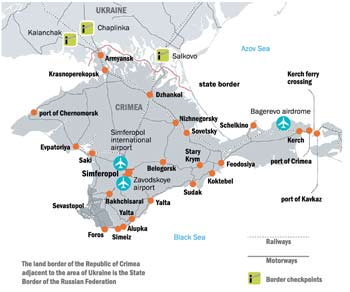 Last March everyone was following daily reports about transport in Crimea. One of the most discussed topics was the construction of a bridge across the Kerch Strait. Deputy Minister of Economic Development of the Russian Federation Aleksey Likhachev talked about investment needed for Crimea development: about $5 billion, of which $2.8 billion will be spent on transport. The most costly project will be the construction of a road and rail bridge across the Kerch Strait, which will replace the current ferry lines.
Construction of the new facility is not only a strategic plan to establish uninterrupted connection with Crimea, but also an ambitious redesign of the traffic flow on the peninsula. Before, the Kerch-Crimea line had a local value and served only the interests of the customers of the port of Kerch. However, in the future it will become the main transport corridor of Crimea. Today, cargo flows go through Perekop from the territory of Ukraine, but it is obvious that the pressure on them will soon decline. This will happen because of the technical issues associated with border formalities, and because of strategic challenges launched by the authorities of the Russian Federation.
Crimea has a well-developed transport infrastructure, although it requires modernisation. There are roads, the Simferopol airport, and five sea commercial ports - Feodosia, Evpatoria, Kerch, Yalta, and Sevastopol. The current State Enterprise “Crimean Railway” on the rights of the Directorate was a part of Pridneprovskaya Railroad (a structure of “Ukrzaliznytsia”). There is also a ferry automobile-passenger sea line and one rail-ferry line.
According to Mikhail Makarenko, the former Head of Pridneprovskaya railway, Crimean rail stations were used for unloading freight, they never had their own cargo; therefore, other units covered their work. In recent years cargo terminals in Sevastopol were being developed. “The development of ports in Crimea may add work to railmen. But so far it is mainly about the passenger and suburban traffic,” he said.
Despite everything “Ukrzaliznytsia” talks about its work on the territory of Crimea, the Ukrainian railwaymen do not influence the situation anymore. “Shipping to the Crimean ports fell because shippers changed their supply chains, as they are afraid of safety of their cargo on the territory of Crimea”, told Irina Kozlova, the Press-Secretary of the Pridneprovskaya railway. It was known before, when locomotives and wagons of the new series were withdrawn from Crimea. Later the ban to send all types of cargoes towards Crimean stations was declared.
Dmitry Yagello, expert from the Kiev Center of Transport Strategies, believes that the Ukrainian freight traffic from Crimea will partially withdraw because of the further obstacles, such as the state border. The barrier will be not only the border, but also tariff rates on shipments to foreign ports. Although a new Ukrainian law “On the Legal Regime for the Protection of Rights and Freedoms of Citizens on the Occupied Territories of Ukraine” cannot be ignored. The draft law adopted by the Verkhovnaya Rada in the first reading prohibits the movement of cargoes to the Crimea until the settlement of property issues with Russia and Ukraine. “The port of Odessa, where all shipments are redirected now, will gain from this situation,” is the analyst's opinion. Ukrainian companies that own assets in the Crimean ports, will be unlikely to turn away cargo from their property and will continue shipments through their terminals.
The source in the Feodosia seaport said that cargo from the port has mostly gone (first of all, metals from enterprises in the southeast of Ukraine), but these difficulties are temporary. According to the Ministry of Infrastructure of Ukraine, Crimea's ports in the first two months of 2014 handled 1.49 million tons of cargo, 24.7% less in comparison with the same period of the previous year. And their share in the total cargo turnover of ports of the country decreased from 8.7% to 6.4%.
Trends of the Past
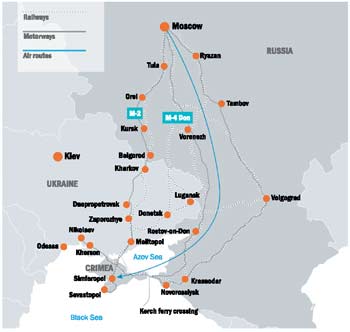 Revolution in Ukraine, and the annexation of Crimea made transport companies of the two countries worried, because officials were speaking even about closure of borders and complete cessation of rail services. Ukrainian transit from Russia and to Russia gradually decreased in the past two years. Last year, railway volumes fell by 19%, or 7.9 million tons, in comparison with 2012.
M. Makarenko says, “The bad situation with transit is associated with the development of Russian ports in the Baltic Sea and the Black Sea that were able to gain goods which previously went to the Ukrainian stevedoring companies”. The expert is sure that economic issues influence the situation more than political.
Although, there is no escape from politics. “The RZD-Partner” team has interviewed several major Russian transport companies working with Ukraine. They all refused to comment, and some even asked not to mention them at all. The comments were brief: “We carry everything in the previous regime, but we will not comment on it”.
However, it is also because of economic issues. This year, Ukrzaliznytsia imposed a ban on the supply of empty Russian railcars for domestic and export shipments, because Russian cars do not leave any work for Ukrainian ones.
“Because of the surplus of railcars in Russia, as well as because of the limit on using old rolling stock, all these wagons went to Ukraine”, said the Deputy Director of Ukrzaliznytsia Peter Naumenko. According to the Ukrainian railwayman, the ban was not applied to those foreign railcars, which entered Ukraine loaded. In fact, the ban became a part of the trade war between Ukrzaliznytsia and Freight One that provided its cars to the ArcelorMittal enterprise in Krivoy Rog.
The reduction in passenger traffic between the two countries may also be caused by political reasons. Ukraine has already announced the cancellation of the preferential customs regime for trains between Kiev and Moscow, where inspection was carried out directly on board. It is also planned to reduce the number of passenger routes. Now there are only three crossing points for passengers: Uspenskaya-Kvashino (Donetsk direction), Suzemka-Khutor-Mikhailovsky (Kiev direction), and Naumovka-Kazachya Lopan (Kharkiv direction).
Valery Yusupov, Deputy Head for Territorial Administration at the North Caucasus Railway, announced the beginning of passenger service on the Kerch-Caucasus ferry crossing. “This will be a partial solution to the issue in the coming years, until the construction of the bridge is finished,” he said.
Another sore point of the Russian-Ukrainian railway and road cooperation is the decision of Russian regulatory authorities to ban the extension of service of freight cars and the ban on the purchase of cars and spare parts from Ukrainian enterprises. Ukrainian wagon building works fulfilled about half the need for cargo railcars for Russian operators, so they were the main competitors of the RF producers. The ban on the purchase of their products will lead to higher prices on rolling stock. As a result, shippers will have to pay more. Transportation in some types of rolling stock - for food or chemical cargoes – which are not built in Russia, will become very expensive. Therefore, customers will probably choose road transport.
To summarise, despite the contradictions between the transport markets of Russia and Ukraine, the two countries still have a strong relationship. They, of course, can live without each other, but in this case, both will lose.
By Alexey Lebedev
[~DETAIL_TEXT] => Traffic will withdraw
Last March everyone was following daily reports about transport in Crimea. One of the most discussed topics was the construction of a bridge across the Kerch Strait. Deputy Minister of Economic Development of the Russian Federation Aleksey Likhachev talked about investment needed for Crimea development: about $5 billion, of which $2.8 billion will be spent on transport. The most costly project will be the construction of a road and rail bridge across the Kerch Strait, which will replace the current ferry lines.
Construction of the new facility is not only a strategic plan to establish uninterrupted connection with Crimea, but also an ambitious redesign of the traffic flow on the peninsula. Before, the Kerch-Crimea line had a local value and served only the interests of the customers of the port of Kerch. However, in the future it will become the main transport corridor of Crimea. Today, cargo flows go through Perekop from the territory of Ukraine, but it is obvious that the pressure on them will soon decline. This will happen because of the technical issues associated with border formalities, and because of strategic challenges launched by the authorities of the Russian Federation.
Crimea has a well-developed transport infrastructure, although it requires modernisation. There are roads, the Simferopol airport, and five sea commercial ports - Feodosia, Evpatoria, Kerch, Yalta, and Sevastopol. The current State Enterprise “Crimean Railway” on the rights of the Directorate was a part of Pridneprovskaya Railroad (a structure of “Ukrzaliznytsia”). There is also a ferry automobile-passenger sea line and one rail-ferry line.
According to Mikhail Makarenko, the former Head of Pridneprovskaya railway, Crimean rail stations were used for unloading freight, they never had their own cargo; therefore, other units covered their work. In recent years cargo terminals in Sevastopol were being developed. “The development of ports in Crimea may add work to railmen. But so far it is mainly about the passenger and suburban traffic,” he said.
Despite everything “Ukrzaliznytsia” talks about its work on the territory of Crimea, the Ukrainian railwaymen do not influence the situation anymore. “Shipping to the Crimean ports fell because shippers changed their supply chains, as they are afraid of safety of their cargo on the territory of Crimea”, told Irina Kozlova, the Press-Secretary of the Pridneprovskaya railway. It was known before, when locomotives and wagons of the new series were withdrawn from Crimea. Later the ban to send all types of cargoes towards Crimean stations was declared.
Dmitry Yagello, expert from the Kiev Center of Transport Strategies, believes that the Ukrainian freight traffic from Crimea will partially withdraw because of the further obstacles, such as the state border. The barrier will be not only the border, but also tariff rates on shipments to foreign ports. Although a new Ukrainian law “On the Legal Regime for the Protection of Rights and Freedoms of Citizens on the Occupied Territories of Ukraine” cannot be ignored. The draft law adopted by the Verkhovnaya Rada in the first reading prohibits the movement of cargoes to the Crimea until the settlement of property issues with Russia and Ukraine. “The port of Odessa, where all shipments are redirected now, will gain from this situation,” is the analyst's opinion. Ukrainian companies that own assets in the Crimean ports, will be unlikely to turn away cargo from their property and will continue shipments through their terminals.
The source in the Feodosia seaport said that cargo from the port has mostly gone (first of all, metals from enterprises in the southeast of Ukraine), but these difficulties are temporary. According to the Ministry of Infrastructure of Ukraine, Crimea's ports in the first two months of 2014 handled 1.49 million tons of cargo, 24.7% less in comparison with the same period of the previous year. And their share in the total cargo turnover of ports of the country decreased from 8.7% to 6.4%.
Trends of the Past
Revolution in Ukraine, and the annexation of Crimea made transport companies of the two countries worried, because officials were speaking even about closure of borders and complete cessation of rail services. Ukrainian transit from Russia and to Russia gradually decreased in the past two years. Last year, railway volumes fell by 19%, or 7.9 million tons, in comparison with 2012.
M. Makarenko says, “The bad situation with transit is associated with the development of Russian ports in the Baltic Sea and the Black Sea that were able to gain goods which previously went to the Ukrainian stevedoring companies”. The expert is sure that economic issues influence the situation more than political.
Although, there is no escape from politics. “The RZD-Partner” team has interviewed several major Russian transport companies working with Ukraine. They all refused to comment, and some even asked not to mention them at all. The comments were brief: “We carry everything in the previous regime, but we will not comment on it”.
However, it is also because of economic issues. This year, Ukrzaliznytsia imposed a ban on the supply of empty Russian railcars for domestic and export shipments, because Russian cars do not leave any work for Ukrainian ones.
“Because of the surplus of railcars in Russia, as well as because of the limit on using old rolling stock, all these wagons went to Ukraine”, said the Deputy Director of Ukrzaliznytsia Peter Naumenko. According to the Ukrainian railwayman, the ban was not applied to those foreign railcars, which entered Ukraine loaded. In fact, the ban became a part of the trade war between Ukrzaliznytsia and Freight One that provided its cars to the ArcelorMittal enterprise in Krivoy Rog.
The reduction in passenger traffic between the two countries may also be caused by political reasons. Ukraine has already announced the cancellation of the preferential customs regime for trains between Kiev and Moscow, where inspection was carried out directly on board. It is also planned to reduce the number of passenger routes. Now there are only three crossing points for passengers: Uspenskaya-Kvashino (Donetsk direction), Suzemka-Khutor-Mikhailovsky (Kiev direction), and Naumovka-Kazachya Lopan (Kharkiv direction).
Valery Yusupov, Deputy Head for Territorial Administration at the North Caucasus Railway, announced the beginning of passenger service on the Kerch-Caucasus ferry crossing. “This will be a partial solution to the issue in the coming years, until the construction of the bridge is finished,” he said.
Another sore point of the Russian-Ukrainian railway and road cooperation is the decision of Russian regulatory authorities to ban the extension of service of freight cars and the ban on the purchase of cars and spare parts from Ukrainian enterprises. Ukrainian wagon building works fulfilled about half the need for cargo railcars for Russian operators, so they were the main competitors of the RF producers. The ban on the purchase of their products will lead to higher prices on rolling stock. As a result, shippers will have to pay more. Transportation in some types of rolling stock - for food or chemical cargoes – which are not built in Russia, will become very expensive. Therefore, customers will probably choose road transport.
To summarise, despite the contradictions between the transport markets of Russia and Ukraine, the two countries still have a strong relationship. They, of course, can live without each other, but in this case, both will lose.
By Alexey Lebedev
[DETAIL_TEXT_TYPE] => html
[~DETAIL_TEXT_TYPE] => html
[PREVIEW_TEXT] => Agreement on the inclusion of the Republic of Crimea and the city of Sevastopol into Russia will influence not only transportation processes on the peninsula, but the future of transport communication with Ukraine. Despite businessmen’s fears about the possible collapse of interstate rail transportation, the facts show that it is likely to continue after some adjustment, because it is profitable both for Russia and Ukraine.
[~PREVIEW_TEXT] => Agreement on the inclusion of the Republic of Crimea and the city of Sevastopol into Russia will influence not only transportation processes on the peninsula, but the future of transport communication with Ukraine. Despite businessmen’s fears about the possible collapse of interstate rail transportation, the facts show that it is likely to continue after some adjustment, because it is profitable both for Russia and Ukraine.
[PREVIEW_TEXT_TYPE] => html
[~PREVIEW_TEXT_TYPE] => html
[PREVIEW_PICTURE] =>
[~PREVIEW_PICTURE] =>
[LANG_DIR] => /
[~LANG_DIR] => /
[CODE] => crimea-s-amendment
[~CODE] => crimea-s-amendment
[EXTERNAL_ID] => 9211
[~EXTERNAL_ID] => 9211
[IBLOCK_TYPE_ID] => info
[~IBLOCK_TYPE_ID] => info
[IBLOCK_CODE] => articles_magazines
[~IBLOCK_CODE] => articles_magazines
[IBLOCK_EXTERNAL_ID] =>
[~IBLOCK_EXTERNAL_ID] =>
[LID] => s1
[~LID] => s1
[EDIT_LINK] =>
[DELETE_LINK] =>
[DISPLAY_ACTIVE_FROM] =>
[FIELDS] => Array
(
)
[PROPERTIES] => Array
(
[AUTHOR] => Array
(
[ID] => 97
[IBLOCK_ID] => 25
[NAME] => Автор
[ACTIVE] => Y
[SORT] => 400
[CODE] => AUTHOR
[DEFAULT_VALUE] =>
[PROPERTY_TYPE] => S
[ROW_COUNT] => 1
[COL_COUNT] => 30
[LIST_TYPE] => L
[MULTIPLE] => N
[XML_ID] =>
[FILE_TYPE] =>
[MULTIPLE_CNT] => 5
[LINK_IBLOCK_ID] => 0
[WITH_DESCRIPTION] => N
[SEARCHABLE] => Y
[FILTRABLE] => N
[IS_REQUIRED] => N
[VERSION] => 2
[USER_TYPE] =>
[USER_TYPE_SETTINGS] => Array
(
)
[HINT] =>
[~NAME] => Автор
[~DEFAULT_VALUE] =>
[VALUE_ENUM] =>
[VALUE_XML_ID] =>
[VALUE_SORT] =>
[VALUE] =>
[PROPERTY_VALUE_ID] => 97105:97
[DESCRIPTION] =>
[~DESCRIPTION] =>
[~VALUE] =>
)
[AUTHOR_PHOTO] => Array
(
[ID] => 108
[IBLOCK_ID] => 25
[NAME] => Автор фото
[ACTIVE] => Y
[SORT] => 410
[CODE] => AUTHOR_PHOTO
[DEFAULT_VALUE] =>
[PROPERTY_TYPE] => S
[ROW_COUNT] => 1
[COL_COUNT] => 30
[LIST_TYPE] => L
[MULTIPLE] => N
[XML_ID] =>
[FILE_TYPE] =>
[MULTIPLE_CNT] => 5
[LINK_IBLOCK_ID] => 0
[WITH_DESCRIPTION] => N
[SEARCHABLE] => N
[FILTRABLE] => N
[IS_REQUIRED] => N
[VERSION] => 2
[USER_TYPE] =>
[USER_TYPE_SETTINGS] => Array
(
)
[HINT] =>
[~NAME] => Автор фото
[~DEFAULT_VALUE] =>
[VALUE_ENUM] =>
[VALUE_XML_ID] =>
[VALUE_SORT] =>
[VALUE] =>
[PROPERTY_VALUE_ID] => 97105:108
[DESCRIPTION] =>
[~DESCRIPTION] =>
[~VALUE] =>
)
[ISSUE] => Array
(
[ID] => 93
[IBLOCK_ID] => 25
[NAME] => Выпуск
[ACTIVE] => Y
[SORT] => 500
[CODE] => ISSUE
[DEFAULT_VALUE] =>
[PROPERTY_TYPE] => E
[ROW_COUNT] => 1
[COL_COUNT] => 30
[LIST_TYPE] => L
[MULTIPLE] => N
[XML_ID] =>
[FILE_TYPE] =>
[MULTIPLE_CNT] => 5
[LINK_IBLOCK_ID] => 0
[WITH_DESCRIPTION] => N
[SEARCHABLE] => N
[FILTRABLE] => N
[IS_REQUIRED] => Y
[VERSION] => 2
[USER_TYPE] =>
[USER_TYPE_SETTINGS] => Array
(
)
[HINT] =>
[~NAME] => Выпуск
[~DEFAULT_VALUE] =>
[VALUE_ENUM] =>
[VALUE_XML_ID] =>
[VALUE_SORT] =>
[VALUE] => 94704
[PROPERTY_VALUE_ID] => 97105:93
[DESCRIPTION] =>
[~VALUE] => 94704
[~DESCRIPTION] =>
)
[BLOG_POST_ID] => Array
(
[ID] => 94
[IBLOCK_ID] => 25
[NAME] => ID поста блога для комментариев
[ACTIVE] => Y
[SORT] => 500
[CODE] => BLOG_POST_ID
[DEFAULT_VALUE] =>
[PROPERTY_TYPE] => N
[ROW_COUNT] => 1
[COL_COUNT] => 30
[LIST_TYPE] => L
[MULTIPLE] => N
[XML_ID] =>
[FILE_TYPE] =>
[MULTIPLE_CNT] => 5
[LINK_IBLOCK_ID] => 0
[WITH_DESCRIPTION] => N
[SEARCHABLE] => N
[FILTRABLE] => N
[IS_REQUIRED] => N
[VERSION] => 1
[USER_TYPE] =>
[USER_TYPE_SETTINGS] => Array
(
)
[HINT] =>
[~NAME] => ID поста блога для комментариев
[~DEFAULT_VALUE] =>
[VALUE_ENUM] =>
[VALUE_XML_ID] =>
[VALUE_SORT] =>
[VALUE] =>
[PROPERTY_VALUE_ID] => 97105:94
[DESCRIPTION] =>
[~DESCRIPTION] =>
[~VALUE] =>
)
[BLOG_COMMENTS_CNT] => Array
(
[ID] => 95
[IBLOCK_ID] => 25
[NAME] => Количество комментариев
[ACTIVE] => Y
[SORT] => 500
[CODE] => BLOG_COMMENTS_CNT
[DEFAULT_VALUE] =>
[PROPERTY_TYPE] => N
[ROW_COUNT] => 1
[COL_COUNT] => 30
[LIST_TYPE] => L
[MULTIPLE] => N
[XML_ID] =>
[FILE_TYPE] =>
[MULTIPLE_CNT] => 5
[LINK_IBLOCK_ID] => 0
[WITH_DESCRIPTION] => N
[SEARCHABLE] => N
[FILTRABLE] => N
[IS_REQUIRED] => N
[VERSION] => 1
[USER_TYPE] =>
[USER_TYPE_SETTINGS] => Array
(
)
[HINT] =>
[~NAME] => Количество комментариев
[~DEFAULT_VALUE] =>
[VALUE_ENUM] =>
[VALUE_XML_ID] =>
[VALUE_SORT] =>
[VALUE] =>
[PROPERTY_VALUE_ID] => 97105:95
[DESCRIPTION] =>
[~DESCRIPTION] =>
[~VALUE] =>
)
[MORE_PHOTO] => Array
(
[ID] => 98
[IBLOCK_ID] => 25
[NAME] => Дополнительные фотографии
[ACTIVE] => Y
[SORT] => 500
[CODE] => MORE_PHOTO
[DEFAULT_VALUE] =>
[PROPERTY_TYPE] => F
[ROW_COUNT] => 1
[COL_COUNT] => 30
[LIST_TYPE] => L
[MULTIPLE] => Y
[XML_ID] =>
[FILE_TYPE] => jpg, gif, bmp, png, jpeg
[MULTIPLE_CNT] => 5
[LINK_IBLOCK_ID] => 0
[WITH_DESCRIPTION] => N
[SEARCHABLE] => N
[FILTRABLE] => N
[IS_REQUIRED] => N
[VERSION] => 2
[USER_TYPE] =>
[USER_TYPE_SETTINGS] => Array
(
)
[HINT] =>
[~NAME] => Дополнительные фотографии
[~DEFAULT_VALUE] =>
[VALUE_ENUM] =>
[VALUE_XML_ID] =>
[VALUE_SORT] =>
[VALUE] =>
[PROPERTY_VALUE_ID] =>
[DESCRIPTION] =>
[~DESCRIPTION] =>
[~VALUE] =>
)
[PUBLIC_ACCESS] => Array
(
[ID] => 110
[IBLOCK_ID] => 25
[NAME] => Открытый доступ
[ACTIVE] => Y
[SORT] => 500
[CODE] => PUBLIC_ACCESS
[DEFAULT_VALUE] =>
[PROPERTY_TYPE] => L
[ROW_COUNT] => 1
[COL_COUNT] => 30
[LIST_TYPE] => C
[MULTIPLE] => N
[XML_ID] =>
[FILE_TYPE] =>
[MULTIPLE_CNT] => 5
[LINK_IBLOCK_ID] => 0
[WITH_DESCRIPTION] => N
[SEARCHABLE] => N
[FILTRABLE] => N
[IS_REQUIRED] => N
[VERSION] => 2
[USER_TYPE] =>
[USER_TYPE_SETTINGS] => Array
(
)
[HINT] =>
[~NAME] => Открытый доступ
[~DEFAULT_VALUE] =>
[VALUE_ENUM] =>
[VALUE_XML_ID] =>
[VALUE_SORT] =>
[VALUE] =>
[PROPERTY_VALUE_ID] => 97105:110
[DESCRIPTION] =>
[~DESCRIPTION] =>
[~VALUE] =>
[VALUE_ENUM_ID] =>
)
[ATTACHED_PDF] => Array
(
[ID] => 324
[IBLOCK_ID] => 25
[NAME] => Прикрепленный PDF
[ACTIVE] => Y
[SORT] => 500
[CODE] => ATTACHED_PDF
[DEFAULT_VALUE] =>
[PROPERTY_TYPE] => F
[ROW_COUNT] => 1
[COL_COUNT] => 30
[LIST_TYPE] => L
[MULTIPLE] => N
[XML_ID] =>
[FILE_TYPE] => pdf
[MULTIPLE_CNT] => 5
[LINK_IBLOCK_ID] => 0
[WITH_DESCRIPTION] => N
[SEARCHABLE] => N
[FILTRABLE] => N
[IS_REQUIRED] => N
[VERSION] => 2
[USER_TYPE] =>
[USER_TYPE_SETTINGS] => Array
(
)
[HINT] =>
[~NAME] => Прикрепленный PDF
[~DEFAULT_VALUE] =>
[VALUE_ENUM] =>
[VALUE_XML_ID] =>
[VALUE_SORT] =>
[VALUE] =>
[PROPERTY_VALUE_ID] => 97105:324
[DESCRIPTION] =>
[~DESCRIPTION] =>
[~VALUE] =>
)
)
[DISPLAY_PROPERTIES] => Array
(
)
[IPROPERTY_VALUES] => Array
(
[SECTION_META_TITLE] => Crimea’s Amendment
[SECTION_META_KEYWORDS] => crimea’s amendment
[SECTION_META_DESCRIPTION] => <p>Agreement on the inclusion of the Republic of Crimea and the city of Sevastopol into Russia will influence not only transportation processes on the peninsula, but the future of transport communication with Ukraine. Despite businessmen’s fears about the possible collapse of interstate rail transportation, the facts show that it is likely to continue after some adjustment, because it is profitable both for Russia and Ukraine.</p>
[ELEMENT_META_TITLE] => Crimea’s Amendment
[ELEMENT_META_KEYWORDS] => crimea’s amendment
[ELEMENT_META_DESCRIPTION] => <p>Agreement on the inclusion of the Republic of Crimea and the city of Sevastopol into Russia will influence not only transportation processes on the peninsula, but the future of transport communication with Ukraine. Despite businessmen’s fears about the possible collapse of interstate rail transportation, the facts show that it is likely to continue after some adjustment, because it is profitable both for Russia and Ukraine.</p>
[SECTION_PICTURE_FILE_ALT] => Crimea’s Amendment
[SECTION_PICTURE_FILE_TITLE] => Crimea’s Amendment
[SECTION_DETAIL_PICTURE_FILE_ALT] => Crimea’s Amendment
[SECTION_DETAIL_PICTURE_FILE_TITLE] => Crimea’s Amendment
[ELEMENT_PREVIEW_PICTURE_FILE_ALT] => Crimea’s Amendment
[ELEMENT_PREVIEW_PICTURE_FILE_TITLE] => Crimea’s Amendment
[ELEMENT_DETAIL_PICTURE_FILE_ALT] => Crimea’s Amendment
[ELEMENT_DETAIL_PICTURE_FILE_TITLE] => Crimea’s Amendment
)
)
Array
(
[ID] => 97105
[~ID] => 97105
[IBLOCK_ID] => 25
[~IBLOCK_ID] => 25
[IBLOCK_SECTION_ID] => 1364
[~IBLOCK_SECTION_ID] => 1364
[NAME] => Crimea’s Amendment
[~NAME] => Crimea’s Amendment
[ACTIVE_FROM_X] =>
[~ACTIVE_FROM_X] =>
[ACTIVE_FROM] =>
[~ACTIVE_FROM] =>
[TIMESTAMP_X] => 01.09.2016 18:07:25
[~TIMESTAMP_X] => 01.09.2016 18:07:25
[DETAIL_PAGE_URL] => /publications/rzd-partner-int/38-2014/crimea-s-amendment/
[~DETAIL_PAGE_URL] => /publications/rzd-partner-int/38-2014/crimea-s-amendment/
[LIST_PAGE_URL] => /info/index.php?ID=25
[~LIST_PAGE_URL] => /info/index.php?ID=25
[DETAIL_TEXT] => Traffic will withdraw
Last March everyone was following daily reports about transport in Crimea. One of the most discussed topics was the construction of a bridge across the Kerch Strait. Deputy Minister of Economic Development of the Russian Federation Aleksey Likhachev talked about investment needed for Crimea development: about $5 billion, of which $2.8 billion will be spent on transport. The most costly project will be the construction of a road and rail bridge across the Kerch Strait, which will replace the current ferry lines.
Construction of the new facility is not only a strategic plan to establish uninterrupted connection with Crimea, but also an ambitious redesign of the traffic flow on the peninsula. Before, the Kerch-Crimea line had a local value and served only the interests of the customers of the port of Kerch. However, in the future it will become the main transport corridor of Crimea. Today, cargo flows go through Perekop from the territory of Ukraine, but it is obvious that the pressure on them will soon decline. This will happen because of the technical issues associated with border formalities, and because of strategic challenges launched by the authorities of the Russian Federation.
Crimea has a well-developed transport infrastructure, although it requires modernisation. There are roads, the Simferopol airport, and five sea commercial ports - Feodosia, Evpatoria, Kerch, Yalta, and Sevastopol. The current State Enterprise “Crimean Railway” on the rights of the Directorate was a part of Pridneprovskaya Railroad (a structure of “Ukrzaliznytsia”). There is also a ferry automobile-passenger sea line and one rail-ferry line.
According to Mikhail Makarenko, the former Head of Pridneprovskaya railway, Crimean rail stations were used for unloading freight, they never had their own cargo; therefore, other units covered their work. In recent years cargo terminals in Sevastopol were being developed. “The development of ports in Crimea may add work to railmen. But so far it is mainly about the passenger and suburban traffic,” he said.
Despite everything “Ukrzaliznytsia” talks about its work on the territory of Crimea, the Ukrainian railwaymen do not influence the situation anymore. “Shipping to the Crimean ports fell because shippers changed their supply chains, as they are afraid of safety of their cargo on the territory of Crimea”, told Irina Kozlova, the Press-Secretary of the Pridneprovskaya railway. It was known before, when locomotives and wagons of the new series were withdrawn from Crimea. Later the ban to send all types of cargoes towards Crimean stations was declared.
Dmitry Yagello, expert from the Kiev Center of Transport Strategies, believes that the Ukrainian freight traffic from Crimea will partially withdraw because of the further obstacles, such as the state border. The barrier will be not only the border, but also tariff rates on shipments to foreign ports. Although a new Ukrainian law “On the Legal Regime for the Protection of Rights and Freedoms of Citizens on the Occupied Territories of Ukraine” cannot be ignored. The draft law adopted by the Verkhovnaya Rada in the first reading prohibits the movement of cargoes to the Crimea until the settlement of property issues with Russia and Ukraine. “The port of Odessa, where all shipments are redirected now, will gain from this situation,” is the analyst's opinion. Ukrainian companies that own assets in the Crimean ports, will be unlikely to turn away cargo from their property and will continue shipments through their terminals.
The source in the Feodosia seaport said that cargo from the port has mostly gone (first of all, metals from enterprises in the southeast of Ukraine), but these difficulties are temporary. According to the Ministry of Infrastructure of Ukraine, Crimea's ports in the first two months of 2014 handled 1.49 million tons of cargo, 24.7% less in comparison with the same period of the previous year. And their share in the total cargo turnover of ports of the country decreased from 8.7% to 6.4%.
Trends of the Past
Revolution in Ukraine, and the annexation of Crimea made transport companies of the two countries worried, because officials were speaking even about closure of borders and complete cessation of rail services. Ukrainian transit from Russia and to Russia gradually decreased in the past two years. Last year, railway volumes fell by 19%, or 7.9 million tons, in comparison with 2012.
M. Makarenko says, “The bad situation with transit is associated with the development of Russian ports in the Baltic Sea and the Black Sea that were able to gain goods which previously went to the Ukrainian stevedoring companies”. The expert is sure that economic issues influence the situation more than political.
Although, there is no escape from politics. “The RZD-Partner” team has interviewed several major Russian transport companies working with Ukraine. They all refused to comment, and some even asked not to mention them at all. The comments were brief: “We carry everything in the previous regime, but we will not comment on it”.
However, it is also because of economic issues. This year, Ukrzaliznytsia imposed a ban on the supply of empty Russian railcars for domestic and export shipments, because Russian cars do not leave any work for Ukrainian ones.
“Because of the surplus of railcars in Russia, as well as because of the limit on using old rolling stock, all these wagons went to Ukraine”, said the Deputy Director of Ukrzaliznytsia Peter Naumenko. According to the Ukrainian railwayman, the ban was not applied to those foreign railcars, which entered Ukraine loaded. In fact, the ban became a part of the trade war between Ukrzaliznytsia and Freight One that provided its cars to the ArcelorMittal enterprise in Krivoy Rog.
The reduction in passenger traffic between the two countries may also be caused by political reasons. Ukraine has already announced the cancellation of the preferential customs regime for trains between Kiev and Moscow, where inspection was carried out directly on board. It is also planned to reduce the number of passenger routes. Now there are only three crossing points for passengers: Uspenskaya-Kvashino (Donetsk direction), Suzemka-Khutor-Mikhailovsky (Kiev direction), and Naumovka-Kazachya Lopan (Kharkiv direction).
Valery Yusupov, Deputy Head for Territorial Administration at the North Caucasus Railway, announced the beginning of passenger service on the Kerch-Caucasus ferry crossing. “This will be a partial solution to the issue in the coming years, until the construction of the bridge is finished,” he said.
Another sore point of the Russian-Ukrainian railway and road cooperation is the decision of Russian regulatory authorities to ban the extension of service of freight cars and the ban on the purchase of cars and spare parts from Ukrainian enterprises. Ukrainian wagon building works fulfilled about half the need for cargo railcars for Russian operators, so they were the main competitors of the RF producers. The ban on the purchase of their products will lead to higher prices on rolling stock. As a result, shippers will have to pay more. Transportation in some types of rolling stock - for food or chemical cargoes – which are not built in Russia, will become very expensive. Therefore, customers will probably choose road transport.
To summarise, despite the contradictions between the transport markets of Russia and Ukraine, the two countries still have a strong relationship. They, of course, can live without each other, but in this case, both will lose.
By Alexey Lebedev
[~DETAIL_TEXT] => Traffic will withdraw
Last March everyone was following daily reports about transport in Crimea. One of the most discussed topics was the construction of a bridge across the Kerch Strait. Deputy Minister of Economic Development of the Russian Federation Aleksey Likhachev talked about investment needed for Crimea development: about $5 billion, of which $2.8 billion will be spent on transport. The most costly project will be the construction of a road and rail bridge across the Kerch Strait, which will replace the current ferry lines.
Construction of the new facility is not only a strategic plan to establish uninterrupted connection with Crimea, but also an ambitious redesign of the traffic flow on the peninsula. Before, the Kerch-Crimea line had a local value and served only the interests of the customers of the port of Kerch. However, in the future it will become the main transport corridor of Crimea. Today, cargo flows go through Perekop from the territory of Ukraine, but it is obvious that the pressure on them will soon decline. This will happen because of the technical issues associated with border formalities, and because of strategic challenges launched by the authorities of the Russian Federation.
Crimea has a well-developed transport infrastructure, although it requires modernisation. There are roads, the Simferopol airport, and five sea commercial ports - Feodosia, Evpatoria, Kerch, Yalta, and Sevastopol. The current State Enterprise “Crimean Railway” on the rights of the Directorate was a part of Pridneprovskaya Railroad (a structure of “Ukrzaliznytsia”). There is also a ferry automobile-passenger sea line and one rail-ferry line.
According to Mikhail Makarenko, the former Head of Pridneprovskaya railway, Crimean rail stations were used for unloading freight, they never had their own cargo; therefore, other units covered their work. In recent years cargo terminals in Sevastopol were being developed. “The development of ports in Crimea may add work to railmen. But so far it is mainly about the passenger and suburban traffic,” he said.
Despite everything “Ukrzaliznytsia” talks about its work on the territory of Crimea, the Ukrainian railwaymen do not influence the situation anymore. “Shipping to the Crimean ports fell because shippers changed their supply chains, as they are afraid of safety of their cargo on the territory of Crimea”, told Irina Kozlova, the Press-Secretary of the Pridneprovskaya railway. It was known before, when locomotives and wagons of the new series were withdrawn from Crimea. Later the ban to send all types of cargoes towards Crimean stations was declared.
Dmitry Yagello, expert from the Kiev Center of Transport Strategies, believes that the Ukrainian freight traffic from Crimea will partially withdraw because of the further obstacles, such as the state border. The barrier will be not only the border, but also tariff rates on shipments to foreign ports. Although a new Ukrainian law “On the Legal Regime for the Protection of Rights and Freedoms of Citizens on the Occupied Territories of Ukraine” cannot be ignored. The draft law adopted by the Verkhovnaya Rada in the first reading prohibits the movement of cargoes to the Crimea until the settlement of property issues with Russia and Ukraine. “The port of Odessa, where all shipments are redirected now, will gain from this situation,” is the analyst's opinion. Ukrainian companies that own assets in the Crimean ports, will be unlikely to turn away cargo from their property and will continue shipments through their terminals.
The source in the Feodosia seaport said that cargo from the port has mostly gone (first of all, metals from enterprises in the southeast of Ukraine), but these difficulties are temporary. According to the Ministry of Infrastructure of Ukraine, Crimea's ports in the first two months of 2014 handled 1.49 million tons of cargo, 24.7% less in comparison with the same period of the previous year. And their share in the total cargo turnover of ports of the country decreased from 8.7% to 6.4%.
Trends of the Past
Revolution in Ukraine, and the annexation of Crimea made transport companies of the two countries worried, because officials were speaking even about closure of borders and complete cessation of rail services. Ukrainian transit from Russia and to Russia gradually decreased in the past two years. Last year, railway volumes fell by 19%, or 7.9 million tons, in comparison with 2012.
M. Makarenko says, “The bad situation with transit is associated with the development of Russian ports in the Baltic Sea and the Black Sea that were able to gain goods which previously went to the Ukrainian stevedoring companies”. The expert is sure that economic issues influence the situation more than political.
Although, there is no escape from politics. “The RZD-Partner” team has interviewed several major Russian transport companies working with Ukraine. They all refused to comment, and some even asked not to mention them at all. The comments were brief: “We carry everything in the previous regime, but we will not comment on it”.
However, it is also because of economic issues. This year, Ukrzaliznytsia imposed a ban on the supply of empty Russian railcars for domestic and export shipments, because Russian cars do not leave any work for Ukrainian ones.
“Because of the surplus of railcars in Russia, as well as because of the limit on using old rolling stock, all these wagons went to Ukraine”, said the Deputy Director of Ukrzaliznytsia Peter Naumenko. According to the Ukrainian railwayman, the ban was not applied to those foreign railcars, which entered Ukraine loaded. In fact, the ban became a part of the trade war between Ukrzaliznytsia and Freight One that provided its cars to the ArcelorMittal enterprise in Krivoy Rog.
The reduction in passenger traffic between the two countries may also be caused by political reasons. Ukraine has already announced the cancellation of the preferential customs regime for trains between Kiev and Moscow, where inspection was carried out directly on board. It is also planned to reduce the number of passenger routes. Now there are only three crossing points for passengers: Uspenskaya-Kvashino (Donetsk direction), Suzemka-Khutor-Mikhailovsky (Kiev direction), and Naumovka-Kazachya Lopan (Kharkiv direction).
Valery Yusupov, Deputy Head for Territorial Administration at the North Caucasus Railway, announced the beginning of passenger service on the Kerch-Caucasus ferry crossing. “This will be a partial solution to the issue in the coming years, until the construction of the bridge is finished,” he said.
Another sore point of the Russian-Ukrainian railway and road cooperation is the decision of Russian regulatory authorities to ban the extension of service of freight cars and the ban on the purchase of cars and spare parts from Ukrainian enterprises. Ukrainian wagon building works fulfilled about half the need for cargo railcars for Russian operators, so they were the main competitors of the RF producers. The ban on the purchase of their products will lead to higher prices on rolling stock. As a result, shippers will have to pay more. Transportation in some types of rolling stock - for food or chemical cargoes – which are not built in Russia, will become very expensive. Therefore, customers will probably choose road transport.
To summarise, despite the contradictions between the transport markets of Russia and Ukraine, the two countries still have a strong relationship. They, of course, can live without each other, but in this case, both will lose.
By Alexey Lebedev
[DETAIL_TEXT_TYPE] => html
[~DETAIL_TEXT_TYPE] => html
[PREVIEW_TEXT] => Agreement on the inclusion of the Republic of Crimea and the city of Sevastopol into Russia will influence not only transportation processes on the peninsula, but the future of transport communication with Ukraine. Despite businessmen’s fears about the possible collapse of interstate rail transportation, the facts show that it is likely to continue after some adjustment, because it is profitable both for Russia and Ukraine.
[~PREVIEW_TEXT] => Agreement on the inclusion of the Republic of Crimea and the city of Sevastopol into Russia will influence not only transportation processes on the peninsula, but the future of transport communication with Ukraine. Despite businessmen’s fears about the possible collapse of interstate rail transportation, the facts show that it is likely to continue after some adjustment, because it is profitable both for Russia and Ukraine.
[PREVIEW_TEXT_TYPE] => html
[~PREVIEW_TEXT_TYPE] => html
[PREVIEW_PICTURE] =>
[~PREVIEW_PICTURE] =>
[LANG_DIR] => /
[~LANG_DIR] => /
[CODE] => crimea-s-amendment
[~CODE] => crimea-s-amendment
[EXTERNAL_ID] => 9211
[~EXTERNAL_ID] => 9211
[IBLOCK_TYPE_ID] => info
[~IBLOCK_TYPE_ID] => info
[IBLOCK_CODE] => articles_magazines
[~IBLOCK_CODE] => articles_magazines
[IBLOCK_EXTERNAL_ID] =>
[~IBLOCK_EXTERNAL_ID] =>
[LID] => s1
[~LID] => s1
[EDIT_LINK] =>
[DELETE_LINK] =>
[DISPLAY_ACTIVE_FROM] =>
[FIELDS] => Array
(
)
[PROPERTIES] => Array
(
[AUTHOR] => Array
(
[ID] => 97
[IBLOCK_ID] => 25
[NAME] => Автор
[ACTIVE] => Y
[SORT] => 400
[CODE] => AUTHOR
[DEFAULT_VALUE] =>
[PROPERTY_TYPE] => S
[ROW_COUNT] => 1
[COL_COUNT] => 30
[LIST_TYPE] => L
[MULTIPLE] => N
[XML_ID] =>
[FILE_TYPE] =>
[MULTIPLE_CNT] => 5
[LINK_IBLOCK_ID] => 0
[WITH_DESCRIPTION] => N
[SEARCHABLE] => Y
[FILTRABLE] => N
[IS_REQUIRED] => N
[VERSION] => 2
[USER_TYPE] =>
[USER_TYPE_SETTINGS] => Array
(
)
[HINT] =>
[~NAME] => Автор
[~DEFAULT_VALUE] =>
[VALUE_ENUM] =>
[VALUE_XML_ID] =>
[VALUE_SORT] =>
[VALUE] =>
[PROPERTY_VALUE_ID] => 97105:97
[DESCRIPTION] =>
[~DESCRIPTION] =>
[~VALUE] =>
)
[AUTHOR_PHOTO] => Array
(
[ID] => 108
[IBLOCK_ID] => 25
[NAME] => Автор фото
[ACTIVE] => Y
[SORT] => 410
[CODE] => AUTHOR_PHOTO
[DEFAULT_VALUE] =>
[PROPERTY_TYPE] => S
[ROW_COUNT] => 1
[COL_COUNT] => 30
[LIST_TYPE] => L
[MULTIPLE] => N
[XML_ID] =>
[FILE_TYPE] =>
[MULTIPLE_CNT] => 5
[LINK_IBLOCK_ID] => 0
[WITH_DESCRIPTION] => N
[SEARCHABLE] => N
[FILTRABLE] => N
[IS_REQUIRED] => N
[VERSION] => 2
[USER_TYPE] =>
[USER_TYPE_SETTINGS] => Array
(
)
[HINT] =>
[~NAME] => Автор фото
[~DEFAULT_VALUE] =>
[VALUE_ENUM] =>
[VALUE_XML_ID] =>
[VALUE_SORT] =>
[VALUE] =>
[PROPERTY_VALUE_ID] => 97105:108
[DESCRIPTION] =>
[~DESCRIPTION] =>
[~VALUE] =>
)
[ISSUE] => Array
(
[ID] => 93
[IBLOCK_ID] => 25
[NAME] => Выпуск
[ACTIVE] => Y
[SORT] => 500
[CODE] => ISSUE
[DEFAULT_VALUE] =>
[PROPERTY_TYPE] => E
[ROW_COUNT] => 1
[COL_COUNT] => 30
[LIST_TYPE] => L
[MULTIPLE] => N
[XML_ID] =>
[FILE_TYPE] =>
[MULTIPLE_CNT] => 5
[LINK_IBLOCK_ID] => 0
[WITH_DESCRIPTION] => N
[SEARCHABLE] => N
[FILTRABLE] => N
[IS_REQUIRED] => Y
[VERSION] => 2
[USER_TYPE] =>
[USER_TYPE_SETTINGS] => Array
(
)
[HINT] =>
[~NAME] => Выпуск
[~DEFAULT_VALUE] =>
[VALUE_ENUM] =>
[VALUE_XML_ID] =>
[VALUE_SORT] =>
[VALUE] => 94704
[PROPERTY_VALUE_ID] => 97105:93
[DESCRIPTION] =>
[~VALUE] => 94704
[~DESCRIPTION] =>
)
[BLOG_POST_ID] => Array
(
[ID] => 94
[IBLOCK_ID] => 25
[NAME] => ID поста блога для комментариев
[ACTIVE] => Y
[SORT] => 500
[CODE] => BLOG_POST_ID
[DEFAULT_VALUE] =>
[PROPERTY_TYPE] => N
[ROW_COUNT] => 1
[COL_COUNT] => 30
[LIST_TYPE] => L
[MULTIPLE] => N
[XML_ID] =>
[FILE_TYPE] =>
[MULTIPLE_CNT] => 5
[LINK_IBLOCK_ID] => 0
[WITH_DESCRIPTION] => N
[SEARCHABLE] => N
[FILTRABLE] => N
[IS_REQUIRED] => N
[VERSION] => 1
[USER_TYPE] =>
[USER_TYPE_SETTINGS] => Array
(
)
[HINT] =>
[~NAME] => ID поста блога для комментариев
[~DEFAULT_VALUE] =>
[VALUE_ENUM] =>
[VALUE_XML_ID] =>
[VALUE_SORT] =>
[VALUE] =>
[PROPERTY_VALUE_ID] => 97105:94
[DESCRIPTION] =>
[~DESCRIPTION] =>
[~VALUE] =>
)
[BLOG_COMMENTS_CNT] => Array
(
[ID] => 95
[IBLOCK_ID] => 25
[NAME] => Количество комментариев
[ACTIVE] => Y
[SORT] => 500
[CODE] => BLOG_COMMENTS_CNT
[DEFAULT_VALUE] =>
[PROPERTY_TYPE] => N
[ROW_COUNT] => 1
[COL_COUNT] => 30
[LIST_TYPE] => L
[MULTIPLE] => N
[XML_ID] =>
[FILE_TYPE] =>
[MULTIPLE_CNT] => 5
[LINK_IBLOCK_ID] => 0
[WITH_DESCRIPTION] => N
[SEARCHABLE] => N
[FILTRABLE] => N
[IS_REQUIRED] => N
[VERSION] => 1
[USER_TYPE] =>
[USER_TYPE_SETTINGS] => Array
(
)
[HINT] =>
[~NAME] => Количество комментариев
[~DEFAULT_VALUE] =>
[VALUE_ENUM] =>
[VALUE_XML_ID] =>
[VALUE_SORT] =>
[VALUE] =>
[PROPERTY_VALUE_ID] => 97105:95
[DESCRIPTION] =>
[~DESCRIPTION] =>
[~VALUE] =>
)
[MORE_PHOTO] => Array
(
[ID] => 98
[IBLOCK_ID] => 25
[NAME] => Дополнительные фотографии
[ACTIVE] => Y
[SORT] => 500
[CODE] => MORE_PHOTO
[DEFAULT_VALUE] =>
[PROPERTY_TYPE] => F
[ROW_COUNT] => 1
[COL_COUNT] => 30
[LIST_TYPE] => L
[MULTIPLE] => Y
[XML_ID] =>
[FILE_TYPE] => jpg, gif, bmp, png, jpeg
[MULTIPLE_CNT] => 5
[LINK_IBLOCK_ID] => 0
[WITH_DESCRIPTION] => N
[SEARCHABLE] => N
[FILTRABLE] => N
[IS_REQUIRED] => N
[VERSION] => 2
[USER_TYPE] =>
[USER_TYPE_SETTINGS] => Array
(
)
[HINT] =>
[~NAME] => Дополнительные фотографии
[~DEFAULT_VALUE] =>
[VALUE_ENUM] =>
[VALUE_XML_ID] =>
[VALUE_SORT] =>
[VALUE] =>
[PROPERTY_VALUE_ID] =>
[DESCRIPTION] =>
[~DESCRIPTION] =>
[~VALUE] =>
)
[PUBLIC_ACCESS] => Array
(
[ID] => 110
[IBLOCK_ID] => 25
[NAME] => Открытый доступ
[ACTIVE] => Y
[SORT] => 500
[CODE] => PUBLIC_ACCESS
[DEFAULT_VALUE] =>
[PROPERTY_TYPE] => L
[ROW_COUNT] => 1
[COL_COUNT] => 30
[LIST_TYPE] => C
[MULTIPLE] => N
[XML_ID] =>
[FILE_TYPE] =>
[MULTIPLE_CNT] => 5
[LINK_IBLOCK_ID] => 0
[WITH_DESCRIPTION] => N
[SEARCHABLE] => N
[FILTRABLE] => N
[IS_REQUIRED] => N
[VERSION] => 2
[USER_TYPE] =>
[USER_TYPE_SETTINGS] => Array
(
)
[HINT] =>
[~NAME] => Открытый доступ
[~DEFAULT_VALUE] =>
[VALUE_ENUM] =>
[VALUE_XML_ID] =>
[VALUE_SORT] =>
[VALUE] =>
[PROPERTY_VALUE_ID] => 97105:110
[DESCRIPTION] =>
[~DESCRIPTION] =>
[~VALUE] =>
[VALUE_ENUM_ID] =>
)
[ATTACHED_PDF] => Array
(
[ID] => 324
[IBLOCK_ID] => 25
[NAME] => Прикрепленный PDF
[ACTIVE] => Y
[SORT] => 500
[CODE] => ATTACHED_PDF
[DEFAULT_VALUE] =>
[PROPERTY_TYPE] => F
[ROW_COUNT] => 1
[COL_COUNT] => 30
[LIST_TYPE] => L
[MULTIPLE] => N
[XML_ID] =>
[FILE_TYPE] => pdf
[MULTIPLE_CNT] => 5
[LINK_IBLOCK_ID] => 0
[WITH_DESCRIPTION] => N
[SEARCHABLE] => N
[FILTRABLE] => N
[IS_REQUIRED] => N
[VERSION] => 2
[USER_TYPE] =>
[USER_TYPE_SETTINGS] => Array
(
)
[HINT] =>
[~NAME] => Прикрепленный PDF
[~DEFAULT_VALUE] =>
[VALUE_ENUM] =>
[VALUE_XML_ID] =>
[VALUE_SORT] =>
[VALUE] =>
[PROPERTY_VALUE_ID] => 97105:324
[DESCRIPTION] =>
[~DESCRIPTION] =>
[~VALUE] =>
)
)
[DISPLAY_PROPERTIES] => Array
(
)
[IPROPERTY_VALUES] => Array
(
[SECTION_META_TITLE] => Crimea’s Amendment
[SECTION_META_KEYWORDS] => crimea’s amendment
[SECTION_META_DESCRIPTION] => <p>Agreement on the inclusion of the Republic of Crimea and the city of Sevastopol into Russia will influence not only transportation processes on the peninsula, but the future of transport communication with Ukraine. Despite businessmen’s fears about the possible collapse of interstate rail transportation, the facts show that it is likely to continue after some adjustment, because it is profitable both for Russia and Ukraine.</p>
[ELEMENT_META_TITLE] => Crimea’s Amendment
[ELEMENT_META_KEYWORDS] => crimea’s amendment
[ELEMENT_META_DESCRIPTION] => <p>Agreement on the inclusion of the Republic of Crimea and the city of Sevastopol into Russia will influence not only transportation processes on the peninsula, but the future of transport communication with Ukraine. Despite businessmen’s fears about the possible collapse of interstate rail transportation, the facts show that it is likely to continue after some adjustment, because it is profitable both for Russia and Ukraine.</p>
[SECTION_PICTURE_FILE_ALT] => Crimea’s Amendment
[SECTION_PICTURE_FILE_TITLE] => Crimea’s Amendment
[SECTION_DETAIL_PICTURE_FILE_ALT] => Crimea’s Amendment
[SECTION_DETAIL_PICTURE_FILE_TITLE] => Crimea’s Amendment
[ELEMENT_PREVIEW_PICTURE_FILE_ALT] => Crimea’s Amendment
[ELEMENT_PREVIEW_PICTURE_FILE_TITLE] => Crimea’s Amendment
[ELEMENT_DETAIL_PICTURE_FILE_ALT] => Crimea’s Amendment
[ELEMENT_DETAIL_PICTURE_FILE_TITLE] => Crimea’s Amendment
)
)


Copyright © 2002-2026 Учредитель ООО «Редакция журнала «РЖД-Партнер»
Информационное агентство «РЖД-Партнер.РУ»
Главный редактор Ретюнин А.С.
адрес электронной почты rzdp@rzd-partner.ru телефон редакции +7 (812) 418-34-92; +7 (812) 418-34-90
Политика обработки персональных данных | Согласие на обработку персональных данных | Пользовательское соглашение
При цитировании информации гиперссылка на ИА РЖД-Партнер.ру обязательна.
Использование материалов ИА РЖД-Партнер.ру в коммерческих целях без письменного разрешения агентства не допускается.
Регистрационный номер СМИ ИА № ФС77-22819 от 11 января 2006 г., выдан Федеральной службой по надзору за соблюдением законодательства в сфере массовых коммуникаций и охране культурного наследия.
Любое использование материалов допускается только при наличии гиперссылки на ИА РЖД-Партнер.ру
Разработка сайта - iMedia Solutions


 III КВАРТАЛ 2022Г. - 55 баллов


